Posts Tagged ‘Will Guzzardi’
Pritzker OKs changes to Prisoner Review Board following years of controversy
Capitol News Illinois
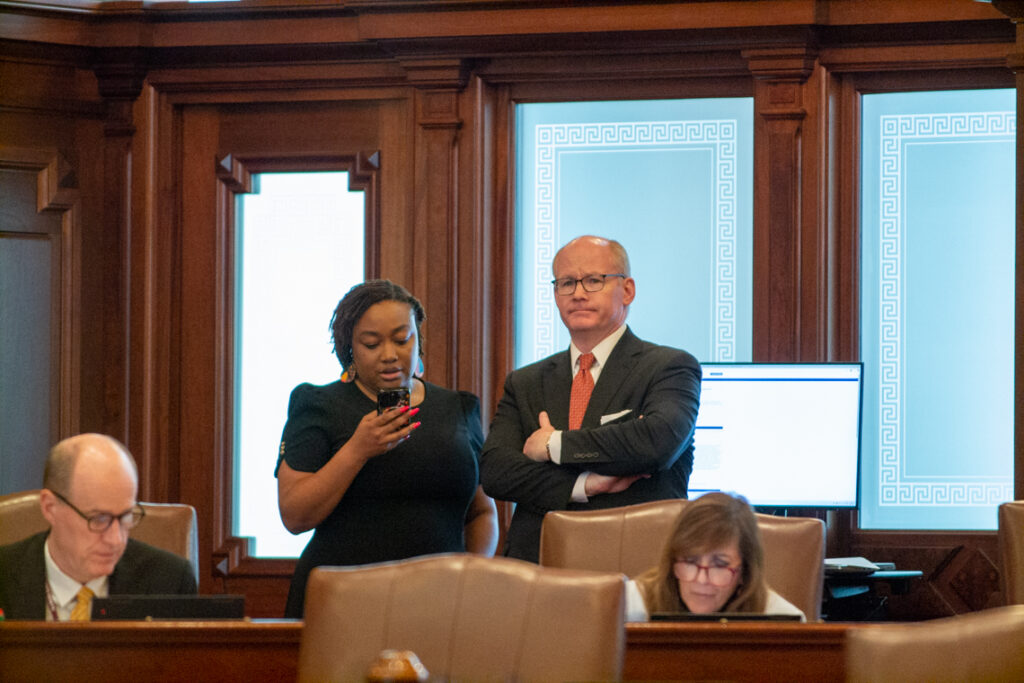
Gov. JB Pritzker signed a new law Friday to make a series of changes to the Prisoner Review Board after it released a man who would go on to commit murder, leading to intense scrutiny in Springfield.
Pritzker signed Senate Bill 19, which contains changes designed to include victims’ participation in Prisoner Review Board decisions and ensure more board members have relevant law enforcement or judicial experience.
The law gives victims the right to file impact statements ahead of hearings, provides them with additional notice when their offender is granted early release, and allows them to seek an order of protection against an offender who is incarcerated.
It also creates the Office of the Director of Victim and Witness Services within the PRB, which would ensure the board complies with victims’ rights. The measure also mandates the board provide victims with contact information for the State Victim Assistance Hotline.
“The bulk of this bill is focused on … making sure that victims, survivors, are more engaged in the process at PRB because unfortunately, too often, we’ve heard from victims and family members that they simply haven’t been given a voice in this process,” bill sponsor Rep. Will Guzzardi, D-Chicago, said when the bill passed the House last month.
Read more: Prisoner Review Board reform bill clears Senate
The bill was approved by the Senate in April on a 33-22 vote, with some Democrats opposing it. The House voted 74-37 along party lines to send the bill to Pritzker’s desk in May. Republicans, who had for months been calling for broader reforms, criticized the bill.
Pritzker’s signature comes just two weeks after a man released by the PRB was found guilty of murdering 11-year-old Jayden Perkins at his Chicago home in March 2024.
Crosetti Brand was released from prison in 2023 after serving a sentence for a domestic violence conviction. After his release, Brand began threatening a former partner, Laterria Smith, and showed up to her home in February 2024, according to the Chicago Sun-Times. Brand was sent back to prison for violating the conditions of his release, and Smith filed for an order of protection. But a Cook County judge denied the order because Brand was behind bars.
On March 12, 2024, the PRB voted to release Brand citing a lack of evidence to keep him behind bars, the Sun-Times reported. The next day, Brand confronted Smith at her home and stabbed her and her son, Perkins, multiple times. Smith survived but Perkins did not. Brand was found guilty of first-degree murder and 16 other counts earlier this month.
Two board members, including the chair, resigned after Perkins’ death. Smith sued the board for negligence in March.
Read more: Prisoner Review Board sued for negligence a year after released prisoner killed Chicago boy
The case put even more scrutiny on the board, which was already in the spotlight over other controversial decisions to release people from prison.
In May 2024, the Senate unanimously passed a bill that would have made a series of reforms to the board, including requiring that certain meetings be livestreamed and board members receive additional training. The bill appeared ready to pass the House with 76 members signing on as cosponsors. But the bill was never called for a vote in the final hours of session after Pritzker had concerns about the feasibility of the livestreaming requirements and lack of funding for the board.
Read more: Stalled bills: ‘Dignity in Pay Act,’ Prisoner Review Board changes fail to move
Instead, lawmakers moved forward with the legislation signed by Pritzker on Friday, which Republicans opposed saying it doesn’t go far enough to meaningfully reform the board.
“After the Governor ignored our consistent and clear warnings, a horrible murder was triggered by a terrible decision by the Prisoner Review Board,” Sens. Jason Plummer, R-Edwardsville, and Steve McClure, R-Springfield, said in a statement. “Now, instead of listening to a bipartisan coalition at the capitol, he and his far-left allies pushed through a bill that makes it more difficult for the PRB to keep violent criminals off the streets.”
The new law also attempts to make the board more professional, Senate President Don Harmon, D-Oak Park, the Senate sponsor of the bill, said in April. It gives board members eight-year terms instead of six so they can be more focused on their decisions rather than their reappointment, he said. It also changes qualifications for board members, requiring seven out of the 15 board members have at least five years of experience as a law enforcement officer, parole officer, prosecutor, criminal defense attorney or judge.
Republicans opposed creating longer terms for board members, saying it reduces Senate oversight of the board and fails to hold board members accountable for decisions. The Senate is responsible for confirming the governor’s appointments to the board.
Capitol News Illinois is a nonprofit, nonpartisan news service that distributes state government coverage to hundreds of news outlets statewide. It is funded primarily by the Illinois Press Foundation and the Robert R. McCormick Foundation.
The post Pritzker OKs changes to Prisoner Review Board following years of controversy appeared first on Capitol News Illinois.
New taxes on sports bets, nicotine products as Democrats pass $55.2B budget
Capitol News Illinois
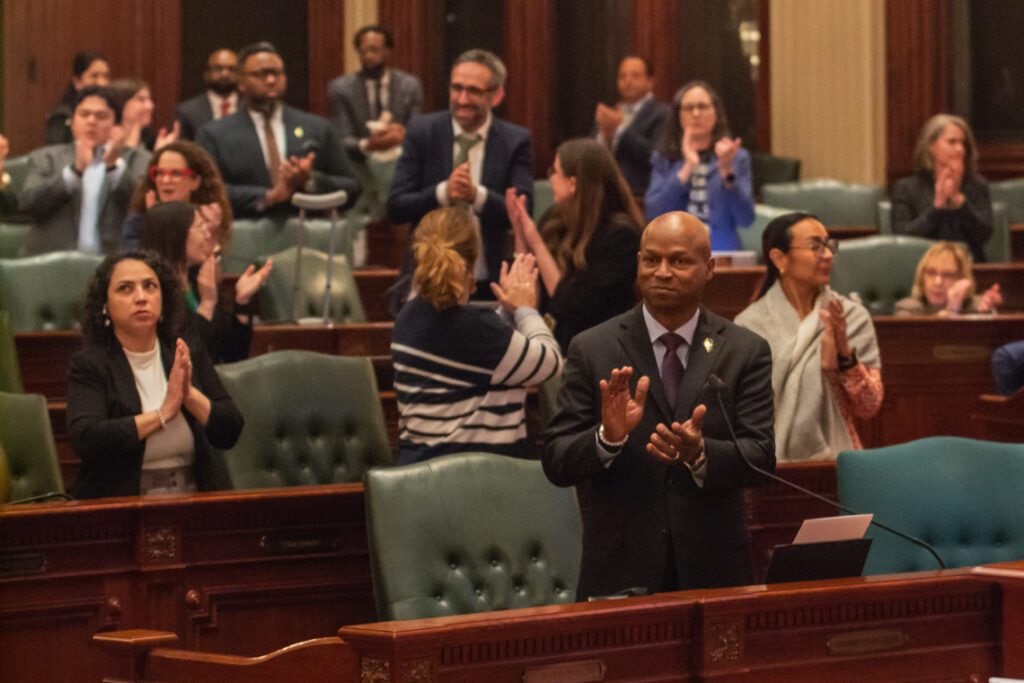
SPRINGFIELD – Giving almost no time for public review, Illinois Democrats pushed through a $55.2 billion budget for next fiscal year late Saturday, bolstering coffers with new taxes on sports bets, nicotine products and businesses.
The $55.2 billion spending plan is supported by $55.3 billion of revenue, including just over $1 billion in new taxes and revenue changes.
The four bills making up the budget and capital spending plan, were part of a flurry of thousands of pages of legislation that went from introduction to passage in the final 48 hours of the legislative session.
The budget marked a roughly 3.9% spending increase from the current year, while Republicans criticized it for containing few cuts. It raises about $500 million more in new revenue than what Gov. JB Pritzker proposed in February to make up for declining base revenues.
The minority party also aired frustration with supermajority Democrats for providing next to no time for public review of the massive spending plan and other major bills.
“We’re rushing this process like we always do. ‘Let’s hide this stuff. Let’s hide it so that the public doesn’t see it until it’s too late,’” Rep. John Cabello, R-Machesney Park, said.
Democrats said it was the best budget they could manage in a difficult year. To address potential uncertainties stemming from federal policy changes, they gave the governor authority over a new $100 million “emergency” fund. And they frequently lobbed criticisms at President Donald Trump and Republicans in Congress.
“I am very pleased to be able to present a balanced budget crafted to be fiscally and socially responsible, because we see the decisions made in Washington right now are neither,” House Majority Leader Robyn Gabel, D-Evanston said. “Erratic leadership in Washington has affected our economic outlook, our revenue projections, and even threatened federal funding for our most crucial services.”
The GOP also took issue with the tax increases, although the measure did not raise or create new sales, income or service taxes.
Instead, the measures expand state taxes on foreign and out-of-state income for businesses, raise tax rates on tobacco, vapes and sports gambling, and sweep fund balances from several lesser-known and utilized state funds.
The spending measure, Senate Bill 2510, passed the House 75-41 just before 10 p.m. The Senate followed around 11:30 p.m. with a 34-23 vote. The revenue and tax changes, House Bill 2755, and the budget implementation bill, House Bill 1075, both passed with relative ease before the constitution’s midnight deadline and only Democratic votes as well. Gov. JB Pritzker issued a statement saying he would sign it.
Another spate of tax increases included in a transit governance overhaul bill surfaced late but sputtered. The failed measure would have added a $1.50 fee on food and package deliveries and taxed electric vehicle charging statewide among other changes. Talks on that bill could resume later this year.
New taxes on vaping, gaming, deliveries
The revenue bill creates a tax of 25 cents per wager for a sports betting licensee’s first 20,000 wagers accepted, and 50 cents per wager after that.
Consumers will also see new taxes on tobacco products. The tax rate will rise to 45% from 36%. Vape products and nicotine pouches would also now be included under the tax.
The revenue plan amends state law to tax sales from all businesses that transact in the state, rather than only businesses with a physical presence in Illinois. The plan also eliminates a “safe harbor” exemption for businesses that move money outside the state.
Businesses that move profits to other countries would also be subject to the state’s corporate income tax. The federal government currently taxes half of income moved offshore and Illinois would tax the other half under the revenue plan.
Businesses outside Illinois that sell $100,000 or more to people in the state must also collect Illinois sales taxes even if the business doesn’t have a physical location in Illinois. This would apply to businesses like Amazon.
“I will not support this betrayal of hard-working Illinoisans,” Sen. Don DeWitte, R-St. Charles, said. “And if you care about the people who sent you here, if you truly represent them, you’ll vote no too. Enough is enough. It’s time for this body to stand with taxpayers, not stand up against them.”
Another source of new revenue is a delinquent tax payment incentive program designed to help the state recuperate overdue tax payments. It will generate $228 million, Rep. Will Guzzardi, D-Chicago, said.
The state would also pause the final transfer of motor fuel sales tax revenue to the road fund in order to free up $171 million, according to the governor’s office’s estimate.
A separate bill designed to lower prescription drug prices calls for levying a fee on pharmacy benefit managers based on the number of patients they insure. Money from that fee would go into a fund for the Department of Commerce and Economic Opportunity to award up to $25 million a year in grants to independent pharmacies and pharmacies located in rural counties. The remaining money would go to the state’s general revenue fund.
The measure also extends the state’s Hotel Operators’ Occupation Tax to short-term rentals like Airbnb and Vrbo.
Immigrant health cuts
A controversial program that provides health insurance to more than 30,000 noncitizens between ages 42 and 64 will be cut in FY26. The program’s elimination saves the state $330 million, but a $110 million program for seniors will remain in place.
Together, the two programs have cost the state at least $1.6 billion, according to an audit released in February, far exceeding budgeted costs for the program.
“We had to make some tough decisions here. That program grew at greater rates, financially, than we thought it would, and we had to make some hard decisions,” Gabel said.
Federally Qualified Health Centers are set to receive $40 million in the budget. The centers provide health services to low-income and uninsured people. Democrats touted that increase to provide care for immigrants who would have qualified for the health care program.
Illinois still risks losing some Medicaid funding under a proposal in Congress that threatens to slash reimbursements for states that provide health insurance to people illegally in the United States. But Gabel noted it’s possible those reductions won’t take place until 2027.
The budget also increases funding for safety-net hospitals with federal Medicaid funding cuts possible.
Education spending
The state’s evidence-based funding model for K-12 schools calls for $350 million in additional funding each year, with a portion of that going to a property tax relief fund and the rest directly to schools. The proposed budget fully funds the K-12 education portion at $307 million but does not add $43 million in property tax relief funds, according to Democratic leaders.
Funding for the Illinois Community College Board would also decrease by $24 million, mostly because lawmakers reduced spending on a workforce development grant that Democrat leaders said was not being fully utilized.
Funding for state universities would only increase by 1%. Pritzker proposed a 3% increase for higher education even as most other areas of his budget would’ve increased by 1%. Senate Democrats’ budget leader Sen. Elgie Sims, D-Chicago, said the budget allows for an additional 2% increase in FY26 if the federal government eliminates substantial funding.
Pensions
Despite more than a year of discussions, Illinois lawmakers did not tackle pension reform this spring. Illinois’ Tier 2 pension system is likely out of compliance with Social Security’s “safe harbor” law that requires pension benefits to be at least equal to Social Security.
Part of the budget package created a new Tier 2 reserve fund that can be accessed if there are violations of the “safe harbor” law. Lawmakers appropriated $75 million for the fund this year, in line with Pritzker’s proposal.
‘Emergency’ fund, raises, more
Notably not in this year’s budget is an increase to the “rainy day” fund. Pritzker has taken pride in the fund’s increases in recent years, as it’s grown to a balance of $2.3 billion, up from less than $60,000 when Pritzker took office. The FY26 budget would suspend the monthly transfer for one year, freeing up $45 million for general fund use.
The budget package also establishes a new $100 million fund that the governor can tap into “in the event of unanticipated delays in or failures of revenues.” The measure, an apparent nod to the uncertainty of federal funding amid ongoing congressional budget negotiations, will come from money swept from other funds.
“That will allow us to respond to actions by the federal government and challenges that present themselves and costs that have been diverted from the federal government to the state government,” Sims said in a committee hearing.
The attorney general’s office would get $116 million from the general fund. Attorney General Kwame Raoul asked lawmakers to boost funding for his office as he engages in a growing number of lawsuits against the Trump administration. Raoul was hoping to receive $120 million in funding.
Direct service providers are in line for an 80-cent per hour wage increase, but Republicans said calling it a funding increase is “sleight of hand,” because the measure would also reduce work hours for DSPs by the hundreds of thousands. That makes the increase negligible, Sen. Chapin Rose, R-Mahomet, said in committee.
“It’s not a great budget, but it is a good budget and it is the budget we need for this very difficult moment,” Rep. Lindsey LaPointe, D-Chicago, said.
Lawmakers will see their salaries rise as part of the budget, going to a $98,304 base salary from roughly $92,000. That’s an annualized rate of increase that is set by law.
“You raised our pay, you gave yourselves hundreds of millions of dollars of our taxpayers funds to spend on your pet projects,” Rep. Amy Elik, R-Godfrey, said. “So I simply don’t believe you anymore that you ever intended to be fiscally careful.”
No Bears stadium funding
Lawmakers did not appropriate funding for the Chicago Bears to build a new stadium. But NASCAR would be the recipient of a $5 million grant ahead of the sport’s third downtown Chicago race in July, and the PGA Tour would receive a $1 million grant as part of hosting the 2026 President’s Cup in DuPage County. Those were two economic development measures criticized by Republicans during the Senate committee hearing.
The budget also contains $200 million to prepare unused state properties to be repurposed for development, Sims said. Lawmakers removed another $300 million that Pritzker had sought in spending aimed at offloading surplus property.
Gabel said the state’s employee management department has negotiated more than $100 million in health care cost savings as well.
Any remaining federal pandemic relief funding would also be sent to recipients that have not received payments in previous years before the funding expires in 2026.
Jade Aubrey contributed.
Capitol News Illinois is a nonprofit, nonpartisan news service that distributes state government coverage to hundreds of news outlets statewide. It is funded primarily by the Illinois Press Foundation and the Robert R. McCormick Foundation.
The post New taxes on sports bets, nicotine products as Democrats pass $55.2B budget appeared first on Capitol News Illinois.
What Trump’s cuts to federal climate research could mean for Illinois

Capitol News Illinois
CHICAGO — The Trump administration took the unprecedented step of halting work on the next National Climate Assessment last week, dismissing all 400 volunteer scientists who were tasked with writing the new version of the report.
Illinois State Climatologist Trent Ford was among those dismissed in his volunteer capacity with the federal program. On April 28, Ford and his colleagues received an email saying the upcoming Sixth National Climate Assessment, due to be released in 2027, is “currently being reevaluated in accordance with the Global Change Research Act of 1990.”
The Global Change Research Act mandates that the National Climate Assessment be published every four years to inform the public of the ongoing impacts, risks and responses to climate change. In the last 35 years, the federal government has never failed to publish the nation’s preeminent report on climate change, but its fate was brought into question last month when it was reported that NASA canceled a critical contract for the U.S. Global Change Research Program, which oversees the assessment.
“It’s disappointing from a personal standpoint,” said Ford, who served as a technical contributor to the Fifth National Climate Assessment published in 2023. He said he was looking forward to taking on a larger role as an author of the Midwest chapter in the next report, which was due in 2027.
He and the other authors of the Midwest chapter had already begun planning what topics the next report should focus on, like the effects of extreme heat on farmers and farm workers, livestock and even mental health, “something that the Midwest chapter hadn’t done previously,” Ford said.
Illinois researchers have always played a role in the National Climate Assessment. University of Illinois emeritus professor Donald Wuebbles has contributed to all five previous reports, including serving as a lead author of the fourth assessment in 2017.
He said his greatest concern is that the report could now move forward under a different team of scientists hand-picked by President Donald Trump, who has a history of denying climate change as a “hoax.”
“There’s a group of denialists out there,” Wuebbles said. “They let their politics affect their science.”
The National Climate Assessment is meant to help policymakers understand the immediate threats of rising global temperatures to the environment in their region and implement solutions at the local level.
“Almost all impacts of climate change are local,” Ford said.
In Illinois, those impacts include heavy rainfall and flooding, heat waves and drought in the summer, and natural disasters like tornadoes, which can lead people to become displaced and cost the state billions of dollars in damage, according to Ford.
Read more: Flooding is Illinois’ Most Threatening Natural Disaster. Are We Prepared?
A 2021 Illinois climate change assessment, which Wuebbles led and Ford co-authored, cites extreme flooding in the spring of 2019 as an example of how climate change is already impacting Illinois. Crop yield losses that year led to a record number of Prevented Plant claims and crop insurance payouts to farmers by the state. Similar events are expected to occur more often and with more intensity if global temperatures continue to increase at the current rate, the 2021 assessment found.
“Climate change isn’t going to stop by ignoring it,” Ford said. “If we don’t have the assessment, we don’t know what to expect, and therefore we can’t plan. Is it (climate change) going to cost $5 billion to the economy, or is it going to be $10 billion?”
The Trump administration is reportedly not going to track the cost of major natural disasters any longer.
Ford shared Wuebbles’ concerns that the next assessment, if published, could be influenced by Trump’s anti-climate change regulation agenda. He also said without the involvement of a diverse group of researchers, the next assessment could fail to represent the interests of the states.
“We are, as experts, tasked with assessing what kinds of problems and solutions are worth including in the National Climate Assessment,” Ford said. “But if this is being disbanded, who’s going to be leading this?… Probably not people from Illinois.”
Trump’s White House has fueled these concerns, saying climate change regulations threaten the president’s goal of “unleashing American energy.” He described state and local climate policies as “burdensome and ideologically motivated,” saying they” “threaten American energy dominance and our economic and national security.”
This is paired with a recent move by U.S. Environmental Protection Agency Administrator Lee Zelden to repeal the endangerment finding of 2009, the agency’s official recognition of greenhouse gases as harmful to human health and the planet.
Proposed Illinois legislation could fill gaps in research
Amid national setbacks to climate change research and environmental policy, Illinois lawmakers are continuing to advance progressive climate legislation at the state level, such as Illinois Senate Bill 1859, referred to as the Climate Displacement Act. That measure cleared the state Senate and is awaiting action in the House.
If passed, the act would establish a state task force to assess and provide recommendations for how Illinois can prepare for the impacts of climate change — specifically, an anticipated influx of climate-displaced people moving to the Midwest from other parts of the U.S.
Sponsors say the bill was informed by the Fifth National Climate Assessment, which projected a trend of increased migration of people away from coastal areas over the next 20-30 years, due to greater frequency of natural disasters. The task force would evaluate ways Illinois might proactively respond, and what the cost burden of that response would be. An initial report of its findings would be due in 2026.
“There’s not a lot of states that are proactively doing this kind of planning despite, you know, the looming danger,” said Senate bill sponsor Sen. Graciela Guzmán, D-Chicago.
Rep. Blaine Wilhour, R-Beecher City, criticized the measure in an Energy and Environment committee hearing.
“Is this task force going to study the outmigration as a result of some of our climate policies in this state, specifically the outmigration of good union jobs?” he asked.
House bill sponsor Rep. Will Guzzardi, D-Chicago, said the proposed task force would work to project those trends. Wilhour said if the task force were to include relevant union stakeholders, he would consider supporting the bill.
The bill passed the House Energy and Environment Committee, and now moves to the House floor.
Illinois has a track record of enacting progressive climate policies, which Ford said is the silver lining to an otherwise difficult situation for climate scientists.
“They don’t have to follow the science,” he said. “But they’re at least informed by the science at the state level in Illinois. We’re at least doing that.”
Isabella Schoonover is a graduate student in journalism with Northwestern University’s Medill School of Journalism, Media, Integrated Marketing Communications, and a fellow in its Medill Illinois News Bureau working in partnership with Capitol News Illinois.
Capitol News Illinois is a nonprofit, nonpartisan news service that distributes state government coverage to hundreds of news outlets statewide. It is funded primarily by the Illinois Press Foundation and the Robert R. McCormick Foundation.
The post What Trump’s cuts to federal climate research could mean for Illinois appeared first on Capitol News Illinois.