Posts Tagged ‘Taxes’
Senate’s transit funding, delivery tax proposal stalls in House
Capitol News Illinois
SPRINGFIELD – With public transit agencies in Chicagoland facing a fiscal cliff and the potential for thousands of layoffs, the state did not pass a bill that would have provided the agencies with potentially over $1 billion in new funding.
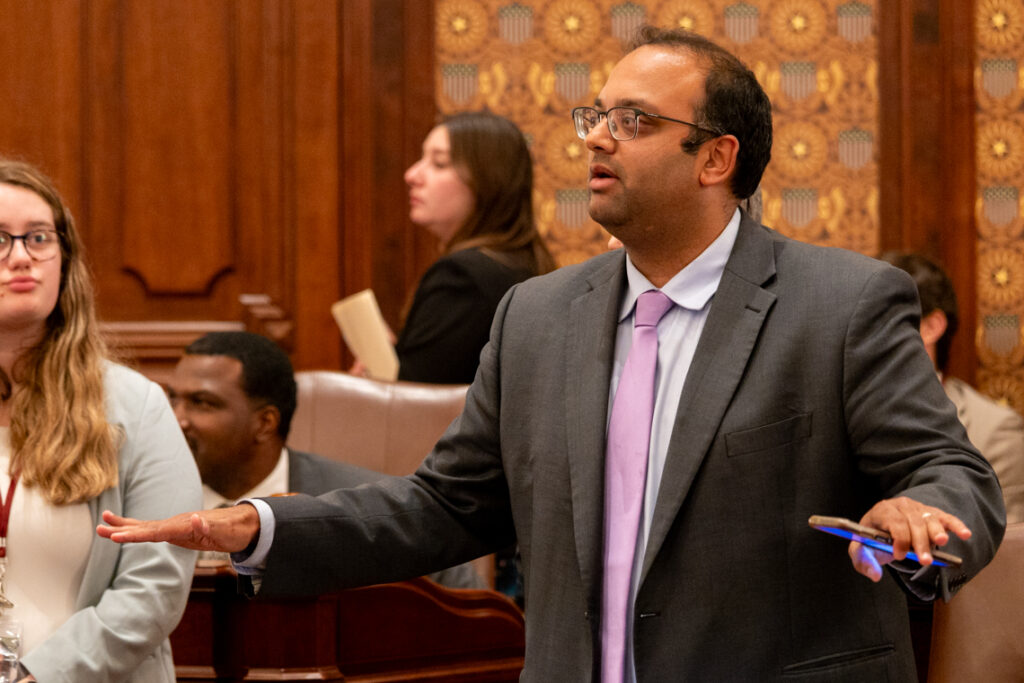
A version of the bill passed in the Senate, sponsored by Sen. Ram Villivalam, D-Chicago. But the House adjourned early Sunday morning without concurring as some of its tax hikes became too controversial. Now, the future of Chicagoland transit is in limbo as the bill awaits further action.
The Regional Transportation Authority — which oversees the Chicago Transit Authority, Metra commuter rail and Pace Suburban Bus — projects a $771 million annual operating budget shortfall.
At a hearing in the days leading up to adjournment, Amalgamated Transit Union political director Clem Balanoff told lawmakers that thousands of union bus drivers and train operators would be laid off if action wasn’t taken to fill the budget gap. RTA officials have estimated 40% service cuts are necessary to address the fiscal crisis.
Gov. JB Pritzker on Sunday said there is “significant work” left to address Chicagoland transit funding over the summer and into the fall.
“The fact is that we need to address transit funding as fast as possible,” Pritzker said.
The Senate’s proposal to do so included statewide taxes on deliveries and electric vehicle charging, as well as expanding taxes on rideshares and expanded certain Chicago taxes to the rest of Cook County and surrounding counties.
RTA and its subsidiary transit agencies will create their budgets for the upcoming fiscal year in the coming weeks. According to RTA spokesperson Tina Fassett Smith in a statement, those budgets “by law must only include funding we are confident the system will receive in 2026.”
“We think there’s probably a billion dollars for mass transit in there,” RTA Board Chairman Kirk Dillard said shortly after the Senate passed its transit bill late Saturday night.
Now, Dillard and other transit officials are going to work to minimize or avoid cuts.
“It’s clear that many in both the House and Senate support transit and our intention is to build on that shared support to identify the funding needed to avoid devastating cuts and disruption for everyone in Northeast Illinois,” Smith said in a statement.
The senate’s solution
House Bill 3438, the proposal approved by the Senate, would bail out transit authorities and send some funding outside northern Illinois. The reform package includes multiple tax increases. It’s unclear if any of these increases could come up again in future attempts to reform transit, although the House could pass it at a special legislative session or at a a future regular session.
The most controversial tax increase was a $1.50 fee added to any home delivery order placed online, with exceptions for some small businesses as well as orders containing only groceries and medication. Of the funds raised from this statewide tax, 80% would go to northern Illinois transit systems under a renamed RTA and 20% would be put into a fund for downstate transit agencies.
The bill would have also instituted a tax on real estate transfers in Cook County and the counties surrounding it. That tax is similar to one already in place in Chicago. It would have also required a charge on taxi and rideshare services in that region and a statewide 3 cents-per-kilowatt hour fee for charging electric vehicles.
“All told, we have achieved with the Senate package, a $1.5 billion investment for the northeast Illinois region,” Villivalam said. “And we have received more than double what downstate transit agencies requested for a historic investment.”
Over the two years that lawmakers have worked with the RTA on this transit funding issue, Democratic lawmakers have consistently repeated their mantra: there would be no funding without reform. To that end, they sought to institute sweeping reforms to the RTA.
Read more: Lawmakers offer 2 incomplete pitches for public transit and funding reform
The bill would rename the RTA to the Northern Illinois Transit Authority. The agency would have ultimate control over fares as well as a restructured board that places more power in the hands of the state.
While the bill will not become law soon, similar governance reforms were proposed by House lawmakers, who indicated there was agreement between the Senate and House on the reforms likely to be included in any deal.
Even still, those reform proposals drew fierce criticism from some suburban lawmakers
“This has become a bailout for Chicago CTA,” Sen. Seth Lewis, R- Bartlett, said. “We’re giving the mayor more control. We’re giving him more than a billion dollars in revenue.”
The board, under the Senate bill passed Saturday, would have five members appointed by the governor, five appointed by the president of the Cook County Board, five from the mayor of Chicago and one each from the collar counties.
Capitol News Illinois is a nonprofit, nonpartisan news service that distributes state government coverage to hundreds of news outlets statewide. It is funded primarily by the Illinois Press Foundation and the Robert R. McCormick Foundation.
The post Senate’s transit funding, delivery tax proposal stalls in House appeared first on Capitol News Illinois.
New taxes on sports bets, nicotine products as Democrats pass $55.2B budget
Capitol News Illinois
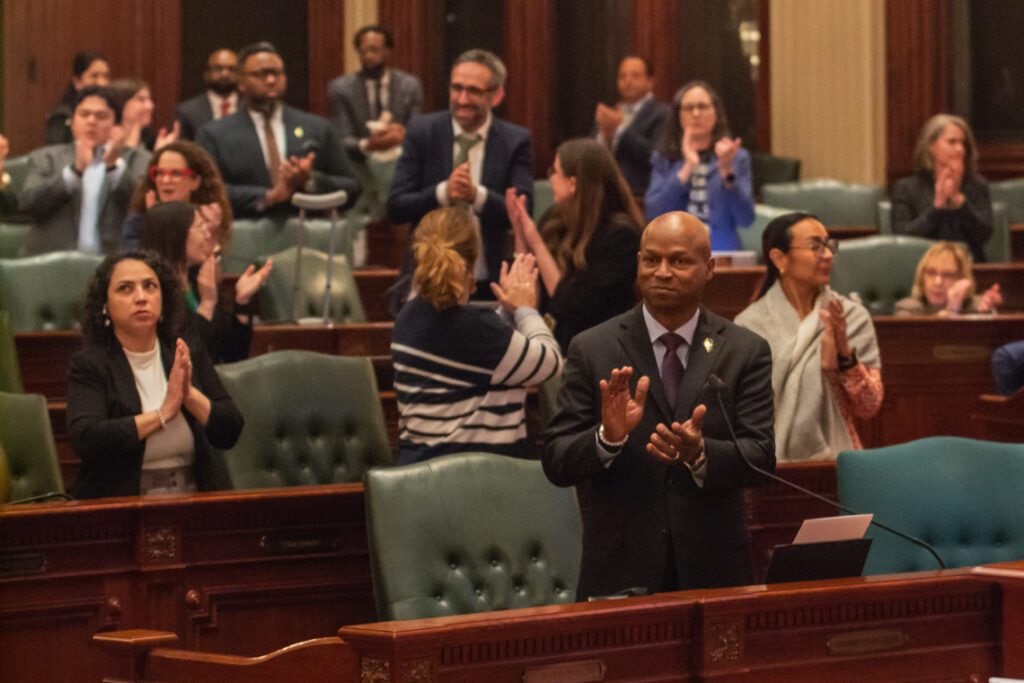
SPRINGFIELD – Giving almost no time for public review, Illinois Democrats pushed through a $55.2 billion budget for next fiscal year late Saturday, bolstering coffers with new taxes on sports bets, nicotine products and businesses.
The $55.2 billion spending plan is supported by $55.3 billion of revenue, including just over $1 billion in new taxes and revenue changes.
The four bills making up the budget and capital spending plan, were part of a flurry of thousands of pages of legislation that went from introduction to passage in the final 48 hours of the legislative session.
The budget marked a roughly 3.9% spending increase from the current year, while Republicans criticized it for containing few cuts. It raises about $500 million more in new revenue than what Gov. JB Pritzker proposed in February to make up for declining base revenues.
The minority party also aired frustration with supermajority Democrats for providing next to no time for public review of the massive spending plan and other major bills.
“We’re rushing this process like we always do. ‘Let’s hide this stuff. Let’s hide it so that the public doesn’t see it until it’s too late,’” Rep. John Cabello, R-Machesney Park, said.
Democrats said it was the best budget they could manage in a difficult year. To address potential uncertainties stemming from federal policy changes, they gave the governor authority over a new $100 million “emergency” fund. And they frequently lobbed criticisms at President Donald Trump and Republicans in Congress.
“I am very pleased to be able to present a balanced budget crafted to be fiscally and socially responsible, because we see the decisions made in Washington right now are neither,” House Majority Leader Robyn Gabel, D-Evanston said. “Erratic leadership in Washington has affected our economic outlook, our revenue projections, and even threatened federal funding for our most crucial services.”
The GOP also took issue with the tax increases, although the measure did not raise or create new sales, income or service taxes.
Instead, the measures expand state taxes on foreign and out-of-state income for businesses, raise tax rates on tobacco, vapes and sports gambling, and sweep fund balances from several lesser-known and utilized state funds.
The spending measure, Senate Bill 2510, passed the House 75-41 just before 10 p.m. The Senate followed around 11:30 p.m. with a 34-23 vote. The revenue and tax changes, House Bill 2755, and the budget implementation bill, House Bill 1075, both passed with relative ease before the constitution’s midnight deadline and only Democratic votes as well. Gov. JB Pritzker issued a statement saying he would sign it.
Another spate of tax increases included in a transit governance overhaul bill surfaced late but sputtered. The failed measure would have added a $1.50 fee on food and package deliveries and taxed electric vehicle charging statewide among other changes. Talks on that bill could resume later this year.
New taxes on vaping, gaming, deliveries
The revenue bill creates a tax of 25 cents per wager for a sports betting licensee’s first 20,000 wagers accepted, and 50 cents per wager after that.
Consumers will also see new taxes on tobacco products. The tax rate will rise to 45% from 36%. Vape products and nicotine pouches would also now be included under the tax.
The revenue plan amends state law to tax sales from all businesses that transact in the state, rather than only businesses with a physical presence in Illinois. The plan also eliminates a “safe harbor” exemption for businesses that move money outside the state.
Businesses that move profits to other countries would also be subject to the state’s corporate income tax. The federal government currently taxes half of income moved offshore and Illinois would tax the other half under the revenue plan.
Businesses outside Illinois that sell $100,000 or more to people in the state must also collect Illinois sales taxes even if the business doesn’t have a physical location in Illinois. This would apply to businesses like Amazon.
“I will not support this betrayal of hard-working Illinoisans,” Sen. Don DeWitte, R-St. Charles, said. “And if you care about the people who sent you here, if you truly represent them, you’ll vote no too. Enough is enough. It’s time for this body to stand with taxpayers, not stand up against them.”
Another source of new revenue is a delinquent tax payment incentive program designed to help the state recuperate overdue tax payments. It will generate $228 million, Rep. Will Guzzardi, D-Chicago, said.
The state would also pause the final transfer of motor fuel sales tax revenue to the road fund in order to free up $171 million, according to the governor’s office’s estimate.
A separate bill designed to lower prescription drug prices calls for levying a fee on pharmacy benefit managers based on the number of patients they insure. Money from that fee would go into a fund for the Department of Commerce and Economic Opportunity to award up to $25 million a year in grants to independent pharmacies and pharmacies located in rural counties. The remaining money would go to the state’s general revenue fund.
The measure also extends the state’s Hotel Operators’ Occupation Tax to short-term rentals like Airbnb and Vrbo.
Immigrant health cuts
A controversial program that provides health insurance to more than 30,000 noncitizens between ages 42 and 64 will be cut in FY26. The program’s elimination saves the state $330 million, but a $110 million program for seniors will remain in place.
Together, the two programs have cost the state at least $1.6 billion, according to an audit released in February, far exceeding budgeted costs for the program.
“We had to make some tough decisions here. That program grew at greater rates, financially, than we thought it would, and we had to make some hard decisions,” Gabel said.
Federally Qualified Health Centers are set to receive $40 million in the budget. The centers provide health services to low-income and uninsured people. Democrats touted that increase to provide care for immigrants who would have qualified for the health care program.
Illinois still risks losing some Medicaid funding under a proposal in Congress that threatens to slash reimbursements for states that provide health insurance to people illegally in the United States. But Gabel noted it’s possible those reductions won’t take place until 2027.
The budget also increases funding for safety-net hospitals with federal Medicaid funding cuts possible.
Education spending
The state’s evidence-based funding model for K-12 schools calls for $350 million in additional funding each year, with a portion of that going to a property tax relief fund and the rest directly to schools. The proposed budget fully funds the K-12 education portion at $307 million but does not add $43 million in property tax relief funds, according to Democratic leaders.
Funding for the Illinois Community College Board would also decrease by $24 million, mostly because lawmakers reduced spending on a workforce development grant that Democrat leaders said was not being fully utilized.
Funding for state universities would only increase by 1%. Pritzker proposed a 3% increase for higher education even as most other areas of his budget would’ve increased by 1%. Senate Democrats’ budget leader Sen. Elgie Sims, D-Chicago, said the budget allows for an additional 2% increase in FY26 if the federal government eliminates substantial funding.
Pensions
Despite more than a year of discussions, Illinois lawmakers did not tackle pension reform this spring. Illinois’ Tier 2 pension system is likely out of compliance with Social Security’s “safe harbor” law that requires pension benefits to be at least equal to Social Security.
Part of the budget package created a new Tier 2 reserve fund that can be accessed if there are violations of the “safe harbor” law. Lawmakers appropriated $75 million for the fund this year, in line with Pritzker’s proposal.
‘Emergency’ fund, raises, more
Notably not in this year’s budget is an increase to the “rainy day” fund. Pritzker has taken pride in the fund’s increases in recent years, as it’s grown to a balance of $2.3 billion, up from less than $60,000 when Pritzker took office. The FY26 budget would suspend the monthly transfer for one year, freeing up $45 million for general fund use.
The budget package also establishes a new $100 million fund that the governor can tap into “in the event of unanticipated delays in or failures of revenues.” The measure, an apparent nod to the uncertainty of federal funding amid ongoing congressional budget negotiations, will come from money swept from other funds.
“That will allow us to respond to actions by the federal government and challenges that present themselves and costs that have been diverted from the federal government to the state government,” Sims said in a committee hearing.
The attorney general’s office would get $116 million from the general fund. Attorney General Kwame Raoul asked lawmakers to boost funding for his office as he engages in a growing number of lawsuits against the Trump administration. Raoul was hoping to receive $120 million in funding.
Direct service providers are in line for an 80-cent per hour wage increase, but Republicans said calling it a funding increase is “sleight of hand,” because the measure would also reduce work hours for DSPs by the hundreds of thousands. That makes the increase negligible, Sen. Chapin Rose, R-Mahomet, said in committee.
“It’s not a great budget, but it is a good budget and it is the budget we need for this very difficult moment,” Rep. Lindsey LaPointe, D-Chicago, said.
Lawmakers will see their salaries rise as part of the budget, going to a $98,304 base salary from roughly $92,000. That’s an annualized rate of increase that is set by law.
“You raised our pay, you gave yourselves hundreds of millions of dollars of our taxpayers funds to spend on your pet projects,” Rep. Amy Elik, R-Godfrey, said. “So I simply don’t believe you anymore that you ever intended to be fiscally careful.”
No Bears stadium funding
Lawmakers did not appropriate funding for the Chicago Bears to build a new stadium. But NASCAR would be the recipient of a $5 million grant ahead of the sport’s third downtown Chicago race in July, and the PGA Tour would receive a $1 million grant as part of hosting the 2026 President’s Cup in DuPage County. Those were two economic development measures criticized by Republicans during the Senate committee hearing.
The budget also contains $200 million to prepare unused state properties to be repurposed for development, Sims said. Lawmakers removed another $300 million that Pritzker had sought in spending aimed at offloading surplus property.
Gabel said the state’s employee management department has negotiated more than $100 million in health care cost savings as well.
Any remaining federal pandemic relief funding would also be sent to recipients that have not received payments in previous years before the funding expires in 2026.
Jade Aubrey contributed.
Capitol News Illinois is a nonprofit, nonpartisan news service that distributes state government coverage to hundreds of news outlets statewide. It is funded primarily by the Illinois Press Foundation and the Robert R. McCormick Foundation.
The post New taxes on sports bets, nicotine products as Democrats pass $55.2B budget appeared first on Capitol News Illinois.
Lawmakers unveil $55B spending plan with just 1 day left to pass it
Capitol News Illinois
SPRINGFIELD — Illinois Democrats introduced what a leading budgeteer described as a $55 billion budget Friday evening ahead of a Saturday deadline to pass the fiscal year 2026 spending plan.
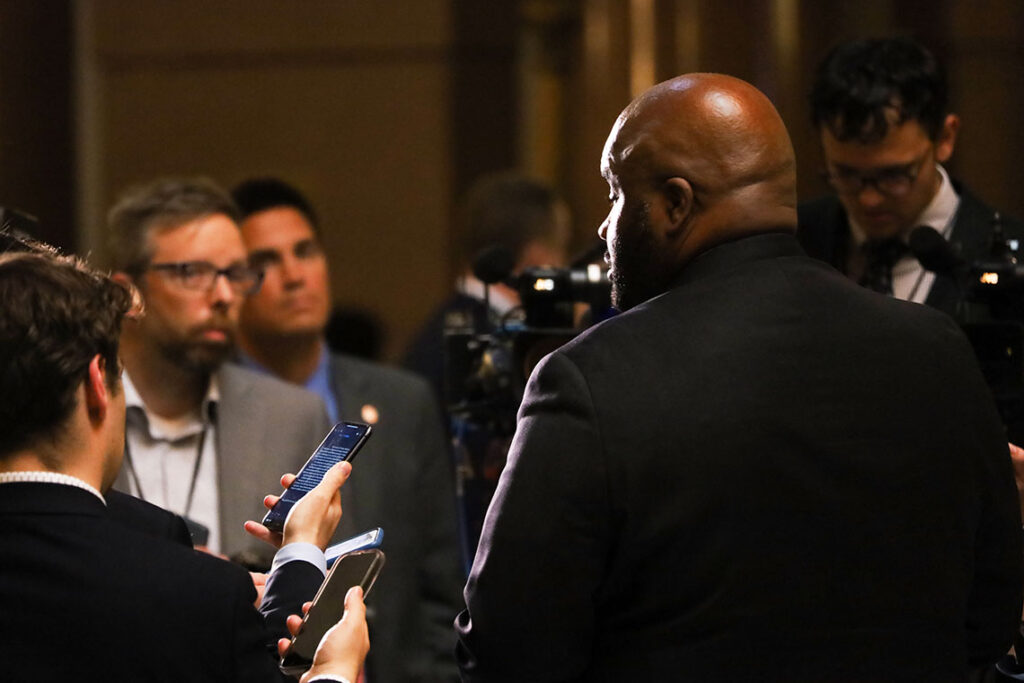
The 3,363-page spending proposal was unveiled after 6 p.m. At the time the Senate’s lead budget negotiator, Sen. Elgie Sims, D-Chicago, briefed reporters on the plan; an exact proposal for raising about $1 billion in revenue to pay for it had not been made publicly available.
But Sims said lawmakers are not using broad tax hikes to balance the budget, although the plan does call for specific tax increases in certain areas. Sims said the proposal includes new taxes on gambling as well as tobacco and vape products. He also hinted that some businesses will pay more under the plan – though Illinois’ constitution mandates that the state corporate income tax remain a flat rate.
“We’re trying to make sure that individuals pay their fair share, and corporations, who are the most prosperous are most profitable, also pay their fair share,” Sims said.
Later, in a House hearing on the spending plan, Democratic Rep. Robyn Gabel, D-Evanston, said it relies upon $55.4 billion in revenue with $55.2 billion in spending. But at several points the chamber’s budget leaders declined to talk about revenue, noting that proposal will come before the committee later, likely on Saturday.
The plan is roughly in line with what Gov. JB Pritzker proposed in his February budget address as budget talks in Congress have injected uncertainty in state finances.
“This budget recognizes that there are significant challenges that we have, that we will face, and it makes sure that the chaos that is coming out of Washington, we’re prepared for it,” Sims told reporters Friday night. “We’re not running away from our responsibility. We’re running towards it.”
A health care program that provides benefits to undocumented immigrants in Illinois between ages 42 and 64 also appears to be eliminated. Pritzker proposed eliminating the program to save the state $330 million.
“He did not include the HBIA (Health Benefits for Immigrant Adults) program in the budget,” Sims said. “But again, that’s in recognition of the challenges that we’re seeing coming out of Washington and the devastating effects that those proposals are having on our state and states across the country.”
Pritzker proposed a $55.2 billion spending plan in February, but revenue forecasts have declined since then. The latest estimate in early May from the governor’s office pegged FY26 revenue at $54.9 billion while the General Assembly’s independent Commission on Government Forecasting and Accountability projected revenue would come in at $54.5 billion – $1 billion below Pritzker’s February revenue estimate.
Expected declines in federal funding and a diminishing economic outlook have caused the downward revisions.
But the yet-to-be-filed revenue plan would make up a little over $1 billion in revenue, according to Sims.
Read more: Pritzker calls $55.2 billion budget ‘responsible and balanced’ | Governor’s office cuts revenue projection by $500 million
Another source of new revenue in the budget proposal is a delinquent tax payment incentive program. The program is designed to help the state recuperate overdue tax payments. The program was proposed by Pritzker and is estimated to generate about $198 million in revenue.
With Medicaid funding cuts possible from Congress, Sims said the budget makes “significant” increases for the state’s hospital systems, in particular safety-net hospitals. He said the plan also builds in wage increases for direct service providers.
The state’s evidence-based funding model for K-12 schools calls for $350 million in additional funding each year, with a portion of that going to a property tax relief fund and the rest directly to schools. The proposed budget fully funds the K-12 education portion at $307 million but does not add $43 million in property tax relief funds, according to House Democratic leaders.
Republicans prodding House Democratic budget leaders for details during a late-night hearing said pausing the grant fails to deliver benefits to property owners.
“The taxpayers are begging and pleading for tax relief and then we put a program on pause?” Rep. John Cabello, R-Machesney Park, said. “Maybe we should look at all the different programs going to Democratic districts and stop those for a little bit instead of telling the taxpayers that there’s not going to be property tax relief.”
Republicans pressed on why House Democrats are set to get $1.5 million of spending for their districts while Senate Democrats are expecting $3 million of spending on districting projects – although Democrats wouldn’t confirm or deny those numbers.
Lawmakers will also see their salaries rise as part of the budget, going to a $98,304 base salary from roughly $92,000. That’s an annualized rate of increase that is set by law.
Editor’s note: This story was updated with more information on the budget from an evening House committee hearing.
Capitol News Illinois is a nonprofit, nonpartisan news service that distributes state government coverage to hundreds of news outlets statewide. It is funded primarily by the Illinois Press Foundation and the Robert R. McCormick Foundation.
The post Lawmakers unveil $55B spending plan with just 1 day left to pass it appeared first on Capitol News Illinois.