Posts Tagged ‘Peoria’
Mapping Juliana Stratton’s U.S. Senate Democratic primary win
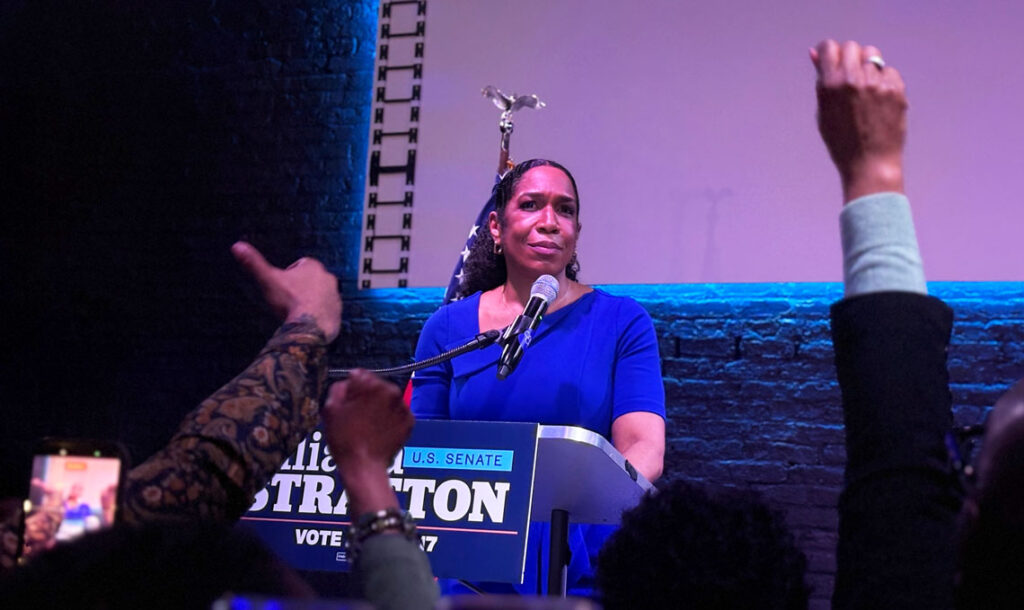
The foundation of Lt. Gov. Juliana Stratton’s larger-than-expected victory in the Democratic primary for Illinois’ open U.S. Senate was laid with a dominant performance in Chicago but padded by a surprisingly strong performance downstate. She also kept up with Rep. Raja Krishnamoorthi in the Chicago suburbs.
Read More‘Illinois farmers can feed Illinois’: State grant program offers assistance
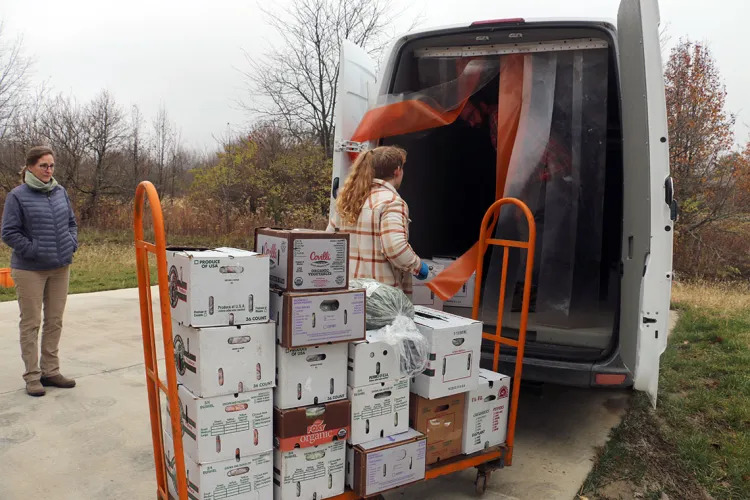
Illinois food producers and businesses can apply for a share of $3.6 million in funding to support local food systems.
Read MoreMoore: How ‘Strattmentum’ upended Krishnamoorthi’s once-seemingly inevitable Senate path
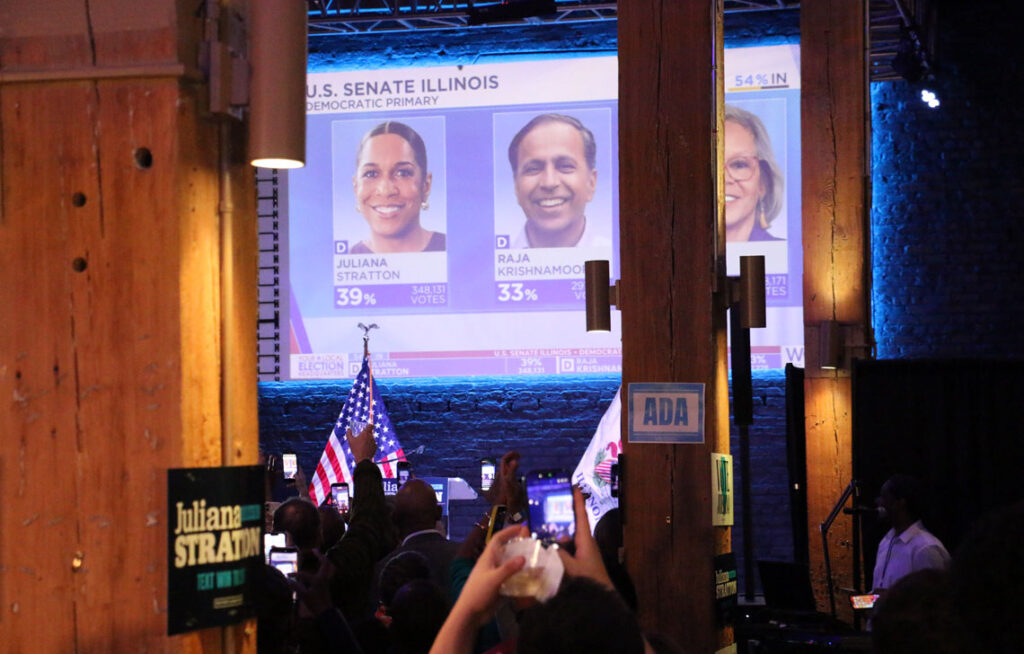
Everyone has a take on the impact the flood of money had on the Democratic U.S. Senate primary. Brenden Moore’s? Money was obviously a factor. The leading candidates needed it to communicate with voters. But money isn’t worth anything without a winning message and an effective messenger to deliver it.
Read MorePritzker signs $1.5B plan to overhaul public transportation, avoid service cuts

New transit reform law is designed to improve public transportation services after Chicago area faced funding shortfall.
Read MoreWho is contributing to Illinois’ U.S. Senate candidates?
Capitol News Illinois
Article Summary
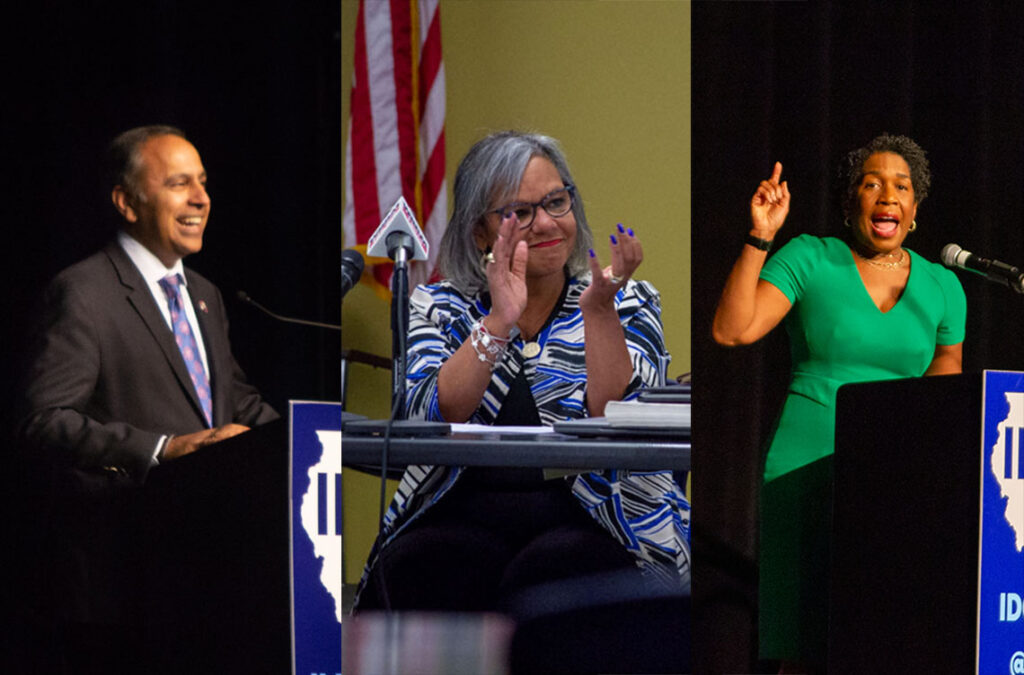
U.S. Rep. Raja Krishnamoorthi raised the most money in the first quarter of fundraising for the 2026 Illinois Democratic primary for U.S. Senate and has already launched a TV ad.
Lt. Gov. Juliana Stratton received money from some of the most politically connected donors in state politics, from Gov. JB Pritzker to lobbyists and owners of Chicago sports teams.
U.S. Rep. Robin Kelly had the lowest fundraising total but has more than $2 million available.
Ten other candidates in both parties have also filed federal campaign committees but did not report substantial contributions.
This summary was written by the reporters and editors who worked on this story.
TV advertising has already begun in Illinois’ 2026 Democrat primary for U.S. Senate, and new fundraising numbers released Tuesday show the race is shaping up to be expensive.
The quarterly reports submitted to the Federal Elections Commission shed light on how candidates are spending money as well as who is contributing to them. Donations are pouring in for U.S. Rep. Raja Krishnamoorthi, U.S. Rep. Robin Kelly and Lt. Gov. Juliana Stratton — the three most high-profile Democrats so far to launch their campaign.
Gov. JB Pritzker has already put his thumb on the scale of the race, endorsing Stratton a day after she launched her campaign in April. But the billionaire governor has a financial stake in the contest as well.
Pritzker contributed $3,500 to Stratton’s primary campaign, and another $3,500 earmarked for the general election. It’s the maximum amount allowed in an election cycle for an individual contribution under federal rules, meaning he can’t contribute anything close to the $300 million he’s dumped into his own campaigns for governor.
Pritzker can still find other avenues to financially support Stratton later, such as through a dark money political action committee he launched in 2023. And he wasn’t the only Pritzker to donate to Stratton. His wife, MK, his two adult children, and his cousins Adam, John, Gigi and Jennifer, all contributed the maximum $7,000. Jennifer Pritzker is a former supporter of President Donald Trump who has more recently supported Democratic candidates.
Kelly vs. Pritzker round 3
The race has also set a third battle between a Pritzker ally and Kelly.
Underlying the contest is Kelly’s past history as chair of the Democratic Party of Illinois. She was elected party chair in 2021 against Pritzker backed candidate and Chicago Ald. Michelle Harris to replace Mike Madigan who bowed out of the job after losing the speakership that year. But the following year, Kelly ended her bid for reelection as party chair after it became clear she would not have enough support to beat State Rep. Lisa Hernandez, D-Cicero, for the leadership role. Hernandez was also backed by Pritzker.
Read more: Democratic Party chair bows out in re-election bid, paving way for state Rep. Lisa Hernandez
Kelly, of Matteson, argued a lot of people on the party’s state central committee “were sad to see me go.”
“The people in the party, they know me, they know the work that I’ve done,” Kelly told Capitol News Illinois last week. “Despite what happened, I’ve still been an effective leader. I’m the only one that’s been an effective leader on every level of government and has delivered on every level.”
Kelly says money isn’t going to decide the race.
“They have a lot of money, but you know what, I’m just using every opportunity to tell my story and I don’t feel like I need the most money in the race to win the race because I feel like I have an excellent story to tell,” Kelly said.
Between her two campaign committees for her U.S. House seat and a new committee for her Senate bid, Kelly raised $565,775 from April 1 through June 30 and has $2 million in her campaign accounts.
Her donors include a lengthy list of corporate political action committees, many local officials in her 2nd Congressional District, and some notable names in Illinois government. They include former state Sen. Jacqueline Collins, Chicago Fire Department Commissioner Annette Nance-Holt and Cook County Clerk Monica Gordon. Gordon also contributed to Stratton’s campaign.
Stratton’s contributions
Stratton’s cash balance of $666,416 is the smallest in the race, as it is her first time running for federal office and first time running for office alone since she was a state representative in 2016. She raised just over $1 million since launching her campaign in late April.
Stratton has pledged not to take any money from corporate political action committees, though Krishnamoorthi and Kelly have received such donations. She returned a contribution from the central Illinois energy company Marquis Energy’s PAC, although accepted contributions from several Marquis family members who hold top leadership positions at the company, according to FEC filings.
The rest of her list of donors is a “who’s who” of Illinois Democrats.
Stratton has touted many endorsements from members of the General Assembly in recent days and 12 have contributed to her campaign. The list also includes many Lake County Democrats, including State’s Attorney Eric Rinehart, Highland Park Mayor Nancy Rotering, and county party chair Lauren Beth Gash.
Stratton also received support from owners of most of the city’s sports teams: Cubs co-owner Laura Ricketts and her wife; White Sox and Bulls owner Jerry Reinsdorf, along with his son and Bulls President Michael Reinsdorf; and Blackhawks CEO Danny Wirtz.
Other donors come from all sectors of state politics, including Sen. Tammy Duckworth, former legislators, high-profile lobbyists and consultants, Pritzker’s top political advisor, business executives, and lawyers at Chicago’s top law firms.
Some donors also hold positions in state government, including Department of Human Rights Director Jim Bennett and the Department of Labor’s top attorney, Deborah Baker.
Stratton has also formed her own political action committee called “Level Up.” Fundraising numbers for the committee have not yet been released as political action committees follow a different reporting schedule than campaigns.
Krishnamoorthi continues strong fundraising
Krishnamoorthi, of Schaumburg, has been one of the most prolific fundraisers in Congress, reporting millions of dollars in contributions every quarter. His first months running for Senate were no different.
Krishnamoorthi raised just shy of $3 million between his House campaign account and new Senate campaign account. Candidates running for a new federal office are generally allowed to transfer funds from their old campaign to their new campaign. In total, Krishnamoorthi has $21 million on hand.
“I’m just blessed to have a lot of individual donors throughout Illinois and elsewhere who believe in my mission,” Krishnamoorthi told Capitol News Illinois.
The March 17, 2026, primary is still eight months away, but Krishnamoorthi launched the election cycle’s first TV ad on Tuesday, which cost $500,000 for the first week, according to his campaign. It’s airing in TV markets around the state and on digital platforms.
Open interactive chart in new tab
The 30-second segment serves as an introduction of Krishnamoorthi, who currently represents the 8th Congressional District in the northwest suburbs. It portrays him as a fighter against “bullies,” which is how he describes Trump.
“When I see underdogs hurt by a rigged system, I fight back … Bullies like Trump can call us names, but you can just call me Raja,” Krishnamoorthi says in the ad, playing off his “just call me Raja” slogan that has been a hallmark of his TV advertisements since he first ran for Congress in 2016.
Most of Krishnamoorthi’s fundraising came from individual donors and less than $200,000 was from political action committees. But unlike his opponents, he had very few donors who are involved in state politics. One of the most notable names contributing to his campaign was Vinai Thummalapally, a former ambassador to Belize.
Other candidates
Six Republicans have filed as candidates with the Federal Elections Commission but did not raise substantial amounts of money. They include Casey Chlebek, a former IT professional who is active in Polish-American civic groups; Douglas Bennett, who ran unsuccessfully in the 10th Congressional District in 2018; Air Force veteran John Goodman; Pamela Denise Long, an occupational therapist and former political commentator for Newsweek; former Illinois International Port District board member Cary Capparelli, and Westchester resident Panagioti Bartzis.
On the Democrat side, four other candidates have filed with the FEC: Kevin Ryan, a Marine veteran and diplomat; Christopher Swann, a program manager for Feeding America; Carmi resident Stan Leavell, and Awisi Bustos, CEO of the Illinois Alliance of Boys and Girls Clubs.
Bustos is daughter-in-law of former U.S. Rep. Cheri Bustos, who represented the 17th Congressional District for 10 years. Cheri Bustos is not supporting Awisi Bustos’ campaign amid an ongoing divorce case, the D.C. insider newsletter Punchbowl reported.
Capitol News Illinois is a nonprofit, nonpartisan news service that distributes state government coverage to hundreds of news outlets statewide. It is funded primarily by the Illinois Press Foundation and the Robert R. McCormick Foundation.
The post Who is contributing to Illinois’ U.S. Senate candidates? appeared first on Capitol News Illinois.
Trump’s ‘big bill’ takes center stage in Illinois’ U.S. Senate race
Capitol News Illinois
Article summary
The three Democrats running for Illinois’ open Senate seat voiced concerns about the new domestic policy plan at events around Illinois.
Lt. Gov. Juliana Stratton discussed how SNAP cuts will affect Illinois at an event in Chicago.
Rep. Robin Kelly spoke with voters in Peoria about their concerns with federal spending cuts.
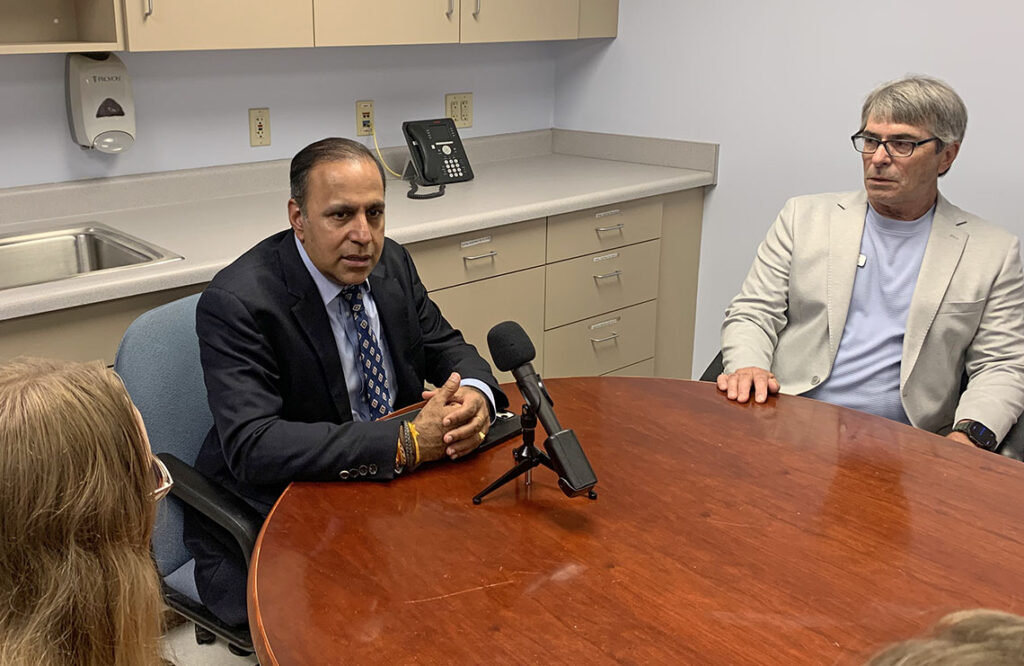
Rep. Raja Krishnamoorthi met with central Illinois independent pharmacist owners to highlight how spending cuts could hurt health care in rural areas.
This summary was written by the reporters and editors who worked on this story.
PEORIA – With major future cuts to social service programs now written into law, Democrats seeking Illinois’ open U.S. Senate seat in 2026 are hitting the campaign trail seeking to position themselves among the law’s most vocal opponents.
“We want Illinoisians throughout our state to understand the ripple effects of the Trump administration’s cruelty and be prepared for what’s to come,” Lt. Gov. Juliana Stratton said during a panel discussion at the Greater Chicago Food Depository Thursday.
The federal policy bill, dubbed the “One Big, Beautiful Bill,” signed by President Donald Trump on July 4 will slash federal spending for health care and other human service programs over the next several years, in many cases leaving states to pick up the tab if they are to continue providing benefits. The bill is expected to cost Illinois more than $700 million for the Supplemental Nutrition Assistance Program, cut Medicaid spending in Illinois by $48 billion over the next 10 years, and potentially force some rural hospitals to close.
As Illinois’ 2026 candidates prepare to begin circulating nominating petitions next month, the three Democrats vying for retiring Sen. Dick Durbin’s Senate seat met with residents around the state to hear about the local impacts of the bill and rally support for their campaigns.
Stratton held an official state event in Chicago to discuss the Pritzker administration’s response to SNAP changes, while U.S. Reps. Robin Kelly and Raja Krishnamoorthi visited downstate communities to discuss the bill.
Kelly gets feedback in Peoria
Kelly, who represents the state’s 2nd Congressional District across parts of Chicago, the south suburbs and rural eastern Illinois, visited with voters in Peoria to hear their concerns about the bill.
The Bradly University graduate said her goal is to make sure Americans are aware of the bill’s effects – even though many of them are slated to begin after the 2026 midterm election.
U.S. Rep. Robin Kelly speaks to voters at an event at the Peoria Public Library on Wednesday, July 9, 2025. (Capitol News Illinois photo by Ben Szalinski)
“In polling and different things that we’ve done, half of the population doesn’t even realize what’s going on,” Kelly said.
Kelly played up her relationship with U.S. House Minority Leader Hakeem Jeffries, saying she has been part of a coalition of House Democrats that have been traveling the country holding town hall meetings about federal spending cuts.
“Every group that we can speak in front of, we need to speak in front of,” Kelly said. “And so that’s one of the reason’s we’re traveling.”
Krishnamoorthi visits rural pharmacy
Krishnamoorthi, who represents the 8th Congressional District in the northwest suburbs, visited a pharmacy in Petersburg about 30 minutes northwest of Springfield.
He echoed concerns other Illinois Democrats have expressed about the “large, lousy law” cutting Medicaid and that it could limit health care services in rural communities.
Read more: Illinois hospitals fear massive cuts under Trump domestic policy law
“When you have that many people who all of a sudden don’t have a way of paying for their health care, then it hurts all those rural health care providers that depend on Medicaid as a form of payment for so many of their patients,” Krishnamoorthi said.
Krishnamoorthi also worried about domino effects from growing deficits as a result of the bill, which the Congressional Budget Office estimates will increase by more than $3 trillion. According to the nonpartisan health research organization KFF, the growing deficit could trigger automatic spending cuts, which could force Medicare cuts even though it was not reduced in the bill.
“We’re also talking about seniors who could be affected by Medicare cuts,” Krishnamoorthi said. “And so at the end of the day, however, everybody’s going to be affected because if, God forbid, one of these hospitals in these areas in the rural parts of Illinois are closed, then everyone, regardless of how their health care is paid for, would be affected negatively.”
SNAP cuts worry candidates
Stratton did not hit the campaign trail with any public events this week, but the Pritzker administration must now decide how it will proceed with new spending requirements signed by the president and the effects of fewer residents receiving social service benefits.
Lt. Gov. Juliana Stratton speaks at a panel discussion on SNAP benefits at the Greater Chicago Food Depository in Chicago on Thursday, July 10, 2025. (Screenshot from Illinois.gov live feed)
Stratton and other top Pritzker administration officials discussed the impact of cuts to the SNAP program during a panel discussion at the Greater Chicago Food Depository as the state seeks more immediate solutions that lawmakers could approve before the 2026 election. The lieutenant governor, who resides on Chicago’s South Side, said reducing eligibility for a food program exacerbates other issues such as crime, economic productivity and learning in schools.
“Hunger is not a problem that stays isolated,” Stratton said. “The repercussions seep out, harming everyone and everything in its path until something changes.”
Kelly told voters in Peoria that SNAP cuts aren’t just a problem for low-income recipients.
“If you cannot buy food, then you’re not shopping at Kroger or wherever you shop,” Kelly said. “And so then Kroger is not buying as much food from the farmers and then they won’t need as many people to work there.”
The Republican field in the Senate race has yet to take shape. Republican Rep. Darin LaHood from the Peoria area held a virtual townhall with 16th Congressional District voters to discuss why he believes the bill will benefit Illinois.
Capitol News Illinois is a nonprofit, nonpartisan news service that distributes state government coverage to hundreds of news outlets statewide. It is funded primarily by the Illinois Press Foundation and the Robert R. McCormick Foundation.
The post Trump’s ‘big bill’ takes center stage in Illinois’ U.S. Senate race appeared first on Capitol News Illinois.
‘We think about the state in the same way’: Mitchell ready to back up Pritzker
Capitol News Illinois
Article Summary
JB Pritzker’s new running mate Christian Mitchell has held several roles in state government, including lawmaker and deputy governor.
Pritzker said he trusts Mitchell is ready to take over as governor if required and Mitchell said he shares Pritzker’s vision for Illinois.
Mitchell spearheaded some of Pritzker’s top legislative accomplishments during his first term.
Affordability will be a top issue for Pritzker’s campaign, Mitchell said.
Mitchell said he’s willing to consider ethics reform after holding a top leadership position in the Democratic Party of Illinois under former Chair Mike Madigan.
This summary was written by the reporters and editors who worked on this story.
At 38 years old, Christian Mitchell has been inside most corners of state government as a top advisor on political campaigns, state legislator, deputy governor and civic engagement leader at a major university.
All those experiences make him ready to be Gov. JB Pritzker’s running mate next year in the governor’s campaign for a third term, Mitchell said.
“Bringing somebody who will continue to do the work, who with the governor, will go everywhere in the state of Illinois, advocating for the state of Illinois — that’s the thing I think I bring to the ticket. And I think we think about the state the same way,” Mitchell said in an interview with Capitol News Illinois.
Mitchell, a Black Bronzeville resident who currently works as vice president of civic engagement for the University of Chicago, was raised by his single mom and his grandfather and attended the now-shuttered St. Joseph High School in Westchester. He got an undergraduate degree in public policy from the University of Chicago, and while serving in the General Assembly, earned his law degree at Loyola University.
Mitchell represented a South Side of Chicago district in the Illinois House from 2013 until 2019 when Pritzker selected him to be one of four deputy governors, which serve a chief of staff-like role in Pritzker’s administration overseeing specific state agencies and policy areas.
Related: Pritzker selects former Deputy Gov. Christian Mitchell as running mate
He also joined the Illinois Air National Guard in 2023 shortly after leaving the governor’s office.
“It’s certainly not great for my free time, but your time is the most precious thing you have and the ability to give my time in service of my state and my country is very important to me,” Mitchell said.
Why Pritzker picked Mitchell
Pritzker told reporters in the days after he launched his campaign he was looking for a running mate who shared the same affinity for Illinois and was qualified to step in as governor if required. He said he picked Mitchell more than a week before announcing his reelection in late June, but he declined to say how many people he considered.
“He is somebody that I have grown to trust,” Pritzker said at an event in Peoria. “I’ve seen him usher enormous legislation through the legislature. … He’s a guy who knows how to get big things done and I’ve worked with him to get it done and I’m excited for the people of Illinois to get to know him.”
Lieutenant governors in Illinois have virtually no constitutional authority, other than to replace a governor who is impeached, resigns or dies in office. Pritzker’s running mate selection has received more attention as the governor is believed to be considering running for president in 2028 and would resign as governor if victorious.
Mitchell said he’s running to be Pritzker’s right-hand man for four years, but said Pritzker would make a good candidate for president.
“Illinois is the state most representative of the nation and it’s really exciting to see a governor who is considered for president and not for prison,” Mitchell said, referring to the fact that two of Illinois’ last five governors and four of the last 11 have served time in prison.
“I think he would be excellent. Having said that, that’s why I’m so excited he’s running for reelection to continue the progress of the last seven years,” Mitchell added.
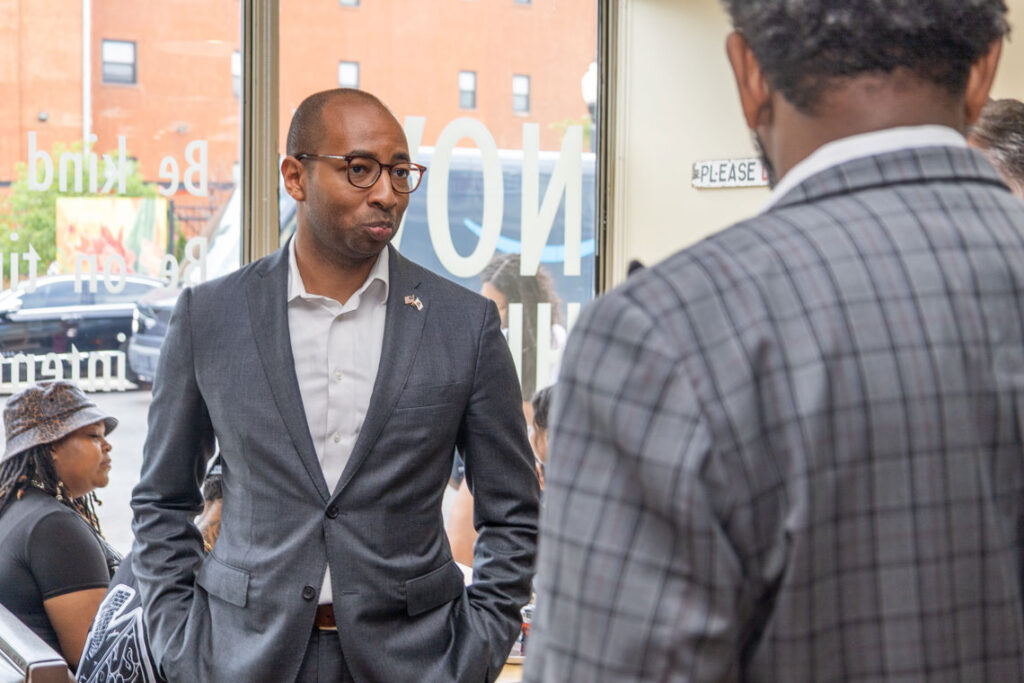
Christian Mitchell, Gov. JB Pritzker’s running mate, listens during a conversation at Peach’s Restaurant in Chicago’s Bronzeville neighborhood on July 2. (Capitol News Illinois photo by Andrew Adams)
Though Mitchell hails from Chicago, Pritzker said he believes Mitchell can appropriately address the needs of all areas of the state.
“When you’re a state representative, you don’t just represent the people of your district; you are also voting on things that are good for people all across the state,” Pritzker told reporters last week after greeting Chicagoans at a Bronzeville coffee shop with Mitchell.
Policy goals
As deputy governor, Mitchell led some of Pritzker’s hallmark initiatives through the General Assembly during his first term: a $45 billion infrastructure plan, legalization of cannabis for recreational use by adults, and a climate initiative setting clean energy goals for the state.
Mitchell has a reputation as a hard-nosed negotiator, even among fellow Democrats. Though he has sometimes angered political allies, Mitchell said he’s open to listening to anyone’s ideas.
“For me, it’s build the biggest tent that you possibly can, ask people for their ideas and be willing to listen to them and change your mind when something is different than you thought it was,” Mitchell said. “That’s how Gov. Pritzker has always led, that’s how he has always directed me when I was deputy governor, that’s what we’ll do as partners in state government going forward.”
Christian Mitchell, candidate for lieutenant governor, speaks to former Democratic U.S. Rep. Bobby Rush at Peach’s restaurant in Chicago’s Bronzeville neighborhood on July 2. (Capitol News Illinois photo by Andrew Adams)
Economic affordability is a top concern for Pritzker, who has preached in national media interviews that Democrats must champion policies addressing cost-of-living concerns for Americans. Mitchell said he shares those goals.
“People want to know that you understand what’s going on in their lives, that you’re working on your behalf every single day and when you do things that they can see on their paycheck, in their pocketbook, that is how you inspire confidence and that is something I think we can do as statewide elected officials,” Mitchell said.
He acknowledged price concerns are a macroeconomic issue outside the state’s total control, but Mitchell said state lawmakers can promote policies that lower costs within the state’s control. Reducing the education system’s reliance on property taxes could be a priority in a third Pritzker administration.
“The governor has put … hundreds of millions of new dollars into education every single year to help drive down that burden,” Mitchell said. “We do now need to work with our local governments to make sure those savings are being passed along. That’s another way in which you touch people’s pocketbooks directly.”
Mitchell said he sees some of the same themes surrounding affordability concerns for voters playing out in the 2026 election that helped Democrats win big victories in Illinois in 2018 when he was executive director of the Democratic Party of Illinois. Democrats swept races for statewide offices that year and gained supermajorities in the legislature that have remained strong since then.
Madigan ties and ethics reform
Mike Madigan was chair of the state party while Mitchell worked as executive director. Madigan, the longtime speaker of the Illinois House until early 2021, was sentenced last month to 7 ½ years in federal prison for bribery and corruption.
Read more: Ex-Speaker Madigan sentenced to 7 ½ years in prison for bribery, corruption | Madigan: The rise and fall
Prosecutors accused Madigan of using his positions as House speaker, party chair and as partner in his real estate law firm as a “criminal enterprise” meant to maintain and increase his power while enriching his allies. He was not convicted of the overarching racketeering charge regarding the alleged “enterprise,” but was convicted on lesser bribery counts.
Mitchell took over the administrative reins of the party from Tim Mapes, Madigan’s trusted chief of staff who was accused in early 2018 of sexual harassment and bullying, who is now in prison for perjury.
A woman shakes Christian Mitchell’s hand at a campaign event hosted by Peach’s Restaurant in Chicago’s Bronzeville neighborhood on July 2. (Capitol News Illinois photo by Andrew Adams)
Like many other Democrats, Mitchell said Illinois has moved beyond Madigan’s era and brand of politics.
“I think it’s important to take the message that not just voters but now a jury has sent, which is let’s make Illinois the most ethical state in the nation,” Mitchell said.
Mitchell argued that work started with the Climate and Equitable Jobs Act – the 2021 clean energy policy he led for the governor’s office. In addition to setting decarbonization goals, it also ended the formula rate system that was at the center of bribery allegations against Madigan and the electric utility Commonwealth Edison.
State lawmakers passed other ethics legislation in 2021 months after Madigan left Springfield and nearly a year before he would ever be charged with a crime. But the legislature has largely not dealt with the issue since then, even after Madigan was convicted early this year.
Mitchell said he and Pritzker would be open to any ethics proposals in the future.
Capitol News Illinois is a nonprofit, nonpartisan news service that distributes state government coverage to hundreds of news outlets statewide. It is funded primarily by the Illinois Press Foundation and the Robert R. McCormick Foundation.
The post ‘We think about the state in the same way’: Mitchell ready to back up Pritzker appeared first on Capitol News Illinois.
State ends fiscal year with record revenue

Capitol News Illinois
Article Summary:
Illinois closed fiscal year 2025 with record $54 billion in revenue.
While that marked a surplus from the enacted budget, the extra revenue was anticipated when lawmakers approved the current-year budget in May.
It doesn’t give lawmakers any extra breathing room for an expected volatile fiscal year 2026.
This summary was written by the reporters and editors who worked on this story.
Despite uncertainty over the economy and federal funding during the second half of fiscal year 2025, the year closed on June 30 with the state setting a new record for annual revenue.
Numbers compiled by the independent Commission on Government Forecasting and Accountability show FY25 concluded with $54 billion in revenue, the most the state has ever received in a fiscal year. The state also brought in $717 million more in revenue than lawmakers originally budgeted for when they passed a $53.3 billion budget in May 2024.
All told, the final revenue numbers track closely with projections made in May by both COGFA and the Governor’s Office of Management and Budget that formed the basis of the FY26 budget. In other words, June revenues produced no surprises, and lawmakers aren’t sitting on any substantial surplus as the new fiscal year begins.
The record revenues also don’t alleviate any uncertainty for the current or future fiscal years as Congress considers drastic reductions to the social safety net and aid to states.
Causes of revenue growth
Strong personal income tax growth drove the revenue increase in FY25, largely thanks to a “true up” conducted by the Department of Revenue that reallocated business related income tax revenue into the personal income tax category. Personal income tax revenue was 10% higher than in FY24, but corporate income taxes declined by 9.5%.
Some other revenue sources also saw minimal growth. Sales tax revenue grew by less than 1%, though COGFA noted it increased by nearly 3% in the second half of FY25 after a weak start last summer as gas prices dropped and people cut back on large purchases amid growing economic uncertainty.
Federal income was also down 4.6% in FY25, even when excluding one-time pandemic relief funds the state received in FY24. But in a bright spot for the state, COGFA found that state revenue sources grew more than anticipated to offset the $178 million decline in federal revenue.
Despite solid revenue growth this year, questions remain about how well it will perform in FY26.
“Whether this record will be surpassed in FY 2026 remains to be seen, though the FY 2026 enacted budget assumes revenues of $55.297 billion – nearly $1.3 billion above the FY 2025 final total,” COGFA Revenue Manger Eric Noggle wrote.
Bills paid and money left over
The state also ended the fiscal year with $1.9 billion of cash in the General Revenue Fund after all bills were paid, according to the Comptroller Susana Mendoza’s office.
“We work hard each year to pay bills on time, build up the state’s emergency reserves and stress fiscal discipline, even in these uncertain times,” Mendoza said in a statement. “My office will strive for continued improvement in state finances and credit ratings in the new budget year.”
Mendoza’s office also put $256 million into the “rainy day” fund, growing it to a balance of $2.5 billion. The fund is expected to grow at a slower rate in FY26, however, as lawmakers suspended a monthly transfer that will free up $45 million.
With an extra cash balance to start the new fiscal year, Mendoza said she plans to pre-pay monthly pension payments for FY26. Lawmakers gave the comptroller authority last year to make pension payments earlier in the year rather than on a monthly basis when extra money is available.
“This will enable the systems to plan accordingly and keep additional dollars in their investment portfolios into the new budget year,” Mendoza said.
An uncertain future
With good new concluding FY25, attention now turns to FY26, which began Tuesday, and the vast uncertainty the state faces from budget talks in Congress and the economic fallout of decisions by the Trump administration.
Gov. JB Pritzker signed a $55.1 billion spending plan in mid-June that relies on $55.3 billion in revenue. It’s the largest budget in state history despite minimal discretionary spending growth, and it relies on $1.2 billion of tax increases or one-time revenues.
Read more: Pritzker signs $55.1B state budget reliant on $700M of new taxes
But state lawmakers have left the door open to the possibility that changes Congress makes to federal funding that requires states to cover greater portions of government programs and ceases funding in certain areas will require lawmakers to change the budget.
“The ability of the state to try to step in and try to mitigate the damage is somewhat limited, although we have the ability to do certain things and may have to in special session or we may have to in veto session,” Pritzker told reporters in Peoria on Tuesday. “It’s a little hard to tell yet. Some of the provisions of this terrible bill in Washington, D.C. don’t go into effect until next year and so we’ll have to evaluate what changes to make in order to deal with it.”
Work requirements for health care and food assistance programs, cuts to Medicaid reimbursements and the elimination of clean energy tax credits could all require the state to take on more costs.
Capitol News Illinois is a nonprofit, nonpartisan news service that distributes state government coverage to hundreds of news outlets statewide. It is funded primarily by the Illinois Press Foundation and the Robert R. McCormick Foundation.
The post State ends fiscal year with record revenue appeared first on Capitol News Illinois.
Pritzker announces reelection campaign
Capitol News Illinois
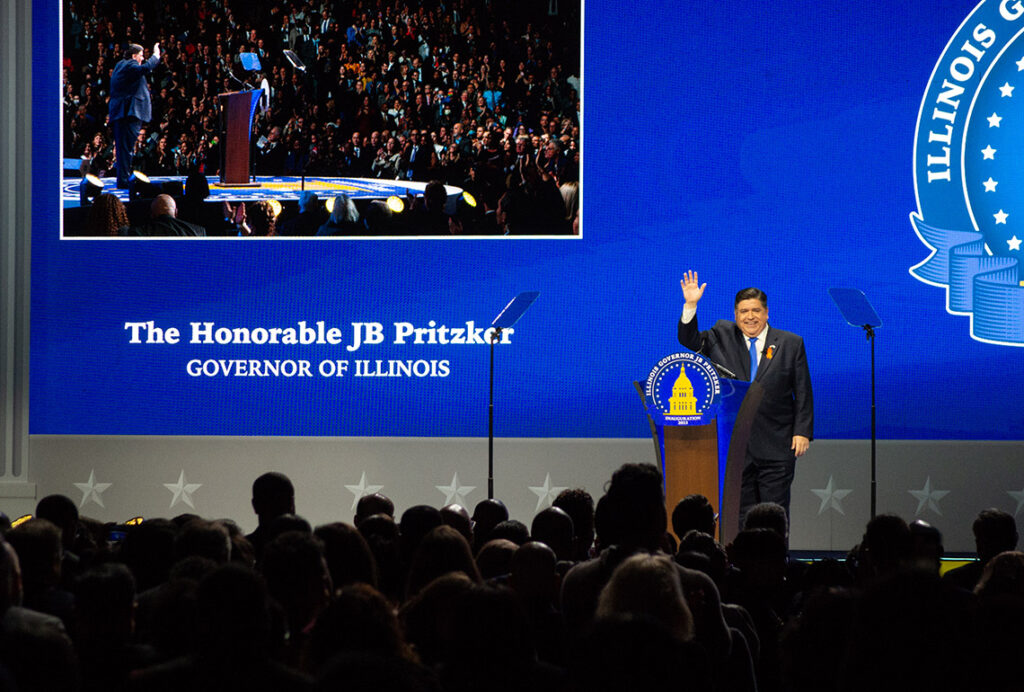
Gov. JB Pritzker will run for a third term as governor. He’s officially making the reelection announcement Thursday in a four-stop tour that spans Chicago, Rockford, Peoria and Springfield.
Should Pritzker win and serve a full term, he would become the only three-term Democratic governor in Illinois’ history.
“I’m running for re-election to protect our progress and continue solving the problems we face,” he said in an announcement video. “I love this state, and it’s the honor of my life to serve as your governor – to help lead through the most challenging of times and celebrate the most joyful ones together. I’m ready for the fight ahead.”
Pritzker has not yet announced a running mate to replace Lt. Gov. Juliana Stratton, who is running for U.S. Senate in 2026.
The state GOP issued a statement saying Pritzker should be “fired not re-hired.”
“He’s prioritized illegal immigrants over Illinois families, hiked taxes, and rammed through the largest, most bloated budget in state history,” ILGOP Chairman Kathy Salvi said in a statement.
The governor’s political future has been the topic of significant speculation, especially since he was shortlisted for former Vice President Kamala Harris’ running mate search last summer in her campaign for the White House. That and his vocal and frequent condemnations of President Donald Trump have fueled speculation of a presidential run in 2028.
The announcement that he will run for governor does not prohibit a future presidential run, because governor and president are not up in the same election cycle.
Several Republicans have announced plans to run for governor. DuPage County Sheriff James Mendrick said he would run earlier this year. Mechanic and Posen Park District Commissioner Phil Perez and businessman Joe Severino have also publicly said they are running, while Cook County GOP Chair Aaron Del Mar is also mulling a run.
Capitol News Illinois will cover the Chicago and Springfield events and have full coverage later today.
Capitol News Illinois is a nonprofit, nonpartisan news service that distributes state government coverage to hundreds of news outlets statewide. It is funded primarily by the Illinois Press Foundation and the Robert R. McCormick Foundation.
The post Pritzker announces reelection campaign appeared first on Capitol News Illinois.
Challenges persist for women, minorities breaking into Illinois’ skilled trades

Capitol News Illinois
PEORIA — For 60 years, SkillsUSA Illinois has held workforce development competitions for young people entering the trades. For 60 years, there has never been an all-female team competing in the architecture and construction team competition.
Until now, that is.
This April, students competed at the Peoria Civic Center in a bid to showcase their trades work skills, from barbering and cosmetics to house building and fixing cars. First-place winners in the Illinois competition earned eligibility to travel to Atlanta to compete in the national SkillsUSA Championships this week.
Amid the fanfare and cheer, however, the state competition highlighted some of the persistent challenges facing the Illinois workforce. As employers continue searching for skilled tradespeople to combat national worker shortages, entry into fields like construction remains strikingly low for women and people of color, particularly in higher paying and leadership positions.
SkillsUSA Illinois’ first all-girls team — Aubrey Levin, Kayhl Miles, Catelin Wesley and team captain Amyla Walls — did not know they were breaking boundaries until after they had finished their competition this spring in Peoria.
The team from the Bloomington Area Career Center reacted to the news with shocked laughter, followed by near immediate dread as they anticipated the heightened expectations and scrutiny of their work this title would bring.
“They’re going to be like, ‘You’re the first all-female team,’ and I’m going to be like, ‘Please don’t look at my electrical,’” Levin said, half laughing.
Although it may seem late for the existence of the first all-female team, it is consistent with the construction industry demographic trends in Illinois. Over the past 10 years, women have held fewer than one in 10 construction jobs. Prior to 2021, fewer than 5% of new construction apprentices in Illinois were women, according to data from the U.S. Department of Labor.
View Chart in New Tab
The problem is a national one. Although 2020 saw the largest number of women working in trades, only one in 20 U.S. construction workers was a woman, according to a report from the Institute for Women’s Policy Research.
Male construction workers were also better compensated than female construction workers in 2024, even for entry-level apprenticeship positions. New male apprentices earned an average wage of $23.76 per hour, 36 cents more than the average pay for their female counterparts.
The discrepancy grew for those who completed their apprenticeships, with an average hourly gender pay gap of $1.41.
Participation rates for workers of color also remained low, with white apprentices accounting for over three quarters of new registered apprenticeships in 2024.
View Chart in New Tab
Apprentices of color earn less on average than white apprentices, both at entry and completion. In 2024, newly registered Black apprentices earned on average 36 cents less in hourly wages than their white counterparts. For those who completed apprenticeships, the gap grew to almost $4 per hour.
As limited as the progress is, much of it has come in the last few years, according to Jayne Vellinga, executive director of the non-profit Chicago Women in Trades.
Vellinga attributes the momentum to “a perfect storm” of an expected construction boom and worker shortage, infrastructure investment and federal leadership on diversity initiatives.
“It did get people to think sort of outside the box in terms of how they were going to recruit a sufficient workforce to meet a large number of projects projected to come to the area and the retirement of experienced workers,” Vellinga said.
Since 2021, the state has invested heavily in the Illinois Works pre-apprenticeship program, which seeks to create a “qualified talent pipeline of diverse candidates in the construction and building trades.” Gov. JB Pritzker’s office announced an additional $19 million funding allocation to the program in April.
However, Vellinga said she is seeing a rollback in progress, pointing to President Donald Trump’s decision to rescind an executive order that had been in place since enacted by President Lyndon B. Johnson in 1965, which prohibited federal contractors from engaging in employment discrimination on the basis of race, color, religion, sex, sexual orientation, gender identity or national origin.
“I don’t know how it’s going to impact opportunities for women, but there is definitely a change in narrative also at the federal level, from ‘we need diversity on publicly funded projects’ to ‘don’t engage in diversity, equity and inclusion activities,’” Vellinga said.
In addition to outright hiring discrimination, Vellinga said many women’s careers are limited by gender stereotypes and harassment on job sites.
“Some women are doing well and are having an opportunity to move up, and other women do face discrimination, are unable to cobble together enough work during the year to make it a viable career, or perhaps the works site is so hostile that they walk away from it,” Vellinga said.
The hostility is something that the team of high schoolers was already familiar with.
House built by the all-girls team during the SkillsUSA Illinois Championships in April. (Medill Illinois News Bureau photo by Maggie Dougherty)
As SkillsUSA Illinois’ first all-girls team spent two days using their carpentry, roofing, electrical and plumbing skills to build a small house, they were subjected to disparaging, gender-based comments, which the team diplomatically referred to as “construction language.”
It is not something unique to this competition, they said. Levin recalled asking women in the construction unions about their advice on entering tradework. They told her she would need to have thick skin.
“Even now?” Levin asked. Especially now, they replied.
The team described their male peers making jokes with double meanings, and then getting irritated if the girls did not laugh.
“You’re like a bad person for not laughing at a really bad joke,” Miles said.
One such joke came at Levin’s expense, while she was standing on a ladder and trying not to cry from pain after being hit in the back by something on site. A team nearby pointed and laughed at her, she said. A teacher walked by and told Levin to let it out if she needed to.
“Not here,” Levin said. “You can’t cry, because then you’re soft.”
On the other hand, if they got mad, Levin said, a male peer would inevitably ask, “What, are you on your period or something?”
The girls said they are held to a higher standard, as any sign of emotion will be used to prove that they are incapable of matching their male peers. If they stop for a second, they will be called lazy or asked whether they broke a nail, the team said. The job requires a strong poker face, Miles added.
And, Walls said, their judgment is constantly called into question. She recounted a male peer repeatedly correcting her and speaking to her like a child, before eventually concluding she was correct all along.
A national survey of women exiting the trades found that the most common reason women left the trades was due to harassment and lack of respect; nearly half of those who left or had strong intentions to leave marked this as their reason for doing so. Over a quarter of women in the study also indicated that they frequently or always saw sexually explicit and racist graffiti; a fifth responded the same for anti-semitic graffiti.
The second most common reason for exiting, selected by over 40% of those with strong intentions to leave, was a lack of prospects for promotion and advancement. The least selected option was that the work was too physically demanding.
Manny Rodriguez looks down the street in front of Revolution Workshop. (Medill Illinois News Bureau photo by Maggie Dougherty)
The perception that women are less competent exacerbates other structural barriers to employment, according to Manny Rodriguez, executive director of the Chicago-based nonprofit Revolution Workshop, which offers workforce development programs targeted at communities of color who have been underrepresented in the trades.
Construction is a tough business for anyone, Rodriguez said. A recent paper by the RAND Corporation found that almost 40% of apprentices drop out of their programs before completion, regardless of race or gender, with almost half of those dropping out in the first six months.
Part of the issue is stability of work, such as making it through the cold season when opportunities for new construction projects dip, according to Rodriguez.
“In the wintertime, you can’t pour concrete. You can’t weld. If the structure is not already up, you pretty much got to wait until spring,” Rodriguez said.
Employer biases mean that women and people of color may be hired for jobs, but not retained for the next one, resulting in more instability for those workers, Rodriguez said. As a result, apprenticeship completion rates for women and people of color are even lower.
In 2023, women accounted for 4.5% of U.S. construction apprentices, but 6% of cancellations, according to U.S. Department of Labor data. A study by The Institute for Construction Employment Research found that over the last two decades, around two-thirds of Black construction apprentices did not complete their programs.
Hispanic workers have maintained a high share of workforce participation in the construction industry, but often in lower paying, physically intensive roles, resulting in higher rates of both fatal and nonfatal injuries on the job.
“Latinos are represented in construction, but where?” Rodriquez asked. “I’m not the electrician, I’m not the plumber, I’m not the heavy equipment operator, I’m not the pipe fitter. So you got no problem breaking my brown body, but you’re not letting me do the other things.”
Many women and people of color who do make it in construction attribute their success, at least in part, to having others who look like them in the field.
A competitor focuses during the SkillsUSA Illinois TeamWorks competition. (Photo courtesy SkillsUSA Illinois)
In the survey of tradeswomen, almost two thirds of respondents identified mentorship from senior tradeswomen as important to their recruitment and advancement. It was something the all-girls team said was valuable as well.
“If we passed a construction site, and they were working, I always got excited when I saw a girl,” said Miles. “I was happy about it, because I’m like, I’m not the only one who actually enjoys this.” Other members of the team agreed.
But Walls, the only Black member of the team, sees fewer women in construction who look like her.
“I don’t see a lot of women, let alone,Black women, doing construction,” Walls said. “I wish I had someone to relate to.”
That is part of the reason why breaking this barrier was important, for the girls on the team and for those who will come after them.
“It doesn’t matter if we win,” Wesley said. “The fact that we have taken a step like this for us, but also for other females in the trades, it’s a huge deal.”
Maggie Dougherty is a graduate student in journalism with Northwestern University’s Medill School of Journalism, Media, Integrated Marketing Communications, and a fellow in its Medill Illinois News Bureau working in partnership with Capitol News Illinois.
Capitol News Illinois is a nonprofit, nonpartisan news service that distributes state government coverage to hundreds of news outlets statewide. It is funded primarily by the Illinois Press Foundation and the Robert R. McCormick Foundation.
The post Challenges persist for women, minorities breaking into Illinois’ skilled trades appeared first on Capitol News Illinois.