Posts Tagged ‘Medicare’
Illinois extends open enrollment deadline for health care plans starting Jan. 1
The deadline was extended from Dec. 15 to Dec. 31.
Read MoreTrump’s ‘big bill’ takes center stage in Illinois’ U.S. Senate race
Capitol News Illinois
Article summary
The three Democrats running for Illinois’ open Senate seat voiced concerns about the new domestic policy plan at events around Illinois.
Lt. Gov. Juliana Stratton discussed how SNAP cuts will affect Illinois at an event in Chicago.
Rep. Robin Kelly spoke with voters in Peoria about their concerns with federal spending cuts.
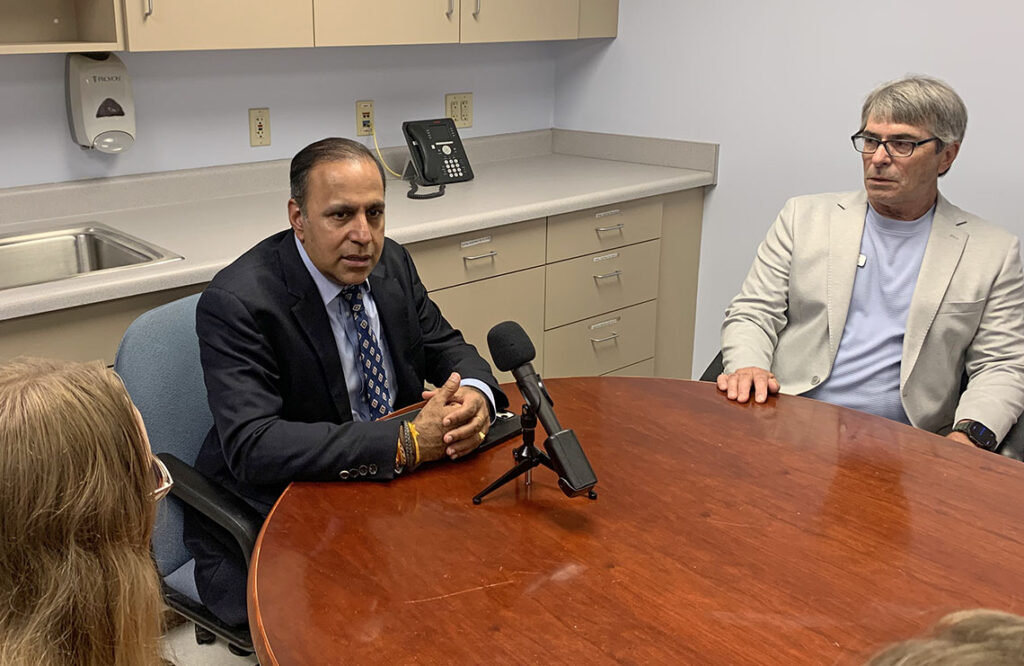
Rep. Raja Krishnamoorthi met with central Illinois independent pharmacist owners to highlight how spending cuts could hurt health care in rural areas.
This summary was written by the reporters and editors who worked on this story.
PEORIA – With major future cuts to social service programs now written into law, Democrats seeking Illinois’ open U.S. Senate seat in 2026 are hitting the campaign trail seeking to position themselves among the law’s most vocal opponents.
“We want Illinoisians throughout our state to understand the ripple effects of the Trump administration’s cruelty and be prepared for what’s to come,” Lt. Gov. Juliana Stratton said during a panel discussion at the Greater Chicago Food Depository Thursday.
The federal policy bill, dubbed the “One Big, Beautiful Bill,” signed by President Donald Trump on July 4 will slash federal spending for health care and other human service programs over the next several years, in many cases leaving states to pick up the tab if they are to continue providing benefits. The bill is expected to cost Illinois more than $700 million for the Supplemental Nutrition Assistance Program, cut Medicaid spending in Illinois by $48 billion over the next 10 years, and potentially force some rural hospitals to close.
As Illinois’ 2026 candidates prepare to begin circulating nominating petitions next month, the three Democrats vying for retiring Sen. Dick Durbin’s Senate seat met with residents around the state to hear about the local impacts of the bill and rally support for their campaigns.
Stratton held an official state event in Chicago to discuss the Pritzker administration’s response to SNAP changes, while U.S. Reps. Robin Kelly and Raja Krishnamoorthi visited downstate communities to discuss the bill.
Kelly gets feedback in Peoria
Kelly, who represents the state’s 2nd Congressional District across parts of Chicago, the south suburbs and rural eastern Illinois, visited with voters in Peoria to hear their concerns about the bill.
The Bradly University graduate said her goal is to make sure Americans are aware of the bill’s effects – even though many of them are slated to begin after the 2026 midterm election.
U.S. Rep. Robin Kelly speaks to voters at an event at the Peoria Public Library on Wednesday, July 9, 2025. (Capitol News Illinois photo by Ben Szalinski)
“In polling and different things that we’ve done, half of the population doesn’t even realize what’s going on,” Kelly said.
Kelly played up her relationship with U.S. House Minority Leader Hakeem Jeffries, saying she has been part of a coalition of House Democrats that have been traveling the country holding town hall meetings about federal spending cuts.
“Every group that we can speak in front of, we need to speak in front of,” Kelly said. “And so that’s one of the reason’s we’re traveling.”
Krishnamoorthi visits rural pharmacy
Krishnamoorthi, who represents the 8th Congressional District in the northwest suburbs, visited a pharmacy in Petersburg about 30 minutes northwest of Springfield.
He echoed concerns other Illinois Democrats have expressed about the “large, lousy law” cutting Medicaid and that it could limit health care services in rural communities.
Read more: Illinois hospitals fear massive cuts under Trump domestic policy law
“When you have that many people who all of a sudden don’t have a way of paying for their health care, then it hurts all those rural health care providers that depend on Medicaid as a form of payment for so many of their patients,” Krishnamoorthi said.
Krishnamoorthi also worried about domino effects from growing deficits as a result of the bill, which the Congressional Budget Office estimates will increase by more than $3 trillion. According to the nonpartisan health research organization KFF, the growing deficit could trigger automatic spending cuts, which could force Medicare cuts even though it was not reduced in the bill.
“We’re also talking about seniors who could be affected by Medicare cuts,” Krishnamoorthi said. “And so at the end of the day, however, everybody’s going to be affected because if, God forbid, one of these hospitals in these areas in the rural parts of Illinois are closed, then everyone, regardless of how their health care is paid for, would be affected negatively.”
SNAP cuts worry candidates
Stratton did not hit the campaign trail with any public events this week, but the Pritzker administration must now decide how it will proceed with new spending requirements signed by the president and the effects of fewer residents receiving social service benefits.
Lt. Gov. Juliana Stratton speaks at a panel discussion on SNAP benefits at the Greater Chicago Food Depository in Chicago on Thursday, July 10, 2025. (Screenshot from Illinois.gov live feed)
Stratton and other top Pritzker administration officials discussed the impact of cuts to the SNAP program during a panel discussion at the Greater Chicago Food Depository as the state seeks more immediate solutions that lawmakers could approve before the 2026 election. The lieutenant governor, who resides on Chicago’s South Side, said reducing eligibility for a food program exacerbates other issues such as crime, economic productivity and learning in schools.
“Hunger is not a problem that stays isolated,” Stratton said. “The repercussions seep out, harming everyone and everything in its path until something changes.”
Kelly told voters in Peoria that SNAP cuts aren’t just a problem for low-income recipients.
“If you cannot buy food, then you’re not shopping at Kroger or wherever you shop,” Kelly said. “And so then Kroger is not buying as much food from the farmers and then they won’t need as many people to work there.”
The Republican field in the Senate race has yet to take shape. Republican Rep. Darin LaHood from the Peoria area held a virtual townhall with 16th Congressional District voters to discuss why he believes the bill will benefit Illinois.
Capitol News Illinois is a nonprofit, nonpartisan news service that distributes state government coverage to hundreds of news outlets statewide. It is funded primarily by the Illinois Press Foundation and the Robert R. McCormick Foundation.
The post Trump’s ‘big bill’ takes center stage in Illinois’ U.S. Senate race appeared first on Capitol News Illinois.
Pritzker signs order to protect personal autism data in response to federal action
Capitol News Illinois
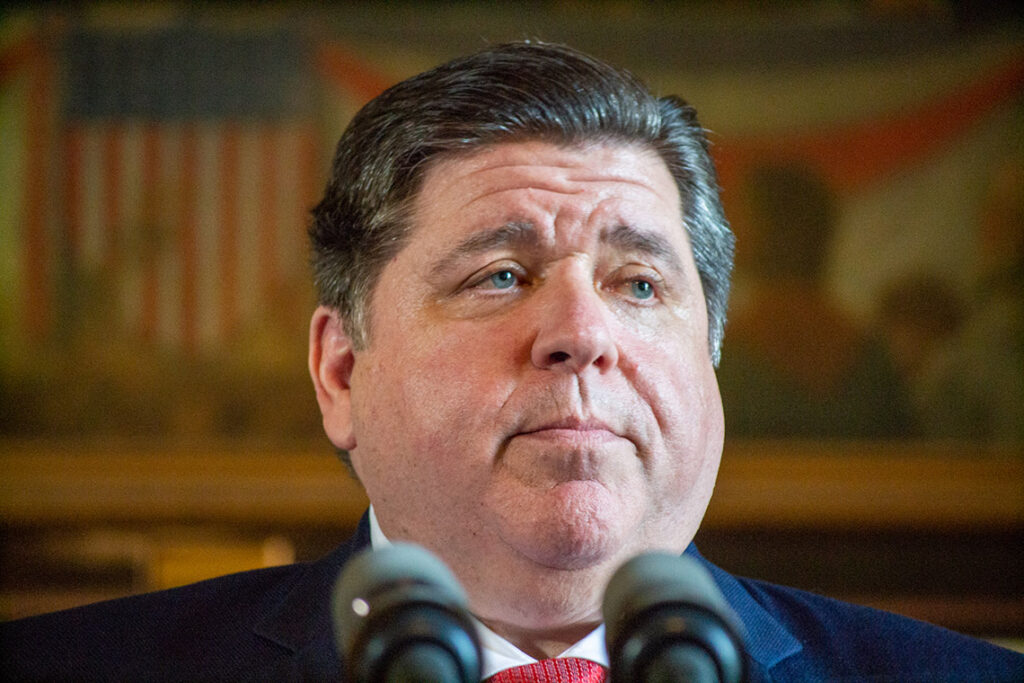
SPRINGFIELD — Gov. JB Pritzker issued an executive order Wednesday that bars state agencies from collecting and disclosing data about autism to the federal government unless it’s medically or legally necessary.
The order was in response to a move by the U.S. Department of Health and Human Services earlier Wednesday to research and create a national autism database.
In a statement, Pritzker called the project a “threat” to the rights of disabled individuals. The order stated that the project raises privacy concerns about the collection and use of data, as well as potential “discriminatory profiling or surveillance of individuals with disabilities.”
“Every Illinoisan deserves dignity, privacy, and the freedom to live without fear of surveillance or discrimination,” Pritzker said. “As Donald Trump and DOGE threaten these freedoms, we are taking steps to ensure that our state remains a leader in protecting the rights of individuals with autism and all people with disabilities.”
Executive Order 2025-02 also requires state agencies to follow strict privacy and data protection requirements when they do disclose such data, including making personal information anonymous where it’s practicable and only disclosing the minimum amount of personal information that’s legally necessary.
The move was prompted by an HHS announcement of a research project on Wednesday. The project will allow the National Institutes of Health and the Centers for Medicare and Medicaid Services to have access to data and medical records of Medicare and Medicaid enrollees diagnosed with autism in an effort to research autism, Newsweek reported.
It also directly responded to remarks made last month by U.S. Department of Health and Human Services Secretary Robert F. Kennedy Jr., who called autism an “epidemic” and said that President Trump has tasked him with finding a cause for the “epidemic.”
“Autism is a neurological difference—not a disease or an epidemic,” Pritzker’s order read. “People with disabilities, including individuals with autism, are too often stigmatized and underestimated, and public policy should never diminish the diverse strengths and potential of this community.”
This is not the first time Kennedy has touched on his beliefs about autism. During an interview in 2023, he confirmed that he believes that vaccines cause autism, a theory the U.S. Centers for Disease Control and Prevention and a wide body of research have long since debunked.
Read more: How RFK Jr.’s health proposals could affect Illinois
Executive orders aren’t often enacted by the Illinois governor, as last year he only signed three. This is the second order he has signed this year and is his latest action against the Trump Administration since his trade mission to Mexico this spring.
Read more: Pritzker hopes trade mission to Mexico sparks new investment despite tariffs
Capitol News Illinois is a nonprofit, nonpartisan news service that distributes state government coverage to hundreds of news outlets statewide. It is funded primarily by the Illinois Press Foundation and the Robert R. McCormick Foundation.
The post Pritzker signs order to protect personal autism data in response to federal action appeared first on Capitol News Illinois.