Posts Tagged ‘Medicaid’
Illinois extends open enrollment deadline for health care plans starting Jan. 1
The deadline was extended from Dec. 15 to Dec. 31.
Read MoreTrump cuts could shrink Illinois economy by $10B: report
Tariffs are also hurting economic activity, according to new reports released by the governor’s office.
Read MoreTrump’s ‘big bill’ takes center stage in Illinois’ U.S. Senate race
Capitol News Illinois
Article summary
The three Democrats running for Illinois’ open Senate seat voiced concerns about the new domestic policy plan at events around Illinois.
Lt. Gov. Juliana Stratton discussed how SNAP cuts will affect Illinois at an event in Chicago.
Rep. Robin Kelly spoke with voters in Peoria about their concerns with federal spending cuts.
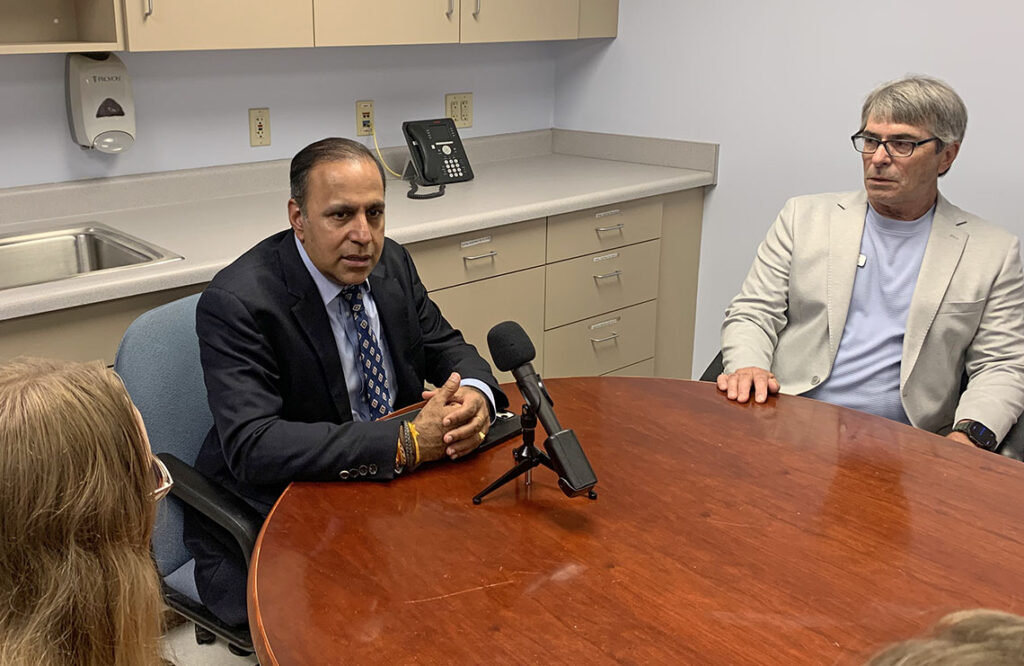
Rep. Raja Krishnamoorthi met with central Illinois independent pharmacist owners to highlight how spending cuts could hurt health care in rural areas.
This summary was written by the reporters and editors who worked on this story.
PEORIA – With major future cuts to social service programs now written into law, Democrats seeking Illinois’ open U.S. Senate seat in 2026 are hitting the campaign trail seeking to position themselves among the law’s most vocal opponents.
“We want Illinoisians throughout our state to understand the ripple effects of the Trump administration’s cruelty and be prepared for what’s to come,” Lt. Gov. Juliana Stratton said during a panel discussion at the Greater Chicago Food Depository Thursday.
The federal policy bill, dubbed the “One Big, Beautiful Bill,” signed by President Donald Trump on July 4 will slash federal spending for health care and other human service programs over the next several years, in many cases leaving states to pick up the tab if they are to continue providing benefits. The bill is expected to cost Illinois more than $700 million for the Supplemental Nutrition Assistance Program, cut Medicaid spending in Illinois by $48 billion over the next 10 years, and potentially force some rural hospitals to close.
As Illinois’ 2026 candidates prepare to begin circulating nominating petitions next month, the three Democrats vying for retiring Sen. Dick Durbin’s Senate seat met with residents around the state to hear about the local impacts of the bill and rally support for their campaigns.
Stratton held an official state event in Chicago to discuss the Pritzker administration’s response to SNAP changes, while U.S. Reps. Robin Kelly and Raja Krishnamoorthi visited downstate communities to discuss the bill.
Kelly gets feedback in Peoria
Kelly, who represents the state’s 2nd Congressional District across parts of Chicago, the south suburbs and rural eastern Illinois, visited with voters in Peoria to hear their concerns about the bill.
The Bradly University graduate said her goal is to make sure Americans are aware of the bill’s effects – even though many of them are slated to begin after the 2026 midterm election.
U.S. Rep. Robin Kelly speaks to voters at an event at the Peoria Public Library on Wednesday, July 9, 2025. (Capitol News Illinois photo by Ben Szalinski)
“In polling and different things that we’ve done, half of the population doesn’t even realize what’s going on,” Kelly said.
Kelly played up her relationship with U.S. House Minority Leader Hakeem Jeffries, saying she has been part of a coalition of House Democrats that have been traveling the country holding town hall meetings about federal spending cuts.
“Every group that we can speak in front of, we need to speak in front of,” Kelly said. “And so that’s one of the reason’s we’re traveling.”
Krishnamoorthi visits rural pharmacy
Krishnamoorthi, who represents the 8th Congressional District in the northwest suburbs, visited a pharmacy in Petersburg about 30 minutes northwest of Springfield.
He echoed concerns other Illinois Democrats have expressed about the “large, lousy law” cutting Medicaid and that it could limit health care services in rural communities.
Read more: Illinois hospitals fear massive cuts under Trump domestic policy law
“When you have that many people who all of a sudden don’t have a way of paying for their health care, then it hurts all those rural health care providers that depend on Medicaid as a form of payment for so many of their patients,” Krishnamoorthi said.
Krishnamoorthi also worried about domino effects from growing deficits as a result of the bill, which the Congressional Budget Office estimates will increase by more than $3 trillion. According to the nonpartisan health research organization KFF, the growing deficit could trigger automatic spending cuts, which could force Medicare cuts even though it was not reduced in the bill.
“We’re also talking about seniors who could be affected by Medicare cuts,” Krishnamoorthi said. “And so at the end of the day, however, everybody’s going to be affected because if, God forbid, one of these hospitals in these areas in the rural parts of Illinois are closed, then everyone, regardless of how their health care is paid for, would be affected negatively.”
SNAP cuts worry candidates
Stratton did not hit the campaign trail with any public events this week, but the Pritzker administration must now decide how it will proceed with new spending requirements signed by the president and the effects of fewer residents receiving social service benefits.
Lt. Gov. Juliana Stratton speaks at a panel discussion on SNAP benefits at the Greater Chicago Food Depository in Chicago on Thursday, July 10, 2025. (Screenshot from Illinois.gov live feed)
Stratton and other top Pritzker administration officials discussed the impact of cuts to the SNAP program during a panel discussion at the Greater Chicago Food Depository as the state seeks more immediate solutions that lawmakers could approve before the 2026 election. The lieutenant governor, who resides on Chicago’s South Side, said reducing eligibility for a food program exacerbates other issues such as crime, economic productivity and learning in schools.
“Hunger is not a problem that stays isolated,” Stratton said. “The repercussions seep out, harming everyone and everything in its path until something changes.”
Kelly told voters in Peoria that SNAP cuts aren’t just a problem for low-income recipients.
“If you cannot buy food, then you’re not shopping at Kroger or wherever you shop,” Kelly said. “And so then Kroger is not buying as much food from the farmers and then they won’t need as many people to work there.”
The Republican field in the Senate race has yet to take shape. Republican Rep. Darin LaHood from the Peoria area held a virtual townhall with 16th Congressional District voters to discuss why he believes the bill will benefit Illinois.
Capitol News Illinois is a nonprofit, nonpartisan news service that distributes state government coverage to hundreds of news outlets statewide. It is funded primarily by the Illinois Press Foundation and the Robert R. McCormick Foundation.
The post Trump’s ‘big bill’ takes center stage in Illinois’ U.S. Senate race appeared first on Capitol News Illinois.
Illinois hospitals fear massive cuts under Trump domestic policy law
Capitol News Illinois
Article summary
President Trump’s domestic policy bill contains massive cuts in federal Medicaid spending over the next 10 years.
One analysis predicts $48 billion in spending reductions in Illinois over a decade.
The cuts limit states’ ability to raise money through provider taxes to fund their share of Medicaid costs.
The cuts also limit the way states use Medicaid to direct additional payments to hospitals.
SPRINGFIELD — Hospital officials in Illinois say they will have to make some difficult decisions in the next few years that could involve laying off staff, cutting back services and even closing some facilities entirely.
That’s the expected result of federal funding cuts built into the recently passed domestic policy bill that President Donald Trump signed into law July 4, a law that will cut federal spending on Medicaid by more than $1 trillion over the next 10 years.
A.J. Wilhelmi, CEO of the Illinois Health and Hospital Association said in an interview with Capitol News Illinois that the financial pressures will fall heaviest on hospitals that serve rural areas, where a larger share of the population is covered by Medicaid.
“The hospitals in these communities are already on the brink, based on some of the increases in labor, drug and supply costs coming out of COVID, a continuation of claim denials by payers and relatively flat reimbursement rates,” Wilhelmi said. “So, all of that is creating significant pressures. And when you add these Medicaid cuts to an already challenging situation, we know that there are several hospitals that close because of these changes.”
Enrollment, reimbursement reductions
The new law contains provisions that are expected to reduce the number of people enrolled in Medicaid, particularly in states like Illinois that expanded eligibility for the program under the Affordable Care Act, the 2010 law commonly known as Obamacare.
Those include work requirements for people who enrolled through the expansion as well as requirements that they verify their continued eligibility for the program twice a year instead of annually.
But the law also includes changes in aspects of the program that most people outside the health care industry never see. Those mechanisms – known as provider taxes and directed payments – affect the way states finance their share of the cost of Medicaid and the way they direct additional payments to certain health care providers such as hospitals.
Like many states, Illinois levies special taxes on certain health care providers, including hospitals. The money those taxes generate is used to draw down additional federal matching funds, then is paid back to the providers in the form of directed payments to increase their overall reimbursement rate and to reward them if they meet certain performance or quality standards.
Currently, IHA estimates the hospital tax generates about $2 billion a year in revenue. This past session, lawmakers passed a bill to increase the assessment in order to fund a 54% increase in hospital payments, subject to federal approval of the state’s plan. But state lawmakers passed that bill before Congress passed Trump’s domestic policy bill, dubbed the “One Big Beautiful Bill Act.”
Prior to passage of the new federal law, the tax rate states could levy was effectively capped at 6% of a hospital’s net patient revenue. But under the new law, for states like Illinois that expanded Medicaid under the ACA, that cap will gradually be lowered by half a percentage point each year starting in 2028 until it reaches 3.5% in 2032.
In addition, Wilhelmi said, the new law imposes a cap on the directed payments that expansion states like Illinois can send to hospitals so that the total does not exceed the maximum allowed under Medicare – the federal health insurance program for seniors, which has a lower reimbursement rate than Medicaid.
“And that will result in a significant reduction in Medicaid reimbursements for hospitals,” Wilhelmi said. “It means literally hundreds of millions of dollars in less reimbursement to hospitals.”
$48 billion impact over 10 years
According to the nonpartisan health policy research organization KFF, federal Medicaid spending in Illinois is expected to be reduced by about $48 billion over 10 years under the new legislation. That includes an estimated $6.73 billion in spending cuts in rural parts of the state.
Democratic Gov. JB Pritzker has been harshly critical of the new law, and particularly the Medicaid cuts contained in it.
“Donald Trump isn’t just cutting health care — he’s also closing hospitals in Illinois and across the country with his latest scheme,” Pritzker said in one social media post while the bill was moving through Congress. “Hard-working Illinoisans will spend more time in overcrowded waiting rooms and lose access to life-saving care.”
Wilhelmi, meanwhile, said there is still time before the cuts begin to take effect, and he is urging state officials to begin work immediately to develop strategies to adapt to the changes.
“I think the state will need to work with stakeholders like IHA and our hospitals, other provider groups, to identify creative options to ensure that the Medicaid program can continue to be that lifeline for vulnerable patients and communities,” he said. “And that will include identifying options to fortify those programs and services, as well as identify working with our congressional delegation on ways to mitigate or further delay these changes.”
Capitol News Illinois is a nonprofit, nonpartisan news service that distributes state government coverage to hundreds of news outlets statewide. It is funded primarily by the Illinois Press Foundation and the Robert R. McCormick Foundation.
The post Illinois hospitals fear massive cuts under Trump domestic policy law appeared first on Capitol News Illinois.
Pritzker warns 330,000 Illinoisans could lose Medicaid under Trump’s budget plan
Capitol News Illinois
Article Summary
The U.S. House gave final passage Thursday to a bill that will cut federal Medicaid spending in Illinois by an estimated 20%, or $48 billion, over 10 years.
Medicaid pays for about 40% of all childbirths in Illinois as well as 69% of all nursing home care, according to an independent analysis.
State officials estimate 330,000 Illinoisans could lose Medicaid coverage if President Donald Trump signs the bill into law.
The Illinois Department of Public Health said nine rural hospitals in Illinois would face closure or severe service reductions due to the cuts.
This summary was written by the reporters and editors who worked on this story.
SPRINGFIELD — The U.S. House gave final passage Thursday to a budget bill that will cut federal Medicaid spending by an estimated $1 trillion over 10 years.
All three Republican members of the Illinois congressional delegation voted in favor of the bill, despite a last-minute plea from Democratic Gov. JB Pritzker who warned the bill will result more than 330,000 Illinoisans losing Medicaid coverage and have a devastating effect on some rural hospitals.
“As those who are entrusted with protecting the health of all your constituents, I urge you to oppose these harmful Medicaid provisions and work to protect healthcare access for rural Illinois families, workers, and veterans,” Pritzker wrote in the letter addressed to GOP Reps. Mike Bost, Darin LaHood and Mary Miller.
The cuts would translate to about $48 billion in Illinois over that period, or about 20% of what the state would otherwise receive, according to an analysis by KFF, a nonpartisan health policy research organization.
That would be one of the largest percentage reductions in any state in the nation, according to KFF, a nonpartisan health policy research organization formerly known as the Kaiser Family Foundation. Louisiana and Virginia would each see cuts of about 21%, KFF said.
The state-level analysis is based largely on Congressional Budget Office estimates showing the bill would reduce federal Medicaid spending by $1 trillion nationwide over the next decade.
The KFF analysis does not include estimates of the number of people who would lose Medicaid coverage under the bill, noting how that will depend on how individual states respond to the policy changes contained in the bill. But overall, it estimates the number of uninsured Americans will grow by 11.8 million.
The bill, which includes many of President Donald Trump’s domestic policy priorities – including tax cuts and increased spending on border security – passed the Senate on Tuesday by a vote of 51-50, with Vice President J.D. Vance casting the tie-breaking vote. Both senators from Illinois, Democrats Dick Durbin and Tammy Duckworth, voted no.
The final vote in the House was 218-214.
“The One Big, Beautiful Bill is a once-in-a-generation victory for the American people,” Miller said in a statement after the House vote. “It delivers on President Trump’s America First agenda with bold, decisive, and immediate action. This is the most pro-worker, pro-family, pro-America legislation I have voted for during my time in Congress, and I was proud to help get it across the finish line for the hardworking Americans across my district.”
Medicaid and the health care marketplace
Medicaid, which is jointly funded by states and the federal government, provides health coverage for lower-income individuals and families. It was established in 1965 alongside Medicare, the federally funded health coverage program for people over 65.
Today, according to the Illinois Department of Healthcare and Family Services, the program covers about 3.4 million people in Illinois, or a fourth of the state’s population. At a total cost of $33.7 billion a year, it is one of the largest single categories of expenditures in the state’s budget. It pays for about 40% of all childbirths in the state, according to KFF, as well as 69% of all nursing home care.
But questions about its future loomed over the Illinois General Assembly during the just-completed legislative session as both Congress and the General Assembly were crafting their respective budgets for their upcoming fiscal years.
“This was a difficult year because of the unprecedented changes and cuts that are looming on the horizon in Washington,” state Rep. Anna Moeller, D-Elgin, said on the floor of the Illinois House during debate over a Medicaid bill on the final day of the session.
Read more: Amid uncertainty in Washington, Illinois lawmakers pass slimmed-down Medicaid package
Speaking with reporters at an unrelated event Tuesday, Pritzker predicted “hundreds of thousands” of people in Illinois will lose Medicaid coverage if the Senate bill is signed into law.
“This is shameful, if you ask me, and it’s going to be very hard to recover,” Pritzker said. “The state of Illinois can’t cover the cost – no state in the country can cover the cost of reinstating that health insurance that is today paid for mostly by the federal government, partly by state government.”
Policy changes under the bill
According to KFF, most of the reductions in Medicaid spending would result from just a few policy changes contained in the bill
Those include imposing a work requirement on adults enrolled in Medicaid through the Affordable Care Act, also known as “Obamacare.” That law expanded eligibility for Medicaid to working-age adults with incomes up to 138% of the federal poverty level. About 772,000 people in Illinois are enrolled under that program.
The bill also calls for requiring people enrolled through the ACA expansion to verify their continued eligibility for Medicaid twice a year instead of annually. That is expected to filter out enrollees whose incomes rise above the eligibility limit as well as those who simply fail to complete the verification process.
Another provision would limit the ability of states to finance their share of the cost of Medicaid by levying taxes on health care providers. Illinois imposes such taxes on hospitals, nursing facilities and managed care organizations that administer the program. Revenue from those taxes is used to draw down federal matching funds that are then used to fund higher reimbursement rates to health care providers.
The final version of the bill does not, however, include a provision penalizing states like Illinois that also provide state-funded health care to noncitizens who do not have lawful status to be in the United States. That provision, which was included in the earlier House version, was not included in the Senate bill, according to KFF.
Capitol News Illinois is a nonprofit, nonpartisan news service that distributes state government coverage to hundreds of news outlets statewide. It is funded primarily by the Illinois Press Foundation and the Robert R. McCormick Foundation.
The post Pritzker warns 330,000 Illinoisans could lose Medicaid under Trump’s budget plan appeared first on Capitol News Illinois.
Amid uncertainty in Washington, Illinois lawmakers pass slimmed-down Medicaid package
Capitol News Illinois
SPRINGFIELD — Nearly every year, Illinois lawmakers pass a package of measures dealing with the state’s Medicaid program, the joint federal and state health care program that covers low-income individuals.
Known as the Medicaid omnibus bill, it sometimes includes bold components, like a 2021 initiative that made millions of dollars available to local communities to help them plan and design their own health care delivery systems. Other packages have focused on smaller changes like guaranteeing coverage for specific conditions and medications or adjusting reimbursement rates for different categories of health care providers.
And moThe Illinois General Assembly passed a scaled-back Medicaid package on the last day of the session Saturday.st years, the packages receive bipartisan support because they are negotiated, largely behind closed doors, by an unofficial, bipartisan Medicaid Working Group.
This year, however, lawmakers passed one of the narrowest packages in recent memory, due mainly to the Trump administration’s vows to make sweeping cuts in federal funding for the program while state lawmakers faced their own set of budget constraints.
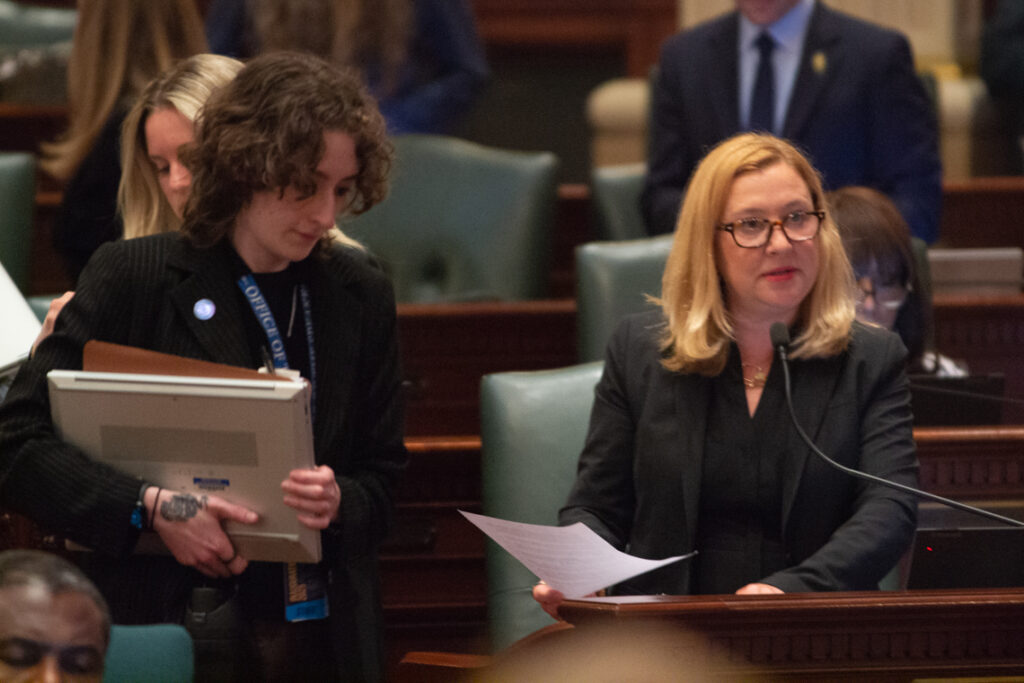
“There were many, many, very worthy program expansions, rate increases that we considered during this process that we were unable to include because of the uncertainty in Washington,” Rep. Anna Moeller, D-Elgin, the current chair of the Medicaid Working Group, said on the House floor Saturday.
The Illinois Medicaid program currently costs about $33.7 billion a year, according to the Department of Healthcare and Family Services. Of that, $20.9 billion, or about 62%, comes from the federal government while much of the state’s share comes from taxes levied on hospitals, nursing homes and managed care organizations – money the state uses to draw down federal matching funds.
The program covers nearly 3.5 million people in Illinois, or about a quarter of the state’s population. According to the nonpartisan health policy think tank KFF, the program pays for 40% of all child births in Illinois while covering 69% of all nursing home residents.
This year’s Medicaid omnibus bill, a 231-page amendment inserted into Senate Bill 2437, contains items that could be hugely beneficial to many Medicaid enrollees, but which don’t carry large price tags. In fact, the entire package is estimated to cost just under $1 million.
One of this year’s additions would make it easier for family members of medically fragile children who qualify for in-home nursing care to receive training to become certified family health aides, a designation that would enable them to administer medications, help with feeding and perform many of the same tasks as a certified nursing assistant.
Another provision would require all hospitals with licensed obstetric beds and birthing centers to adopt written policies that permit patients to have an Illinois Medicaid certified doula of their choosing to accompany them and provide support before, during and after labor and delivery.
Although those provisions enjoyed bipartisan support, another provision that extends coverage to certain categories of noncitizens drew Republican opposition Saturday, resulting in a partisan roll call vote.
The program covers noncitizens who meet the income requirements for Medicaid and have pending applications for asylum in the United States or for special visas as victims of trafficking, torture or other serious crimes. Those individuals can receive coverage for up to 24 months, provided they continue to meet the eligibility requirements.
Moeller said the language was not a new extension of health care benefits to noncitizens, but instead a “technical and administrative fix” to an existing program that had been requested by the Department of Healthcare and Family Services.
But for Republicans, the programs sounded too similar to the more controversial programs, Health Benefits for Immigrant Seniors and Health Benefits for Immigrant Adults, that extend health care to a large category of people who are not U.S. citizens, including some who are in the country illegally.
“For us on this side of the aisle, that is the poison pill,” said Rep. Noreen Hammond, R-Macomb, the deputy House minority leader. “So in spite of the fact that we have article after article in here, that is very worthy of a yes vote, I would urge a no vote.”
At Gov. JB Pritzker’s request, the budget bill lawmakers passed Saturday night cancels the program for immigrant adults, which had covered about 31,000 noncitizens age 42-64. But it provides $110 million over the next year, all in state funds, for the immigrant seniors program, which covers about 8,900 noncitizens age 65 and over.
The Medicaid bill passed the House late Saturday night, 76-39. It then passed the Senate shortly after midnight, 36-19.
It next goes to Pritzker’s desk for his consideration.
Capitol News Illinois is a nonprofit, nonpartisan news service that distributes state government coverage to hundreds of news outlets statewide. It is funded primarily by the Illinois Press Foundation and the Robert R. McCormick Foundation.
The post Amid uncertainty in Washington, Illinois lawmakers pass slimmed-down Medicaid package appeared first on Capitol News Illinois.
Immigrant health care programs boosted hospital bottom lines, study suggests
Capitol News Illinois
SPRINGFIELD – Two state-run health care programs that extend Medicaid-like coverage to noncitizens may have provided significant financial benefits for Illinois hospitals.
That’s according to preliminary results of an ongoing study at the University of Chicago that suggests the programs corresponded, at least in part, to a 15% reduction in the amount of bad debt Illinois hospitals incurred each year since the programs have been in full effect.
“The number that we find is a 15% reduction,” Aresha Martinez-Cardoso, an assistant professor and researcher at U of C’s Embodying Racism Lab, where the study is being conducted, said in an interview. “We think that that might be a high estimate, given what we know about perhaps other things that are going on that we can’t entirely rule out, but we do think that part of that reduction is associated with the policy.”
That translates to an average of $1.5 million per year, per hospital, according to the report, although the exact amount would vary greatly depending on a hospital’s size and the volume of patients it treats who are covered by the programs.
“Our early findings show that this landmark policy isn’t just about access — it also serves as a strategic investment in our hospitals and the health of entire communities,” Martinez-Cardoso said.
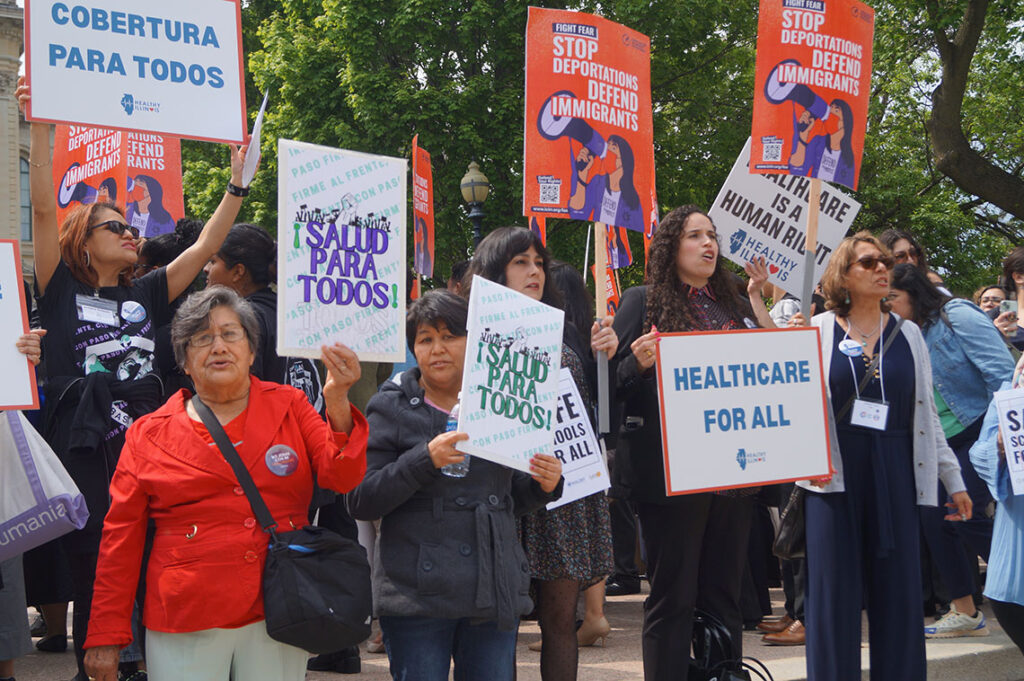
Those findings come as Gov. JB Pritzker’s administration is preparing to shut down the larger of the two programs as part of his budget proposal for the upcoming fiscal year. The Health Benefits for Immigrant Adults, or HBIA, currently covers more than 31,000 eligible noncitizens aged 42-64, at a cost of about $21 million per month, according to the most recent data from the Department of Healthcare and Family Services.
The other program, Health Benefits for Immigrant Seniors, covers eligible noncitizens aged 65 and over. That program currently covers about 8,900 individuals at a cost of about $10 million per month. Pritzker has not proposed eliminating it.
The programs were launched in 2020 and 2021, during the COVID-19 pandemic, as a means of extending health coverage to individuals who did not qualify for other publicly funded health care programs solely due to their immigration status. Those include individuals who are in the United States without legal authorization as well as certain legal permanent residents who have not yet been in the country long enough to qualify for Medicaid.
The programs have been controversial since they were first proposed. Republicans have been especially critical, saying the programs serve as an incentive for immigrants to cross into the United States illegally and settle in Illinois to receive taxpayer-funded health benefits.
With the state facing slow revenue growth and a projected budget deficit in the coming year, Pritzker surprised many of his supporters in February when he proposed closing the HBIA program.
Eliminating the program for middle-aged adults is projected to save the general revenue fund about $330 million, according to the governor’s office. Pritzker told reporters after his address in February he expects the federal government will stop reimbursing states for costs associated with programs providing services to noncitizens.
A week after the governor’s budget address, the Illinois Auditor General released a report that said enrollment in both programs and their eventual costs had far exceeded their original projection. The cost for the two programs, the report said, exceeded $1.6 billion over the course of four fiscal years.
Read more: Audit finds Illinois’ noncitizen health care programs far outstripped original cost estimates
Unlike Medicaid, which is jointly funded with state and federal funds, the health programs for noncitizens are funded almost entirely with state dollars.
The study looked at publicly available hospital financial reports to analyze changes in the amount of uncompensated care they provided from 2017 to 2023. It also looked at similar data from hospitals in Indiana and Wisconsin, neighboring states that do not provide health benefits for noncitizens.
“We tried to flip it a few different ways,” Martinez-Cardoso said in an interview. “There could be a lot of other things happening. But when we test a bunch of different models … we kind of see a consistent pattern that the policy timing is associated with bad debt.”
She said the results so far are only preliminary and that analysis of the data is continuing. But she said the analysis so far shows a strong link between the enactment of the programs and an overall reduction in uncollectable debt.
Capitol News Illinois is a nonprofit, nonpartisan news service that distributes state government coverage to hundreds of news outlets statewide. It is funded primarily by the Illinois Press Foundation and the Robert R. McCormick Foundation.
The post Immigrant health care programs boosted hospital bottom lines, study suggests appeared first on Capitol News Illinois.
Pritzker signs order to protect personal autism data in response to federal action
Capitol News Illinois
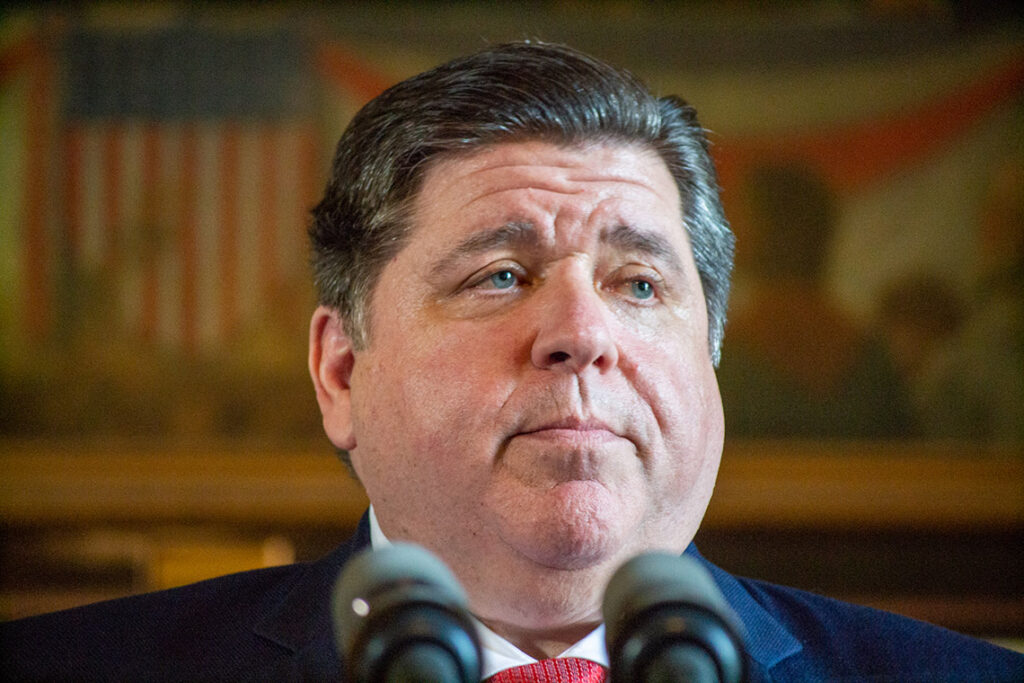
SPRINGFIELD — Gov. JB Pritzker issued an executive order Wednesday that bars state agencies from collecting and disclosing data about autism to the federal government unless it’s medically or legally necessary.
The order was in response to a move by the U.S. Department of Health and Human Services earlier Wednesday to research and create a national autism database.
In a statement, Pritzker called the project a “threat” to the rights of disabled individuals. The order stated that the project raises privacy concerns about the collection and use of data, as well as potential “discriminatory profiling or surveillance of individuals with disabilities.”
“Every Illinoisan deserves dignity, privacy, and the freedom to live without fear of surveillance or discrimination,” Pritzker said. “As Donald Trump and DOGE threaten these freedoms, we are taking steps to ensure that our state remains a leader in protecting the rights of individuals with autism and all people with disabilities.”
Executive Order 2025-02 also requires state agencies to follow strict privacy and data protection requirements when they do disclose such data, including making personal information anonymous where it’s practicable and only disclosing the minimum amount of personal information that’s legally necessary.
The move was prompted by an HHS announcement of a research project on Wednesday. The project will allow the National Institutes of Health and the Centers for Medicare and Medicaid Services to have access to data and medical records of Medicare and Medicaid enrollees diagnosed with autism in an effort to research autism, Newsweek reported.
It also directly responded to remarks made last month by U.S. Department of Health and Human Services Secretary Robert F. Kennedy Jr., who called autism an “epidemic” and said that President Trump has tasked him with finding a cause for the “epidemic.”
“Autism is a neurological difference—not a disease or an epidemic,” Pritzker’s order read. “People with disabilities, including individuals with autism, are too often stigmatized and underestimated, and public policy should never diminish the diverse strengths and potential of this community.”
This is not the first time Kennedy has touched on his beliefs about autism. During an interview in 2023, he confirmed that he believes that vaccines cause autism, a theory the U.S. Centers for Disease Control and Prevention and a wide body of research have long since debunked.
Read more: How RFK Jr.’s health proposals could affect Illinois
Executive orders aren’t often enacted by the Illinois governor, as last year he only signed three. This is the second order he has signed this year and is his latest action against the Trump Administration since his trade mission to Mexico this spring.
Read more: Pritzker hopes trade mission to Mexico sparks new investment despite tariffs
Capitol News Illinois is a nonprofit, nonpartisan news service that distributes state government coverage to hundreds of news outlets statewide. It is funded primarily by the Illinois Press Foundation and the Robert R. McCormick Foundation.
The post Pritzker signs order to protect personal autism data in response to federal action appeared first on Capitol News Illinois.