Posts Tagged ‘Kwame Raoul’
Lawyers say D.C. court’s decision striking down large-capacity magazine ban should be applied to Illinois
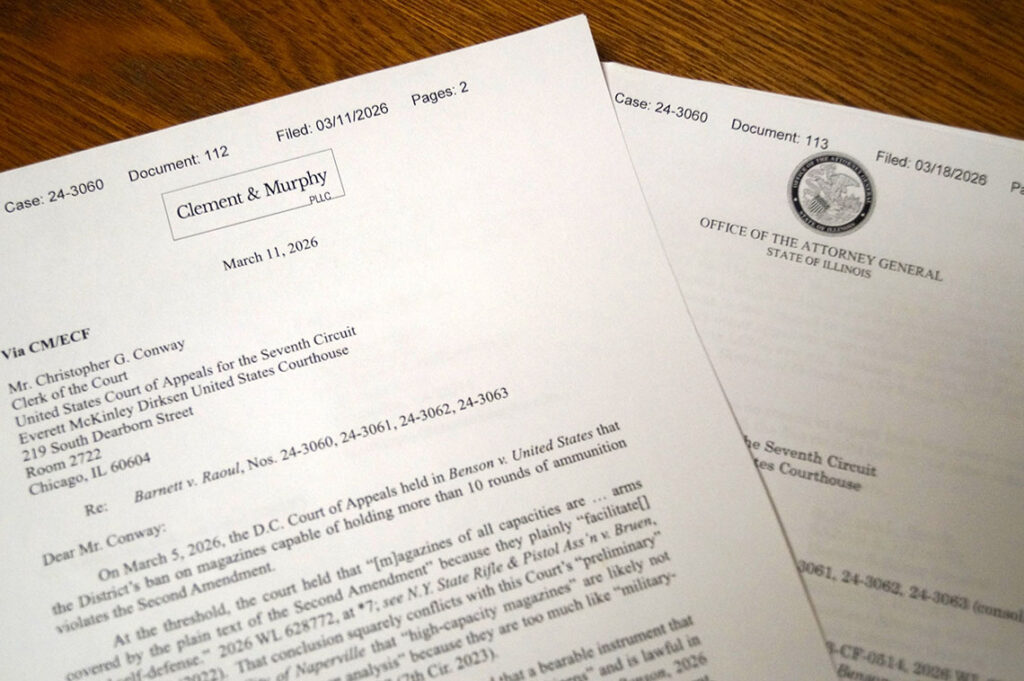
Recent decision by a local Washington, D.C., court is being cited as precedent in a case challenging Illinois’ assault weapons ban.
Read MoreIllinois leaders ‘won’t back down’ following Trump’s order limiting AI regulation
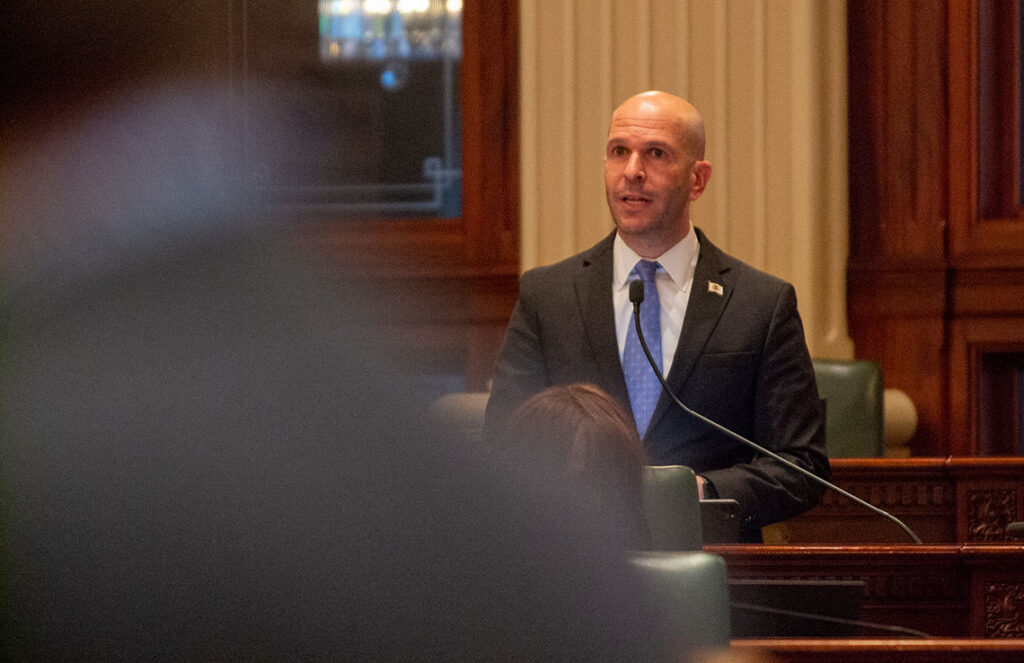
President Donald Trump said winning the AI race is a national security matter.
Read MoreTrump administration requests voter data from Illinois elections board
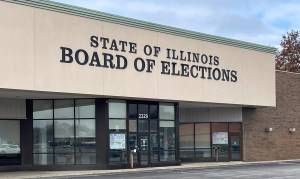
The Illinois State Board of Elections office is pictured in Springfield. (Capitol News Illinois file photo)
DOJ is launching efforts in multiple states to gain access to sensitive voter data.
The post Trump administration requests voter data from Illinois elections board appeared first on Capitol News Illinois
Pritzker signs bills addressing gun storage, tracing of firearms

Under new laws signed by Gov. JB Pritzker, firearm owners will soon be required to keep their weapons stored securely and out of the hands of minors while law enforcement agencies will be required to trace the ownership of all firearms they recover from crime scenes. (Capitol News Illinois photo by Andrew Campbell)
Illinois adopts tougher gun laws while courts grow increasingly skeptical.
The post Pritzker signs bills addressing gun storage, tracing of firearms appeared first on Capitol News Illinois
Attorney General Raoul joins lawsuit challenging Trump’s termination of federal grants
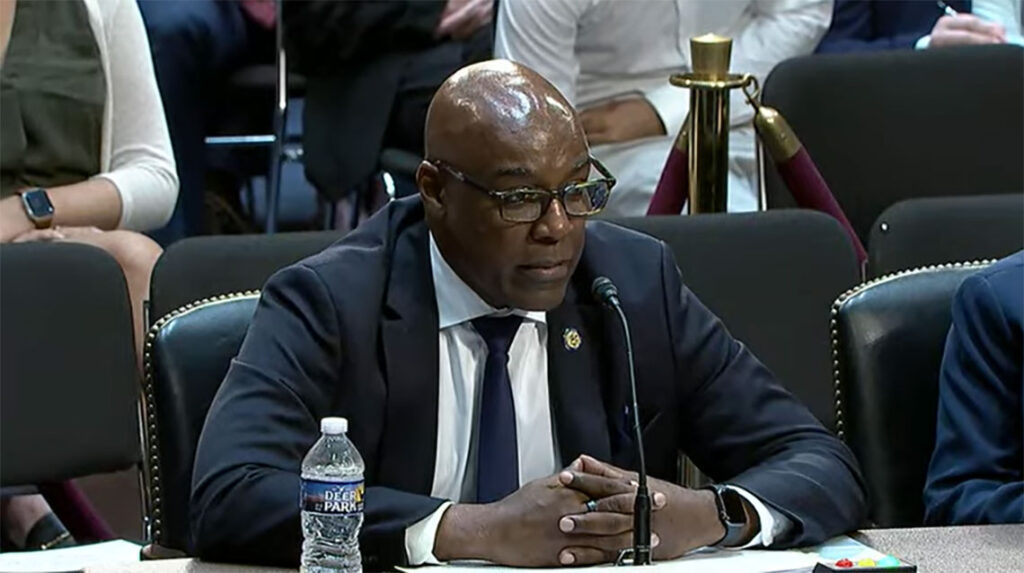
Capitol News Illinois
SPRINGFIELD – Attorney General Kwame Raoul announced this week he has joined another multistate lawsuit challenging the Trump administration’s decision to withhold billions of dollars in federal funds that had previously been approved for states and other grantees.
The complaint, filed Tuesday in U.S. District Court in Massachusetts, challenges several actions the administration has taken since Trump returned to office Jan. 20 that involved terminating federal grants that had previously been approved by various agencies.
Each of those actions, the lawsuit argues, were based on a misuse of a single clause in one regulation under the federal Office of Management and Budget. That clause allows agencies to terminate a grant if the agency determines the award “no longer effectuates the program goals or agency priorities.”
“The Trump Administration has claimed that five words in this Clause — ‘no longer effectuates . . . agency priorities’ — provide federal agencies with virtually unfettered authority to withhold federal funding any time they no longer wish to support the programs for which Congress has appropriated funding,” the lawsuit alleges.
The suit is one of more than a dozen Raoul has joined as part of a coalition of Democratic attorneys general who have been battling the administration since Trump’s second inauguration in January.
Speaking Monday to a congressional panel made up of Democratic members of the U.S. House and Senate judiciary committees, Raoul joined three other members of that coalition to explain their litigation campaign.
“Whether or not I disagree with President Trump on his policy agenda, he must act in a lawful way that is consistent with the Constitution and the laws that Congress has enacted,” Raoul said. “Unfortunately, the president and his administration have chosen, with many of their actions, to ignore the Constitution and federal law. And when constitutional guarantees are ignored, all Americans are at risk.”
Grants affected by cuts
The lawsuit challenges three specific funding cuts that have directly affected the state of Illinois. Those include:
The U.S. Department of Agriculture’s decision in March to halt reimbursements under the Local Food Purchase Assistance Program, which provided funding for nonprofit organizations to buy locally grown food products from farmers for free distribution to vulnerable communities.
A decision by the Federal Emergency Management Agency to terminate two Shelter and Services Program Grant awards to the Illinois Department of Human Services totaling $29 million. The money was intended to reimburse Illinois for the cost of providing food, shelter and medical care to migrants whom the U.S. Department of Homeland Security had released to relieve overcrowding at federal detention facilities.
And a decision in May by the U.S. Department of Labor to terminate grants totaling $28.8 million to the Illinois Department of Employment Security for modernization of the state’s unemployment insurance system.
According to the lawsuit, OMB first adopted the regulation in 2020, near the end of the first Trump administration. At the time, according to the Federal Register, the agency said the clause was intended to allow agencies to end a grant program under specific conditions, but that it was not intended to let them terminate grants “arbitrarily.”
The clause was later updated to include its current wording in 2024, near the end of Joe Biden’s administration. However, according to the complaint, “OMB never suggested, in either the 2020 or 2024 rulemaking, that a grant could be terminated even though the grant was continuing to serve the very goals for which the monies had initially been awarded, merely because the agency’s priorities shifted midway during the use of the grant—let alone with no advance notice.”
As of Wednesday, the case had not yet been scheduled for a hearing.
Capitol News Illinois is a nonprofit, nonpartisan news service that distributes state government coverage to hundreds of news outlets statewide. It is funded primarily by the Illinois Press Foundation and the Robert R. McCormick Foundation.
The post Attorney General Raoul joins lawsuit challenging Trump’s termination of federal grants appeared first on Capitol News Illinois.
Wasted waters: How Southern Illinois is coping with decades of sewage flooding

Capitol News Illinois
by Janelle O’Dea for the Illinois Answers Project
CAHOKIA HEIGHTS — Arianna Norris, 63, paid cash for her home in Cahokia Heights. For as long as she’s lived there, during intense rainstorms, water surrounds her property and last year her basement started flooding.
Norris was around four years ago when residents in Alorton, Cahokia, and Centreville voted for the merger that created Cahokia Heights and disbanded the Commonfields of Cahokia Public Water District. The merger was an effort to address the sewage overflows that have plagued the area for decades, thanks to leaky pipes and broken equipment in the aging system that allow raw sewage to escape, flooding homes, streets and businesses.
But given her experience with months-long floods last summer, Norris is skeptical that the city’s sewer system will ever be fixed, even with the merger’s promise— that combining the three cities would give Cahokia Heights a larger population and a shot at multi-million dollar federal grants for repairs.
She knows the city has applied for grants, received some of them, and completed some work. She sees crews making repairs, but she also still experiences flooding.
Kyle Pyatt for Illinois Answers Project
“They might as well have just taken a match to it,” Norris said, of the grant money “I know they spent it, but I don’t know where.”
Like other smaller communities, the city’s still relatively small tax base and fewer resources hinder its ability to pay for the kind of multimillion dollar projects that could resolve overflows.
It is among five dozen communities in Southern Illinois and the Metro East that account for a third of sanitary sewer overflows reported to the state of Illinois within the last decade, according to data from the Illinois Environmental Protection Agency. Unless authorized by a permit, sewer overflows into U.S. waters are violations of the U.S. Clean Water Act, which the Illinois EPA enforces.
Explainer: What is a sanitary sewer overflow?
Sanitary sewer overflows, SSOs, are a release of untreated or partially treated waste from a city sewer. Sanitary sewer overflows are illegal. But when normal systems become overloaded through heavy rain or a larger load from an increasing population, SSOs occur. When they occur, they must be reported to the Illinois EPA. SSOs can be caused by blockages, line breaks, sewer defects, power failures, improper sewer design, vandalism, or groundwater overloading the system, as is often the case during heavy rainfall. Learn more.
Cahokia Heights tried the 2021 merger and applications for numerous grants to remedy the problem with mixed results. Other communities with overflow issues have tried approaches like selling parts of their sewer systems.
Yet for Norris and others in Southern Illinois, the overflows persist.
While these residents wait for relief they continue to endure property damage, fear and distrust of the drinking water and damaging health impacts.
Surrounded by sewer water
As of 2020 when an engineering report on sewer repairs was completed, Cahokia Heights needed to repair or replace at least 800 feet of sewer pipes, six sections of water main, 19 fire hydrants, eight lift stations, and more than 50 pump stations according to grant applications submitted the following year.
The estimated cost: more than $24 million.
This map shows where various repairs are needed throughout Cahokia Heights’ sewer system. (Cori Lin/Onibaba Studios for Illinois Answers Project)
A third of the majority-Black population of Cahokia Heights lives below the poverty line. The community’s median household income is $37,975 — less than half of the state’s median. As of publication, Illinois Answers had not received a requested copy of the city’s most recent budget.
Poorer areas and communities of color often face the greatest risk when it comes to sewage backups, flooding, and access to clean drinking water. Decades of infrastructure disinvestment and neglect can exacerbate problems with old sewer systems, and expensive home repairs from flooding damage or cleanup are tough to make on a limited income.
Two out of the three former cities that make up present-day Cahokia Heights had wastewater collection and transport systems built in the 1980s that have been poorly maintained, according to the Illinois EPA. The newly merged city sits in the Mississippi River floodplain, located about 30 minutes east of St. Louis.
Water rises in the streets outside Patricia Greenwood’s house in the Piat Place neighborhood. (Kyle Pyatt for Illinois Answers Project)
Between 2014 and 2024, the city accounted for a quarter of all sanitary sewer overflow reports submitted to the Illinois EPA by permittees not regulated by the National Pollutant Discharge Elimination System program, according to data obtained from the agency. Those with NPDES permits are allowed to discharge into waterways so long as contaminants are below a certain level.
But a lag in enforcing SSO reporting from more rural communities until recent years may contribute to the issue.
“Historically any time a new requirement comes down the pipeline, it seems like larger communities are the first ones tested for compliance,” said Cody Moake, chief of staff to the Marion mayor.
The sewer system in Cahokia Heights as a whole is still broken and the overflows happen despite repairs. Attorneys with Equity Legal Services, who represent citizens of Cahokia Heights in multiple lawsuits, said residents report that repairs are made but fail within weeks or months.
Other repairs made flooding worse in some residents’ yards and houses.
Last summer during a storm, Norris’ house was surrounded by water for six weeks, and another resident was without hot water for over two weeks after the flood destroyed her hot water tank, according to the complaint filed by attorneys. Within a week, St. Clair County, where Cahokia Heights is located, was declared a disaster zone by the U.S. government.
Solution: A merger to secure more funds
Since the 2021 merger, more than $35 million in grants have been awarded to Cahokia Heights, according to Illinois EPA data. The data indicates an estimated $200 million would be needed for flood mitigation and to repair or replace sanitary sewer and drinking water systems.
The agency aggregates this data from multiple sources, and a disclaimer attached to the data states that there is “no assumed review of accuracy or completeness by EPA.”
Almost $12 million in awarded grants comes from federal agencies including the federal Environmental Protection Agency, the U.S. Army Corps of Engineers, the U.S. Department of Housing and Urban Development, funds earmarked by U.S. Senators Dick Durbin and Tammy Duckworth and from the American Rescue Plan Act.
But securing the funds is only part of the battle.
To use these funds, Cahokia Heights has to apply to the various agencies that control the money for approval on how it’s spent.
When applying for a grant, cities have to provide information about how the money will be spent and preparing those plans isn’t cheap. For example, preliminary engineering on two parts of the sewer system over the last two years cost the city more than $400,000, according to invoices from Hurst-Roche, a Hillsboro-based engineering firm.
The ditch surrounding William McNeal’s house flows with smelly water every time there is significant rain. The overflows by McNeal’s house made up more than a third of the 107 sanitary sewer overflows in Cahokia Heights. (Kyle Pyatt for Illinois Answers Project)
In Johnston City, about two hours south of Cahokia Heights, officials secured a $68,000 grant from the Delta Regional Authority to map out the sewer system in anticipation of applying for a larger grant, Mayor Doug Dobbins said. The DRA is a federal-state collaboration established 25 years ago to invest in basic public infrastructure in eight states along the Mississippi River.
Dobbins said getting the grant would have been impossible without help from a pro bono grant writer.
An overflow complaint from Johnston City was reported to the Illinois EPA in November of last year citing “dead fish, black water” and “a foul odor.” When EPA staff investigated, they didn’t find dead fish, but noted in a report that repairs were needed to prevent future basement backups. In response to a records request, the Illinois EPA found no Johnston City sewer overflow reports from the last five years.
Dobbins said the November break was an equipment malfunction and “could happen with an old or a new valve.” The break came about a week after record rainfall once again hit the region.
Prior to the overflow, Dobbins said, city staff were developing a replacement plan for the city’s wastewater treatment plant, which began providing service in the early 1980s with an estimated 25-year lifespan. It’s nearly 50 years old.
Keeping an older plant running can cost cities money, too, he said — when equipment would break, sometimes they’d find that the parts needed were no longer made, and they had to pay for a custom fabrication.
Without the no-cost grant writer, Dobbins said he doesn’t think the city would be considered for most grants.
“What takes [a grant writer] three hours would take us three weeks,” Dobbins said. He’s still unsure if the entire plant needs replacing, or just parts of it, but he anticipates a request from state officials in the near future for a plan.
Even if the preparation to make repairs gets done, a small tax base means some funding is out of reach. Grants can require a 50/50 split, meaning a municipality has to pay for half of the project and the agency providing the grant pays for the other half.
“And there’s no doubt in my mind that this project starts with an ‘M,’” he said, referring to the millions he thinks it’ll take to repair or replace the wastewater plant in Johnston City.
“We’re a retirement community,” Dobbins said. “We can’t afford that.”
In Carterville, about two hours south of Cahokia Heights, Mayor Bradley Robinson said the city has spent $1 million just on engineering for the city’s proposed new wastewater treatment plant.
State and federal intervention has had little effect.
Related local coverage of Cahokia Heights’ sewer overflows
Timeline of Belleville News-Democrat coverage, Jan. 16, 2023 — Staff at the Belleville News-Democrat have covered developments in the Cahokia Heights story for years. Here’s a timeline of their coverage through 2022.
Only a fraction of the money sought for Cahokia Heights projects has been spent. Why? May 30, 2024 — The Belleville News-Democrat follows the money and asks questions about why it’s taking a while for the city to receive and spend the money it’s been awarded in multiple grants.
How aging water systems are pushing sewage into U.S. homes Oct. 25, 2024 — The nonprofit organization Science Friday features Cahokia Heights and explores how aging infrastructure can result in sewage backups and flooding.
Plan calls for $30 million in Cahokia Heights sewer repairs. Residents say it’s not enough Dec. 10, 2024 — After authorities announced the proposed settlement agreement for the sewage and flooding issues in Cahokia Heights, residents expressed their misgivings about it.
In December, five years after the sewage overflows and severe flooding began getting widespread attention in the press, the Illinois Attorney General Kwame Raoul joined a lawsuit, along with the U.S. Department of Justice and the state and federal environmental protection agencies on behalf of Cahokia Heights residents.
As a part of the enforcement, the agencies filed a consent decree that, according to a release from Raoul’s office, “requires Cahokia Heights to pay a $30,000 civil penalty and invest approximately $30 million in extensive sewer improvement projects, conduct system-wide repairs and ensure the community is updated with its progress on upgrades.”
But “the 15 years doesn’t even include [a requirement for] the system being fully functional,” said Nicole Nelson, an attorney for Equity Legal Services, which represents Cahokia Heights residents in a separate lawsuit.
A sign by William McNeal’s house warns that there is a sanitary sewer overflow and warns residents of potential health risks if exposed to the contaminated water. (Kyle Pyatt for Illinois Answers Project)
The decree also provides a caveat: If Cahokia Heights “demonstrates that an SSO would not have occurred but for the conditions in the City of East St. Louis sewer system,” the city won’t be obligated to fix the source of the overflow. The two cities’ systems are connected.
In overflow reports from East St. Louis, none blamed Cahokia Heights, but in the last 10 years, eight Cahokia Heights reports cited the East St. Louis system as the cause. A wastewater treatment plant in the nearby village of Sauget also cites East St. Louis in reports as a contributor to overflows there.
Precipitation and equipment failures were cited as causes of overflows in East St. Louis.
But Dawayne Stewart, assistant finance director for East St. Louis, said “there’s never been a comprehensive study” of where sewer problems are located in the city. On April 10, the East St. Louis City Council considered an agreement with an engineering group to complete a sewer study, but it died without any votes.
“We’re still having a ton of problems,” Stewart said. In June, the Illinois Department of Natural Resources announced a $2.6 million plan to buy out flood-damaged properties in East St. Louis citing “stronger and more frequent storms.” In December, state and federal authorities filed suit against overflows in the city of East St. Louis.
Robert Betts, city manager of East St. Louis, declined to comment, but said the “proper functioning of the sanitary and storm water sewer system is of paramount importance.
The ditch surrounding William McNeal’s house flows with smelly water every time there is significant rain. The overflows by McNeal’s house made up more than a third of the 107 sanitary sewer overflows in Cahokia Heights. (Kyle Pyatt for Illinois Answers Project)
Meanwhile, with slashes to federal funding targeting environmental projects, federal support for these fixes is at risk.
The main sources of funding for drinking water and wastewater infrastructure are the U.S. EPA, the Department of Agriculture and U.S. Department of Housing and Urban Development through programs like the Safe Drinking Water and Clean Water state revolving funds. The Associated General Contractors of America, a construction association, calls these federal funds “highly successful but chronically underfunded.”
U.S. Representative Nikki Budzinski, whose district includes Cahokia Heights, is worried after she said she learned that the Trump administration had plans to cut staff from the U.S. Department of Housing and Urban Development, potentially including those who manage natural disaster response.
In April, Budzinski visited Granite City, about 20 minutes north of Cahokia Heights, to meet with residents and criticized Republicans for federal cuts. The cut funding included over $1 million for part of the project in Cahokia Heights. The city’s engineer said the cut funding would have gone toward separating the Cahokia Heights and East St. Louis systems — they will now have to start the appropriations process again.
In early June, the Illinois EPA announced nearly $10 million in combined grant programs for sewer overflows and watershed management. This comes months after the Illinois Answers Project began requesting records and asking the agency about sanitary sewer overflows.
The state of Illinois also provides funding for sewer infrastructure projects through community development block grants and other grant programs, like the unsewered communities planning grant program announced by the Illinois EPA at the end of last year.
Solution: Fix the Harding Ditch
Despite the consent decree mandating system-wide repairs, a lawyer for Cahokia Heights has attributed the city’s sewage problem to homeowner mismanagement in past court filings.
But an Illinois Answers review of the Illinois EPA overflow reports found only a sixth of the reports made by the city attribute overflows to equipment failures, from line breaks to pumps failing. Three quarters of the reports cite heavy rain or snow melt — or stormwater — as causes.
Stormwater and lack of maintenance of the infrastructure meant to contain it — such as canals or ditches designed to prevent flooding by allowing surface water to drain into them — adds to the overflow problem.
The ditch surrounding William McNeal’s house flows with smelly water every time there is significant rain. The overflows by McNeal’s house made up more than a third of the 107 sanitary sewer overflows in Cahokia Heights. (Kyle Pyatt for Illinois Answers Project)
In Cahokia Heights, stormwater eventually flows to several larger ditches, including the Harding Ditch, an 11-mile-long drainage ditch that runs through several Metro East communities. Two years ago, the mayors of Cahokia Heights and East St. Louis said solving the flooding problems would be tough without remediating the Harding Ditch.
The Harding Ditch is maintained by the Metro East Sanitary District, and is the “primary drainage path” for the southern part of the Metro East levee system, with multiple tributaries that empty into the ditch, according to the U.S. Army Corps of Engineers.
“The ditch network is supposed to channel water from the ditches into the levee system,” said Kalila Jackson, one of the Equity Legal Services attorneys. “But because the ditches are not clean, they’re not dredged, they’re not properly maintained. They’re dammed up.”
Fixing the stormwater issues will cost millions, according to lawsuit documents. Patricia Greenwood, 75, has lived her entire life in her home in the Piat Place neighborhood. In that neighborhood alone, the current estimate is $12 million or more.
Patricia Greenwood, 75, has lived in the Piat Place neighborhood in Cahokia Heights her whole life. It is currently estimated to cost $12 million or more to fix stormwater issues in Greenwood’s neighborhood. (Kyle Pyatt for the Illinois Answers Project)
“Yet the city has only applied for two grants to address the stormwater infrastructure across all neighborhoods, one of which was rejected and the other still pending,” according to court filings.
Fixing the Harding Ditch alone could cost hundreds of millions of dollars and take longer than a decade, according to local engineering firms.
At a November MESD board meeting, Tom Schooley, the attorney representing the board, said “By being proactive and cleaning the Harding Ditch, it helps our position in the litigation,” referring to the suit brought by Centreville Citizens for Change against the city of Cahokia Heights and MESD.
In the same meeting, Schooley announced the closing of a $8.4 million deal with Illinois American Water which provided MESD with funding to begin work on the Harding Ditch.
The deal transferred the responsibilities for two MESD-run sewer systems to Illinois American Water, a private water company that has increased its sewer footprint in the Metro East in recent years. MESD no longer owns or operates any sewer systems.
It would have cost too much to fix the systems, said former board president Scott Oney. The board tried to apply for a grant to do so several years ago, but if the grant had been secured, it would have meant an increase on customers’ bills, Oney said. The board decided the best course of action, then, was to sell the two systems to Illinois American Water.
Solution: Selling to Private Water
When repairing and replacing old systems to prevent sewer overflows becomes too expensive, they can become business opportunities for private water companies like Illinois American Water.
Such companies benefit when there is less federal funding for water systems, said Bryan McDaniel, executive director of the Citizens Utility Board, a consumer rights advocacy group. When systems are in disrepair, they are more likely to be sold to private companies.
In 2013, Illinois passed a law allowing private water companies to purchase public water systems and pass costs on to consumers. An amendment to the law in 2018 extended it for another decade and also removed a limit on the size of water systems that private companies can buy, according to the Chicago Tribune.
Illinois American Water has pledged that it can and does make repairs and investments that “would not be feasible for a single community to take care of on its own,” according to an email from company spokesman Terry Mackin. In two systems purchased by the company since 2019, hourslong sanitary sewer overflows were reported years after the purchases were completed.
In Cahokia Heights, Illinois American Water doesn’t own any of the sewage system, but the company owns about 20% of the drinking water system in former Alorton and Centreville, which it owned prior to the city merger.
Illinois American Water raised rates twice, in 2023 and this year, on customers in Cahokia Heights. In the first increase, bills rose by almost $7 per month, and in the latest hike, bills increased by $15 per month. Both were attributed to “infrastructure projects statewide,” according to an email from Illinois American Water spokesman Terry Mackin.
Since 2010, the company put $10 million into the portion of Cahokia Heights’ drinking water system that it owns, Mackin’s email said, and another $139 million in “replacements and updates” at the regional East St. Louis water treatment plant, which provides drinking water to Cahokia Heights and other Metro East communities.
The remaining 80% of the drinking water system there is owned by Cahokia Heights, Mackin confirmed. The city purchases water wholesale from Illinois American Water, and owns and operates the water distribution and delivery system, including customer service and all infrastructure.
Illinois American Water announced two years ago that it met requirements of a U.S. EPA order to improve drinking water safety in Cahokia Heights. It applies only to the part of the system the company owns.
“Our actions showed that the issues in Cahokia Heights are about wastewater and flooding and not drinking water service from Illinois American Water,” Mackin’s email said.
Still, William McNeal, 73, a Cahokia Heights resident and a customer of the company, said he doesn’t trust the water that comes out of his faucet. Greenwood, also an Illinois American Water customer, doesn’t trust hers, either. They both use bottled water. In the email, Mackin wrote that the company works with customers “individually and directly” when they’re contacted regarding water quality issues.
Using bottled water is a “consumer’s decision,” he wrote, and “for Illinois American Water customers, it is not necessary for health and/or safety reasons.”
“Heavy rain in recent years in the River Bend has presented challenges in wastewater overflows,” Mackin wrote. “Community wastewater systems, in general, are not built to handle the high volume of rain in recent years in this area.” Mackin also wrote that the company has invested approximately $58 million in Alton since acquisition and $10.8 million in Jerseyville, the two systems that had hourslong overflows after the company purchased them.
“It takes time to analyze, review, design, build and implement improvements,” Mackin wrote.
Solution: Generating funds locally by raising the bills
In Murphysboro and Marion, located about two hours south of Cahokia Heights, where locally generated funds are having some impact, former city officials put service fees on wastewater bills years ago in anticipation of future repairs.
“We only have sanitary sewer overflows when we have an extremely heavy downpour,” said Will Stephens, Murphysboro mayor since 2013. The city of 7,000 is about ten minutes west of Carbondale.
Stephens credits the former Murphysboro mayor for putting a $10 assessment on water bills in the late 2000s to prepare for future infrastructure needs. That money effectively helped finance a loan through the Illinois EPA to build a new wastewater treatment plant completed almost a decade ago.
Within the last few years, Murphysboro also began replacing sewer lines using cured-in-place pipe, he said, and the city financed that work with ARPA funds. This method of pipe repair inserts new material into the pipe to replicate its shape, where it hardens in place.
In Marion, sewer lines were replaced with the same cured-in-place method, Moake said. Those repairs, plus drier weather, have helped bring the number of sewer overflows reported to the Illinois EPA down in Marion from more than 100 three years ago to 24 last year.
Construction on Marion’s sewer lines (provided by Cody Moake)
Marion is financing the repairs with a debt-forgiveness loan from the Illinois EPA and there’s been a debt service fee built into customers’ sewer bills, now $12.31, for decades, Moake said.
The median household income in Marion is $57,281 — almost $20,000 more than the median income in Cahokia Heights. Greenwood showed Illinois Answers copies of three bills totaling $100 that she pays each month for water treatment, water service and sewer service.
Even a $10 per month increase would be a hardship.
“We would have to cut some things out at the grocery store, or gas in the car, or going places,” Greenwood said. “That’s extra money.”
Murphysboro residents expressed similar sentiments in 2005 after sewer bills saw a $10 increase.
Yet the overflows persist
While some communities, like Murphysboro, have found promising solutions, residents in Cahokia Heights and other cities in Southern Illinois and the Metro East are trying to find ways to cope while they wait for solutions they fear may never come.
Represented by Equity Legal Services and environmental justice organization EarthJustice, Cahokia Heights residents are embroiled in two separate lawsuits regarding the sewer overflows. The lawsuits were filed in 2020 and 2021 and are separate from the federal and state agencies’ actions against the city.
The Equity Legal Services team provides McNeal, and dozens of other households with multiple cases of bottled water each month. McNeal said he uses it to cook, drink and brush his teeth.
It’s enough water for him, he said. But he just wants to be able to turn on his tap and trust what comes out.
When there’s substantial rainfall, like there was in April, a sewage overflow next to McNeal’s house turns into a smelly river.
It’s a mix of wastewater and stormwater, and McNeal never knows exactly how contaminated the water is; just that somewhere in the flow, there’s raw sewage. The overflow spills out of the pipe and runs alongside his house, bordering his backyard where he tends a small garden of greens.
William McNeal, 73, says he doesn’t trust the water at his home in Cahokia Heights, where a ditch surrounding his house flows with smelly water every time there is significant rain. (Kyle Pyatt for Illinois Answers Project)
His kids want him to sell the house and move, or leave without selling it, he said, but McNeal’s not planning on doing either.
“I worked for this,” said McNeal, whose home is paid off. He shared the same sentiment with the St. Louis Post-Dispatch five years ago when the situation in Cahokia Heights received a flurry of media coverage. Little has changed since then.
The river that springs up next to his house during pounding rain frustrates him. But the water bills bother him even more.
“The killing part is they steady send you bills, and they said the water was treated and I could drink it,” McNeal said.
McNeal said repairs made near his house earlier this year stopped bathtub and toilet backups. But the pipe in his yard still spews water when it rains.
Authorities acknowledge relief may still be years away. In an update last September on the two remaining lawsuits against Cahokia Heights, lawyers for the U.S. DOJ and the Illinois Attorney General’s Office wrote “due to the long-term nature of sewer infrastructure upgrades, some SSOs [sanitary sewer overflows] will likely continue to occur.”
The federal and state attorneys are not party to the lawsuit but were “willing to aid the court in its understanding of this matter.”
In response to emailed questions from Illinois Answers about enforcement in Cahokia Heights and East St. Louis, Illinois EPA spokeswoman Kim Biggs said because the municipalities are in joint enforcement with the Illinois EPA, U.S. EPA and the DOJ, she could not comment further.
Multiple attempts to reach Cahokia Heights officials were unsuccessful.
The continued overflows with no end in sight are not news to residents who live with them. They wait in their flood-prone homes, anticipating another soggy Illinois wet season.
Patricia Greenwood, 75, has lived in the Piat Place neighborhood in Cahokia Heights her whole life. It is currently estimated to cost $12 million or more to fix stormwater issues in Greenwood’s neighborhood. (Kyle Pyatt for Illinois Answers Project)
At the home of Cornelius Bennett, one of the residents who originally sued the city in 2020, a new backflow preventer, which prevents contaminated water from flowing back into the clean water supply, ended up causing more issues.
“When it rains hard and/or consistently, the top of his backflow preventer pops off due to the pressure of the system and raw sewage sprays everywhere. He keeps bricks on top of the preventer to stem the flow of sewage that escapes,” a November court filing said.
Norris said her basement flooded for the first time last July after a repair was made nearby. Flooding surrounding her home was common during rainstorms.
Norris feels like giving up, some days, though she thought she’d retire peacefully in Cahokia Heights.
She spends her time working part-time at the Cahokia library and pushing for relief from the overflows. Though she’s exhausted, and she didn’t think she’d “have to go back into fighting mode” in retirement, she’s digging her heels in and is determined to stay. Others, she says, may be running out of steam.
Norris has been to several town hall meetings on the water and sewer projects held by city officials over the years. Attendance at the meetings was once robust, she said, but waned as time went on. The meetings were “minimally advertised,” attorneys said, and they did not see much community engagement.
“It is heartbreaking and sometimes it can be almost soul crushing because you feel like you’re up against it,” Norris said. “That’s the worst part is the feeling that nobody cares.”
Methodology: How we reported this story
Illinois Answers examined a decade’s worth (2014-2024) of sewer overflow data and reports obtained from the Illinois EPA. In response to a Freedom of Information Act seeking sanitary sewer overflow data for the time period, two spreadsheets were provided.
Reports are submitted to the agency by governments when an overflow occurs. For some entities — those not permitted under the National Pollutant Discharge Elimination System — Illinois EPA staff enter the data from the reports into a spreadsheet for internal tracking purposes. The reports are entered manually by Illinois EPA staff within one week of receipt, said Illinois EPA spokeswoman Kim Biggs. The internal tracking spreadsheet is not public.
Another spreadsheet represents overflows reported by NPDES permittees. SSO reports from NPDES permitted facilities, which are those that discharge to waters of the U.S., are entered into the U.S. EPA’s Integrated Compliance Information System (ICIS) database. That database is public, and is where the spreadsheet provided to the Illinois Answers Project came from.
The PDF reports submitted by government agencies, including cities, villages, and sewer districts, were obtained through a series of separate Freedom of Information Act requests. The reports were used to corroborate information in the spreadsheets provided by the Illinois EPA and fill in gaps of time where reports of overflows did not appear in the spreadsheet.
For example, years 2016, 2017, 2018 and 2019 were missing entirely from one spreadsheet.
“Our staff did do additional checking and unfortunately could not find any spreadsheets with those years for your request,” Biggs said. For localities named in Illinois Answers Project stories, PDF reports were requested for the missing years and manually entered by Illinois Answers Project staff into a copy of the spreadsheet.
The reports are handwritten and provide the authors some latitude to describe conditions. If there are ranges provided — for example, if “8 to 24 hours” is provided for duration of overflow — the lower end, 8, was entered into the spreadsheet.
If “unknown” was entered on the form in a space, that value is shown in the spreadsheet. If it was left blank, it is blank in the spreadsheet. When dates were not correct in the spreadsheet or the report showed a different date, they were corrected with the date shown on the report.
When multiple overflows were reported for the same day, even if the rows of data for each overflow were identical and no PDF reports were returned for those records, the rows were not dropped from the spreadsheet because a permittee can have multiple overflows in different locations in one day. In several of those cases, the date of the overflow was the same, but location of the overflow or other important details — amount discharged, what happened to water discharged — differed.
For records in both spreadsheets:
Some rows in the spreadsheets — each row represents one report — matched the reports provided exactly.
Other rows in the spreadsheet existed but efforts to obtain PDF reports for that overflow record were unsuccessful. For some — including ten reports submitted in Cahokia Heights — reports were returned in a Freedom of Information Act request but corresponding rows were not in the spreadsheet. In that case, rows were added to the spreadsheet for data analysis purposes. Reports with no corresponding rows were found more often for overflows occurring in earlier years, prior to 2020, when cases in Cahokia Heights were filed and began to make news.
The form to submit a Sanitary Sewer Overflow to the Illinois EPA can be found here.
This article first appeared on Illinois Answers Project and is republished here under a Creative Commons Attribution-NoDerivatives 4.0 International License. PARSELY = { autotrack: false, onload: function() { PARSELY.beacon.trackPageView({ url: “https://illinoisanswers.org/2025/06/17/wasted-waters-how-southern-illinois-is-coping-with-decades-of-sewage-flooding/”, urlref: window.location.href }); } }
The post Wasted waters: How Southern Illinois is coping with decades of sewage flooding appeared first on Capitol News Illinois.
Pritzker signs $55.1B state budget reliant on $700M of new taxes
Capitol News Illinois
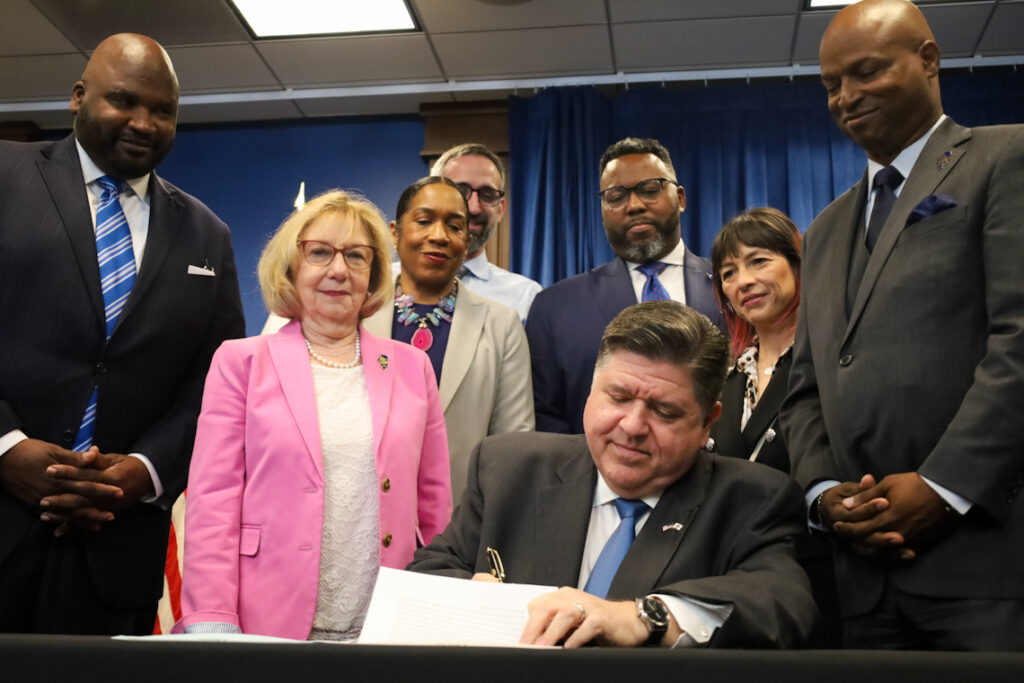
Gov. JB Pritzker signed Illinois’ fiscal year 2026 budget into law Monday, taking shots at President Donald Trump’s budget management to defend hard choices state lawmakers were forced to make this year.
The $55.1 billion spending plan set to take effect July 1 is the largest in state history and is supported by $55.3 billion in anticipated revenue, including more than $700 million in new taxes and more than $500 million in one-time revenues.
Democrats approved the budget shortly before midnight on May 31 with only a handful of Democrats opposing it and all Republicans unanimously voting against it.
The budget’s passage came after months of discussion about closing an initially projected $3 billion deficit and growing concerns about Trump’s treatment of state funding in Washington. Pritzker, a possible 2028 presidential candidate, used Monday’s budget signing ceremony in Chicago as an opportunity to draw a contrast between his and Trump’s budgets.
“While the Trump administration goes on Fox News lying about being fiscally responsible, Illinois is showing a better way: Balancing the budget while maintaining the programs that most people rely on,” Pritzker said.
“Congress is about to pass a federal budget that has one of the largest budget deficits ever in a year without a war or a pandemic. By contrast, Illinois is balancing its budget and prudently improving its fiscal condition,” he said.
Pritzker and other Democratic leaders acknowledged that crafting the FY26 budget was challenging but continues to make investments Democrats believe are priorities. Discretionary spending will increase by less than 1% in FY26, Pritzker said. Despite the minimal increase, the FY26 budget still spends about $2 billion more than FY25.
Democrats “ace the challenges and uncertainty head on, and the result is a budget that is truly balanced with no gimmicks,” House Speaker Chris Welch, D-Hillside, said.
But that’s not how Republicans view the budget’s fund sweeps and delayed transfers that free up hundreds of millions of dollars that can be used in FY26.
“This approach sets Illinois up for failure by FY27 and continues a pattern of short-term thinking,” House Minority Leader Tony McCombie, R-Savanna, said in a statement.
Senate Minority Leader John Curran, R-Downers Grove, condemned lawmakers for failing to deliver significant tax cuts since Pritzker took office in 2019 when Illinois’ budget totaled about $40 billion.
“You know it’s a bad budget when it’s based on nearly $1 billion in tax increases and enhancements,” he said in a statement.
The governor also used his broad authority to reduce a pair of technical errors in the budget. The changes lower spending by $161.2 million from what lawmakers passed.
Tax increases on tobacco and vape products, businesses
The tax plan will raise $709 million in new revenue through what House Majority Leader Robyn Gabel, D-Evanston, characterized as “smart new sources of revenue.” They include new taxes on businesses, sports betting and tobacco and vape products, according to a list provided by the Senate Democratic caucus.
The budget will not raise personal income, corporate income or sales taxes after Pritzker told reporters that he will veto any budget containing “broad-based” tax increases just days before the bill passed.
Sen. Elgie Sims, D-Chicago, discusses the state budget at a June 16 signing ceremony. Sims is the chief budget negotiator in the Senate. (Capitol News Illinois photo by Andrew Adams)
The largest sum of new taxes – $336 million – are on businesses outside of Illinois that lawmakers call “leveling the playing field” and will require businesses to pay more income tax to the state on their profits.
Consumers will face new taxes on specific items, including taxes on tobacco, vaping and other nicotine products, which are increasing to 45% to raise $50 million. An existing telecommunications tax will also rise from 7% to 8.65% and raise $49 million to fund the statewide 988 hotline.
A new tax on sports bets will charge betting sites 25 cents for the first 20 million wagers and 50 cents for each bet following that. It’s projected to raise $36 million. Sports betting sites FanDuel and DraftKings have both announced they will implement 50-cent transaction fees on Illinois customers in response to the tax.
Short-term rentals will have to begin paying the state’s hotel operator’s tax. The charge is already applied to hotels in the state, and Airbnb already pays it voluntarily, but more companies like Vrbo will now be required to pay the tax expected to raise an additional $10 million.
A pair of tax amnesty programs are expected to raise $228 million. Those programs are meant to incentivize taxpayers to pay overdue taxes.
Fund sweeps, delayed transfers free up more for spending
The budget deploys a series of tactics designed to free up more money for spending in the general fund in FY26 without repeating as a revenue source for the following year’s budget.
It suspends the monthly transfer to the “rainy day” fund for one year, freeing up $45 million for general fund use. Pritzker has taken pride in the fund’s increase in recent years as it’s grown to a balance of $2.3 billion, up from less than $60,000 when he took office. The fund is still estimated to grow by $161 million from interest and contributions from other funds in FY26.
Read more: Illinois’ $55.2B budget ‘incomplete,’ Civic Federation president says
The state will also pause the final transfer of motor fuel sales tax revenue to the road fund in order to free up $171 million. That scheduled transfer was set in motion by the state’s 2019 infrastructure plan, with the sales tax supporting bond debt taken out to complete road and bridge projects. This year was to be the final year of incremental transfers that took place over the past five years.
Gov. JB Pritzker speaks before signing Illinois’ fiscal year 2026 budget on June 16. Also pictured, from left to right: Sen. Elgie Sims, D-Chicago; Rep. Will Guzzardi, D-Chicago; Lt. Gov. Juliana Stratton; Rep. Kam Buckner, D-Chicago; House Speaker Emanuel “Chris” Welch, D-Hillside. Rep. Eva-Dina Delgado, D-Chicago, is not shown.
The budget package also establishes a new $100 million BRIDGE fund that the governor can tap into “in the event of unanticipated delays in or failures of revenues.” The measure, an apparent nod to the uncertainty of federal funding amid ongoing congressional budget negotiations, will come from money swept from 57 different funds.
When combined with the tax amnesty program, the fund sweeps and delayed transfers add up to at least $544 million of one-time revenue in this year’s state budget that will not be available in FY27.
Health and Human Services
The most notable change to health care funding is the elimination of the Health Benefits for Immigrant Adults, or HBIA, program that provided certain low-income noncitizens between ages 42 and 64 with state health care benefits akin to Medicaid. Eliminating the program saves the state $330 million, but the $110 million Health Benefits for Immigrant Seniors, or HBIS, remains in place.
“This was part of the challenge that we had to address,” Pritzker said. “It was a program that had been growing significantly in cost. I do believe that everybody should have health care. I also know that we have to live within our means in the state of Illinois.”
HBIA’s elimination comes after a recent audit found the two programs have cost the state at least $1.6 billion since their inception, far exceeding original estimates for the program. Last year, the state put new guardrails in place to limit enrollment into the programs and reduce costs through co-pays and other measures.
Read more: Audit finds Illinois’ noncitizen health care programs far outstripped original cost estimates
Gov. JB Pritzker speaks before signing Illinois’ fiscal year 2026 budget on June 16. (Capitol News Illinois photo by Andrew Adams)
HBIA’s elimination also comes as Congress debates a domestic policy plan that could reduce reimbursements to states that provide health care benefits to noncitizens.
In anticipation of broader reductions to health care and Medicaid reimbursements to the state, Illinois lawmakers also increased spending on other health care and social service programs:
$40 million for Federally Qualified Health Centers. These centers could provide care for people who lose coverage under HBIA turn.
$18 million from the General Revenue Fund for five safety-net hospitals in the state’s Medicaid managed care program. Another $100 million from Fund for Illinois’ Future will go to support the Medicaid managed care program at 12 other safety net hospitals.
$60 million for administrative expenses for the Supplemental Nutrition Assistance Program. That’s a $20 million increase from FY25 as Congress has proposed requiring states to cover half of administrative costs.
$263.7 million for HOME Illinois, a program created to reduce homelessness in Illinois. Housing advocates calculated that between Home Illinois and other housing line items, the budget includes $354 million in funding. That’s about a $14.6 million decrease from a year ago, which marks about double of what Pritzker proposed cutting in homelessness funding in February.
An 80-cent hourly wage increase for direct service professionals who service individuals with intellectual and developmental disabilities in community care settings. However, overall flat funding for the program means 305 positions in the program will be eliminated, according to the They Deserve More coalition. Community Care Program workers at the Illinois Department on Aging will receive a 75-cent hourly wage increase.
A new $25 million Prescription Drug Affordability Fund to support certain pharmacies in Illinois in competition against larger pharmacy benefit managers.
$15 million for the Medical Debt Relief Pilot Program that purchases medical debt from patients at a fraction of the total debt.
A $4 million increase for the Department of Children and Family Services aimed at hiring 100 additional staff members.
A child tax credit created in 2024 at 20% of the Earned Income Tax Credit will double to 40%.
Education
The state’s evidence-based funding model for K-12 schools calls for $350 million in additional funding each year, with a portion of that going to a property tax relief fund and the rest directly to schools. The proposed budget fully funds the K-12 education increase at $307 million but does not add $43 million in property tax relief funds.
Funding for higher education operational expenses is only going up 1%. Pritzker had proposed 3%. Democrat budget leaders have said the spending plan includes ways to increase funding by an additional 2% if there are significant cuts in federal funding for higher education, however.
Read more: Despite victories, major higher education policy bills stall in General Assembly
The budget also includes:
A $10 million increase to the Monetary Award Program grants for lower-income college students.
$8 million for a minority teacher scholarship program.
$2.9 million for the state’s Common App initiative to make it easier for high school students to apply to Illinois colleges and universities at one time.
$212 million for Pritzker’s Smart Start early childhood education program.
$21.7 million for the newly created Department of Early Childhood
Others spending areas
Part of the budget package created a new Tier 2 reserve fund that can be accessed if there are violations of what’s known as the federal “safe harbor” law. Lawmakers appropriated $75 million for the fund this year, in line with Pritzker’s proposal. Broader reform to Tier 2 was not considered this spring.
“With this fix going into effect, we’re protecting our taxpayers and state workers from future shortfalls that could cost the state much more,” Pritzker said.
Read more: ‘This issue isn’t going away’: Illinois lawmakers delay pension reform again
Lt. Gov. Juliana Statton, who is also running for U.S. Senate, speaks at a June 16 signing ceremony where Gov. JB Pritzker formally approved the state’s fiscal year 2026 budget. (Capitol News Illinois photo by Andrew Adams)
Attorney General Kwame Raoul is receiving a $15.7 million general fund increase as his office engages in a growing number of lawsuits against the Trump administration. Raoul told lawmakers he needs more attorneys to handle the cases and a generally growing workload in his office. However, because of declining revenue in other funds, total funding for the office largely remains flat in FY26.
Read more: Raoul’s office to receive $15.7M budget increase for operations
The budget sent to Pritzker included a 5% pay raise for state lawmakers, to $98,304. State law sets the pay for legislators to increase annually with inflation, and lawmakers took no action to stop it from occurring in FY26.
The budget also includes:
$500 million for the Department of Central Management Services and Department of Commerce and Economic Opportunity for the Surplus to Success program to prepare idle state properties for economic development.
$17.9 million for the Department of Financial and Professional Regulation to implement a new licensing system
$40 million for immigrant Welcoming Centers
$6.2 billion for Department of Transportation construction projects, including $4.5 billion for roads and bridges.
Capitol News Illinois is a nonprofit, nonpartisan news service that distributes state government coverage to hundreds of news outlets statewide. It is funded primarily by the Illinois Press Foundation and the Robert R. McCormick Foundation.
The post Pritzker signs $55.1B state budget reliant on $700M of new taxes appeared first on Capitol News Illinois.
New taxes on sports bets, nicotine products as Democrats pass $55.2B budget
Capitol News Illinois
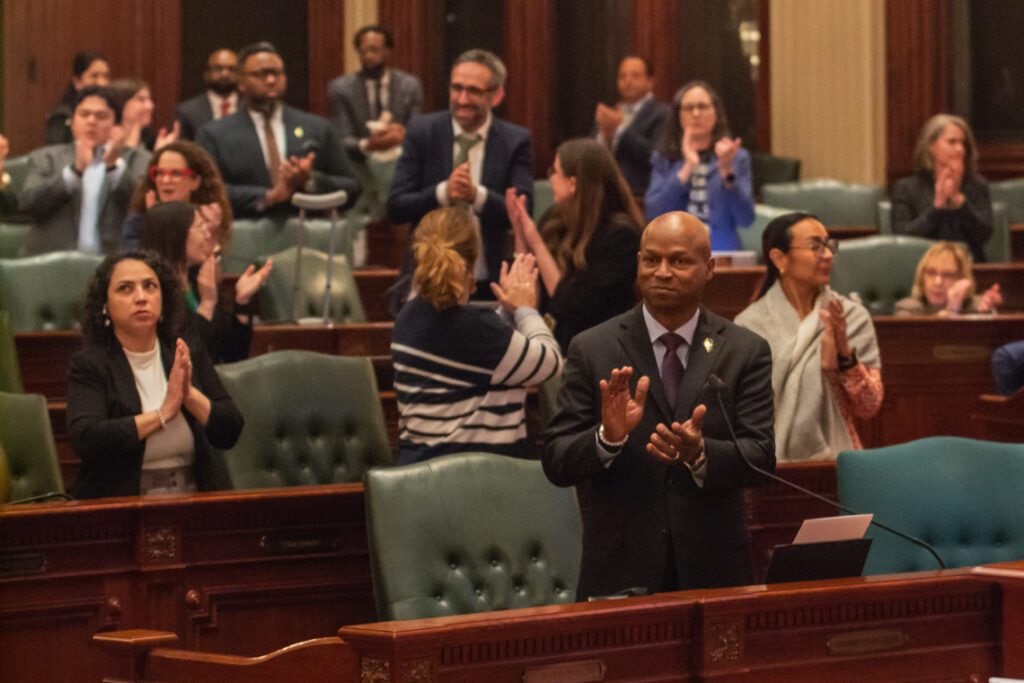
SPRINGFIELD – Giving almost no time for public review, Illinois Democrats pushed through a $55.2 billion budget for next fiscal year late Saturday, bolstering coffers with new taxes on sports bets, nicotine products and businesses.
The $55.2 billion spending plan is supported by $55.3 billion of revenue, including just over $1 billion in new taxes and revenue changes.
The four bills making up the budget and capital spending plan, were part of a flurry of thousands of pages of legislation that went from introduction to passage in the final 48 hours of the legislative session.
The budget marked a roughly 3.9% spending increase from the current year, while Republicans criticized it for containing few cuts. It raises about $500 million more in new revenue than what Gov. JB Pritzker proposed in February to make up for declining base revenues.
The minority party also aired frustration with supermajority Democrats for providing next to no time for public review of the massive spending plan and other major bills.
“We’re rushing this process like we always do. ‘Let’s hide this stuff. Let’s hide it so that the public doesn’t see it until it’s too late,’” Rep. John Cabello, R-Machesney Park, said.
Democrats said it was the best budget they could manage in a difficult year. To address potential uncertainties stemming from federal policy changes, they gave the governor authority over a new $100 million “emergency” fund. And they frequently lobbed criticisms at President Donald Trump and Republicans in Congress.
“I am very pleased to be able to present a balanced budget crafted to be fiscally and socially responsible, because we see the decisions made in Washington right now are neither,” House Majority Leader Robyn Gabel, D-Evanston said. “Erratic leadership in Washington has affected our economic outlook, our revenue projections, and even threatened federal funding for our most crucial services.”
The GOP also took issue with the tax increases, although the measure did not raise or create new sales, income or service taxes.
Instead, the measures expand state taxes on foreign and out-of-state income for businesses, raise tax rates on tobacco, vapes and sports gambling, and sweep fund balances from several lesser-known and utilized state funds.
The spending measure, Senate Bill 2510, passed the House 75-41 just before 10 p.m. The Senate followed around 11:30 p.m. with a 34-23 vote. The revenue and tax changes, House Bill 2755, and the budget implementation bill, House Bill 1075, both passed with relative ease before the constitution’s midnight deadline and only Democratic votes as well. Gov. JB Pritzker issued a statement saying he would sign it.
Another spate of tax increases included in a transit governance overhaul bill surfaced late but sputtered. The failed measure would have added a $1.50 fee on food and package deliveries and taxed electric vehicle charging statewide among other changes. Talks on that bill could resume later this year.
New taxes on vaping, gaming, deliveries
The revenue bill creates a tax of 25 cents per wager for a sports betting licensee’s first 20,000 wagers accepted, and 50 cents per wager after that.
Consumers will also see new taxes on tobacco products. The tax rate will rise to 45% from 36%. Vape products and nicotine pouches would also now be included under the tax.
The revenue plan amends state law to tax sales from all businesses that transact in the state, rather than only businesses with a physical presence in Illinois. The plan also eliminates a “safe harbor” exemption for businesses that move money outside the state.
Businesses that move profits to other countries would also be subject to the state’s corporate income tax. The federal government currently taxes half of income moved offshore and Illinois would tax the other half under the revenue plan.
Businesses outside Illinois that sell $100,000 or more to people in the state must also collect Illinois sales taxes even if the business doesn’t have a physical location in Illinois. This would apply to businesses like Amazon.
“I will not support this betrayal of hard-working Illinoisans,” Sen. Don DeWitte, R-St. Charles, said. “And if you care about the people who sent you here, if you truly represent them, you’ll vote no too. Enough is enough. It’s time for this body to stand with taxpayers, not stand up against them.”
Another source of new revenue is a delinquent tax payment incentive program designed to help the state recuperate overdue tax payments. It will generate $228 million, Rep. Will Guzzardi, D-Chicago, said.
The state would also pause the final transfer of motor fuel sales tax revenue to the road fund in order to free up $171 million, according to the governor’s office’s estimate.
A separate bill designed to lower prescription drug prices calls for levying a fee on pharmacy benefit managers based on the number of patients they insure. Money from that fee would go into a fund for the Department of Commerce and Economic Opportunity to award up to $25 million a year in grants to independent pharmacies and pharmacies located in rural counties. The remaining money would go to the state’s general revenue fund.
The measure also extends the state’s Hotel Operators’ Occupation Tax to short-term rentals like Airbnb and Vrbo.
Immigrant health cuts
A controversial program that provides health insurance to more than 30,000 noncitizens between ages 42 and 64 will be cut in FY26. The program’s elimination saves the state $330 million, but a $110 million program for seniors will remain in place.
Together, the two programs have cost the state at least $1.6 billion, according to an audit released in February, far exceeding budgeted costs for the program.
“We had to make some tough decisions here. That program grew at greater rates, financially, than we thought it would, and we had to make some hard decisions,” Gabel said.
Federally Qualified Health Centers are set to receive $40 million in the budget. The centers provide health services to low-income and uninsured people. Democrats touted that increase to provide care for immigrants who would have qualified for the health care program.
Illinois still risks losing some Medicaid funding under a proposal in Congress that threatens to slash reimbursements for states that provide health insurance to people illegally in the United States. But Gabel noted it’s possible those reductions won’t take place until 2027.
The budget also increases funding for safety-net hospitals with federal Medicaid funding cuts possible.
Education spending
The state’s evidence-based funding model for K-12 schools calls for $350 million in additional funding each year, with a portion of that going to a property tax relief fund and the rest directly to schools. The proposed budget fully funds the K-12 education portion at $307 million but does not add $43 million in property tax relief funds, according to Democratic leaders.
Funding for the Illinois Community College Board would also decrease by $24 million, mostly because lawmakers reduced spending on a workforce development grant that Democrat leaders said was not being fully utilized.
Funding for state universities would only increase by 1%. Pritzker proposed a 3% increase for higher education even as most other areas of his budget would’ve increased by 1%. Senate Democrats’ budget leader Sen. Elgie Sims, D-Chicago, said the budget allows for an additional 2% increase in FY26 if the federal government eliminates substantial funding.
Pensions
Despite more than a year of discussions, Illinois lawmakers did not tackle pension reform this spring. Illinois’ Tier 2 pension system is likely out of compliance with Social Security’s “safe harbor” law that requires pension benefits to be at least equal to Social Security.
Part of the budget package created a new Tier 2 reserve fund that can be accessed if there are violations of the “safe harbor” law. Lawmakers appropriated $75 million for the fund this year, in line with Pritzker’s proposal.
‘Emergency’ fund, raises, more
Notably not in this year’s budget is an increase to the “rainy day” fund. Pritzker has taken pride in the fund’s increases in recent years, as it’s grown to a balance of $2.3 billion, up from less than $60,000 when Pritzker took office. The FY26 budget would suspend the monthly transfer for one year, freeing up $45 million for general fund use.
The budget package also establishes a new $100 million fund that the governor can tap into “in the event of unanticipated delays in or failures of revenues.” The measure, an apparent nod to the uncertainty of federal funding amid ongoing congressional budget negotiations, will come from money swept from other funds.
“That will allow us to respond to actions by the federal government and challenges that present themselves and costs that have been diverted from the federal government to the state government,” Sims said in a committee hearing.
The attorney general’s office would get $116 million from the general fund. Attorney General Kwame Raoul asked lawmakers to boost funding for his office as he engages in a growing number of lawsuits against the Trump administration. Raoul was hoping to receive $120 million in funding.
Direct service providers are in line for an 80-cent per hour wage increase, but Republicans said calling it a funding increase is “sleight of hand,” because the measure would also reduce work hours for DSPs by the hundreds of thousands. That makes the increase negligible, Sen. Chapin Rose, R-Mahomet, said in committee.
“It’s not a great budget, but it is a good budget and it is the budget we need for this very difficult moment,” Rep. Lindsey LaPointe, D-Chicago, said.
Lawmakers will see their salaries rise as part of the budget, going to a $98,304 base salary from roughly $92,000. That’s an annualized rate of increase that is set by law.
“You raised our pay, you gave yourselves hundreds of millions of dollars of our taxpayers funds to spend on your pet projects,” Rep. Amy Elik, R-Godfrey, said. “So I simply don’t believe you anymore that you ever intended to be fiscally careful.”
No Bears stadium funding
Lawmakers did not appropriate funding for the Chicago Bears to build a new stadium. But NASCAR would be the recipient of a $5 million grant ahead of the sport’s third downtown Chicago race in July, and the PGA Tour would receive a $1 million grant as part of hosting the 2026 President’s Cup in DuPage County. Those were two economic development measures criticized by Republicans during the Senate committee hearing.
The budget also contains $200 million to prepare unused state properties to be repurposed for development, Sims said. Lawmakers removed another $300 million that Pritzker had sought in spending aimed at offloading surplus property.
Gabel said the state’s employee management department has negotiated more than $100 million in health care cost savings as well.
Any remaining federal pandemic relief funding would also be sent to recipients that have not received payments in previous years before the funding expires in 2026.
Jade Aubrey contributed.
Capitol News Illinois is a nonprofit, nonpartisan news service that distributes state government coverage to hundreds of news outlets statewide. It is funded primarily by the Illinois Press Foundation and the Robert R. McCormick Foundation.
The post New taxes on sports bets, nicotine products as Democrats pass $55.2B budget appeared first on Capitol News Illinois.
Illinois regains access to $77M in federal education funds following judge’s order
Capitol News Illinois
A federal judge in New York issued a preliminary order Tuesday blocking the Trump administration from cutting off states’ access to hundreds of millions of dollars in pandemic relief funds for public schools, including more than $77 million for Illinois.
U.S. District Judge Edgardo Ramos, of the Southern District of New York, issued a preliminary injunction blocking enforcement of an order that Education Secretary Linda McMahon issued on Friday, March 28. That order reversed earlier decisions to grant the states additional time to spend funds they had been allocated.
The effect of McMahon’s order was to immediately cut off access to funds that states said they had already committed to spend but not yet made the actual expenditures.
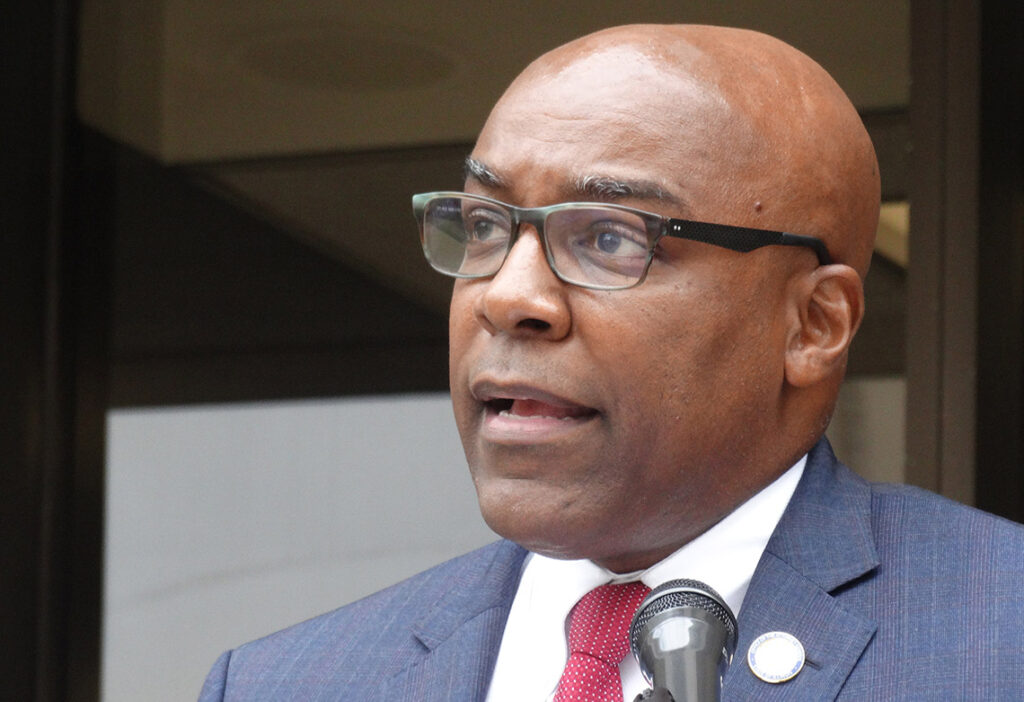
Illinois Attorney General Kwame Raoul joined a coalition of 17 states in suing the federal government to block McMahon’s order.
“The Trump administration’s shortsighted and illegal decision to attempt to rescind already-appropriated education funding would hurt vulnerable students the most and could wreak havoc on the budgets of school districts throughout Illinois and the nation,” Raoul said in a statement Tuesday.
The lawsuit over pandemic-related education money is one of more than a dozen multistate suits Raoul has joined, in combination with other Democratic state attorneys general, challenging actions Trump has taken since being sworn in for a second term Jan. 20.
In 2020 and 2021, Congress passed several relief and economic stimulus packages totaling trillions of dollars to help individuals, businesses and state and local governments deal with the financial consequences of the pandemic. For schools, that included costs associated with preparing for the safe return to in-person learning, addressing the learning loss students suffered during the extended period of school closures, and addressing some of the unique needs of homeless children that were exacerbated by the pandemic.
According to the complaint, Illinois was awarded just over $5 billion in “education stabilization” funds under the American Rescue Plan Act, or ARPA, which was enacted in March 2021. Of that, $77.2 million remained obligated but not yet spent as of the end of March 2025.
Those funds had been earmarked for such things as teacher mentoring, statewide instructional coaching, new principal mentoring, trauma response initiatives, the creation of social-emotional learning hubs and contracts for technology infrastructure upgrades, according to the complaint.
Under ARPA, those funds were intended to cover expenses incurred through Sept. 30, 2023. Subsequent legislation gave states an additional year, to Sept. 30, 2024, to “obligate” their funds. And under agency regulations, they had another 120 days beyond that to draw down the funds, although they were also given the option of requesting further extensions.
In January 2025, Illinois requested, and later received, permission to extend its deadline for drawing down the remainder of its funds to March 28, 2026. Other states involved in the lawsuit also received extensions.
But on Friday, March 28, 2025, the Department of Education issued a memo rescinding those extensions, effectively cutting off the states’ access to any unspent funds.
“Extending deadlines for COVID-related grants, which are in fact taxpayer funds, years after the COVID pandemic ended is not consistent with the Department’s priorities and thus not a worthwhile exercise of its discretion,” McMahon said in a memo to state education agency heads.
The injunction means the Department of Education cannot enforce the order, at least while the case is still being litigated or until the court issues a different order.
Capitol News Illinois is a nonprofit, nonpartisan news service that distributes state government coverage to hundreds of news outlets statewide. It is funded primarily by the Illinois Press Foundation and the Robert R. McCormick Foundation.
The post Illinois regains access to $77M in federal education funds following judge’s order appeared first on Capitol News Illinois.