Posts Tagged ‘Javier Cervantes’
Democrats offer muted praise of Pritzker’s speech, Republicans dismiss ‘campaign’ rhetoric
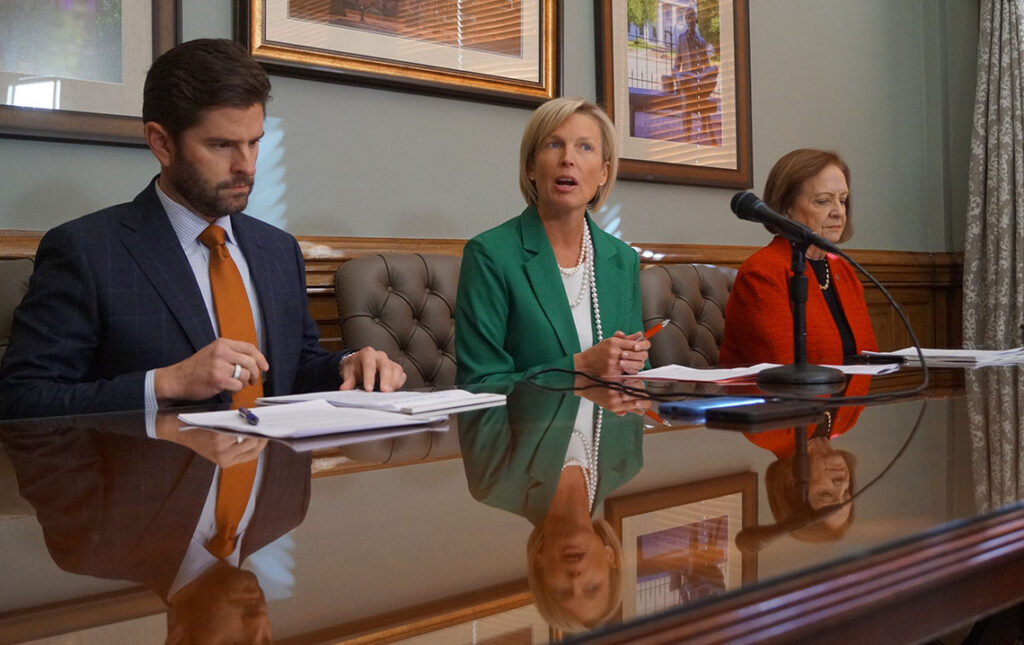
Democrats offered muted praise while Republicans dismissed the governor’s affordability message as campaign-style rhetoric.
Read MoreComptroller Mendoza won’t run for reelection, opening up statewide office
Capitol News Illinois
Article Summary
Susana Mendoza will not run for reelection as Illinois comptroller, the state’s chief financial officer. She is rumored to be considering a run for Chicago mayor.
Mendoza held the comptroller’s office during the worst budgetary crisis in state history and through the COVID-19 pandemic.
A key step in how Cook County Democrats choose who to endorse for statewide office is happening this week.
Candidates are expected to announce whether they will run to replace Mendoza in the coming weeks.
This summary was written by the reporters and editors who worked on this story.
Editor’s note: This story has been updated to reflect the latest information regarding candidates seeking to be slated by Cook County Democrats.
CHICAGO — After almost a decade, Illinois State Comptroller Susana Mendoza will not seek another term as the state’s chief financial officer.
Mendoza, who took office in December 2016 after beating an ally of Republican Gov. Bruce Rauner in a special election, has overseen the state’s financial systems through both the COVID-19 pandemic and the worst budget crisis any state has faced in modern history.
At a news conference Wednesday, Mendoza said she’s not running for reelection in the 2026 comptroller’s race, so she will have time to decide her next career move.
“I’m going to figure out what the right move is for our family, for our city, our state, find out where I’m needed most, that next biggest challenge that I need to take on,” Mendoza said.
Prior to taking statewide office, Mendoza was the first woman to be the Chicago City Clerk. Mendoza previously spent a decade in the Illinois House of Representatives.
It’s been widely speculated that Mendoza, who ran for Chicago mayor in 2019, is eyeing a run to unseat sitting Chicago Mayor Brandon Johnson in 2027.
While she didn’t commit to a run, she said she is “leaving the door open.” Several U.S. House seats are up for grabs, along with Illinois’ first open U.S. Senate seat since 2010.
But when asked whether she was interested in a position in Congress, Mendoza laughed.
“No thank you,” she quickly said Thursday, before moving on to questions about a potential mayoral bid.
Comptroller vacancy
The comptroller’s office, traditionally a low-visibility role, became a high-stakes proxy battle between Democratic and Republican power brokers during the budget impasse of the mid-2010s.
Mendoza became the most vocal and high-profile statewide Democratic foil to Republicans at the height of the more than two-year budget impasse between Rauner and Democrats in the General Assembly. After Comptroller Judy Baar Topinka died in 2014, Rauner appointed Leslie Munger to the position. Mendoza beat Munger with 49.5% of the vote in a special election in 2016.
Mendoza gained statewide visibility for her frequent videos assailing Rauner and highlighting that the state was accruing a massive “bill backlog” driven by ongoing court-mandated expenditures amid dwindling revenue brought on by the impasse.
She won reelection in 2018 and 2022, routinely posting the widest margins of any statewide elected official.
No Republican, meanwhile, has won statewide office since Rauner in 2014, and few have come especially close. This puts the focus for replacing Mendoza on the Democratic primary process. The announcement creates an opportunity for a new Democrat to make a run for an open statewide office for the first time since 2018.
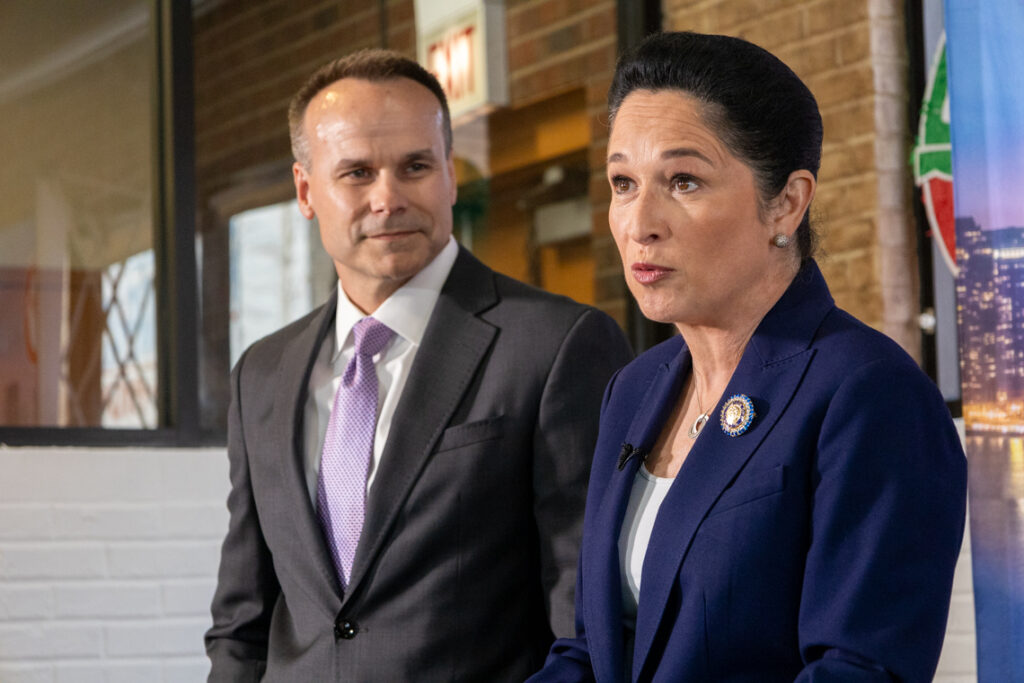
Illinois Comptroller Susana Mendoza answers questions from reporter, curious to know if she will run for Chicago mayor in 2027. (Capitol News Illinois photo by Andrew Adams)
Mendoza said she wanted to make the announcement early enough for people interested in replacing her to “make their pitches” to party officials. The Cook County Democratic Party — a powerhouse in statewide party politics — is holding its “slating” meetings this week to decide which candidates the party will endorse.
Rep. Margaret Croke, D-Chicago, is expected to appear at the slating for statewide candidates and make a formal announcement about her 2026 plans next week, according to sources close to the representative.
“With chaos unfolding at the national level, Illinoisans need steady state leadership and deserve a Comptroller who is prepared to lead with transparency, efficiency, and integrity,” Croke said in a statement after Mendoza’s announcement.
Lake County Treasurer Holly Kim is also expected to appear at the Cook County slating meeting, with an announcement about her plans in the coming weeks.
“Susana Mendoza raised the bar for transparency and accountability, and I intend to build on that legacy,” Kim said.
Sen. Karina Villa, D-Chicago, is also scheduled to appear at the slating meeting to discuss a potential comptroller bid. Sen. Javier Cervantes, D-Chicago, was previously on the agenda, although his name was later removed.
Mendoza said she hopes her replacement is committed to serving the entire state, noting that while she is a Chicagoan, she said she has a “very soft spot in my heart for southern Illinois.”
Mayoral ambitions
While Mendoza did not commit to a run for mayor, she did speak at length about the needs of the city.
“Chicago is in dire need of competency, someone who understands the needs of the city, who understands how important the role of the city is to the good functioning of the whole state,” Mendoza said. “And I think we’ve had two very unsuccessful mayors in a row.”
Mendoza stressed public safety and Chicago’s need for a growth-centered economic policy.
“It’s not just our feathered friends that have flown south, it’s the most important bird in Chicago: the crane,” Mendoza said. “You can look at a city and gauge its financial health by the number of cranes that are in the sky. And, right now, you have an unobstructed, picture-perfect view of this city.”
Illinois Comptroller Susana Mendoza announces she will not seek reelection alongside her husband, David Szostak. (Capitol News Illinois photo by Andrew Adams)
If she runs, Mendoza could be joined by several other prominent Illinois politicians in the race for mayor. Illinois Secretary of State Alexi Giannoulias is also rumored to be considering a run.
Mendoza made her announcement at Los Comales, a restaurant in Chicago’s Little Village neighborhood that specializes in Mexico City-style tacos. Christina Gonzalez, the co-owner of the Los Comales chain and daughter of its founder, noted that Mendoza was from the neighborhood.
“She was always a customer here,” Gonzalez said. “Her parents brought her here and she knew my dad — my dad loved her.”
It’s the same restaurant where she announced her first run for state representative more than 20 years ago and her ill-fated mayoral bid in 2019.
Gonzalez said the restaurant, which was mostly empty aside from Mendoza’s supporters and reporters, has faced a significant slowdown in business recently, thanks to rumors about immigration enforcement.
Capitol News Illinois is a nonprofit, nonpartisan news service that distributes state government coverage to hundreds of news outlets statewide. It is funded primarily by the Illinois Press Foundation and the Robert R. McCormick Foundation.
The post Comptroller Mendoza won’t run for reelection, opening up statewide office appeared first on Capitol News Illinois.
Illinois to roll out direct admissions program for most state universities
Capitol News Illinois
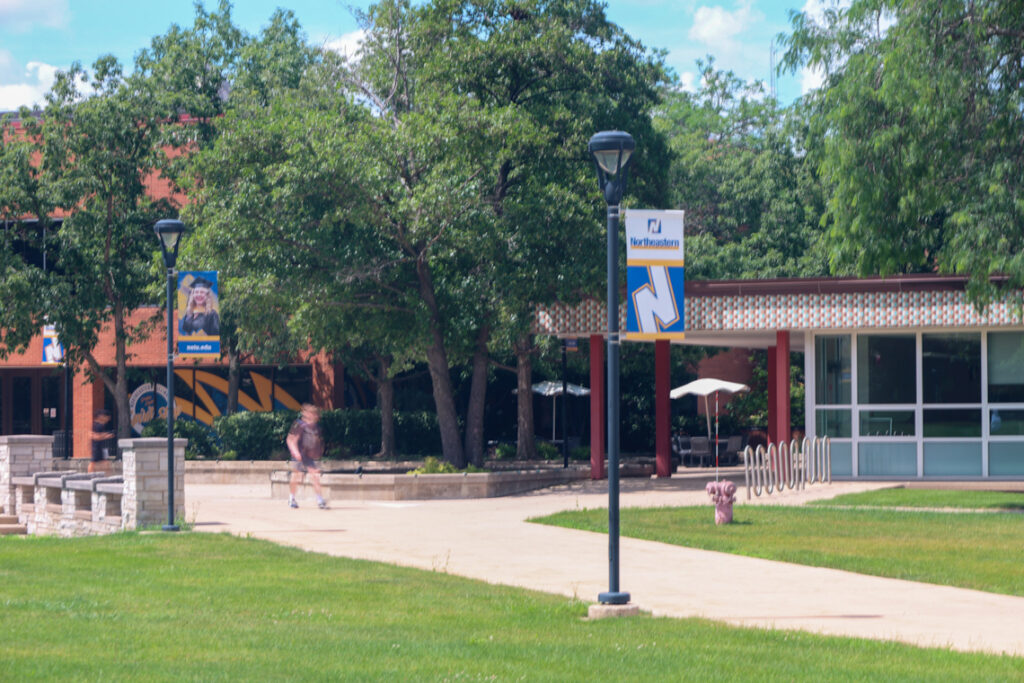
Editor’s note: This story was updated to refer to the correct building on the campus of Northeastern Illinois University in the featured photo caption.
CHICAGO — Illinois students won’t need to fill out applications for most state universities to be admitted — if they have high enough grades.
With his signature, Gov. JB Pritzker on Monday approved a bill creating the direct admissions program. Along with it, he approved bills that implement new state standards for programs offering college credits to high school students, and new requirements for financial aid application assistance.
“These bills streamline the application process for college-bound seniors in Illinois, enhance support for applicants, and open up new horizons for prospective students,” Pritzker said in a statement. “Enacting these laws is what all government work should be about — making life easier for our people.”
Pritzker had said college admissions and higher education accessibility would be a priority of his during this year’s legislative season, which ended May 31. But one of his signature initiatives — allowing community colleges to offer four-year degrees — failed earlier this year.
Direct college admissions
Illinois will implement a direct admissions program so that students hoping to go to a state school will be automatically admitted — if they have a high enough grade point average.
“For eligible seniors and community college transfer students, you will receive offers from the schools that you are admitted to without raising a finger. That’s huge,” Sen. Christopher Belt, D-Swansea, said. “It takes away the anxiety, it takes away the angst of that whole process.”
The bill outlining the direct admissions program, House Bill 3522, passed unanimously in the Senate and with broad bipartisan support in the House in late May.
Read more: House approves new abortion protection, plan to ease college admissions | Senate Democrats champion program to streamline Illinois college applications
The program will begin in the 2027-28 school year, with nine of the state’s 11 public universities participating:
University of Illinois Springfield
Southern Illinois University
Chicago State University
Eastern Illinois University
Governors State University
Illinois State University
Northeastern Illinois University
Northern Illinois University
Western Illinois University
High school students and community college students hoping to transfer to a state school must opt-in to the program to receive offers. Community colleges already admit all students interested in attending but will still participate in the direct admissions program.
The University of Illinois Urbana-Champaign and University of Illinois Chicago will not participate in the direct admission program. The state will, however, provide information about traditional applications to qualifying students through an “access and outreach campaign.”
The criteria for the direct admissions program and outreach campaign will be set by individual schools.
“This new, statewide direct admissions program will make a college degree more accessible for students and will motivate them to continue in their life-changing college journey by ensuring them a spot at their community college or at one of the state’s public universities,” Illinois Board of Higher Education Executive Director Ginger Ostro said in a Monday statement.
Financial aid application assistance
Two more bills signed by Pritzker on Monday, House Bills 3096 and 3097, aim to make it easier for students to navigate the financial aid process.
HB 3096 requires high schools in Illinois to designate at least one staff member as a point-of-contact for information about the Free Application for Federal Student Aid, or FAFSA. HB 3097 requires high schools to offer students time during the school day to fill out FAFSA forms and to receive assistance in doing so.
The new requirements go into effect in the 2025-26 school year.
Information collected through FAFSA is used to determine eligibility for federal loans. Many schools use FAFSA for their own aid programs, and the state offers need-based grants based on information submitted through FAFSA.
“As a father of college students, I just currently went through this fun exercise with my daughter filling out a FAFSA form,” Sen. Javier Cervantes, D-Chicago, said. “I’m being a little sarcastic calling it fun because we had deadlines, we had to make sure we had our documentation together and it wasn’t easy.”
From the 2010 to 2020 school years, an average of 86% of first-time students at four-year schools and 78% of first-time students at two-year schools received federal financial aid, according to data from the U.S. Department of Education.
The Illinois Community College Board offices sits blocks away from the state Capitol. Under a new law, the ICCB and other state agencies are tasked with improving dual credit programs in the state. (Capitol News Illinois photo by Andrew Adams)
Dual credit program
House Bill 2967, another bill approved by Pritzker on Monday, outlines new requirements for high schools and community colleges offering “dual credit” programs, through which students earn high school and college credit for completing a single course.
It requires teachers teaching dual credit classes to have a master’s degree in the subject they’re teaching or a master’s degree and some graduate coursework in the subject. It also requires high schools and community colleges to designate individuals responsible for negotiating what individual dual credit agreements look like.
“HB 2967 reinforces the vital role that strong, robust partnerships between community colleges and high schools play in delivering high quality dual credit programs,” Illinois Community College Board Executive Director Brian Durham said in a statement. “These programs help students get a head start on their college education and a path towards career success.”
The bill also requires schools to consider in-state colleges and universities when setting up dual credit programs over out-of-state institutions.
The bill also creates a committee made up of education officials, representatives from two different statewide teachers’ unions and others to work on improving dual credit programs’ accessibility and quality, as updating a template used by school districts to develop dual credit agreements with community colleges.
Four-year degrees at community college
One key proposal didn’t make the cut this spring — a measure allowing community colleges to offer bachelor’s degrees. Despite being backed by Pritzker in his State of the State address earlier this year, it faced pushback in the General Assembly, which did not pass a bill implementing the policy.
Read more: Pritzker’s community college initiative stalls in House committee
That proposal drew concerns from some lawmakers who worried it could undercut programs to attract local students to state universities. In particular, some lawmakers worried that it could hurt schools like Northeastern Illinois University and Chicago State University, which serve largely minority student populations.
But Pritzker on Monday said he would continue working on a proposal to allow more schools to offer bachelor’s degrees in “very specific, niche areas” like nursing and advanced manufacturing.
“You sometimes have to work two, four, six years, maybe longer to get something done,” Pritzker said.
Capitol News Illinois is a nonprofit, nonpartisan news service that distributes state government coverage to hundreds of news outlets statewide. It is funded primarily by the Illinois Press Foundation and the Robert R. McCormick Foundation.
The post Illinois to roll out direct admissions program for most state universities appeared first on Capitol News Illinois.