Posts Tagged ‘Immigration’
Illinois Accountability Commission hears testimony about excessive force by ICE agents. Felt like a ‘war zone’
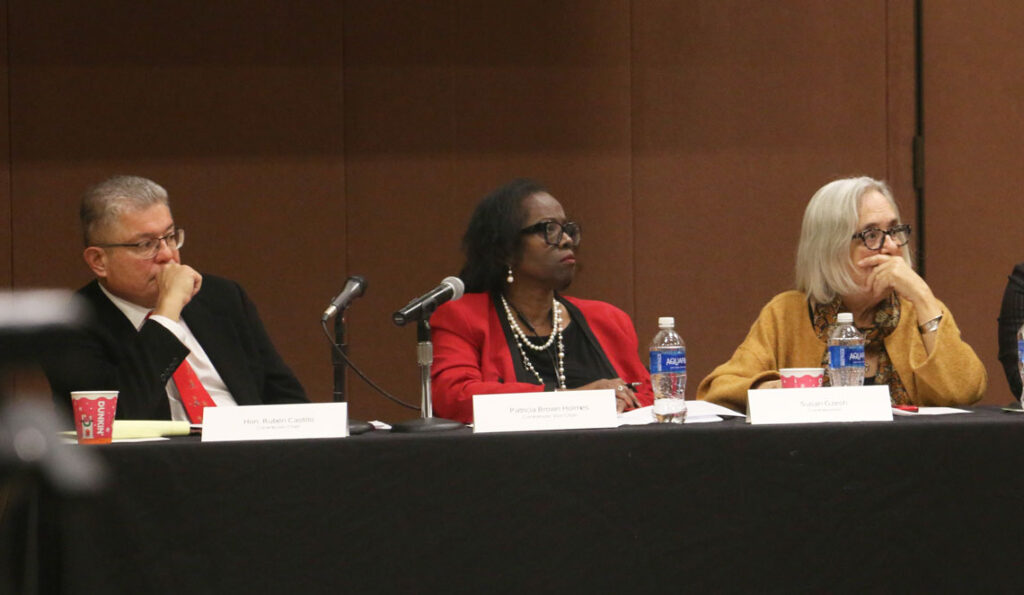
The commission heard testimony of ‘terror unleashed’ by federal immigration agents at its first meeting.
Read MorePritzker signs bill enacting immigrant protections in courthouses
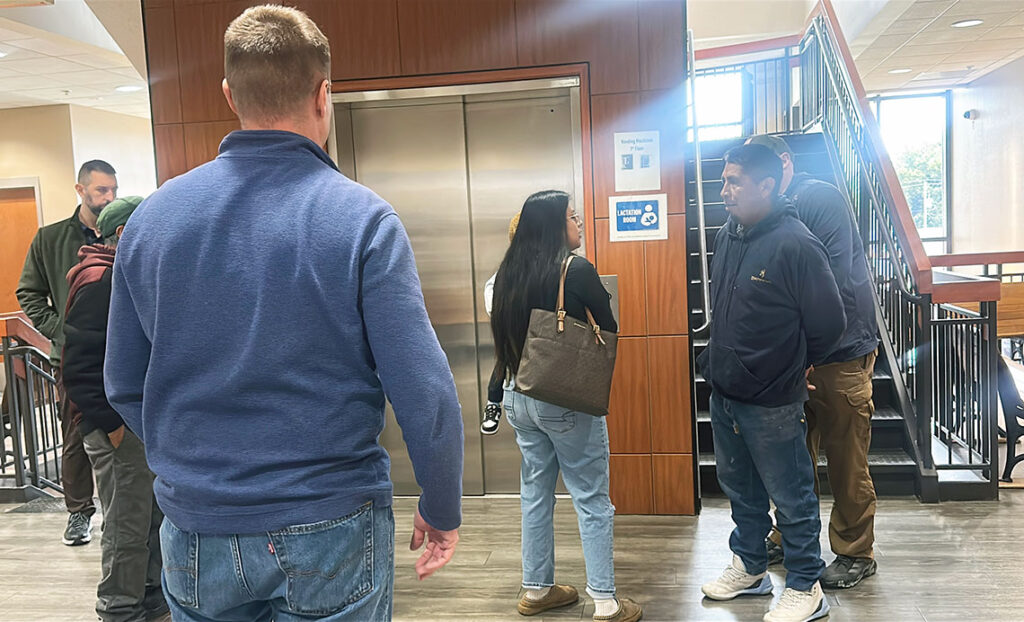
The measure bans civil immigration arrests near state courthouses and allows residents to sue immigration agents who violate their rights.
Read MoreDOJ lawyer says it’s ‘wrong to allege’ Operation Midway Blitz is over

Trump attorney called protesters’ motion to dismiss their own case over immigration agents’ use of force “procedural gamesmanship.”
Read MoreAppeals court weighs release of immigration detainees to electronic monitoring
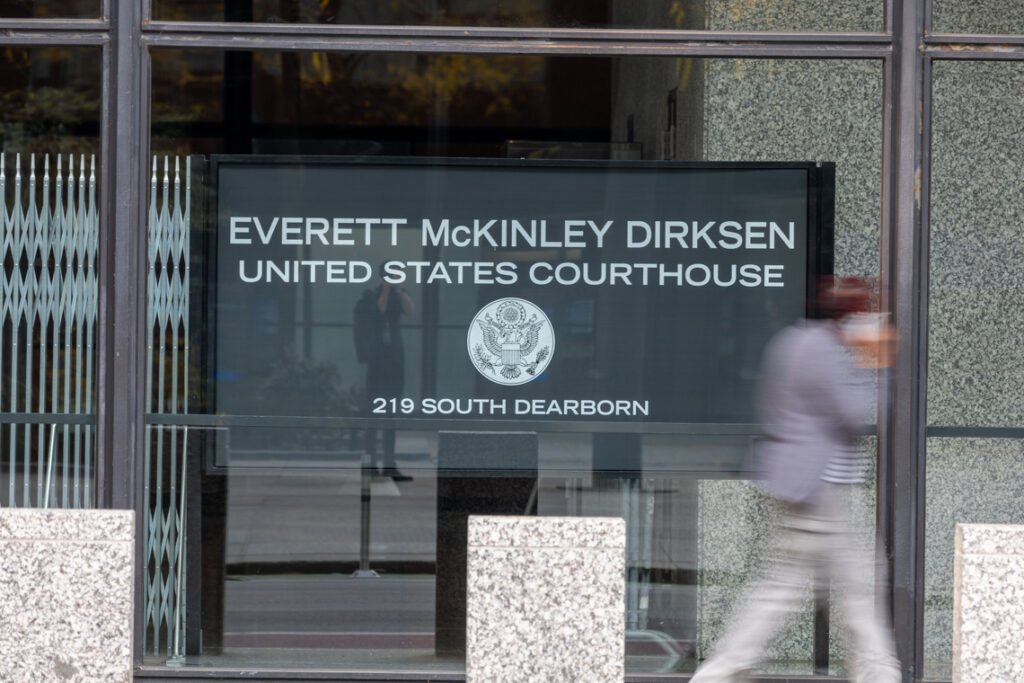
The court is weighing whether roughly 400 immigrants arrested during Midway Blitz should be released to electronic monitoring.
Read MoreAdvocates await action on bill protecting rights of immigrant students in Illinois
Capitol News Illinois
SPRINGFIELD — Immigration rights advocates in Illinois are anxiously awaiting the governor’s signature on legislation aimed at protecting K-12 students who may be in the country without legal authorization from being denied access to a free public education.
House Bill 3247, known as the “Safe Schools for All Act,” passed both chambers of the General Assembly in the final days of the spring session. It would prohibit schools from denying any child access to a free public education based on their actual or perceived immigration status, or that of their parents.
It would also prohibit schools from disclosing, or threatening to disclose, information about a student’s immigration status or the status of a person associated with the child. And it would require schools to develop procedures for reviewing and authorizing requests from law enforcement agents attempting to enter a school or school facility.
The bill is intended to buffer K-12 students in Illinois from efforts by the Trump administration to launch mass deportations of noncitizens living in the United States without legal authorization.
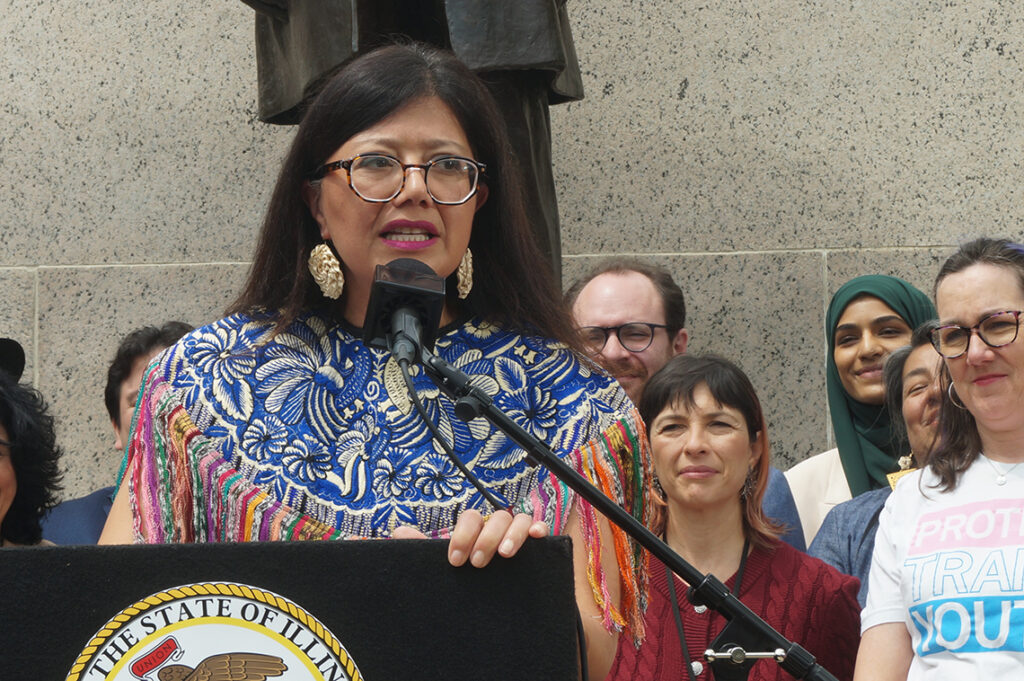
Speaking at a May 7 rally outside the Statehouse, where Democratic lawmakers and immigration rights advocates protested an appearance in Springfield that day of Homeland Security Secretary Kristi Noem, state Sen. Karina Villa, D-West Chicago, the chief Senate sponsor of the bill, vowed that Illinois would remain defiant of Trump’s political agenda.
“We are also going to protect our children,” she told the crowd gathered around a statue of Abraham Lincoln. “We’re going to make them feel safe in our schools by passing HB 3247. We are going to unite and we are going to get that done.”
On Jan. 20, the first day of the new administration, the Department of Homeland Security rescinded a Biden-era policy that prevented federal agents from conducting immigration enforcement actions in certain “sensitive” areas, including schools, churches and hospitals.
Immigrant rights advocates demonstrate outside the Illinois Statehouse for legislation protecting rights of noncitizens, including a bill meant to ensure the right of a free public K-12 education, regardless of a child’s immigration status. (Capitol News Illinois photo by Peter Hancock)
Fred Tsao, an attorney for the Illinois Coalition for Immigrant and Refugee Rights, said during an interview that the policy change has had a chilling effect on the immigrant community, making many afraid to even show up in school.
“We have seen a decline in student participation, particularly among heavily Latino schools after this inauguration,” he said. “So we want to make sure that schools are prepared in the events that federal agents, or for that matter other law enforcement, come to their door in a nonemergency situation.”
Tsao said advocates have also been concerned about possible changes in other legal protections for immigrant students that so far have only been expressed in judicial opinions.
In 1982, the U.S. Supreme Court struck down a Texas statute that authorized local school districts to either deny enrollment to children who had not been “legally admitted” to the United States, or to charge them tuition, holding the law violated the Equal Protection Clause of the 14th amendment.
Tsao, however, said there have been attempts in other state legislatures, including earlier this year in Tennessee, to pass legislation that would challenge that 43-year-old ruling. And while the effort in the Tennessee legislature fell short this year, he said advocates in Illinois wanted to act now to make sure the rights of immigrant students are protected in state law, should the Supreme Court precedent ever be overturned.
“Fortunately, our counterparts in Tennessee, the immigrant advocacy organizations and community leaders, bombarded the General Assembly with advocacy work and were able to persuade a number of legislators to vote against this legislation when it came down to it,” he said. “But you know, that’s not to say that folks in Tennessee or folks in other states won’t try again.”
As of Wednesday, June 18, HB 3247 had not yet been sent to Gov. JB Pritzker.
Capitol News Illinois is a nonprofit, nonpartisan news service that distributes state government coverage to hundreds of news outlets statewide. It is funded primarily by the Illinois Press Foundation and the Robert R. McCormick Foundation.
The post Advocates await action on bill protecting rights of immigrant students in Illinois appeared first on Capitol News Illinois.
Pritzker defends Illinois’ immigration laws in theatrical congressional hearing
Capitol News Illinois
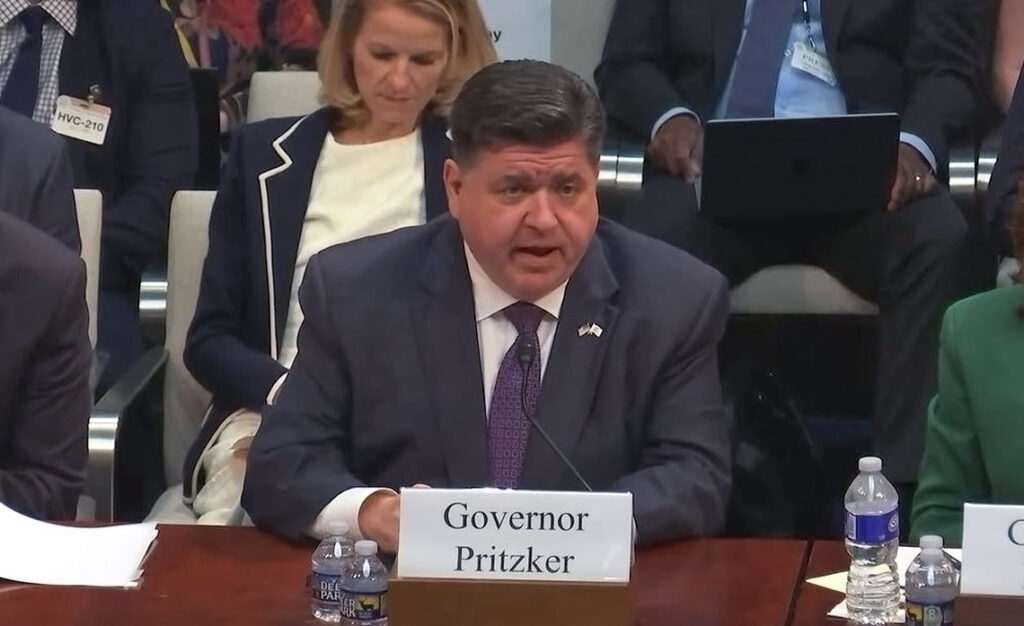
Gov. JB Pritzker spent hours Thursday defending his governing record and Illinois’ immigration policies as he was peppered with questions from members of the U.S. House Oversight Committee.
Pritzker and Democratic governors Kathy Hochul of New York and Tim Walz of Minnesota were summoned to Washington, D.C., by committee Chair James Comer, R-Ky., to answer questions about “sanctuary states.” The hearing mostly involved lectures from Republican members arguing immigration policies like Illinois’ diminish public safety while Democratic members blasted the Trump administration’s deportation raids.
“I invited these governors here today because as the chief executives of their states, they willfully ignore federal law, shield illegal aliens and pass the cost of free services onto their hardworking taxpayers,” Comer said. “It’s hard to figure out whose side these governors are on. They shield criminals while their own citizens pay the price.”
Pritzker countered by reiterating a point he has made publicly in Illinois several times since November’s election.
“As I have consistently said, violent criminals have no place on our streets, and if they are undocumented, I want them out of Illinois and out of our country,” Pritzker said. “And as we are reminded in Los Angeles this week, we can all agree that violence of any kind, whomever it is directed at, is unacceptable.”
Pritzker’s appearance before the committee came as nationwide protests grew over the Trump administration’s deportation tactics and increasing arrest numbers by Immigration and Customs Enforcement, especially in Los Angeles.
After protests and violence in that city last weekend prompted President Donald Trump to deploy hundreds of troops, thousands of people marched through the streets of Chicago this week protesting immigration raids. Some protestors briefly clashed with police, and 17 people were arrested, according to Chicago Police.
Dozens more protests are planned in Chicago and around Illinois on Saturday. Dubbed as “No King” protests, the gatherings are designed to contrast with a military parade planned by Trump in Washington on Saturday celebrating the U.S. Army’s 250th birthday. Saturday is also Trump’s 79th birthday.
Pritzker said if the Illinois National Guard ever needs to be activated to quell civil unrest, it’s done in coordination with local law enforcement. He criticized Trump’s deployment of the Guard in Los Angeles.
“It’s wrong to deploy the National Guard and active-duty Marines into an American city over the objection of local law enforcement just to inflame a situation and create a crisis,” Pritzker said.
Republicans on the committee alleged “sanctuary state” laws violate federal immigration laws. Illinois’ 2017 TRUST Act, signed by Republican Gov. Bruce Rauner, prohibits Illinois law enforcement from detaining people based on their immigration status and assisting in civil immigration enforcement. Law enforcement cannot hold people based on federal immigration warrants in most cases, but they can make arrests for federal criminal warrants.
Rep. Gary Palmer, R-Ala., suggested the three governors be criminally charged with obstruction because of their states’ laws. His comments follow Trump’s suggestion that California Gov. Gavin Newsom should be arrested.
“I have the highest duty to protect the people of my state, and indeed if Tom Homan were to come to my state and try to arrest us, me rather, I can say first of all that he can try,” Pritzker said of Trump’s border czar. “I can also tell you I will stand in the way of Tom Homan going after people who don’t deserve to be frightened in their community.”
Homan told CNN earlier this week Newsom hasn’t done anything to require an arrest.
Controversy over Illinois’ immigration policies
Pritzker blamed decades of federal government inaction on immigration and border security for exacerbating issues in the U.S. He also acknowledged to Comer that President Joe Biden inadequately handled immigration, particularly as 50,000 migrants were sent to Illinois mostly by the governor of Texas.
“We’re not in charge of the border in Illinois, I can tell you that,” Pritzker later told Rep. Pete Sessions, R-Texas. “We don’t have a border with a foreign country. … We had 50,000 people who came from Texas because they were shipped to us. And let me tell you, I was in favor of helping them.”
Read more: Pritzker to tell Congress ‘both parties are to blame’ for broken immigration system
Pritzker occasionally butted heads with Republicans throughout the hearing. Comer questioned the governor about the death of Katie Abraham in an Urbana car crash. She was killed in January by a suspected drunken driver illegally in the United States, according to WCIA. The GOP members mentioned several crime victims by name throughout the hearing.
Rep. Mary Miller, a Republican from Hindsboro, accused Pritzker of “rolling out the red carpet for illegal aliens,” adding “illegal aliens in our state have overwhelmed our communities.”
“I am not going to be lectured to by someone who extolled the virtues of Adolf Hitler,” Pritzker said, alluding to comments Miller made on Jan. 6, 2021.
Given multiple scenarios about what should happen to people who commit crimes while illegally in the country, Pritzker reiterated he supports deporting violent people but emphasized that must happen with due process. Democrats have argued Trump’s administration is deporting people without due process.
Republicans also criticized Illinois’ recent budgets for providing more than $1 billion of state health care benefits to people without documentation along with other programs for noncitizens. However, Pritzker is expected to sign a new state budget this month that eliminates a $330 million health care program for immigrants between ages 42 and 64.
“You do not keep track of any public service dollars in the state of Illinois that goes to illegal immigrants?” Rep. Byron Donalds, R-Fla., asked Pritzker after the governor didn’t offer specifics about exactly how much Illinois spends on “illegal immigration.”
And while Pritzker cast some blame on Republican-led border states for making Illinois part of recent waves of millions of migrants, Rep. Andy Biggs, R-Ariz., remarked that while “Illinois didn’t ask for this crisis” as Pritzker said in his opening remarks, “neither did Yuma, Arizona.”
The hearing’s message
The hearing veered off topic several times. Rep. Raja Krishnamoorthi, a Schaumburg Democrat, praised Pritzker’s work on the economy and spent time discussing Pope Leo XIV’s White Sox loyalty while Texas Republican Rep. Brandon Gill asked Pritzker whether he’s ever used a woman’s restroom.
“You’re admitting that this is just a political circus,” Pritzker responded to Gill.
Aside from Gill’s question about bathrooms, Pritzker largely avoided any immigration-related viral moments. The most intense grilling was reserved for Walz as the Democrat’s 2024 vice presidential nominee and Hochul over high-profile murders in New York.
Rep. Nancy Mace, R-S.C., remarked the hearing featured a possible preview of the 2028 Democratic presidential primary. Pritzker and Walz are both viewed as possible candidates in the next presidential election.
Pritzker’s appearance at the committee hearing is the latest opportunity to grow his national profile. His schedule throughout 2025 has been dotted with national media interviews and out-of-state speaking engagements where he has often called for more protests of the Trump administration.
Read more: Trump’s 100 days: Pritzker calls for mass mobilization as he grows his national profile
He echoed that message again Thursday.
“I encourage people to peacefully protest, and I have said that many times,” he said.
Pritzker said Trump “has created a situation where people are afraid.”
“They’re afraid they’re going to get targeted because that is what’s happening under this administration. People are getting individually targeted when they stand up and speak out,” Pritzker said.
Capitol News Illinois is a nonprofit, nonpartisan news service that distributes state government coverage to hundreds of news outlets statewide. It is funded primarily by the Illinois Press Foundation and the Robert R. McCormick Foundation.
The post Pritzker defends Illinois’ immigration laws in theatrical congressional hearing appeared first on Capitol News Illinois.
Immigrant health care programs boosted hospital bottom lines, study suggests
Capitol News Illinois
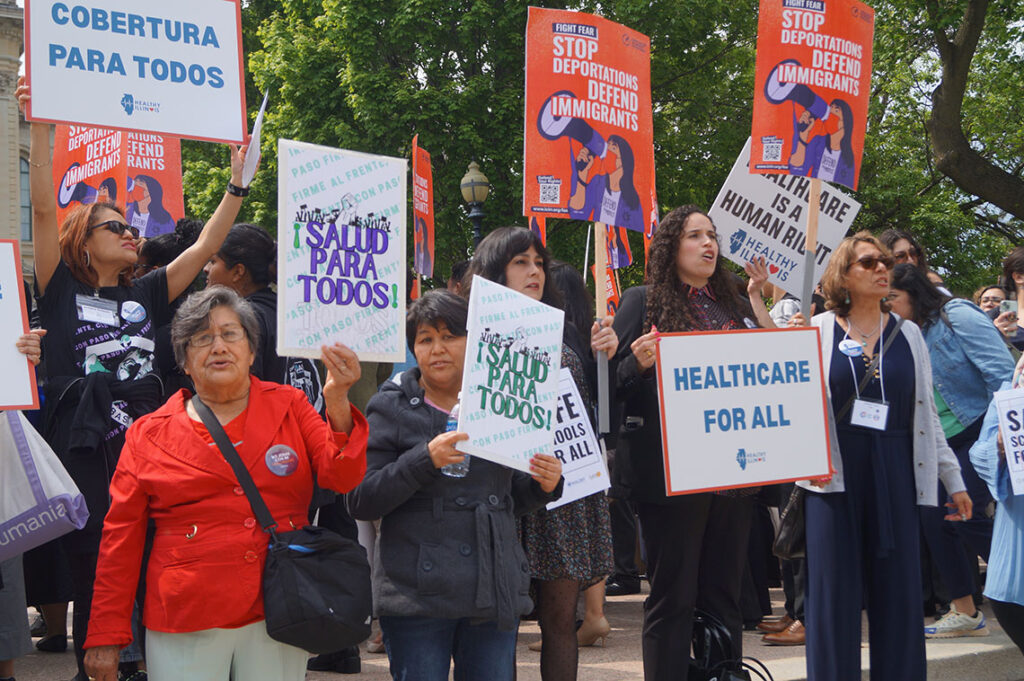
SPRINGFIELD – Two state-run health care programs that extend Medicaid-like coverage to noncitizens may have provided significant financial benefits for Illinois hospitals.
That’s according to preliminary results of an ongoing study at the University of Chicago that suggests the programs corresponded, at least in part, to a 15% reduction in the amount of bad debt Illinois hospitals incurred each year since the programs have been in full effect.
“The number that we find is a 15% reduction,” Aresha Martinez-Cardoso, an assistant professor and researcher at U of C’s Embodying Racism Lab, where the study is being conducted, said in an interview. “We think that that might be a high estimate, given what we know about perhaps other things that are going on that we can’t entirely rule out, but we do think that part of that reduction is associated with the policy.”
That translates to an average of $1.5 million per year, per hospital, according to the report, although the exact amount would vary greatly depending on a hospital’s size and the volume of patients it treats who are covered by the programs.
“Our early findings show that this landmark policy isn’t just about access — it also serves as a strategic investment in our hospitals and the health of entire communities,” Martinez-Cardoso said.
Those findings come as Gov. JB Pritzker’s administration is preparing to shut down the larger of the two programs as part of his budget proposal for the upcoming fiscal year. The Health Benefits for Immigrant Adults, or HBIA, currently covers more than 31,000 eligible noncitizens aged 42-64, at a cost of about $21 million per month, according to the most recent data from the Department of Healthcare and Family Services.
The other program, Health Benefits for Immigrant Seniors, covers eligible noncitizens aged 65 and over. That program currently covers about 8,900 individuals at a cost of about $10 million per month. Pritzker has not proposed eliminating it.
The programs were launched in 2020 and 2021, during the COVID-19 pandemic, as a means of extending health coverage to individuals who did not qualify for other publicly funded health care programs solely due to their immigration status. Those include individuals who are in the United States without legal authorization as well as certain legal permanent residents who have not yet been in the country long enough to qualify for Medicaid.
The programs have been controversial since they were first proposed. Republicans have been especially critical, saying the programs serve as an incentive for immigrants to cross into the United States illegally and settle in Illinois to receive taxpayer-funded health benefits.
With the state facing slow revenue growth and a projected budget deficit in the coming year, Pritzker surprised many of his supporters in February when he proposed closing the HBIA program.
Eliminating the program for middle-aged adults is projected to save the general revenue fund about $330 million, according to the governor’s office. Pritzker told reporters after his address in February he expects the federal government will stop reimbursing states for costs associated with programs providing services to noncitizens.
A week after the governor’s budget address, the Illinois Auditor General released a report that said enrollment in both programs and their eventual costs had far exceeded their original projection. The cost for the two programs, the report said, exceeded $1.6 billion over the course of four fiscal years.
Read more: Audit finds Illinois’ noncitizen health care programs far outstripped original cost estimates
Unlike Medicaid, which is jointly funded with state and federal funds, the health programs for noncitizens are funded almost entirely with state dollars.
The study looked at publicly available hospital financial reports to analyze changes in the amount of uncompensated care they provided from 2017 to 2023. It also looked at similar data from hospitals in Indiana and Wisconsin, neighboring states that do not provide health benefits for noncitizens.
“We tried to flip it a few different ways,” Martinez-Cardoso said in an interview. “There could be a lot of other things happening. But when we test a bunch of different models … we kind of see a consistent pattern that the policy timing is associated with bad debt.”
She said the results so far are only preliminary and that analysis of the data is continuing. But she said the analysis so far shows a strong link between the enactment of the programs and an overall reduction in uncollectable debt.
Capitol News Illinois is a nonprofit, nonpartisan news service that distributes state government coverage to hundreds of news outlets statewide. It is funded primarily by the Illinois Press Foundation and the Robert R. McCormick Foundation.
The post Immigrant health care programs boosted hospital bottom lines, study suggests appeared first on Capitol News Illinois.