Posts Tagged ‘higher education’
Pritzker signs bill enacting immigrant protections in courthouses
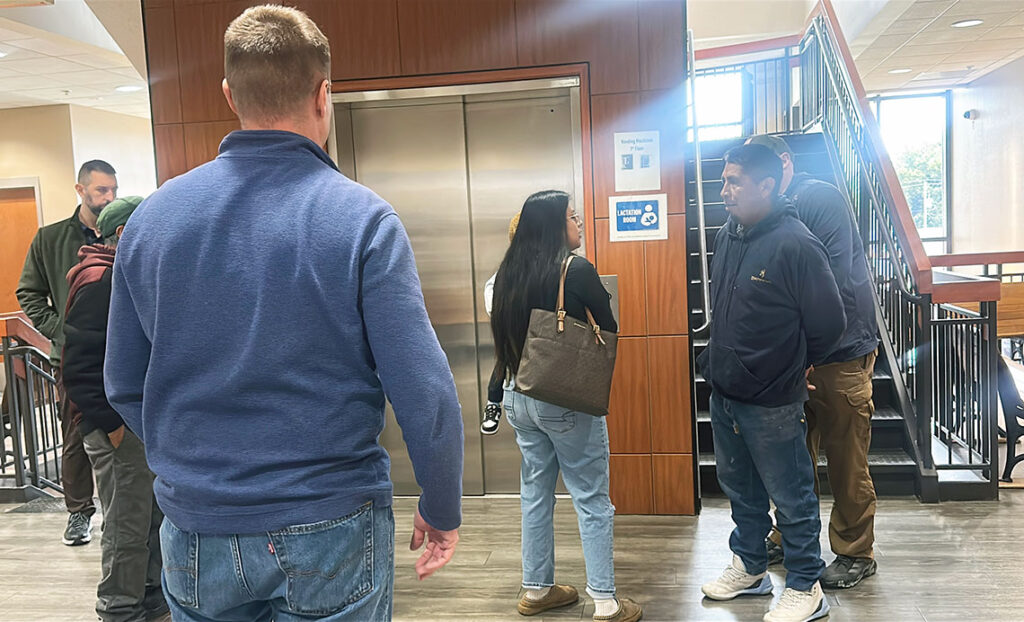
The measure bans civil immigration arrests near state courthouses and allows residents to sue immigration agents who violate their rights.
Read MoreStudy: Education still pays, but barriers to upward mobility persist in Illinois
Capitol News Illinois
Article Summary
A new study shows there are barriers to upward mobility in Illinois, especially for women and people of color.
People who grow up in lower-income families tend to earn less as adults than those from wealthier families, even after earning similar degrees and going to work in similar fields.
Educational attainment and career choices are still the biggest factors that influence future earnings.
This summary was written by the reporters and editors who worked on this story.
For generations, America has been thought of as the land of opportunity, a place where anyone who worked and studied hard could grow up to achieve any goal they set for themselves.
That idea has had especially strong roots in Illinois, the “Land of Lincoln,” where a young man born in a log cabin on America’s frontier rose from rail-splitter to self-taught lawyer and president of the United States.
But a new study suggests that the American dream is still more elusive for some people in Illinois than for others, and that the pathway up the economic ladder is not easily scaled.
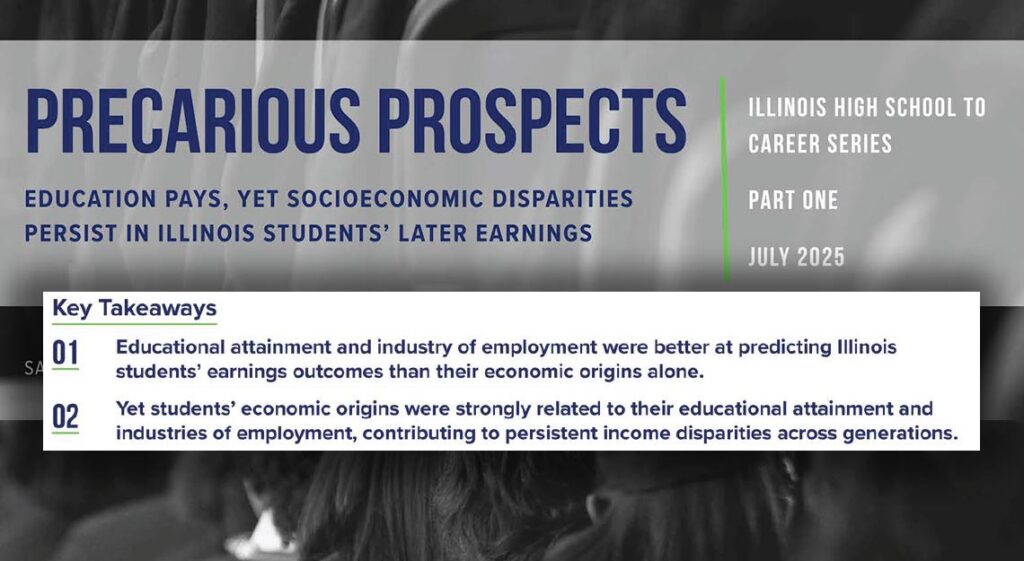
The study, entitled “Precarious Prospects,” tracked a cohort of millennials from Illinois – more than 340,000 students from the senior classes of 2008-2012 – from graduation, through their post-secondary careers and into young adulthood.
The study was a joint project conducted by the Illinois Workforce and Education Research Collaborative, or IWERC, the Discovery Partners Institute, the University of Illinois, and the University of Chicago Consortium on School Research.
It found that educational attainment is still a strong predicter of a person’s future earnings as an adult. So too is the industry that a person chooses for a career.
Other factors can also influence a person’s ability to complete a higher education degree, including their race, ethnicity and gender.
Capitol News Illinois · Upward mobility in Illinois
Class-based barriers
The study also found that a person’s own economic background – whether they grew up rich or poor – also strongly influences their future earnings. Students who grew up in higher-income households tended to earn more than those who grew up in lower-income families, in part because students from higher-income families were more likely to complete a college degree than lower-income students.
But perhaps most surprisingly, the study found that even among those who earn similar degrees and go to work in similar industries, a student’s own economic background influenced their future earnings. That is, students from lower-income families tend to earn less than those from wealthier families, even after they went on to earn similar credentials.
Further, the study found, among students from lower-income families, Black and Latino students and women tended to earn less than their white and male counterparts.
“The racial and gender disparities obviously are real, and there’s a lot of research showing that, but I don’t think it’s all that’s going on,” Sarah Cashdollar, associate director of IWERC and a lead author of the report, said in a podcast interview with Capitol News Illinois.
“One thing is that the same degree, such as a bachelor’s degree, can have a very different payoff depending on the college that the student went to,” she said. “And there’s research that’s found students from higher income families are more likely to go to colleges that have things like many internship opportunities or other work-based learning. More advising, more networking opportunities. And for some fields, those things are essential to landing a good job.”
“There’s also research showing that higher income students have greater access to social networks in general that can provide those connections,” she said.
Education and career choice
Among all the factors the study examined, educational attainment had by far the largest impact on a person’s future earnings. It found there was a gap of nearly $40,000 a year in earnings for someone with an advanced degree compared to someone with only a high school diploma.
The study also found that regardless of what type of degree or credential a person earns, the industry in which they work has a big impact on their future earnings.
“For certificates and associate’s degrees, we see higher earnings for construction, for mechanic and repair technologies,” Cashdollar said. “So these are things like auto mechanics, HVAC techs, electricians, and also precision production. … These are all areas that tend to have unions, and they also have been experiencing higher demand due to lower supply in recent years, and so there’s some upward wage pressure in those in those occupations.”
“And then for the bachelor’s, there are many, many industries that offer higher earnings,” she said. “Two of the highest earnings were engineering and computer and information sciences.”
But the gaps between people with similar degrees from different economic backgrounds was still significant – $3,753 annually for those with less than a bachelor’s degree, and $5,028 for those with a bachelor’s degree or higher.
Still to come
The Precarious Prospects study was the first of a two-part research project made possible through a data sharing partnership between the Illinois Department of Employment Security, the Illinois Student Assistance Commission, the Illinois State Board of Education and Illinois State University.
Cashdollar said the second phase of the project, due to be published later this year, will focus on those students who manage to succeed in climbing the economic ladder, despite the barriers they face.
“To give a preview, we found that there were pathways at all levels of education toward higher earning careers, but they were predominantly concentrated in bachelor’s degree pathways and even higher masters and doctoral and professional (programs).”
Capitol News Illinois is a nonprofit, nonpartisan news service that distributes state government coverage to hundreds of news outlets statewide. It is funded primarily by the Illinois Press Foundation and the Robert R. McCormick Foundation.
The post Study: Education still pays, but barriers to upward mobility persist in Illinois appeared first on Capitol News Illinois.
Illinois to roll out direct admissions program for most state universities
Capitol News Illinois
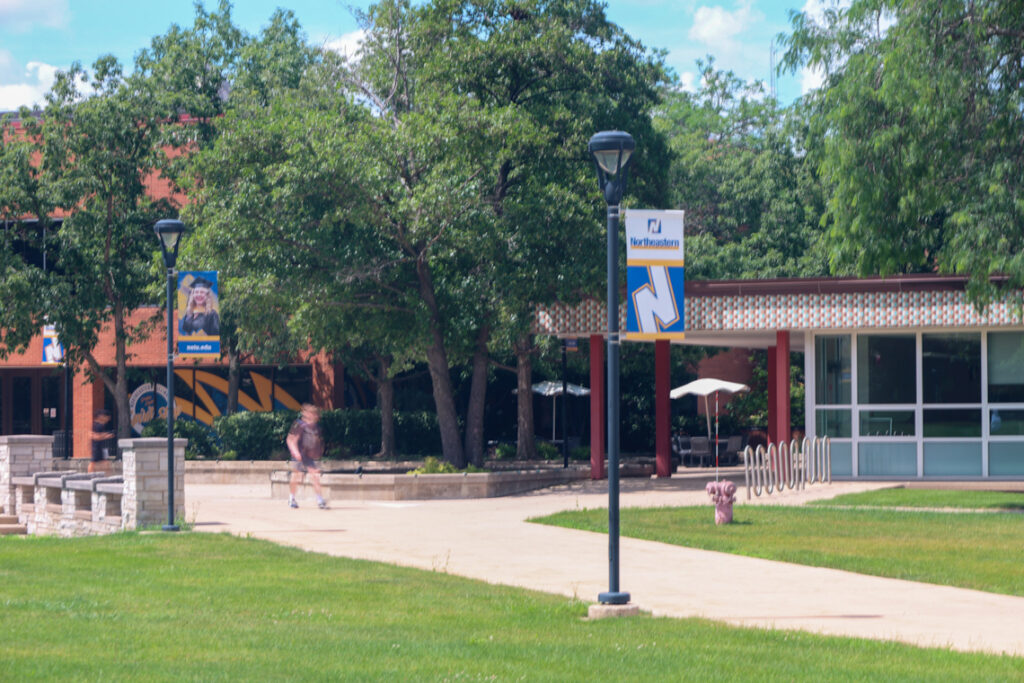
Editor’s note: This story was updated to refer to the correct building on the campus of Northeastern Illinois University in the featured photo caption.
CHICAGO — Illinois students won’t need to fill out applications for most state universities to be admitted — if they have high enough grades.
With his signature, Gov. JB Pritzker on Monday approved a bill creating the direct admissions program. Along with it, he approved bills that implement new state standards for programs offering college credits to high school students, and new requirements for financial aid application assistance.
“These bills streamline the application process for college-bound seniors in Illinois, enhance support for applicants, and open up new horizons for prospective students,” Pritzker said in a statement. “Enacting these laws is what all government work should be about — making life easier for our people.”
Pritzker had said college admissions and higher education accessibility would be a priority of his during this year’s legislative season, which ended May 31. But one of his signature initiatives — allowing community colleges to offer four-year degrees — failed earlier this year.
Direct college admissions
Illinois will implement a direct admissions program so that students hoping to go to a state school will be automatically admitted — if they have a high enough grade point average.
“For eligible seniors and community college transfer students, you will receive offers from the schools that you are admitted to without raising a finger. That’s huge,” Sen. Christopher Belt, D-Swansea, said. “It takes away the anxiety, it takes away the angst of that whole process.”
The bill outlining the direct admissions program, House Bill 3522, passed unanimously in the Senate and with broad bipartisan support in the House in late May.
Read more: House approves new abortion protection, plan to ease college admissions | Senate Democrats champion program to streamline Illinois college applications
The program will begin in the 2027-28 school year, with nine of the state’s 11 public universities participating:
University of Illinois Springfield
Southern Illinois University
Chicago State University
Eastern Illinois University
Governors State University
Illinois State University
Northeastern Illinois University
Northern Illinois University
Western Illinois University
High school students and community college students hoping to transfer to a state school must opt-in to the program to receive offers. Community colleges already admit all students interested in attending but will still participate in the direct admissions program.
The University of Illinois Urbana-Champaign and University of Illinois Chicago will not participate in the direct admission program. The state will, however, provide information about traditional applications to qualifying students through an “access and outreach campaign.”
The criteria for the direct admissions program and outreach campaign will be set by individual schools.
“This new, statewide direct admissions program will make a college degree more accessible for students and will motivate them to continue in their life-changing college journey by ensuring them a spot at their community college or at one of the state’s public universities,” Illinois Board of Higher Education Executive Director Ginger Ostro said in a Monday statement.
Financial aid application assistance
Two more bills signed by Pritzker on Monday, House Bills 3096 and 3097, aim to make it easier for students to navigate the financial aid process.
HB 3096 requires high schools in Illinois to designate at least one staff member as a point-of-contact for information about the Free Application for Federal Student Aid, or FAFSA. HB 3097 requires high schools to offer students time during the school day to fill out FAFSA forms and to receive assistance in doing so.
The new requirements go into effect in the 2025-26 school year.
Information collected through FAFSA is used to determine eligibility for federal loans. Many schools use FAFSA for their own aid programs, and the state offers need-based grants based on information submitted through FAFSA.
“As a father of college students, I just currently went through this fun exercise with my daughter filling out a FAFSA form,” Sen. Javier Cervantes, D-Chicago, said. “I’m being a little sarcastic calling it fun because we had deadlines, we had to make sure we had our documentation together and it wasn’t easy.”
From the 2010 to 2020 school years, an average of 86% of first-time students at four-year schools and 78% of first-time students at two-year schools received federal financial aid, according to data from the U.S. Department of Education.
The Illinois Community College Board offices sits blocks away from the state Capitol. Under a new law, the ICCB and other state agencies are tasked with improving dual credit programs in the state. (Capitol News Illinois photo by Andrew Adams)
Dual credit program
House Bill 2967, another bill approved by Pritzker on Monday, outlines new requirements for high schools and community colleges offering “dual credit” programs, through which students earn high school and college credit for completing a single course.
It requires teachers teaching dual credit classes to have a master’s degree in the subject they’re teaching or a master’s degree and some graduate coursework in the subject. It also requires high schools and community colleges to designate individuals responsible for negotiating what individual dual credit agreements look like.
“HB 2967 reinforces the vital role that strong, robust partnerships between community colleges and high schools play in delivering high quality dual credit programs,” Illinois Community College Board Executive Director Brian Durham said in a statement. “These programs help students get a head start on their college education and a path towards career success.”
The bill also requires schools to consider in-state colleges and universities when setting up dual credit programs over out-of-state institutions.
The bill also creates a committee made up of education officials, representatives from two different statewide teachers’ unions and others to work on improving dual credit programs’ accessibility and quality, as updating a template used by school districts to develop dual credit agreements with community colleges.
Four-year degrees at community college
One key proposal didn’t make the cut this spring — a measure allowing community colleges to offer bachelor’s degrees. Despite being backed by Pritzker in his State of the State address earlier this year, it faced pushback in the General Assembly, which did not pass a bill implementing the policy.
Read more: Pritzker’s community college initiative stalls in House committee
That proposal drew concerns from some lawmakers who worried it could undercut programs to attract local students to state universities. In particular, some lawmakers worried that it could hurt schools like Northeastern Illinois University and Chicago State University, which serve largely minority student populations.
But Pritzker on Monday said he would continue working on a proposal to allow more schools to offer bachelor’s degrees in “very specific, niche areas” like nursing and advanced manufacturing.
“You sometimes have to work two, four, six years, maybe longer to get something done,” Pritzker said.
Capitol News Illinois is a nonprofit, nonpartisan news service that distributes state government coverage to hundreds of news outlets statewide. It is funded primarily by the Illinois Press Foundation and the Robert R. McCormick Foundation.
The post Illinois to roll out direct admissions program for most state universities appeared first on Capitol News Illinois.
Illinois regains access to $77M in federal education funds following judge’s order
Capitol News Illinois
A federal judge in New York issued a preliminary order Tuesday blocking the Trump administration from cutting off states’ access to hundreds of millions of dollars in pandemic relief funds for public schools, including more than $77 million for Illinois.
U.S. District Judge Edgardo Ramos, of the Southern District of New York, issued a preliminary injunction blocking enforcement of an order that Education Secretary Linda McMahon issued on Friday, March 28. That order reversed earlier decisions to grant the states additional time to spend funds they had been allocated.
The effect of McMahon’s order was to immediately cut off access to funds that states said they had already committed to spend but not yet made the actual expenditures.
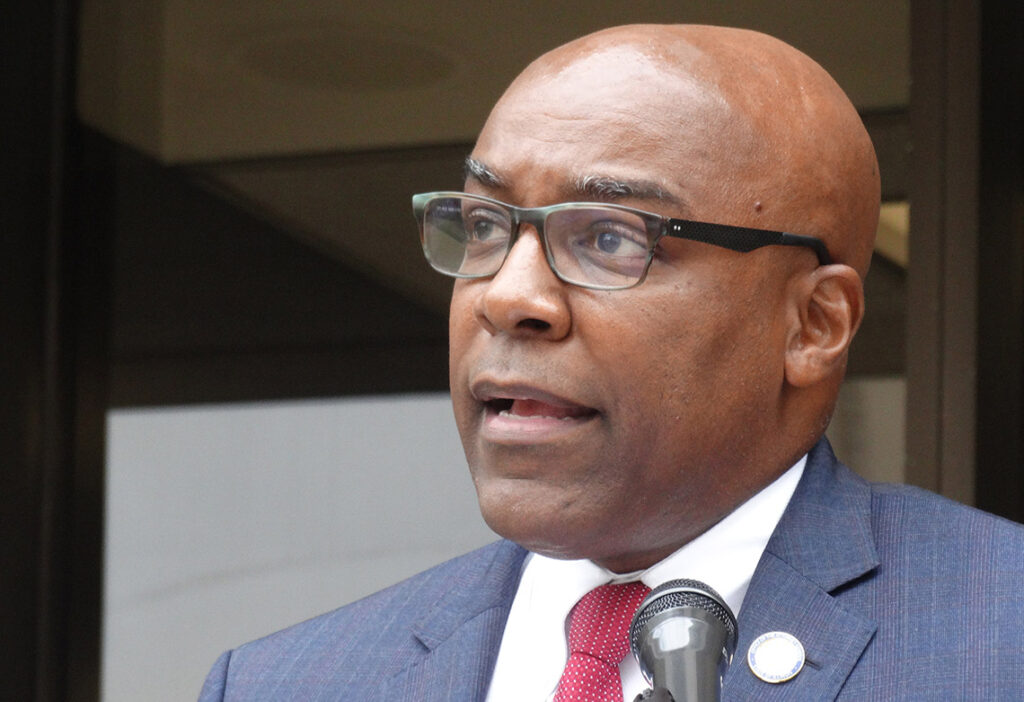
Illinois Attorney General Kwame Raoul joined a coalition of 17 states in suing the federal government to block McMahon’s order.
“The Trump administration’s shortsighted and illegal decision to attempt to rescind already-appropriated education funding would hurt vulnerable students the most and could wreak havoc on the budgets of school districts throughout Illinois and the nation,” Raoul said in a statement Tuesday.
The lawsuit over pandemic-related education money is one of more than a dozen multistate suits Raoul has joined, in combination with other Democratic state attorneys general, challenging actions Trump has taken since being sworn in for a second term Jan. 20.
In 2020 and 2021, Congress passed several relief and economic stimulus packages totaling trillions of dollars to help individuals, businesses and state and local governments deal with the financial consequences of the pandemic. For schools, that included costs associated with preparing for the safe return to in-person learning, addressing the learning loss students suffered during the extended period of school closures, and addressing some of the unique needs of homeless children that were exacerbated by the pandemic.
According to the complaint, Illinois was awarded just over $5 billion in “education stabilization” funds under the American Rescue Plan Act, or ARPA, which was enacted in March 2021. Of that, $77.2 million remained obligated but not yet spent as of the end of March 2025.
Those funds had been earmarked for such things as teacher mentoring, statewide instructional coaching, new principal mentoring, trauma response initiatives, the creation of social-emotional learning hubs and contracts for technology infrastructure upgrades, according to the complaint.
Under ARPA, those funds were intended to cover expenses incurred through Sept. 30, 2023. Subsequent legislation gave states an additional year, to Sept. 30, 2024, to “obligate” their funds. And under agency regulations, they had another 120 days beyond that to draw down the funds, although they were also given the option of requesting further extensions.
In January 2025, Illinois requested, and later received, permission to extend its deadline for drawing down the remainder of its funds to March 28, 2026. Other states involved in the lawsuit also received extensions.
But on Friday, March 28, 2025, the Department of Education issued a memo rescinding those extensions, effectively cutting off the states’ access to any unspent funds.
“Extending deadlines for COVID-related grants, which are in fact taxpayer funds, years after the COVID pandemic ended is not consistent with the Department’s priorities and thus not a worthwhile exercise of its discretion,” McMahon said in a memo to state education agency heads.
The injunction means the Department of Education cannot enforce the order, at least while the case is still being litigated or until the court issues a different order.
Capitol News Illinois is a nonprofit, nonpartisan news service that distributes state government coverage to hundreds of news outlets statewide. It is funded primarily by the Illinois Press Foundation and the Robert R. McCormick Foundation.
The post Illinois regains access to $77M in federal education funds following judge’s order appeared first on Capitol News Illinois.