Posts Tagged ‘Environment’
New laws: Illinois’ grocery tax to end, aquifer protections begin

More than 300 laws will take effect on Jan. 1.
Read MorePesticide drift is catching schools off guard. Lawmakers want to require notice before spraying.

More than 700 Illinois schools are within a quarter-mile of crop fields, yet state law doesn’t require pesticide applicators to notify them before spraying.
Read MoreIllinois’ soil conservation funding stagnates amid recent high-profile dust storms
Capitol News Illinois
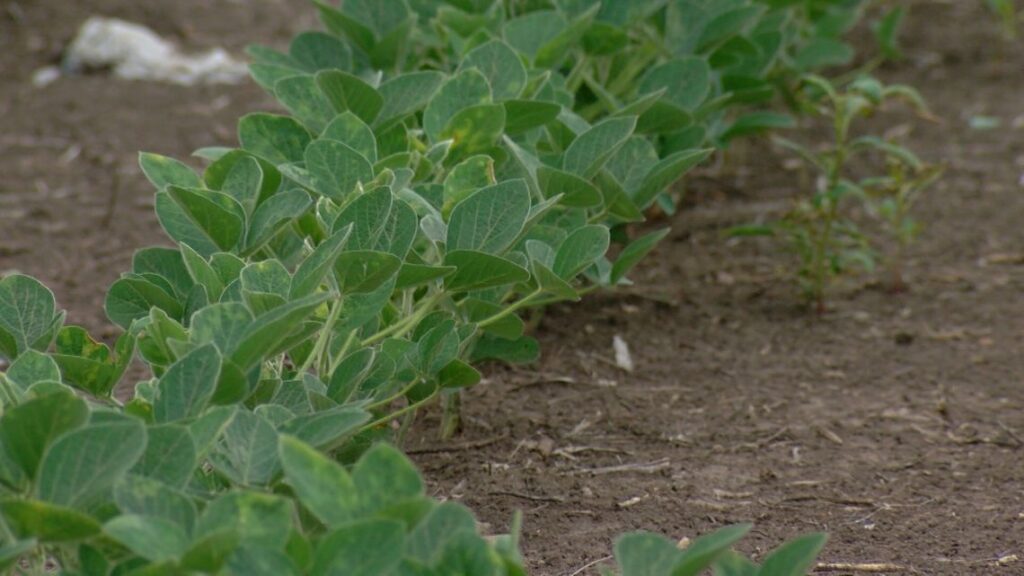
SPRINGFIELD —– Three main factors contribute to the formation of Midwest dust storms: strong winds, dry soil in farm fields and large amounts of loose soil.
That’s according to Andy Taylor, the Science and Operations officer at the National Weather Service’s office in Lincoln. He said these are key ingredients that meteorologists, farmers and experts in the agricultural community have found cause dust storms when they converge.
On May 16, Chicago saw its first major dust storm since the Dust Bowl, which stretched from Texas to New York in the early 1930s and deposited 300 million tons of soil across the nation – 12 million tons of which settled in the Chicago region, according to the Bill of Rights Institute. The storm in May dropped visibility in the city to near zero as wind gusts blew over 60 mph at times, according to the National Weather Service.
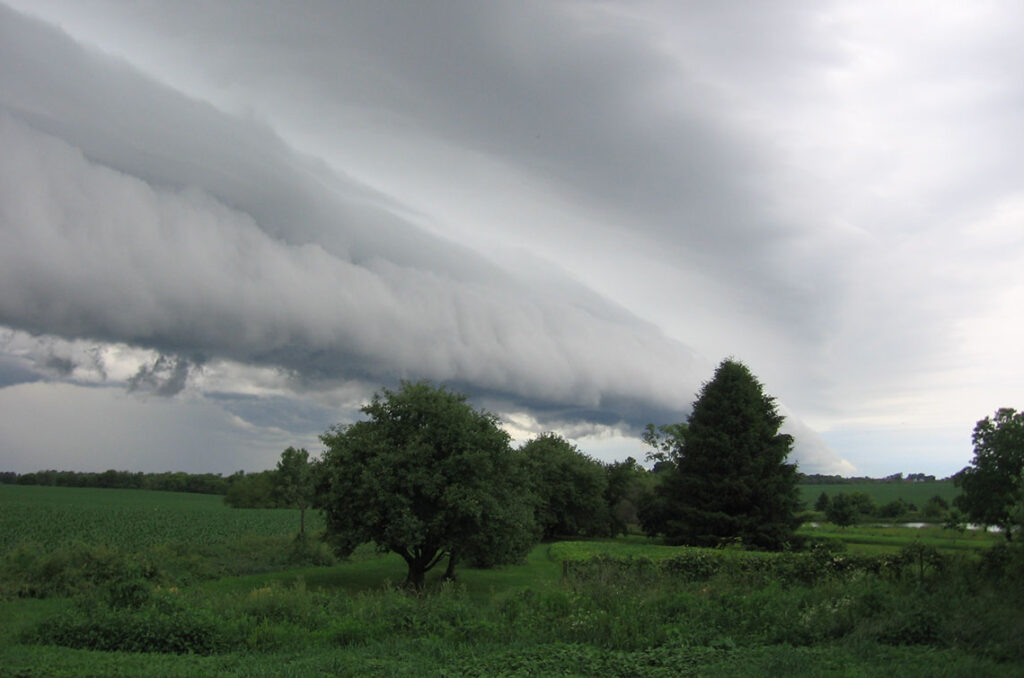
Taylor said the atmospheric environment that day was more characteristic of the dry environments in the High Plains or Southwest U.S., not the Midwest. As rain began to fall near Bloomington, it quickly evaporated and cooled the atmosphere, creating strong pockets of wind that began to move North. And as winds sped up, the storm began to pick up and move dry and loose soil from fields it passed over, which created the dust storm.
“The type of dust storm event that we had that affected the Chicago area, I wouldn’t necessarily take that occurrence as saying we’re going to see an increase in those type of events from this point on,” he said. “Although, anytime you see all those ingredients come together, we certainly could see that again.”
Soil conservation funding ‘deprioritized’
While there were no deaths due to the storm in Chicago, a major dust storm that occurred in central Illinois on a portion of I-55 resulted in a multi-car pileup that took the lives of eight people and injured dozens more in May 2023.
That dust storm also dropped visibility to zero on the stretch of the interstate between Farmersville and Divernon, and was again caused by dry, loose soil being picked up and moved by winds.
Although Taylor said dust storms are not new to Illinois – as his office has documented events back to the 80s – most of the storms don’t move across vast expanses of the state. Instead, he said they often occur in more localized areas, like the storm near Divernon in 2023.
“When we’re seeing the right weather-related factors coming together and the ground is fairly dry, which matches up with loose soil so we know we’re going to be more prone to blowing dust, we coordinate with partners in the agricultural community to determine when we might anticipate those blowing dusts events,” Taylor said.
The Association of Illinois Soil and Water Conservation Districts has been lobbying for increased funding for additional district employees. This year’s state budget allows for each district to staff one full-time employee, which AISWCD Executive Director Eliot Clay called “wildly inadequate” as he said each district needs at least two.
“I really, honestly think conservation funding has been deprioritized,” he said.
What do soil and water conservation districts do?
Soil and water conservation districts began to crop up across the U.S. in the late 1930s as a response to the Dust Bowl and Congress’ subsequent declaration of soil and water conservation as a national priority. According to the Association of Illinois Soil and Water Conservation Districts, that declaration prompted then-President Franklin D. Roosevelt to recommend legislation to state lawmakers that would enact districts in every state.
Illinois has 97 districts, or nearly one district for every county in the state. Employees of the districts are responsible for a variety of tasks – including assessing farmland, educating farmers about conservation practices and connecting farmers with grants from the state and federal government. These all play a key role in the association’s mission of protecting Illinois’ natural resources.
“Unlike a group like the Department of Natural Resources or the EPA or even the Department of Agriculture, SWCDs are not a regulatory body,” Clay said. “We are not going out there and enforcing rules and laws on people, we’re just trying to help farmers do better. And that’s the reason why a lot of farmers rely on SWCDs, is because they do not see us as like, the ‘government’ coming in and telling them, ‘this is how you’re going to do your operation.’”
Soil conservation funding stagnates
The fiscal year 2026 budget signed by Gov. JB Pritzker last week allots $7.5 million to the state’s SWCDs – which Clay said is the same amount the association received in the previous fiscal year. However, he said that number was a $1 million cut from the FY24 budget allocation.
Read more: Pritzker signs $55.1B state budget reliant on $700M of new taxes | New taxes on sports bets, nicotine products as Democrats pass $55.2B budget
Of that $7.5 million, $3 million will go to cost-share grants, which act as reimbursements to farmers for the costs of implementing both state and federal conservation policies, such as cover crops. The remaining $4.5 million will go to administrative costs.
Clay said the breakdown of that $4.5 million provides $40,000 to each Soil and Water Conservation district – meaning that every district will have enough funds to pay one full-time employee. He called the salary “wildly inadequate” for the district employees, most of whom have college degrees.
“$40,000 – and that’s supposed to include benefits, so their take-home is less than that – is barely enough, I mean I would say it’s not enough even for one person” Clay said. “And it’s hard to keep people and incentivize people to come to work when there’s not the kind of money there that there should be.”
In addition, Clay said each district needs two full-time employees to be fully-staffed – one to make on-site visits to farms and one to coordinate schedules, receive phone calls and emails, and staff the office.
He said in recent years, the association was told by both the Department of Agriculture and the governor’s office that if they wanted more funding, they would have to advocate for the money to individual lawmakers outside of budget negotiations.
“I don’t know of any other agency or subsect of an agency that has to, on their own, go to the Capitol and get money,” he said. “That’s very peculiar to me and is something I’ve been trying to wrap my head around, and I have not gotten a good explanation from anybody.”
The governor’s office did not respond to a request for comment.
Over the past two years, Clay said the association unsuccessfully lobbied for $10.5 million in annual funding.
“The bigger question I’m left with after being the executive director over the past six months and witnessing it from this angle is, what does the legislature and the administration value?” Clay said. “It really gets to bigger questions about how the state has dealt with conservation funding in general for the last 20-plus years.”
Soil conservation efforts and farming practices
Kevin Brooks, a commercial agriculture educator at the University of Illinois Urbana-Champaign, said the agriculture community has identified practices farmers can use to reduce the amount of dry, loose topsoil in their fields.
“Measuring the humidity level as a cause is not the issue,” Brooks said in an interview with Capitol News Illinois. “I won’t say it’s not 100% not about the weather, but this is primarily about tillage.”
One suggestion he made was for farmers to till their fields less frequently and instead resort to strip-tilling or using no-till strategies whenever possible to reduce the amount of loose topsoil in fields.
Strip-till is a tilling practice where only narrow rows of a field where seeds will be planted are tilled, leaving the rest of the field untouched. While there are many short- and long-term benefits to strip-tilling, no-till practices often don’t seem to benefit farmers right away but do often have long-term advantages, Brooks said.
Rep. Charles Meier, R-Okawville, farms 1,500 acres in southern Illinois with his family, including corn, wheat, beans, hay, and beef cattle. He said most crops are already minimally tilled by farmers.
State Rep. Charlie Meier, R-Okawville, shows clover growing in a field on his Washington County farm in 2022. In 2009, Meier was awarded the State of Illinois Conservation Farm Family of the Year. (Capitol News Illinois file photo by Beth Hundsdorfer)
“I’m 66 years old and we never no-tilled when I was a kid,” he told Capitol News Illinois. “All of our conventional soybeans are no-tilled now, all of our wheat is done by minimal-till, and our corn is all by minimal-till now.”
He said he’s in frequent contact with his SWCD, including a call on Monday with his district’s employee, and criticized Democratic leadership’s funding priorities, such as subsidies for renewable energy.
“They’re not funding the nuts and bolts of Illinois conservation,” Meier said. “I’m not against wind and solar but they don’t pay for themselves and they’re making us taxpayers pay for them.”
Another main practice Brooks recommended farmers employ was planting cover crops, which are crops planted after harvest not for their produce, but for their benefits to the soil. Cover crops can be planted after a fall harvest for a variety of benefits, including to preserve topsoil through the winter, increase organic matter in the soil and dry the field earlier in the spring.
Brooks also attributed recent dust storms to the invention of high-speed discs – a tillage attachment with many more disks than normal tillage attachments, which tills at faster rates. He said these disks have taken tillage speeds from around 4 mph to over 10, and that farmers in Illinois quickly amassed these machines during and after the COVID-19 pandemic, due to the pandemic relief funds they received.
“In theory, they’re supposed to be a kind of conservation because they don’t go into the ground very deep,” Brooks said. “But they literally turn the top several inches of a farm field into powder.”
Dust storm driving tips
Andy Taylor, from the National Weather Service, recommended safety tips for drivers who find themselves caught in a dust storm.
“If you’re caught in dust with extremely low visibility, the advice is to pull completely off the road, turn off your heads and take your foot off the brake,” he said. “Which may sound kind of counterintuitive in a way, but the reason for doing that is because if you have your lights on, people coming into the dust may think you’re moving. They may see your taillights and think ‘Oh look, someone I can follow’ and that may exacerbate accidents and pileups.”
He also advised drivers who know there is risk of a potential dust storm to travel ahead of the storm or to delay travel until later in the day, if possible.
Capitol News Illinois is a nonprofit, nonpartisan news service that distributes state government coverage to hundreds of news outlets statewide. It is funded primarily by the Illinois Press Foundation and the Robert R. McCormick Foundation.
The post Illinois’ soil conservation funding stagnates amid recent high-profile dust storms appeared first on Capitol News Illinois.
What Trump’s cuts to federal climate research could mean for Illinois
Capitol News Illinois
CHICAGO — The Trump administration took the unprecedented step of halting work on the next National Climate Assessment last week, dismissing all 400 volunteer scientists who were tasked with writing the new version of the report.
Illinois State Climatologist Trent Ford was among those dismissed in his volunteer capacity with the federal program. On April 28, Ford and his colleagues received an email saying the upcoming Sixth National Climate Assessment, due to be released in 2027, is “currently being reevaluated in accordance with the Global Change Research Act of 1990.”
The Global Change Research Act mandates that the National Climate Assessment be published every four years to inform the public of the ongoing impacts, risks and responses to climate change. In the last 35 years, the federal government has never failed to publish the nation’s preeminent report on climate change, but its fate was brought into question last month when it was reported that NASA canceled a critical contract for the U.S. Global Change Research Program, which oversees the assessment.
“It’s disappointing from a personal standpoint,” said Ford, who served as a technical contributor to the Fifth National Climate Assessment published in 2023. He said he was looking forward to taking on a larger role as an author of the Midwest chapter in the next report, which was due in 2027.
He and the other authors of the Midwest chapter had already begun planning what topics the next report should focus on, like the effects of extreme heat on farmers and farm workers, livestock and even mental health, “something that the Midwest chapter hadn’t done previously,” Ford said.
Illinois researchers have always played a role in the National Climate Assessment. University of Illinois emeritus professor Donald Wuebbles has contributed to all five previous reports, including serving as a lead author of the fourth assessment in 2017.
He said his greatest concern is that the report could now move forward under a different team of scientists hand-picked by President Donald Trump, who has a history of denying climate change as a “hoax.”
“There’s a group of denialists out there,” Wuebbles said. “They let their politics affect their science.”
The National Climate Assessment is meant to help policymakers understand the immediate threats of rising global temperatures to the environment in their region and implement solutions at the local level.
“Almost all impacts of climate change are local,” Ford said.
In Illinois, those impacts include heavy rainfall and flooding, heat waves and drought in the summer, and natural disasters like tornadoes, which can lead people to become displaced and cost the state billions of dollars in damage, according to Ford.
Read more: Flooding is Illinois’ Most Threatening Natural Disaster. Are We Prepared?
A 2021 Illinois climate change assessment, which Wuebbles led and Ford co-authored, cites extreme flooding in the spring of 2019 as an example of how climate change is already impacting Illinois. Crop yield losses that year led to a record number of Prevented Plant claims and crop insurance payouts to farmers by the state. Similar events are expected to occur more often and with more intensity if global temperatures continue to increase at the current rate, the 2021 assessment found.
“Climate change isn’t going to stop by ignoring it,” Ford said. “If we don’t have the assessment, we don’t know what to expect, and therefore we can’t plan. Is it (climate change) going to cost $5 billion to the economy, or is it going to be $10 billion?”
The Trump administration is reportedly not going to track the cost of major natural disasters any longer.
Ford shared Wuebbles’ concerns that the next assessment, if published, could be influenced by Trump’s anti-climate change regulation agenda. He also said without the involvement of a diverse group of researchers, the next assessment could fail to represent the interests of the states.
“We are, as experts, tasked with assessing what kinds of problems and solutions are worth including in the National Climate Assessment,” Ford said. “But if this is being disbanded, who’s going to be leading this?… Probably not people from Illinois.”
Trump’s White House has fueled these concerns, saying climate change regulations threaten the president’s goal of “unleashing American energy.” He described state and local climate policies as “burdensome and ideologically motivated,” saying they” “threaten American energy dominance and our economic and national security.”
This is paired with a recent move by U.S. Environmental Protection Agency Administrator Lee Zelden to repeal the endangerment finding of 2009, the agency’s official recognition of greenhouse gases as harmful to human health and the planet.
Proposed Illinois legislation could fill gaps in research
Amid national setbacks to climate change research and environmental policy, Illinois lawmakers are continuing to advance progressive climate legislation at the state level, such as Illinois Senate Bill 1859, referred to as the Climate Displacement Act. That measure cleared the state Senate and is awaiting action in the House.
If passed, the act would establish a state task force to assess and provide recommendations for how Illinois can prepare for the impacts of climate change — specifically, an anticipated influx of climate-displaced people moving to the Midwest from other parts of the U.S.
Sponsors say the bill was informed by the Fifth National Climate Assessment, which projected a trend of increased migration of people away from coastal areas over the next 20-30 years, due to greater frequency of natural disasters. The task force would evaluate ways Illinois might proactively respond, and what the cost burden of that response would be. An initial report of its findings would be due in 2026.
“There’s not a lot of states that are proactively doing this kind of planning despite, you know, the looming danger,” said Senate bill sponsor Sen. Graciela Guzmán, D-Chicago.
Rep. Blaine Wilhour, R-Beecher City, criticized the measure in an Energy and Environment committee hearing.
“Is this task force going to study the outmigration as a result of some of our climate policies in this state, specifically the outmigration of good union jobs?” he asked.
House bill sponsor Rep. Will Guzzardi, D-Chicago, said the proposed task force would work to project those trends. Wilhour said if the task force were to include relevant union stakeholders, he would consider supporting the bill.
The bill passed the House Energy and Environment Committee, and now moves to the House floor.
Illinois has a track record of enacting progressive climate policies, which Ford said is the silver lining to an otherwise difficult situation for climate scientists.
“They don’t have to follow the science,” he said. “But they’re at least informed by the science at the state level in Illinois. We’re at least doing that.”
Isabella Schoonover is a graduate student in journalism with Northwestern University’s Medill School of Journalism, Media, Integrated Marketing Communications, and a fellow in its Medill Illinois News Bureau working in partnership with Capitol News Illinois.
Capitol News Illinois is a nonprofit, nonpartisan news service that distributes state government coverage to hundreds of news outlets statewide. It is funded primarily by the Illinois Press Foundation and the Robert R. McCormick Foundation.
The post What Trump’s cuts to federal climate research could mean for Illinois appeared first on Capitol News Illinois.
Illinois state parks draw highest number of visitors in more than a decade
Capitol News Illinois
SPRINGFIELD – Illinois state parks saw more visitors in 2024 than any point in the past 15 years, according to new data from the Illinois Department of Natural Resources.
Illinois’ 290 state parks and 56 historic sites recorded more than 41 million visitors last year, which was the most in 15 years, following several significant capital projects to upgrade and improve many of the parks.
Interest in state parks has been growing since the pandemic, IDNR Director Natalie Phelps Finnie said in an interview.
“During COVID, people were stir crazy, shut in, and they once again realized how important nature is to all of us,” Phelps Finnie said.
An aggressive advertising campaign by the state has also helped, she said. The Illinois Department of Commerce and Economic Opportunity launched the state’s “Middle of Everything” marketing campaign in 2022, which promotes tourism at the state’s top recreation and cultural attractions in TV commercials, billboards and online advertising.
Starved Rock State Park in LaSalle County topped the list in 2024 with 2.4 million visitors coming to explore the canyons and waterfalls nestled in gorges along the Illinois River in north-central Illinois.
Read more: State completes project preserving its only undeveloped Lake Michigan shoreline
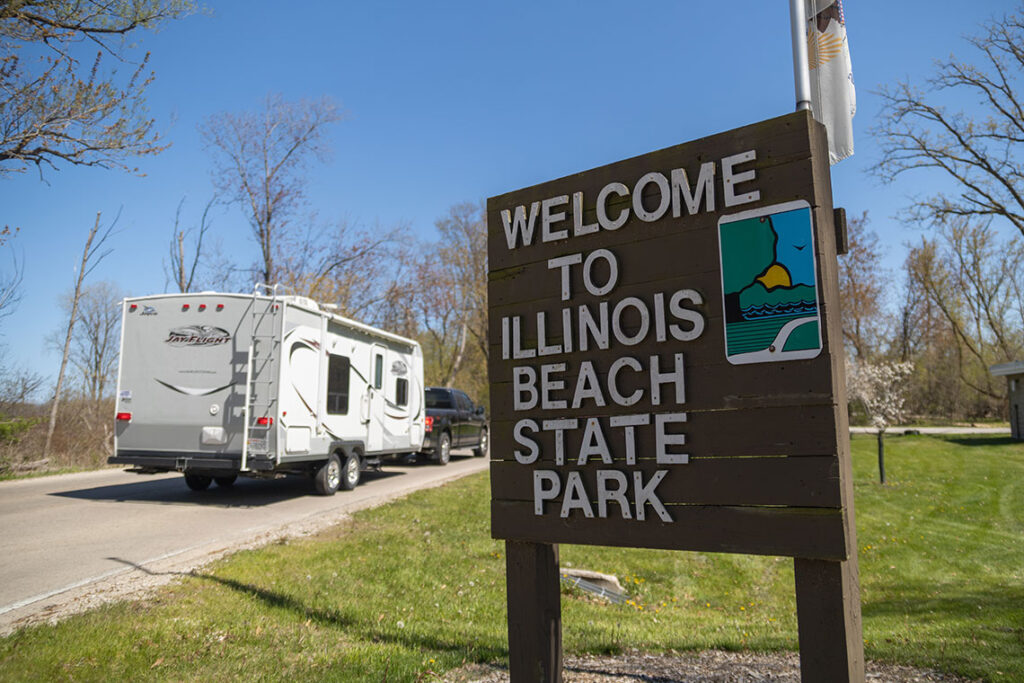
The second-most visited park last year was Illinois Beach State Park, near Zion, with 2 million visitors. IDNR completed a major $73 million project last year to preserve the park from erosion.
“It’s always been a high number of visitors, but certainly the uptick we’ve seen since the beach was restored and since the resort is being invested in once again and remodeled,” Phelps Finnie said.
Beach State Park holds Illinois’ only undeveloped stretch of Lake Michigan shoreline, but it’s subject to the ferocious waves of the lake. The conditions have sometimes eroded up to 100 feet of shoreline a year in parts of the park.
To preserve the park’s shoreline, IDNR’s project included building 22 breakwater structures in the lake to decrease the power of the waves hitting the shore. Several of the structures are entirely submerged while others that poke out the surface of the lake are designed to provide nesting for migratory birds.
The project also included extending the public beach further into Lake Michigan. Erosion had diminished the beach to come within feet of the parking lot and hotel at the park.
The state also announced earlier this year it will put $60 million toward deferred maintenance projects. More than half of that will go to Starved Rock for trail improvements, facility renovations and building a new wastewater system.
The department is also working on adding electric vehicle chargers at state parks and renovating the Old State Capitol in Springfield.
This summer, IDNR plans to restore and upgrade the Crenshaw House in Gallatin County to include a visitor center at a location on the reverse underground railroad, where slaves were held. According to IDNR, John Crenshaw used slaves at his southern Illinois home where he manufactured salt. Crenshaw is also believed to have kidnapped freed or escaped slaves to sell them back to slavery in the South.
“We’re excited that the investment is being made and these parks are getting the attention they deserve,” Phelps Finnie said.
Read more: Illinois commits $8M to repair deteriorating site where Lincoln launched political career
Lincoln’s New Salem Historic Site in Peterburg, where the 16th president lived in his 20s, was the state’s most visited historic site last year with 360,000 visitors. The site is in line for funding to repair aging buildings.
IDNR announced in March it will invest $8 million to repair up to 23 replica log buildings at the site that depict how the village looked when Lincoln lived there in the 1830s.
“You have things fall into disrepair and then it dominoes,” Phelps Finnie said. “It builds. So what was once maybe $100 million or so is now a little over $1 billion worth of deferred maintenance” across IDNR’s properties.
Capitol News Illinois is a nonprofit, nonpartisan news service that distributes state government coverage to hundreds of news outlets statewide. It is funded primarily by the Illinois Press Foundation and the Robert R. McCormick Foundation.
The post Illinois state parks draw highest number of visitors in more than a decade appeared first on Capitol News Illinois.