Posts Tagged ‘Donald Trump’
Pritzker calls Texas GOP’s remap effort ‘cheating,’ doesn’t rule out Illinois response
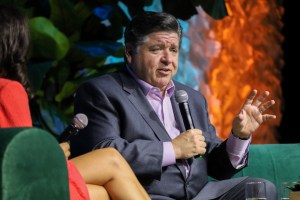
Gov. JB Pritzker speaks during a forum on climate change at the Aspen Ideas conference in Chicago on Monday, July 21, 2025. (Capitol News Illinois photo by Andrew Adams)
A spokesperson for a General Assembly leader says Democrats are not considering redrawing Illinois’ maps.
The post Pritzker calls Texas GOP’s remap effort ‘cheating,’ doesn’t rule out Illinois response appeared first on Capitol News Illinois
Federal housing credit expansion could increase affordable rental units in Illinois: report

Affordable housing advocates say Illinois lawmakers should enact a state low-income housing tax credit to complement more federal funding.
The post Federal housing credit expansion could increase affordable rental units in Illinois: report appeared first on Capitol News Illinois
Illinois hospitals fear massive cuts under Trump domestic policy law
Capitol News Illinois
Article summary
President Trump’s domestic policy bill contains massive cuts in federal Medicaid spending over the next 10 years.
One analysis predicts $48 billion in spending reductions in Illinois over a decade.
The cuts limit states’ ability to raise money through provider taxes to fund their share of Medicaid costs.
The cuts also limit the way states use Medicaid to direct additional payments to hospitals.
SPRINGFIELD — Hospital officials in Illinois say they will have to make some difficult decisions in the next few years that could involve laying off staff, cutting back services and even closing some facilities entirely.
That’s the expected result of federal funding cuts built into the recently passed domestic policy bill that President Donald Trump signed into law July 4, a law that will cut federal spending on Medicaid by more than $1 trillion over the next 10 years.
A.J. Wilhelmi, CEO of the Illinois Health and Hospital Association said in an interview with Capitol News Illinois that the financial pressures will fall heaviest on hospitals that serve rural areas, where a larger share of the population is covered by Medicaid.
“The hospitals in these communities are already on the brink, based on some of the increases in labor, drug and supply costs coming out of COVID, a continuation of claim denials by payers and relatively flat reimbursement rates,” Wilhelmi said. “So, all of that is creating significant pressures. And when you add these Medicaid cuts to an already challenging situation, we know that there are several hospitals that close because of these changes.”
Enrollment, reimbursement reductions
The new law contains provisions that are expected to reduce the number of people enrolled in Medicaid, particularly in states like Illinois that expanded eligibility for the program under the Affordable Care Act, the 2010 law commonly known as Obamacare.
Those include work requirements for people who enrolled through the expansion as well as requirements that they verify their continued eligibility for the program twice a year instead of annually.
But the law also includes changes in aspects of the program that most people outside the health care industry never see. Those mechanisms – known as provider taxes and directed payments – affect the way states finance their share of the cost of Medicaid and the way they direct additional payments to certain health care providers such as hospitals.
Like many states, Illinois levies special taxes on certain health care providers, including hospitals. The money those taxes generate is used to draw down additional federal matching funds, then is paid back to the providers in the form of directed payments to increase their overall reimbursement rate and to reward them if they meet certain performance or quality standards.
Currently, IHA estimates the hospital tax generates about $2 billion a year in revenue. This past session, lawmakers passed a bill to increase the assessment in order to fund a 54% increase in hospital payments, subject to federal approval of the state’s plan. But state lawmakers passed that bill before Congress passed Trump’s domestic policy bill, dubbed the “One Big Beautiful Bill Act.”
Prior to passage of the new federal law, the tax rate states could levy was effectively capped at 6% of a hospital’s net patient revenue. But under the new law, for states like Illinois that expanded Medicaid under the ACA, that cap will gradually be lowered by half a percentage point each year starting in 2028 until it reaches 3.5% in 2032.
In addition, Wilhelmi said, the new law imposes a cap on the directed payments that expansion states like Illinois can send to hospitals so that the total does not exceed the maximum allowed under Medicare – the federal health insurance program for seniors, which has a lower reimbursement rate than Medicaid.
“And that will result in a significant reduction in Medicaid reimbursements for hospitals,” Wilhelmi said. “It means literally hundreds of millions of dollars in less reimbursement to hospitals.”
$48 billion impact over 10 years
According to the nonpartisan health policy research organization KFF, federal Medicaid spending in Illinois is expected to be reduced by about $48 billion over 10 years under the new legislation. That includes an estimated $6.73 billion in spending cuts in rural parts of the state.
Democratic Gov. JB Pritzker has been harshly critical of the new law, and particularly the Medicaid cuts contained in it.
“Donald Trump isn’t just cutting health care — he’s also closing hospitals in Illinois and across the country with his latest scheme,” Pritzker said in one social media post while the bill was moving through Congress. “Hard-working Illinoisans will spend more time in overcrowded waiting rooms and lose access to life-saving care.”
Wilhelmi, meanwhile, said there is still time before the cuts begin to take effect, and he is urging state officials to begin work immediately to develop strategies to adapt to the changes.
“I think the state will need to work with stakeholders like IHA and our hospitals, other provider groups, to identify creative options to ensure that the Medicaid program can continue to be that lifeline for vulnerable patients and communities,” he said. “And that will include identifying options to fortify those programs and services, as well as identify working with our congressional delegation on ways to mitigate or further delay these changes.”
Capitol News Illinois is a nonprofit, nonpartisan news service that distributes state government coverage to hundreds of news outlets statewide. It is funded primarily by the Illinois Press Foundation and the Robert R. McCormick Foundation.
The post Illinois hospitals fear massive cuts under Trump domestic policy law appeared first on Capitol News Illinois.
National speculation helps ‘get more for the people of Illinois,’ Pritzker says
Capitol News Illinois
SPRINGFIELD — Gov. JB Pritzker began his third campaign for governor on Thursday, but much of the buzz around his 2026 campaign announcement focused on 2028.
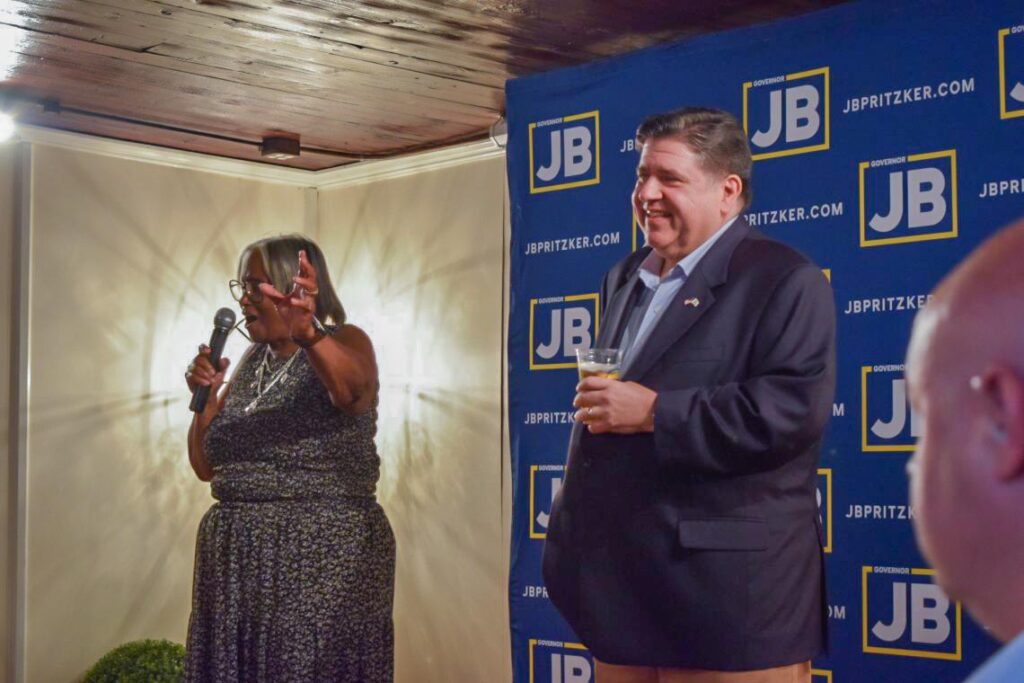
Pritzker made four stops around the state to launch his campaign, fielding questions about any future interest in the presidency and what is driving him to run for what would be a historic third term. In his final stop in Springfield on Thursday evening, he was toasting personally branded “JBeers” – his own craft beer product he unveiled at least year’s Democratic National Convention – with a group of about 100 people at a small event venue just outside the Capitol and talking about his motivations.
“Every day I’m going to wake up going forward thinking about what I am going to do that’s going to help the people of Illinois,” Pritzker told reporters in Springfield when asked how many years of a third term he would serve. “So that’s the reason I’m running for reelection, it’s why I announced today, it’s what I’m going to do every day going forward no matter what decision I make.”
The 60-year-old Democrat’s national profile has grown significantly over the last year. He was a finalist to be former Vice President Kamala Harris’ running mate last July, and weeks later, introduced himself to the country on the stage of the Democratic National Convention in Chicago. In the months since President Donald Trump took office, Pritzker has emerged as one of his most vocal critics.
At news conferences throughout the state, Pritzker did not directly commit to serving a full four-year term if he is reelected and sidestepped questions about his rumored White House ambitions.
Read more: Pritzker calls for mass mobilization as he grows his national profile
But while staying tight-lipped about what he thinks about his prospects in the 2028 presidential election, he said any decision he makes about his future would be Illinois-centric.
Speculation shows Pritzker ‘capable and competent’
In the meantime, Pritzker said he believed his inclusion in the national conversation is good for Illinois.
“When I ran for governor in the first place in 2017 and 2018, never, never could I have imagined that anybody would talk about me as the potential vice-presidential nominee or as a candidate for president of the United States,” Pritzker said.
While Republicans have frequently criticized the governor for his tendencies to criticize Trump rather than work with him to Illinois’ benefit, the governor spun his rising national profile as a positive.
Gov. JB Pritzker takes a picture with Mike Lopez, mayor of nearby Jerome, after announcing his reelection campaign in Springfield on Thursday, June 26. (Capitol News Illinois photo by Jade Aubrey)
“Having the state of Illinois’ leaders viewed as capable and competent and potentially able to run the entire country and being talked about in that way, allows us, I think, to get more for the people of Illinois because there’s an understanding that, you know, maybe in Illinois we’re doing the right things,” he said. “Maybe in Illinois we have leaders that can competently execute on what states really need.”
Pritzker said his experience last summer being vetted for the vice presidency has not played any role in the decisions he has made about his political career.
Should Pritzker decide to run for president, an announcement would likely come at some point in 2027 during what would be the first year of his third term if he’s reelected.
Pritzker’s goal: ‘Protect’ Illinois and his legacy
Pritzker said at his announcement Thursday that his goal in 2026 is to preserve his legacy and “protect” the story of Illinois that’s been written under his leadership. Pritzker didn’t outline a bold vision for his third term but rather pledged to build off what he has already accomplished.
Read more: ‘I have work to do,’ Pritzker says in launching third-term reelection bid
He said his third term would focus on grappling with artificial intelligence, addressing the rising cost of living, continued spending on infrastructure and growing the state’s economy.
Pritzker reflected on his decision to seek reelection despite growing challenges facing the state.
“I don’t shy away from a fight, and we’re going to have to protect the people of Illinois,” Pritzker told reporters in Springfield. “And I feel like we’re in a moment when backing away from public service when things are hard doesn’t feel right. So that’s one of the reasons I chose to run for reelection.”
Gov. JB Pritzker speaks with reporters after his campaign announcement in Springfield on Thursday. (Capitol News Illinois photo by Jade Aubrey)
Pritzker was asked whether he would have run had Trump not been elected last year.
“I think I would, but I have to say that in this moment, it feels like walking away is the wrong thing to do given who is in the White House and given how this administration is attacking people all across this country,” Pritzker said.
The governor must also choose a new running mate as Lt. Gov. Juliana Stratton has decided to run for U.S. Senate. Pritzker said he will choose one by the end of July so his campaign can start circulating nominating petitions in early August. Pritzker said in Chicago that he is looking for someone with enough experience to take over as governor if required.
Rep. Jehan Gordon-Booth, D-Peoria, may be an early front-runner for the job. Pritzker specifically referred to Gordon-Booth as qualified at a stop in East Peoria on Thursday when asked about potential running mates, WGLT reported. The assistant House majority leader has been in the General Assembly since 2009.
Capitol News Illinois is a nonprofit, nonpartisan news service that distributes state government coverage to hundreds of news outlets statewide. It is funded primarily by the Illinois Press Foundation and the Robert R. McCormick Foundation.
The post National speculation helps ‘get more for the people of Illinois,’ Pritzker says appeared first on Capitol News Illinois.
‘I have work to do,’ Pritzker says in launching third-term reelection bid
Capitol News Illinois
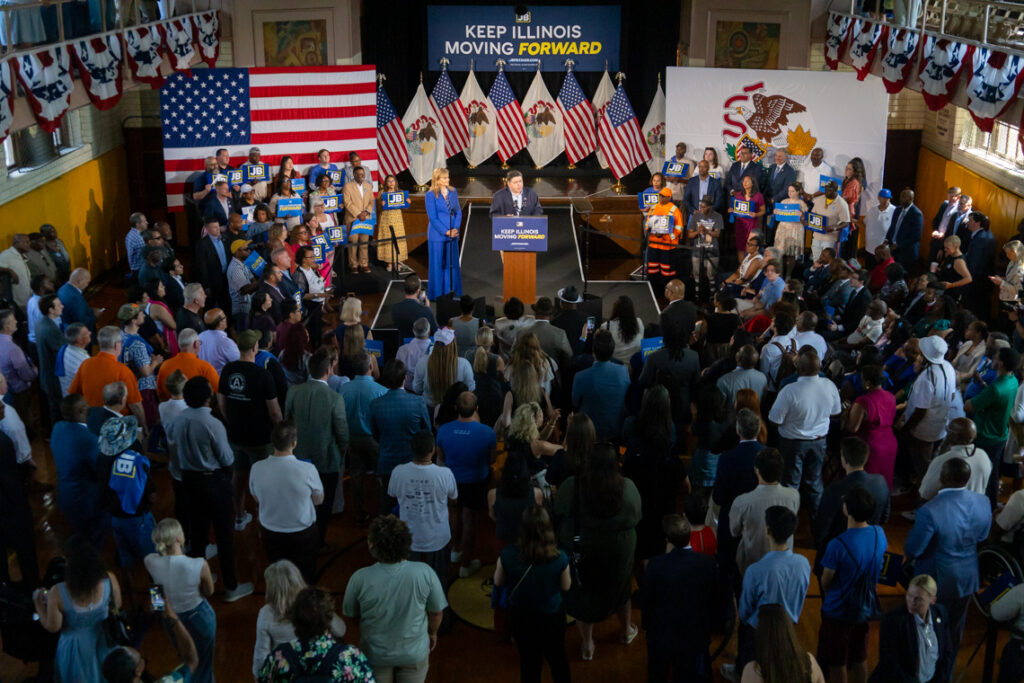
CHICAGO — In a hot gymnasium on Chicago’s South Side, Gov. JB Pritzker announced Thursday morning he’s running for a potentially historic third term as governor.
In his announcement speech, Pritzker said he is running to “protect” the story he’s been telling about Illinois — one that has been built largely in opposition to the politics of President Donald Trump.
Pritzker said his third term would focus on grappling with artificial intelligence, addressing the rising cost of living, continued spending on infrastructure and growing the state’s economy.
The field house at Grand Crossing Park where Pritzker launched his first campaign hosted a crowd of Pritzker’s invited supporters, including Democratic party officials, campaign operatives and long-time Pritzker supporters.
Read more: Pritzker calls for mass mobilization as he grows his national profile
Pritzker’s message has often focused on what Democrats need to do to win and push back on Trump, including addressing economic issues for the middle class and being outspoken against Trump’s policies.
“While it is certainly tempting to lay all of this at the feet of the megalomaniac narcissist in the White House and his malignant clown car in Congress, the hard truth is, we all share some of the blame,” Pritzker said.
The governor said “we must reckon with the fact that everything is too damned expensive,” but taking a shot at Republicans, said enacting budget cuts to key government programs like Medicaid that make life more affordable for people shouldn’t be the solution.
Gov. JB Pritzker and his wife, MK Pritzker, wave to supporters at a June 26 rally to launch JB’s third gubernatorial campaign. (Capitol News Illinois photo by Andrew Adams)
The governor also said a third term would continue his past efforts to protect abortion rights, diversity programming in the private sector and teachers’ ability to teach “uncensored history.”
Pritzker’s progressive stances on hot-button national issues are part of what has grown his national profile since President Donald Trump took office in January.
The governor has been one of the president’s most vocal Democratic critics and his schedule has been loaded with national media interviews and campaign speeches around the country.
From reelection to presidential election?
A successful reelection could set the stage for a bigger one: Pritzker’s speculated 2028 presidential campaign.
Pritzker on Thursday downplayed the possibility when speaking to reporters but didn’t explicitly rule it out.
“Everything that I do, truly everything that I do, in my job and every day when I wake up is about improving the lot of the people who live in the state of Illinois, lifting up the working families of Illinois,” Pritzker said. “Whatever I do going forward is going to be about that.”
He had a small taste of presidential campaigning last year when he was considered as a running mate for former Vice President Kamala Harris, then served as a surrogate.
“You don’t get on that list unless they think you actually could be president of the United States and do the job if you had to,” Pritzker told reporters last year.
As some Democrats have tried finding a centrist message, Pritzker has stayed in the left lane. He condemned politicians, without mentioning specific names, who abandon their core beliefs for political gain.
“Of all the unbecoming qualities that Americans hate in their politicians – they hate cowardice the most,” Pritzker said. “I’d rather lose standing up for what I believe in than win by selling out those who believed in me.”
Read more: Pritzker balances messaging as some Dems encourage party to avoid LGBTQ issues
As Pritzker rattled off a list of accomplishments in his more than six years as governor, his message remained the same as it has since he launched his first campaign in 2017 to unseat an unpopular Republican incumbent: fight.
“Let me be clear: There is no Mission Accomplished banner to stand under today,” Pritzker said alluding to a premature victory declaration former President George W. Bush made in a 2003 speech regarding military action in Iraq. “Yes, we have addressed so many of our old problems – but new ones always arise. History is an endless relay race. Our job is not to look for the finish line but to protect the baton as we run our assigned leg. But we have work to do. I have work to do.”
Gov. JB Pritzker speaks to supporters at a campaign launch rally in Chicago on June 26, telling them in his speech “I have work to do.” (Capitol News Illinois photo by Andrew Adams)
Pritzker argued his success has come through embracing his role as a cheerleader for the state, recalling the negative perceptions of Illinois, such as the prevalence of corruption and unbalanced budgets, that had consumed state politics.
“When I was first elected, I told you I was prepared to be a happy warrior on behalf of our state, even if it meant going it alone,” Pritzker said. “I suited up to face the carnival barkers and misery spelunkers and doom grifters. I handed out optimism like a shot of Malört – as a swift jolt to the heart.”
First three-term Democrat?
The 60-year-old Democrat enters the race as the favorite, having received more than 54% of the vote in the 2018 and 2022 elections.
An heir to a fortune built on the Hyatt Hotel chain, Pritzker’s net worth sits at $3.7 billion as of Thursday, according to Forbes. His vast personal wealth makes him one of the richest politicians in American history and gives him a significant leg up on competitors. Pritzker dumped $350 million into his first two campaigns and has never taken outside contributions.
Separately, Pritzker has used an undisclosed amount of his personal fortune to fund a political action committee, Think Big America, to support abortion rights in other states.
Pritzker is also entering unchartered territory for Illinois governors. If he completes his current term, he would be the first Democrat to serve two full terms in modern state history. If he wins reelection, he would be the only governor to serve more than two terms since Republican Gov. Jim Thompson served four terms from 1977 until 1991.
Pritzker will need a new running mate first, however, as Lt. Gov. Juliana Stratton is running for U.S. Senate. Pritzker did not announce a running mate Thursday.
Pritzker’s governing record
The governor’s top priority for his second term was to eliminate child care deserts and make preschool more accessible. Since he was sworn in in January 2023, the state has implemented Pritzker’s Smart Start initiative to expand preschool offerings around the state and has begun to phase in a new Department of Early Childhood.
When asked about those goals after his speech Thursday, Pritzker said there were an “awful lot of things” that his administration still needed to accomplish.
“We still need to get to universal preschool. We’re on our way. It’ll happen probably in 2027,” Pritzker said.
But Pritzker pointed to several of his progressive policy wins Thursday, in his speech and when speaking to reporters.
He has signed legislation raising the minimum wage to $15, legalizing recreational cannabis, banning assault weapons and numerous new protections of abortion rights since Roe v. Wade was overturned three years ago. Pritzker also passed landmark legislation to phase out fossil fuels in the electricity sector.
Pritzker repeatedly brought up cleaning up Illinois’ fiscal house. The state has recorded budget surpluses in recent years and has received nine credit upgrades since he took office.
But challenges are also growing. The budget has gotten tighter, and lawmakers have resorted to more than $1 billion in targeted tax increases over the last two years to balance the budget. The fiscal year 26 budget Pritzker signed this month increased discretionary spending by less than 1%.
Gov. JB Pritzker highlights his progressive wins and criticizes Republicans in a speech to supporters in Chicago on June 26. (Capitol News Illinois photo by Andrew Adams)
There’s also been headaches over legislative priorities. Labor unions are frustrated Pritzker didn’t embrace their proposal for pension reform this spring. And many parts of the governor’s legislative agenda hit roadblocks with concerned lawmakers. There’s also ongoing discussions about achieving Pritzker’s bold clean energy goals as prices rise and energy supply is strained.
The governor has taken pride in growing state agencies decimated by the two-year budget impasse that began a decade ago. But problems at those agencies have caused trouble for Pritzker.
An audit revealed the Department of Public Health failed to intervene to stop deaths from COVID-19 at the LaSalle Veterans’ Home in 2020, though Pritzker blamed and fired leaders at the Department of Veterans’ Affairs. Billions of pandemic relief dollars at the Department of Employment Security went to fraudsters, while the Department of Children and Family Services faced years of scrutiny over deaths and the its failure to properly house children in its care while Pritzker maintained support for the department’s director.
GOP criticizes ‘stepping stone’ approach
As problems have mounted at the Statehouse, Senate Republicans have encouraged Pritzker to “think Illinois.” As he announced his campaign Thursday, Illinois Republicans continue to believe his focus is elsewhere.
“These last nearly eight years under his governance merits firing not rehiring,” Illinois GOP Chair Kathy Salvi said in a statement. “While businesses and families flee, Pritzker sees Illinois as nothing more than a stepping stone for the White House.”
A field of Republican challengers is still taking shape. So far, DuPage County Sheriff James Mendrick, Posen Park District Commissioner Phil Perez and Lake Forest businessman Joe Severino have announced they will run in the Republican primary.
Capitol News Illinois is a nonprofit, nonpartisan news service that distributes state government coverage to hundreds of news outlets statewide. It is funded primarily by the Illinois Press Foundation and the Robert R. McCormick Foundation.
The post ‘I have work to do,’ Pritzker says in launching third-term reelection bid appeared first on Capitol News Illinois.
Pritzker defends Illinois’ immigration laws in theatrical congressional hearing
Capitol News Illinois
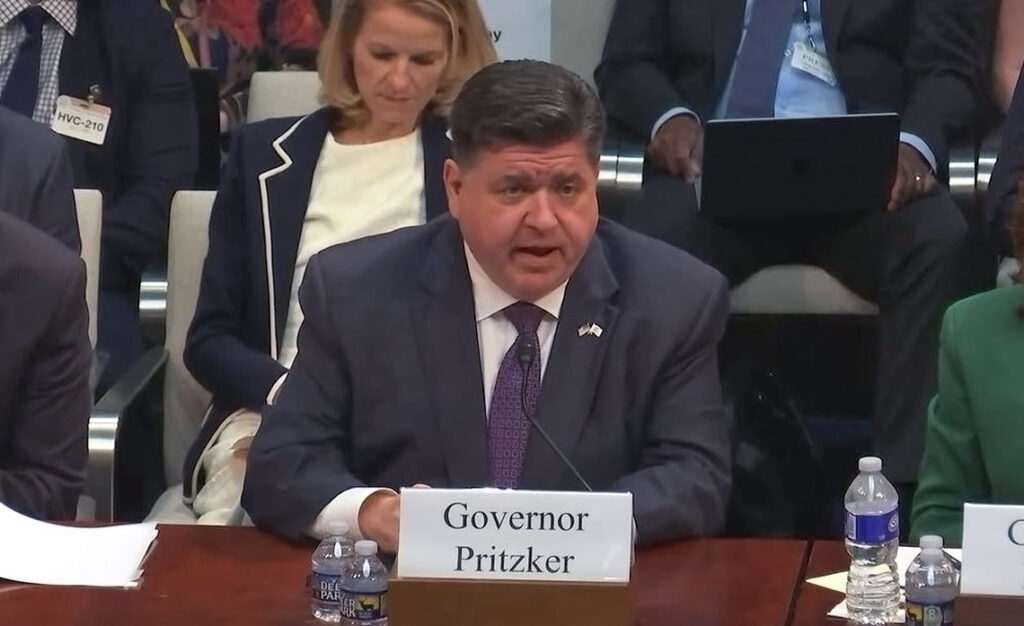
Gov. JB Pritzker spent hours Thursday defending his governing record and Illinois’ immigration policies as he was peppered with questions from members of the U.S. House Oversight Committee.
Pritzker and Democratic governors Kathy Hochul of New York and Tim Walz of Minnesota were summoned to Washington, D.C., by committee Chair James Comer, R-Ky., to answer questions about “sanctuary states.” The hearing mostly involved lectures from Republican members arguing immigration policies like Illinois’ diminish public safety while Democratic members blasted the Trump administration’s deportation raids.
“I invited these governors here today because as the chief executives of their states, they willfully ignore federal law, shield illegal aliens and pass the cost of free services onto their hardworking taxpayers,” Comer said. “It’s hard to figure out whose side these governors are on. They shield criminals while their own citizens pay the price.”
Pritzker countered by reiterating a point he has made publicly in Illinois several times since November’s election.
“As I have consistently said, violent criminals have no place on our streets, and if they are undocumented, I want them out of Illinois and out of our country,” Pritzker said. “And as we are reminded in Los Angeles this week, we can all agree that violence of any kind, whomever it is directed at, is unacceptable.”
Pritzker’s appearance before the committee came as nationwide protests grew over the Trump administration’s deportation tactics and increasing arrest numbers by Immigration and Customs Enforcement, especially in Los Angeles.
After protests and violence in that city last weekend prompted President Donald Trump to deploy hundreds of troops, thousands of people marched through the streets of Chicago this week protesting immigration raids. Some protestors briefly clashed with police, and 17 people were arrested, according to Chicago Police.
Dozens more protests are planned in Chicago and around Illinois on Saturday. Dubbed as “No King” protests, the gatherings are designed to contrast with a military parade planned by Trump in Washington on Saturday celebrating the U.S. Army’s 250th birthday. Saturday is also Trump’s 79th birthday.
Pritzker said if the Illinois National Guard ever needs to be activated to quell civil unrest, it’s done in coordination with local law enforcement. He criticized Trump’s deployment of the Guard in Los Angeles.
“It’s wrong to deploy the National Guard and active-duty Marines into an American city over the objection of local law enforcement just to inflame a situation and create a crisis,” Pritzker said.
Republicans on the committee alleged “sanctuary state” laws violate federal immigration laws. Illinois’ 2017 TRUST Act, signed by Republican Gov. Bruce Rauner, prohibits Illinois law enforcement from detaining people based on their immigration status and assisting in civil immigration enforcement. Law enforcement cannot hold people based on federal immigration warrants in most cases, but they can make arrests for federal criminal warrants.
Rep. Gary Palmer, R-Ala., suggested the three governors be criminally charged with obstruction because of their states’ laws. His comments follow Trump’s suggestion that California Gov. Gavin Newsom should be arrested.
“I have the highest duty to protect the people of my state, and indeed if Tom Homan were to come to my state and try to arrest us, me rather, I can say first of all that he can try,” Pritzker said of Trump’s border czar. “I can also tell you I will stand in the way of Tom Homan going after people who don’t deserve to be frightened in their community.”
Homan told CNN earlier this week Newsom hasn’t done anything to require an arrest.
Controversy over Illinois’ immigration policies
Pritzker blamed decades of federal government inaction on immigration and border security for exacerbating issues in the U.S. He also acknowledged to Comer that President Joe Biden inadequately handled immigration, particularly as 50,000 migrants were sent to Illinois mostly by the governor of Texas.
“We’re not in charge of the border in Illinois, I can tell you that,” Pritzker later told Rep. Pete Sessions, R-Texas. “We don’t have a border with a foreign country. … We had 50,000 people who came from Texas because they were shipped to us. And let me tell you, I was in favor of helping them.”
Read more: Pritzker to tell Congress ‘both parties are to blame’ for broken immigration system
Pritzker occasionally butted heads with Republicans throughout the hearing. Comer questioned the governor about the death of Katie Abraham in an Urbana car crash. She was killed in January by a suspected drunken driver illegally in the United States, according to WCIA. The GOP members mentioned several crime victims by name throughout the hearing.
Rep. Mary Miller, a Republican from Hindsboro, accused Pritzker of “rolling out the red carpet for illegal aliens,” adding “illegal aliens in our state have overwhelmed our communities.”
“I am not going to be lectured to by someone who extolled the virtues of Adolf Hitler,” Pritzker said, alluding to comments Miller made on Jan. 6, 2021.
Given multiple scenarios about what should happen to people who commit crimes while illegally in the country, Pritzker reiterated he supports deporting violent people but emphasized that must happen with due process. Democrats have argued Trump’s administration is deporting people without due process.
Republicans also criticized Illinois’ recent budgets for providing more than $1 billion of state health care benefits to people without documentation along with other programs for noncitizens. However, Pritzker is expected to sign a new state budget this month that eliminates a $330 million health care program for immigrants between ages 42 and 64.
“You do not keep track of any public service dollars in the state of Illinois that goes to illegal immigrants?” Rep. Byron Donalds, R-Fla., asked Pritzker after the governor didn’t offer specifics about exactly how much Illinois spends on “illegal immigration.”
And while Pritzker cast some blame on Republican-led border states for making Illinois part of recent waves of millions of migrants, Rep. Andy Biggs, R-Ariz., remarked that while “Illinois didn’t ask for this crisis” as Pritzker said in his opening remarks, “neither did Yuma, Arizona.”
The hearing’s message
The hearing veered off topic several times. Rep. Raja Krishnamoorthi, a Schaumburg Democrat, praised Pritzker’s work on the economy and spent time discussing Pope Leo XIV’s White Sox loyalty while Texas Republican Rep. Brandon Gill asked Pritzker whether he’s ever used a woman’s restroom.
“You’re admitting that this is just a political circus,” Pritzker responded to Gill.
Aside from Gill’s question about bathrooms, Pritzker largely avoided any immigration-related viral moments. The most intense grilling was reserved for Walz as the Democrat’s 2024 vice presidential nominee and Hochul over high-profile murders in New York.
Rep. Nancy Mace, R-S.C., remarked the hearing featured a possible preview of the 2028 Democratic presidential primary. Pritzker and Walz are both viewed as possible candidates in the next presidential election.
Pritzker’s appearance at the committee hearing is the latest opportunity to grow his national profile. His schedule throughout 2025 has been dotted with national media interviews and out-of-state speaking engagements where he has often called for more protests of the Trump administration.
Read more: Trump’s 100 days: Pritzker calls for mass mobilization as he grows his national profile
He echoed that message again Thursday.
“I encourage people to peacefully protest, and I have said that many times,” he said.
Pritzker said Trump “has created a situation where people are afraid.”
“They’re afraid they’re going to get targeted because that is what’s happening under this administration. People are getting individually targeted when they stand up and speak out,” Pritzker said.
Capitol News Illinois is a nonprofit, nonpartisan news service that distributes state government coverage to hundreds of news outlets statewide. It is funded primarily by the Illinois Press Foundation and the Robert R. McCormick Foundation.
The post Pritzker defends Illinois’ immigration laws in theatrical congressional hearing appeared first on Capitol News Illinois.
What Trump’s cuts to federal climate research could mean for Illinois

Capitol News Illinois
CHICAGO — The Trump administration took the unprecedented step of halting work on the next National Climate Assessment last week, dismissing all 400 volunteer scientists who were tasked with writing the new version of the report.
Illinois State Climatologist Trent Ford was among those dismissed in his volunteer capacity with the federal program. On April 28, Ford and his colleagues received an email saying the upcoming Sixth National Climate Assessment, due to be released in 2027, is “currently being reevaluated in accordance with the Global Change Research Act of 1990.”
The Global Change Research Act mandates that the National Climate Assessment be published every four years to inform the public of the ongoing impacts, risks and responses to climate change. In the last 35 years, the federal government has never failed to publish the nation’s preeminent report on climate change, but its fate was brought into question last month when it was reported that NASA canceled a critical contract for the U.S. Global Change Research Program, which oversees the assessment.
“It’s disappointing from a personal standpoint,” said Ford, who served as a technical contributor to the Fifth National Climate Assessment published in 2023. He said he was looking forward to taking on a larger role as an author of the Midwest chapter in the next report, which was due in 2027.
He and the other authors of the Midwest chapter had already begun planning what topics the next report should focus on, like the effects of extreme heat on farmers and farm workers, livestock and even mental health, “something that the Midwest chapter hadn’t done previously,” Ford said.
Illinois researchers have always played a role in the National Climate Assessment. University of Illinois emeritus professor Donald Wuebbles has contributed to all five previous reports, including serving as a lead author of the fourth assessment in 2017.
He said his greatest concern is that the report could now move forward under a different team of scientists hand-picked by President Donald Trump, who has a history of denying climate change as a “hoax.”
“There’s a group of denialists out there,” Wuebbles said. “They let their politics affect their science.”
The National Climate Assessment is meant to help policymakers understand the immediate threats of rising global temperatures to the environment in their region and implement solutions at the local level.
“Almost all impacts of climate change are local,” Ford said.
In Illinois, those impacts include heavy rainfall and flooding, heat waves and drought in the summer, and natural disasters like tornadoes, which can lead people to become displaced and cost the state billions of dollars in damage, according to Ford.
Read more: Flooding is Illinois’ Most Threatening Natural Disaster. Are We Prepared?
A 2021 Illinois climate change assessment, which Wuebbles led and Ford co-authored, cites extreme flooding in the spring of 2019 as an example of how climate change is already impacting Illinois. Crop yield losses that year led to a record number of Prevented Plant claims and crop insurance payouts to farmers by the state. Similar events are expected to occur more often and with more intensity if global temperatures continue to increase at the current rate, the 2021 assessment found.
“Climate change isn’t going to stop by ignoring it,” Ford said. “If we don’t have the assessment, we don’t know what to expect, and therefore we can’t plan. Is it (climate change) going to cost $5 billion to the economy, or is it going to be $10 billion?”
The Trump administration is reportedly not going to track the cost of major natural disasters any longer.
Ford shared Wuebbles’ concerns that the next assessment, if published, could be influenced by Trump’s anti-climate change regulation agenda. He also said without the involvement of a diverse group of researchers, the next assessment could fail to represent the interests of the states.
“We are, as experts, tasked with assessing what kinds of problems and solutions are worth including in the National Climate Assessment,” Ford said. “But if this is being disbanded, who’s going to be leading this?… Probably not people from Illinois.”
Trump’s White House has fueled these concerns, saying climate change regulations threaten the president’s goal of “unleashing American energy.” He described state and local climate policies as “burdensome and ideologically motivated,” saying they” “threaten American energy dominance and our economic and national security.”
This is paired with a recent move by U.S. Environmental Protection Agency Administrator Lee Zelden to repeal the endangerment finding of 2009, the agency’s official recognition of greenhouse gases as harmful to human health and the planet.
Proposed Illinois legislation could fill gaps in research
Amid national setbacks to climate change research and environmental policy, Illinois lawmakers are continuing to advance progressive climate legislation at the state level, such as Illinois Senate Bill 1859, referred to as the Climate Displacement Act. That measure cleared the state Senate and is awaiting action in the House.
If passed, the act would establish a state task force to assess and provide recommendations for how Illinois can prepare for the impacts of climate change — specifically, an anticipated influx of climate-displaced people moving to the Midwest from other parts of the U.S.
Sponsors say the bill was informed by the Fifth National Climate Assessment, which projected a trend of increased migration of people away from coastal areas over the next 20-30 years, due to greater frequency of natural disasters. The task force would evaluate ways Illinois might proactively respond, and what the cost burden of that response would be. An initial report of its findings would be due in 2026.
“There’s not a lot of states that are proactively doing this kind of planning despite, you know, the looming danger,” said Senate bill sponsor Sen. Graciela Guzmán, D-Chicago.
Rep. Blaine Wilhour, R-Beecher City, criticized the measure in an Energy and Environment committee hearing.
“Is this task force going to study the outmigration as a result of some of our climate policies in this state, specifically the outmigration of good union jobs?” he asked.
House bill sponsor Rep. Will Guzzardi, D-Chicago, said the proposed task force would work to project those trends. Wilhour said if the task force were to include relevant union stakeholders, he would consider supporting the bill.
The bill passed the House Energy and Environment Committee, and now moves to the House floor.
Illinois has a track record of enacting progressive climate policies, which Ford said is the silver lining to an otherwise difficult situation for climate scientists.
“They don’t have to follow the science,” he said. “But they’re at least informed by the science at the state level in Illinois. We’re at least doing that.”
Isabella Schoonover is a graduate student in journalism with Northwestern University’s Medill School of Journalism, Media, Integrated Marketing Communications, and a fellow in its Medill Illinois News Bureau working in partnership with Capitol News Illinois.
Capitol News Illinois is a nonprofit, nonpartisan news service that distributes state government coverage to hundreds of news outlets statewide. It is funded primarily by the Illinois Press Foundation and the Robert R. McCormick Foundation.
The post What Trump’s cuts to federal climate research could mean for Illinois appeared first on Capitol News Illinois.
Pritzker signs order to protect personal autism data in response to federal action
Capitol News Illinois
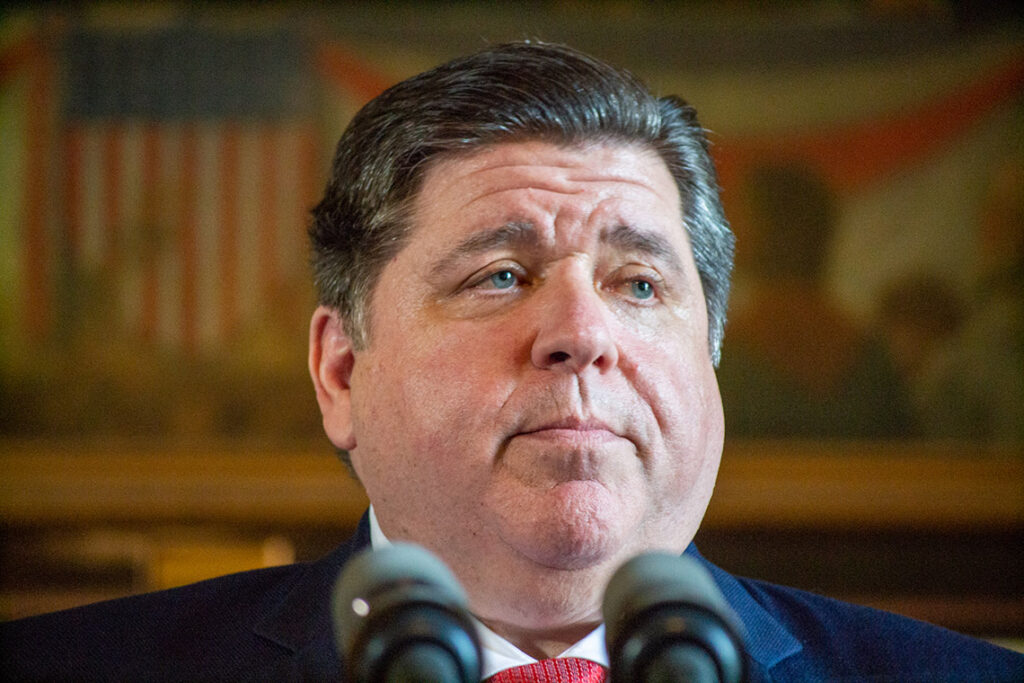
SPRINGFIELD — Gov. JB Pritzker issued an executive order Wednesday that bars state agencies from collecting and disclosing data about autism to the federal government unless it’s medically or legally necessary.
The order was in response to a move by the U.S. Department of Health and Human Services earlier Wednesday to research and create a national autism database.
In a statement, Pritzker called the project a “threat” to the rights of disabled individuals. The order stated that the project raises privacy concerns about the collection and use of data, as well as potential “discriminatory profiling or surveillance of individuals with disabilities.”
“Every Illinoisan deserves dignity, privacy, and the freedom to live without fear of surveillance or discrimination,” Pritzker said. “As Donald Trump and DOGE threaten these freedoms, we are taking steps to ensure that our state remains a leader in protecting the rights of individuals with autism and all people with disabilities.”
Executive Order 2025-02 also requires state agencies to follow strict privacy and data protection requirements when they do disclose such data, including making personal information anonymous where it’s practicable and only disclosing the minimum amount of personal information that’s legally necessary.
The move was prompted by an HHS announcement of a research project on Wednesday. The project will allow the National Institutes of Health and the Centers for Medicare and Medicaid Services to have access to data and medical records of Medicare and Medicaid enrollees diagnosed with autism in an effort to research autism, Newsweek reported.
It also directly responded to remarks made last month by U.S. Department of Health and Human Services Secretary Robert F. Kennedy Jr., who called autism an “epidemic” and said that President Trump has tasked him with finding a cause for the “epidemic.”
“Autism is a neurological difference—not a disease or an epidemic,” Pritzker’s order read. “People with disabilities, including individuals with autism, are too often stigmatized and underestimated, and public policy should never diminish the diverse strengths and potential of this community.”
This is not the first time Kennedy has touched on his beliefs about autism. During an interview in 2023, he confirmed that he believes that vaccines cause autism, a theory the U.S. Centers for Disease Control and Prevention and a wide body of research have long since debunked.
Read more: How RFK Jr.’s health proposals could affect Illinois
Executive orders aren’t often enacted by the Illinois governor, as last year he only signed three. This is the second order he has signed this year and is his latest action against the Trump Administration since his trade mission to Mexico this spring.
Read more: Pritzker hopes trade mission to Mexico sparks new investment despite tariffs
Capitol News Illinois is a nonprofit, nonpartisan news service that distributes state government coverage to hundreds of news outlets statewide. It is funded primarily by the Illinois Press Foundation and the Robert R. McCormick Foundation.
The post Pritzker signs order to protect personal autism data in response to federal action appeared first on Capitol News Illinois.