Posts Tagged ‘affordable housing’
How Illinois’ Democratic U.S. Senate candidates plan to address economic issues

The top three Democrats running for U.S. Senate have released economic plans.
Read MoreBudzinski intervenes in local housing dispute on behalf of low-income residents
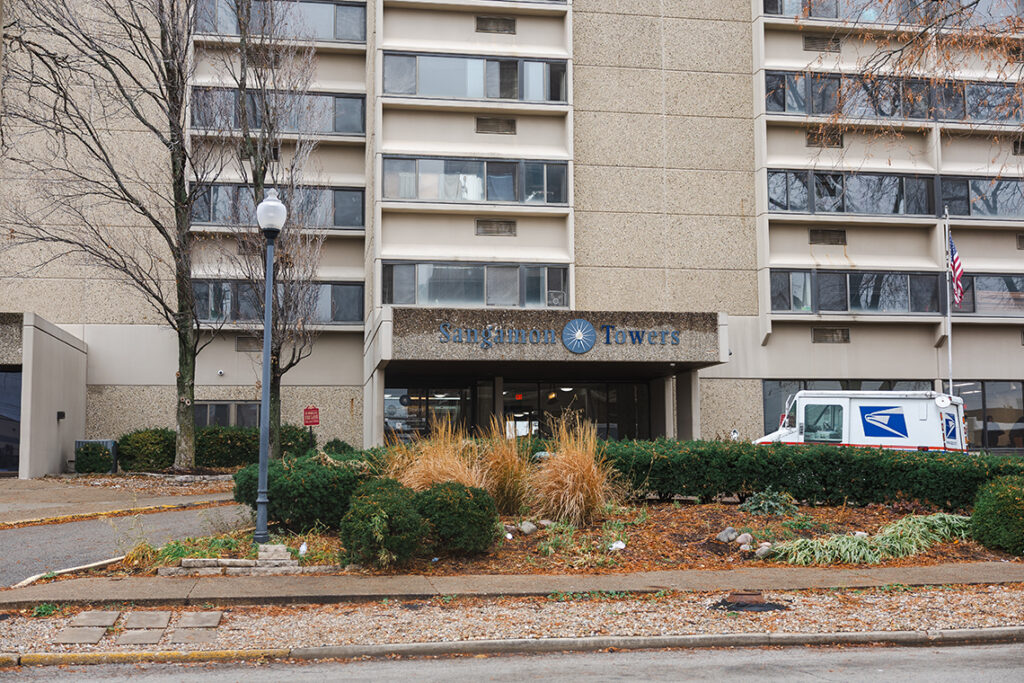
Budzinski demands answers from management company accused of failing low-income Illinois residents as HUD cuts loom.
Read MoreHousing funding cut in Illinois budget as homelessness increases
Capitol News Illinois
Article Summary
Illinois’ fiscal year 2026 budget reduced funding for programs serving homeless people by more than $14 million from the previous year.
JB Pritzker’s “Home Illinois” initiative aimed at reaching “functional zero” homelessness saw a $26.6 million cut.
That program was launched in 2022 and had previously been on a steady upward funding trend.
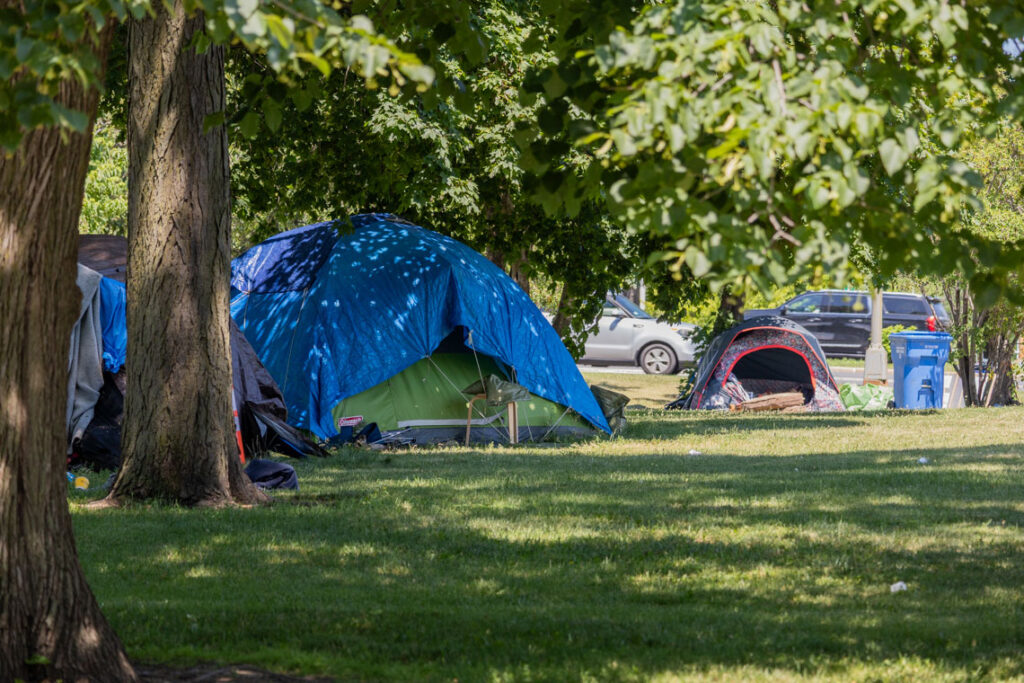
Advocates worry the reductions and potential federal cuts will exacerbate homelessness in Illinois, which increased 116% in 2024, according to state data.
This summary was written by the reporters and editors who worked on this story.
The number of homeless people in Illinois is rising, but the state’s spending on homeless prevention and other housing programs is headed in the other direction.
Facing a tight budget year with constrained spending and limited natural revenue growth, the $55.1 billion fiscal year 2026 budget that took effect July 1 reduces total funding for housing programs by more than $14 million, including Pritzker’s signature initiative designed to eliminate homelessness in Illinois.
“Last year homelessness increased 116% in the state of Illinois,” Doug Kenshol, co-founder of the Illinois Shelter Alliance, told Capitol News Illinois. “To be in the midst of this crisis and then have the state cut funding was beyond disappointing.”
Discretionary spending rose by less than 1% in the FY26 budget, according to the governor’s office, despite total spending increasing by $2 billion. That minimal spending growth led lawmakers to reduce several programs.
“Is it enough? No, it isn’t … we know that homelessness is an existential crisis, and the state of Illinois takes this seriously,” Sen. Adriane Johnson, D-Buffalo Grove, who serves on a state homeless prevention task force, told Capitol News Illinois. “We have a really bold vision for ending homelessness and we’re going to continue down that path.”
Spending reductions
Pritzker first established a task force by executive order in 2021 that would create a plan for “Home Illinois” to reduce homelessness in the state to “functional zero” — where homelessness is temporary and people without housing can quickly obtain housing resources. The executive order did not set a date for the state to reach functional zero, and funding for the Home Illinois is declining by $26.6 million in FY26.
Pritzker’s administration had previously targeted housing programs for substantial increases in recent years. The FY26 budget appropriated $263.7 million for Home Illinois, down from $290.3 million in FY25. That was a $90 million increase from FY24, when the program received $200.3 million in its first year after Pritzker signed legislation in 2023 codifying the task force and Home Illinois program.
Read more: Pritzker signs $55.1B state budget reliant on $700 million of new taxes
Among the decreased spending in Home Illinois is a $25 million reduction to the Court-Based Rental Assistance Program that provides financial aid to people facing evictions. Other programs saw steady or increased funding, including shelters, which rose to fund Chicago’s One System Initiative that integrates migrants into the city’s typical shelter system.
Spending on housing programs is also down overall, according to the advocacy group Housing Action Illinois. While some housing programs saw increases that offset reductions to Home Illinois, total spending on housing programs is down by $14.6 million in the FY26 budget, to $354 million. Pritzker’s proposed budget had called for a $7.6 million decrease.
“FY26 is largely a maintenance year for the state budget,” an Illinois Department of Human Services spokesperson said in a statement. “We remain as committed as ever to advancing strategies that prevent and end homelessness across Illinois.”
Johnson said the spending reduction is “temporary” and the state is still working toward long-term goals that would require more funding.
“The state is trying to do the best it can with limited resources,” Housing Action Illinois Policy Director Bob Palmer said in an interview.
Some of the avenues lawmakers used to fund programs also divert funding away from one area in favor of another, Palmer said. For example, the Affordable Housing Trust Fund is supposed to provide funding for new permanent rental housing, but money in the fund is also being used to increase funding for emergency or transitional housing.
“We were in a way glad to see that increase but also feeling conflicted because it’s taking money from another important housing resource,” Palmer said. “We had been advocating for that increase to come from general revenue funds.”
Read more: Illinois Shelter Alliance calls for $100M state funding boost to fight homelessness
Funding for the emergency and transitional housing program increased by $7 million, a small win for advocates, but nowhere near the $40 million increase sought by the Illinois Shelter Alliance. The group wanted lawmakers to increase funding by $100 million overall for housing programs.
Palmer also worried proposed federal cuts to rental assistance programs will put additional strain on the state’s budget.
Homelessness continues to grow
The spending reductions come as homelessness in Illinois continues to rise despite the new program.
The latest data on homelessness in Illinois from an October report by a Department of Human Services task force shows the state had 25,787 unhoused people on the night of the annual “point in time” count in January 2024 — a 116% increase from 2023.
The increase is largely driven by migrants who have been sent to Illinois by other states such as Texas. Of those without housing in January 2024, 13,891 were new arrivals. However, non-migrant homelessness is still on the rise, increasing 22% in 2024.
Homelessness is also increasing throughout the state. It’s up 207% since 2020 in Chicago, while DuPage and St. Clair counties were the only places in Illinois to see a decline over that time.
“You can argue that we can always do better, but Illinois is on the right path,” Johnson said.
Despite homelessness increasing since Home Illinois was established, Kenshol said the program is making a difference.
“They’ve created some great programs and they’ve gotten funds distributed and a lot of housing and a lot of shelter has been created, but we have to sustain that effort and we need to keep making incremental increases because we’re not there yet,” he said.
Data backs that up, according to IDHS. The Court-Based Rental Assistance Program, which received a substantial cut this year, has helped 7,500 households. And more than 18,000 people were served by Home Illinois in the first half of FY25 — 10,000 more than IDHS’ prior homelessness prevention program helped in FY22.
The problem, according to advocates and IDHS, is rapidly growing housing costs that make finding permanent housing and affording rent more unreachable for more people. A report last month from the Illinois Economic Policy Institute found Illinois needs 142,000 more housing units to meet the current demand for homes.
Finding more resources
Data in the task force’s annual report that provides a road map for Home Illinois shows service providers still need substantial resources to make a dent in homelessness. The state has more than 23,000 beds and housing units for homeless people, but needs about 27,000 more.
The task force, which includes advocates, lawmakers and top leaders in state agencies, says the problem will continue to grow if these resources aren’t addressed.
“The longer it takes to meet these targets, the more resources will be needed to reach functional zero as homelessness is a dynamic systems problem, or, in other words, annual unmet need for shelter and housing can be expected to increase each year that the need is unmet,” the report said.
Palmer agreed.
“If we’re taking the plan to prevent and end homelessness in Illinois seriously, we need to be providing the increased resources to eliminate that shortage … otherwise we’re just managing homelessness at its current level,” he said.
Palmer said lawmakers should be increasing funding for housing no matter what the state’s budget situation is because housing insecurity can be a root cause for other issues that cost the state more money, such as health problems.
Increasing funding for shelters alone also isn’t enough, said Kenshol, the Shelter Aliance co-founder. A lack of funding for affordable permanent housing leaves people stuck in the shelter system, which means growing rental assistance programs to help prevent people from being forced into shelters should be a budget priority, he said.
In a $55.1 billion budget, Kenshol argued the state should be able to find the money to increase funding each year for housing programs.
“As a society, as voters, as elected officials, we make different choices. We turn our backs on the people who are desperate and at risk of perishing and instead we invest in other things,” Kenshol said. “My values suggest that we should put caring for the least of these first.”
Capitol News Illinois is a nonprofit, nonpartisan news service that distributes state government coverage to hundreds of news outlets statewide. It is funded primarily by the Illinois Press Foundation and the Robert R. McCormick Foundation.
The post Housing funding cut in Illinois budget as homelessness increases appeared first on Capitol News Illinois.
‘Granny flats’ may be the answer to affordable housing in Chicago — but they’re illegal
Capitol News Illinois
by Alex Nitkin for ILLINOIS ANSWERS PROJECT
CHICAGO — For most new parents, finding last-minute child care usually means an afternoon of frantic phone calls and around $100 dropped on a trusted babysitter.
For Brian and Fiona Peterman, it means walking across their backyard.
In 2021, Fiona’s mother, Louise D’Agostino, was scanning pricey apartments near Brian and Fiona’s Lakeview home so she could live closer to them after she retired — until Brian learned about a new city program that would let the family build a second, smaller house on their own property.
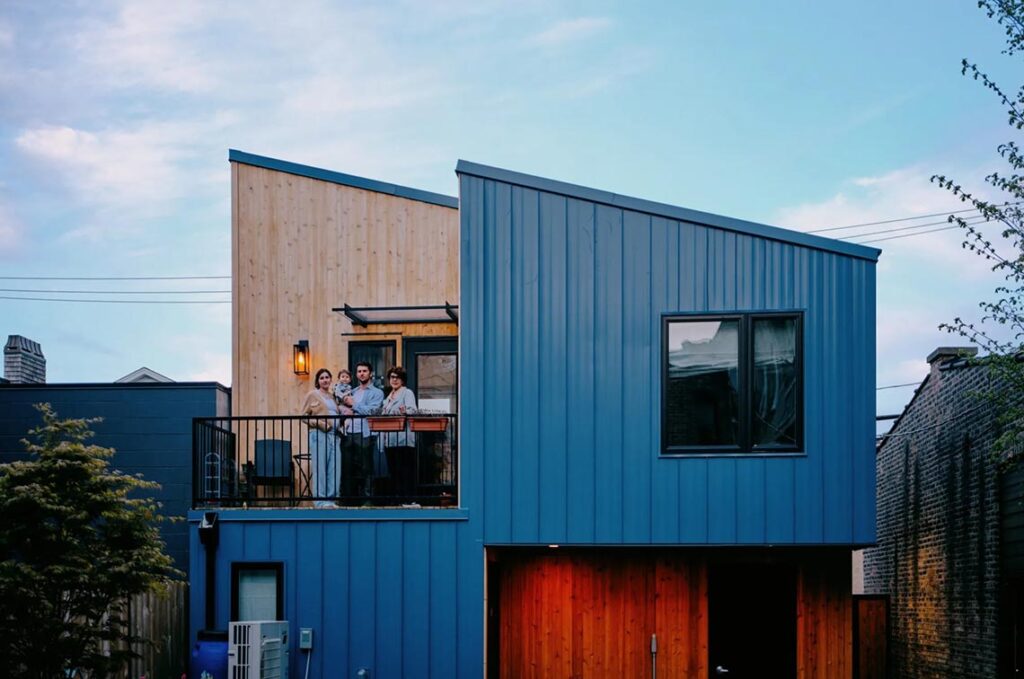
After nearly two years of navigating regulatory red tape and approximately $300,000 in construction costs, D’Agostino was able to move into a 700-square-foot, two-bedroom house on top of Peterman’s garage in 2023.
After nearly two years of navigating regulatory red tape and approximately $300,000 in construction costs, Brian Peterman was able to build a “granny flat” on his property, allowing his mother-in-law to move in. “‘Life-changing’ is probably the cleanest way of saying it,” he said. (Akilah Townsend for Illinois Answers Project)
Nowadays, D’Agostino goes on walks with her 18-month-old granddaughter nearly every day. D’Agostino cooks the toddler recipes from her native Malta that she learned from her own mother, and she’s teaching her to speak Maltese.
D’Agostino pays rent to her daughter, Fiona, and son-in-law, Brian — much less than the cost of the mortgage at her previous home, but still a steady and meaningful source of income for the Petermans to supplement the salaries from their day jobs.
“‘Life-changing’ is probably the cleanest way of saying it,” Brian Peterman said. “By having her there, we always have that backup plan in case something goes awry in our normal lives.”
Homes like D’Agostino’s, typically called coach houses, carriage houses or “granny flats,” are illegal to build in most of Chicago. Their construction was banned in 1957 by city leaders who feared residential overcrowding. Chicago has since lost approximately 800,000 residents.
City officials under three mayors have been pushing for at least six years to unravel the prohibition of so-called accessory dwelling units, or ADUs — a term used to describe both coach houses and unused basement or attic spaces that are converted into apartments. In the legalization campaign, bureaucrats and policy researchers consistently highlight ADUs as a low-risk tool, free to taxpayers, that’s been proven to provide a limited but effective release valve for other cities’ affordable housing crises.
For D’Agostino, it meant finding an affordable home in an affluent neighborhood while providing extra income to offset child care costs for her daughter and son-in-law while keeping her granddaughter close.
A three-year pilot program that legalized the units in some areas showed that outcomes like the Petermans’ are widely replicable, opening up more housing options in neighborhoods where cheap apartments have become increasingly rare. But the burst of construction seen so far is a pittance compared to the more than 100,000 affordable units experts say it would take to satisfy demand.
“ADUs are our path to economic mobility,” said state Rep. Kam Buckner (D-Chicago), who sponsored legislation that would prohibit Illinois cities from banning the units. “They turn under-utilized space into income-generating property, which is a big deal.”
Many City Council members remain skeptical of ADU legalization, wary of any move that would limit their ability to guide new development in their wards.
That’s one reason why a proposal to legalize the units citywide has been sitting on the shelf for more than a year.
In the meantime, property owners inside the pilot zones, like the Petermans, are straining to build ADUs amid daunting costs and regulatory barriers.
City Hall discussions on how to expand and ease construction are clouded by a political stalemate over how far the program should reach, and by a little-understood federal complaint targeting Chicago’s housing segregation. And policymakers have struggled to craft an ordinance that would encourage ADU construction across the city — not just in wealthy, dense areas, where they’ve overwhelmingly been added during the pilot.
As Chicago leaders sit on their hands, proposals to permit ADU construction across Illinois are gaining support in Springfield, where lawmakers are pushing their own measures. Adding to the momentum is Gov. JB Pritzker, who recently endorsed ADUs as a tool to increase the state’s stock of affordable housing.
“Think about carriage houses,” Pritzker said in an April 30 episode of the Volts podcast after an interviewer asked the governor about his housing agenda. “We’ve got neighborhoods where people are not allowed to have those as separate dwellings — or just the idea that we can, if we make a few tweaks here and there, we can significantly increase the amount of housing with the existing housing stock.”
A pilot program to test the waters
Chicago planning officials under former Mayor Rahm Emanuel first promoted the idea of legalizing accessory dwelling units in 2018, saying they “can offer relatively affordable housing for tenants and can help moderate income families become homeowners with the additional income.” Researchers had taken note of new construction in Portland following the legalization of ADUs there years earlier, and a 2016 California law had already unlocked an explosion in construction of the relatively low-cost units across that state.
A 2019 study by the AARP found that in seven U.S. cities, ADU rents were hundreds of dollars lower than the rents of comparable one-bedroom apartments and could provide “a substitute for nursing home care, a means to age in community, an opportunity to live with other family members in multi-generational living arrangements, as well as a source of earning extra income to supplement fixed incomes in their retirement years.”
In 2019, the newly reconstituted Chicago Department of Housing recruited the Chicago-based Urban Land Institute to lead a task force with dozens of developers, architects, affordable housing advocates and lenders to draw up a list of recommendations for how Chicago could legalize ADUs.
The result was a 44-page report, published in May 2020, detailing the challenges of ADU legalization in other cities and ways Chicago could overcome them.
Within a month of the report’s publication, Chicago Mayor Lori Lightfoot had introduced an ordinance legalizing coach house construction and basement unit conversions in Chicago, incorporating some of the task force’s recommendations.
It got a chilly reception in the City Council.
“This will be a blanket approval … it will allow two-flats to become three-flats, three to become four and four to become five,” said then-Ald. Patrick Daley Thompson (11th), who represented the city’s Bridgeport and Chinatown neighborhoods. “If someone wants to change a two-flat to a three-flat, in my ward, we do a community meeting. All of my neighbors — the community comes out and has participation. Not a bureaucrat at City Hall making a decision for my community.”
South Side Ald. David Moore (17th) was more direct.
“I want some aldermanic control over this,” Moore said.
After months of negotiations, the council approved a test ordinance that legalized accessory dwelling ordinance in five “pilot zones” — two on the city’s North Side, one on the West Side and two on the South Side — all in areas represented by alderpeople who supported the initiative. However, the West and South Side zones were established with additional restrictions at local council members’ request, including a requirement that the new units could be built only on owner-occupied properties.
In May 2021, the Chicago Department of Housing began accepting applications for coach houses and basement unit conversions. The ordinance called on city officials to report back to the City Council three years later with data and insights.
Peterman, who had been following the ordinance closely, was among the first in line to apply.
It was a year before his coach house project would break ground.
Peterman became tangled in a weeks-long back-and-forth with zoning officials in the city planning department over the dimensions of his porch. Because the city requires homes like his to have at least one parking space, he needed to figure out how to build the coach house on top of his garage. And even after housing and planning officials gave him the go-ahead, he had to get a fresh approval from the Chicago Department of Buildings, which regulates all construction in the city.
After nearly two years of navigating regulatory red tape and approximately $300,000 in construction costs, Brian Peterman was able to build a “granny flat” on his property, allowing his mother-in-law to move in. “‘Life-changing’ is probably the cleanest way of saying it,” he said. (Akilah Townsend for Illinois Answers Project)
“It took us a very long time compared to a normal [housing] permit, which would have been one-tenth of the time if [the ADU] was already part of the zoning code,” he said.
Just as difficult, Peterman said, was financing. It typically takes between $50,000 and $100,000 to build a new unit in a basement or attic, but building a new coach house can run upwards of $250,000. Peterman and his wife had so much difficulty finding a loan package that they ultimately took out a new line of credit on their existing home to pay for the project, he said.
Despite the hurdles, more than 300 accessory dwelling units have been permitted for construction across the five pilot zones since 2021. They overwhelmingly comprised basement unit conversions, as opposed to coach houses — not surprising, observers said, considering how much cheaper it is to renovate than to build a new free-standing structure.
Open interactive graphic in new tab
More than 90% of the new units were located in one of the two North Side zones. City officials chalked up the disparity to the overwhelming demand for new housing in wealthier parts of the city — and to the added barriers placed on construction in the South and West Side zones.
‘We need them in our neighborhoods’
A May 31, 2024 memo sent to the City Council by commissioners of the Chicago planning and housing departments recommended expanding the pilot citywide. A review of data found that most of the new construction in the pilot program added garden units below existing walk-up apartment buildings. The below-grade units are typically less costly to rent.
Cook County faces a shortage of more than 150,000 affordable homes — in large part due to the disappearance of apartments in two- to four-unit apartment buildings that have either been demolished or converted into lavish single-family homes in recent years, according to the DePaul University Institute for Housing Studies.
As a result, a renter who earns the median income in Chicago today has sharply fewer housing options than they would have had 25 years ago, a WBEZ investigation found earlier this year.
Chicago’s ADU pilot has seen hundreds of units crop up in neighborhoods made up of squat two- and three-story apartment buildings, showing that their legalization has been “spurring investment in exactly the kind of neighborhood type where added housing options are most badly needed,” city commissioners wrote in their memo to the City Council.
The results of the ADU pilot were promising, but they were also underwhelming in the context of the city’s mammoth affordable housing crisis, said Daniel Hertz, who served as director of policy, research and legislative affairs for the Chicago Department of Housing from 2019 to 2024.
“It hasn’t completely transformed the face of any neighborhood,” Hertz said. “But I think 300 additional units that by and large are going to be moderately priced for the neighborhoods that they’re in … and having done that without basically any subsidy from the city — that’s a good thing.”
Ald. Daniel La Spata (1st), whose ward is inside the Northwest Side pilot zone, was an early supporter of accessory dwelling unit legalization. What he’s seen during the pilot has been “fantastic,” solidifying his position on the policy, he said.
Ald. Daniel La Spata (1st) at Chicago City Hall on Tuesday, June 20, 2023 (Victor Hilitski, for Illinois Answers Project)
“I’ve been in these units. They’re great. We need them in our neighborhoods,” La Spata said. “They’ve allowed families to develop and stay together intergenerationally.”
AARP Illinois, which supported Chicago’s ADU pilot ordinance, has since thrown its weight behind efforts to allow construction of the units statewide. A spokesperson for the seniors’ advocacy group said the housing type can provide an ideal option for older Illinoisans who want to live independently while downsizing to a smaller, more affordable home.
AARP found in its 2019 study that the average ADU in Seattle rented for $1,500, compared to nearly $1,900 for a comparable one-bedroom apartment in the same city. The price difference was even sharper in Oakland, Calif. and Washington, D.C.
Proponents argue the financial benefits of ADUs also apply to Chicago.
La Spata noted that the city spends millions of dollars each year to subsidize housing for people with low incomes. Legalizing basement unit conversions, assuming a $100,000-per-unit cost by private developers, represents an easy and efficient way to bring more affordable units into the market without spending taxpayer money, La Spata said.
“If I told someone tomorrow that we could develop 50 units of affordable housing for all of a $5 million investment, that would be the most efficient affordable housing development in the city,” he said.
La Spata supports a proposal from Ald. Bennett Lawson (44th), whose Lakeview ward straddles a pilot zone, to legalize the units across the city.
The addition of new ADUs in Lawson’s ward has “really worked out well,” Lawson said. The new units haven’t drawn any complaints from neighbors or worsened traffic or parking.
“A lot of them are legalizing spaces that were never properly permitted … and making that housing legal and safe for more people in my neighborhood,” the North Side alderperson added.
Lawson met some resistance to the proposal among his colleagues, but he tweaked the ordinance in April 2024 with a compromise that would add an additional hurdle to approval in low-density residential neighborhoods on the city’s outskirts.
Lawson said he believed the amended ordinance had ample support in the City Council and could pass easily if taken to the floor.
A year later, the ordinance remains on the shelf.
Delays and disputes gum up legislation
Lawson’s proposal can’t move forward until Ald. Walter Burnett (27th), who chairs the City Council Committee on Zoning, brings it to a vote.
Burnett is holding the proposal back. But not because he’s against the policy.
He said the hold-up is coming from Mayor Brandon Johnson’s administration.
The housing and planning departments under the mayor rejected Lawson’s proposal, saying its built-in hurdles for construction in less dense neighborhoods make it too restrictive. Instead, the Johnson Administration is pushing for zoning that allows ADU construction in every corner of the city.
“Allowing ADUs by right is essential to meaningfully addressing Chicago’s housing shortage and building on the success of the pilot program,” Chicago Department of Housing spokesperson Felicia Bolton wrote in a statement.
Burnett also blamed the delay on an obscure legal snag.
In 2019, a coalition of fair housing groups led by the Shriver Center on Poverty Law filed a legal complaint with the U.S. Department of Housing and Urban Development alleging that “aldermanic prerogative,” the unwritten rule that gives Chicago alderpeople vast power to dictate zoning changes and other approvals in their own wards, stymies proposals for new affordable housing in well-to-do neighborhoods. The case led federal officials in 2023 to send Chicago leaders a letter ruling that local aldermanic veto power violates federal civil rights law because it “perpetuates segregation” and “effectuates opposition to affordable housing based on racial animus.”
Nearly two years later, the plaintiff groups and city officials all declined to comment on the status of the legal complaint, saying they agreed to stay quiet while the parties negotiate a mutual resolution to the complaint.
Burnett blamed the grinding legal talks for freezing progress on citywide legalization of accessory dwelling units. City attorneys told the zoning committee chair that Lawson’s compromise ordinance, with its added regulations for low-density neighborhoods, would complicate the path to a legal resolution by opening a new avenue for the “aldermanic prerogative” that the plaintiffs are seeking to roll back.
“The law department were the ones that said, ‘hold off until we get past this lawsuit,’” Burnett said.
Chicago Department of Law spokesperson Kristen Cabanban wrote in a statement that city and federal officials are “negotiating a resolution to a complaint regarding the distribution of affordable housing throughout the city.” She declined to comment on the status of the negotiations or on Burnett’s characterization of them.
If city leaders delay on the ordinance much longer, their efforts could be eclipsed by pending state legislation that aims to allow coach houses and basement units across Illinois.
Buckner’s proposal, which would pair a ban on local prohibition of accessory dwelling units with a list of measures designed to boost their construction, missed a key deadline for consideration in the spring 2025 legislative session. But the legislator is also supporting a parallel legalization bill, backed by the powerful trade association Illinois Realtors, that cleared a key committee vote and remains in contention.
“I just hope we can put a little fire under them,” Buckner said of his counterparts on the Chicago City Council. “I want the city to lead this conversation — I really don’t want the state to have to do this. But we will, if we need to.”
After nearly two years of navigating regulatory red tape and approximately $300,000 in construction costs, Brian Peterman was able to build a “granny flat” on his property, allowing his mother-in-law to move in. “‘Life-changing’ is probably the cleanest way of saying it,” he said. (Akilah Townsend for Illinois Answers Project)
Peterman has become a vocal advocate for the legislation, even opening up his home to show Buckner and other state representatives how an ADU can work. He hopes statewide legalization of coach houses helps more families move closer together into affordable homes just like his mother-in-law did.
Legalizing the units in some parts of Chicago “has not changed the character of these neighborhoods,” Peterman said. “All it has done is given people more options for the property that they already own.”
This is a developing story. Check back for updates.
Making it in Chicago
The path toward upward economic mobility is increasingly out of reach for many in Chicago and Illinois. This series by Illinois Answers — the journalism arm of the Better Government Association — examines some of the obstacles, including child-care costs, skyrocketing student loan debt, medical costs and affordable housing. Stories on those topics are being reprinted here with permission from Illinois Answers. Visit Illinois Answers Project to read the entire eight-part series.
This article first appeared on Illinois Answers Project and is republished here under a Creative Commons Attribution-NoDerivatives 4.0 International License. PARSELY = { autotrack: false, onload: function() { PARSELY.beacon.trackPageView({ url: “https://illinoisanswers.org/2025/05/27/granny-flats-are-illegal-to-build-in-most-of-chicago-and-political-gridlock-is-keeping-it-that-way/”, urlref: window.location.href }); } }
The post ‘Granny flats’ may be the answer to affordable housing in Chicago — but they’re illegal appeared first on Capitol News Illinois.