National News
Trump says he’s OK with ‘tiny’ tax increase on the rich
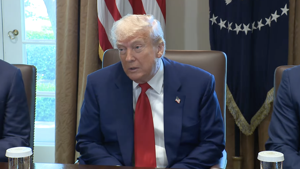
President Donald Trump said Friday that Republicans should probably avoid any tax increases, but said he’d be OK with a “tiny” one the rich.
“The problem with even a ‘TINY’ tax increase for the RICH, which I and all others would graciously accept in order to help the lower and middle income workers, is that the Radical Left Democrat Lunatics would go around screaming, ‘Read my lips,’ the fabled Quote by George Bush the Elder that is said to have cost him the Election. NO, Ross Perot cost him the Election! In any event, Republicans should probably not do it, but I’m OK if they do!!!,” Trump wrote on Truth Social.
Republicans are considering a proposal that would allow the top marginal income tax rate that’s part of the 2017 Tax Cuts and Jobs Act to expire at the end of the year for high-earning Americans. That means the rate would rise from 37% to 39.6%. Republicans would extend the 2017 tax cuts for all other tax brackets.
The Penn Wharton Budget Model found the proposal could shave off some of the $4 trillion price tag of extending the income tax rates included in the 2017 law.
PWBM looked at three scenarios:
Option 1: Extend the TCJA except for the top rate, which would revert to its 2017 level. Ordinary income above $547,000 (single) / $615,000 (married filing jointly) would be taxed at 39.6% starting in 2026. This option reduces the cost of TCJA extension by $402 billion over 10 years.Option 2: Extend the TCJA but introduce a new top rate that taxes ordinary income above $1 million at 39.6% for all filers. This option reduces the cost of TCJA extension by $222 billion over 10 years.Option 3: Extend the TCJA but introduce a new top rate that taxes ordinary income above $2.5 million ($5 million for married filing jointly) at 39.6%. This option reduces the cost of TCJA extension by $22 billion over 10 years.
Republicans have been looking for ways to pay for the tax cuts. Trump warned that any tax increase could upset the Republican base, but said he would support it.
The spending plans Republicans have pushed is not balanced and some financial watchdogs have warned the spending could send interest costs and debt soaring over the next decade.
Congress has run a deficit every year since 2001.
First American pontiff says ‘build bridges’ to peace
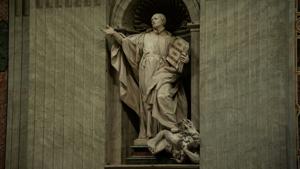
The first American pontiff in the 2,000-year history of the Roman Catholic Church offers a simple vision for the future: build bridges and receive each other with open arms.
It’s a message grown from the roots of 69-year-old Cardinal Robert Francis Prevost’s consecration to the Order of St. Augustine, a 4th century bishop revered for his blend of contemplative prayer and public ministry.
And now, as Pope Leo XIV, the world’s 1.4 billion Catholics – and beyond – wonder how the Chicago native turned Peruvian bishop will navigate the ever-blurring line between secular politics and doctrinal authenticity.
His first remarks from the balcony of St. Peter’s Basilica in Rome favored the latter. He opened his brief and emotional speech with the first words of the “risen Christ, the good shepherd who gave his life for the flock of God.”
“Peace be with you,” he said. “I, too, would like this greeting of peace to enter your hearts, to reach your families and all people, wherever they are; and all the peoples, and all the earth: Peace be with you.”
Like Pope Francis before him, Prevost values a synodal church in which the ordained lead with humility and weigh the needs of its members equally, as opposed to two millennia of hierarchical structure based in scripture and tradition.
This viewpoint drew sharp criticism and dented Francis’ legacy. The former pontiff’s penchant for choosing political sides that many conservative critics viewed as borderline Marxist drove partisan divisions deeper.
Coupled with his “radical” commitment to synodality, many argued that Francis led the church astray by pushing progressive views on immigration, LGBT inclusion, climate change and anti-capitalism.
It was Francis himself who tapped Prevost to serve as Bishop of Chiclayo, in northwestern Peru, and a cardinal just last year. He also ascended to an influential role in the Holy See: running the Dicastery of Bishops, which oversees the selection and management of bishops worldwide.
Prevost’s harshest critics believe his administrative oversight is lacking. In March, the Survivors Network of Abused by Priests said that he’d failed to investigate sexual misconduct claims against two priests serving in the Diocese of Chiclayo.
The network sent a letter to Prevost on Thursday asking him to hold disgraced priests accountable.
“While the priest and other offenders may have stolen our bodies, it is the cardinals and bishops of the church, along with three successive popes before you, who have stolen our voices,” the network wrote. “Imagine our heartbreaking disappointment and despair if we discover that this includes you.”
Vatican observers note that Prevost, however, favors more conservative social and political values, though he remains “open to dialogue.”
He said as much himself on Thursday.
“God loves us, all of us, evil will not prevail. We are all in the hands of God,” Pope Leo XIV said. “Without fear, united, hand in hand with God and among ourselves, we will go forward. We are disciples of Christ, Christ goes before us, and the world needs His light. Humanity needs Him like a bridge to reach God and his love. You help us to build bridges with dialogue and encounter so we can all be one people always in peace.”
Trump taps Judge Jeanine Pirro as interim U.S. attorney for D.C.
Judge Jeanine Pirro, a current Fox News host, has been named interim U.S. attorney for the District of Columbia by President Donald Trump.
The president’s announcement comes hours after he pulled the nomination for Ed Martin after U.S. Sen. Thom Tillis, R-N.C., a member of the 12-10 Republican majority Judiciary Committee, refused to support it killing Martin’s chances of being confirmed. Pirro’s time on the bench and as a former prosecutor were touted by the president.
According to a post from Trump’s Truth Social account, Pirro previously served as assistant district attorney for Westchester County, N.Y., followed by a stint as a county judge and district attorney, touting that she was the “first woman ever to be elected to the positions.”
The president boasted about her career in the judicial system, underscoring her time as a prosecutor.
Trump wrote, “During her time in office, Jeanine was a powerful crusader for victims of crime. Her establishment of the Domestic Violence Bureau in her Prosecutor’s Office was the first in the Nation. She excelled in all ways. Jeanine is incredibly well qualified for this position, and is considered one of the Top District Attorneys in the History of the State of New York. She is in a class by herself.”
Pirro is the latest Fox News personality to be tapped by the president, most notably Defense Secretary Pete Hegseth.
Pirro currently cohosts the network’s show, The Five, which the president says is among the most highly rated shows in his social media post.
Sen. Mike Lee, R-Utah, who sits on the Judiciary Committee, voiced his support for Pirro and is looking to confirm her as soon as possible.
“Okay, let’s get Judge Jeanine Pirro confirmed as U.S. Attorney for D.C…We have no time to waste, and don’t want to give Judge Boasberg any chance to make the appointment,” Lee posted on X.
The president and Republicans are up against the clock in filling the role of top prosecutor for D.C. The Senate has until May 20 to confirm the nomination; if not, Chief Justice James Boasberg will be able to choose. Boasberg has been a thorn in the side of the president, specifically in his quest to carry out deportations.
Pirro must face a split Judiciary with a 12-10 Republican majority and likely no support from Democratic members.
16 states, DC sue Trump over 2021 EV charger funds; most haven’t built chargers
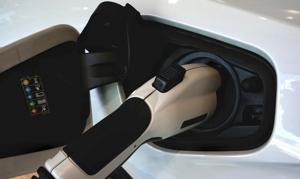
A 17-state-and-territory coalition led by California, Washington and Colorado is suing the Trump administration to maintain access to $5 billion in EV charger funding passed by Congress in 2021 but put on hold by the current administration.
A majority of the coalition, including lawsuit leaders California and Washington, has failed to build any chargers using $3.3 billion in awarded funds over the past four fiscal years.
Following President Donald Trump’s order to eliminate electric vehicle mandates, the Federal Highway Administration suspended the approval of state EV charger network plans submitted for federal grants under the Infrastructure Investment and Jobs Act, which was signed into law in 2021. It provided $5 billion in National Electric Vehicle Infrastructure grant funding.
The FHWA’s notice said that “until new guidance is issued, reimbursement of existing obligations will be allowed in order to not disrupt current financial commitments.”
According to the NEVI dashboard maintained by the National Association of State Energy Officials, $3.3 billion has already been awarded. That means the suspension mainly impacts the $1.7 billion in unallocated funding that would have otherwise gone out through fiscal year 2026, but are required by the IIJA “to remain available until expended.”
Forty-four states and territories, including the District of Columbia and Puerto Rico, issued at least one solicitation for NEVI funding. Of the 44 soliciting states and territories, 38 have been issued funding, of which only 16 have at least one operational NEVI station, despite four years of funding between fiscal year 2021 and fiscal year 2025.
The lawsuit filed by 17 attorneys general requests that the courts block the withholding of NEVI grants, citing the explicit congressional mandate in the IIJA.
In its plan suspension notice, the FHWA say the NEVI program is “unique in that this Program requires the Secretary to approve a plan for each State describing how the State intends to use its NEVI funds,” and simply “has decided to review the policies underlying the implementation of the NEVI Formula Program.”
This suggests that while the IIJA may have required the FHWA to disburse $5 billion in NEVI grants, that it’s also true the IIJA grants the FHWA the power to temporarily suspend NEVI plans for review.
The lawsuit says that “The Secretary must distribute to each State its share of NEVI Formula Program funds unless the State fails to timely submit its State Electric Vehicle Infrastructure Deployment Plan or if the Secretary determines a State has not taken action to carry out its [State P]lan.”
Despite having secured $302 million in NEVI funding since fiscal year 2021 of the $384 million it requested, California is yet to have completed a single NEVI-funded charger. Washington has been awarded $56 million, but also has no completed NEVI chargers. Of the 17 states and territories filing suit, only eight have completed any NEVI chargers.
The lawsuit says the IIJA creates clear guidelines for the FHWA to follow if it determines a state is not carrying out its plan, including identifying actions to rectify concerns and providing at least 90 days to address those concerns, and providing notice of 60 days of its intent to withhold or withdraw funds.
Should courts find that the IIJA’s explicit procedures were violated in excess of the powers available to the FHWA, it’s likely the FHWA will have to reinstate the rescinded state plans and at some point resume the awarding of NEVI funding.
EV battery and charging technology is quickly improving, but older vehicles are often unable to make use of faster charging technologies.
In the last quarter of 2019, over half the nation’s 4,000 public “fast chargers” put out less than 50 kilowatts. Two years later, the plurality of the nations’ over 10,000 “fast chargers” put out between 150 and 249 kw. By the end of 2023, almost half of the nationa’s 24,000 chargers put out between 250 and 349 kw, with the next generation of chargers — those putting out 350 kw or more — growing 39% over the previous quarter.
While gasoline-powered cars take two minutes to refill, a 60-kilowatt-hour Tesla Model 3 requires eight to 12 hours to charge at a Tesla Destination charger, 40 minutes to reach 80% on a 150 kw charger and 20 minutes on a 250 kh charger.
These rapid technological advancements mean significant investments in current EV charging technology may soon become obsolete, challenging the value of taxpayer investments in the sector.
Trump administration unveils ‘modern’ air traffic control system
Air travel is about to enter a new era as President Donald Trump and Transportation Secretary Sean Duffy unveiled plans to upgrade the nation’s “outdated” air traffic control system.
The administration announced the new system Thursday afternoon, following promises to upgrade it. The administration boasted that the new system is ” state-of-the-art.”
Duffy says the new system will replace outdated systems with modern technology. He claims the old system still uses floppy disks as a marker of its age.
The new plan includes developing six new air traffic control centers for the first time “since the 1960s ” and replacing over 600 radars, which the Department of Transportation argues are past their life cycle. The Federal Aviation Administration also plans to replace the “core infrastructure” to include “radar, software, hardware and telecommunications networks to manage modern travel.”
The new system will increase the number of airports with the Surface Awareness Initiative to 200, which the DOT claims will improve runway safety.
The DOT claims the new system will “reduce outages, improve efficiency, and reinforce safety,” which has come under scrutiny following several incidents, including plane crashes, near collisions and outages causing significant delays, including ongoing issues at Newark Liberty International Airport. Last week, an air traffic control equipment outage led to continual delays at the airport.
Duffy argues the upgrade is long overdue and a “necessity,” while commending the Trump administration for making it happen.
“Decades of neglect have left us with an outdated system that is showing its age. Building this new system is an economic and national security necessity, and the time to fix it is now. The unprecedented coalition of support we’ve assembled – from labor to industry – is indicative of just how important it is to this administration to get done what no one else could,” said Duffy.
Several CEOs from the nation’s largest airlines, including United, American, Delta, Southwest and JetBlue, praised the new system and credited the Trump administration for its role in unveiling the upgrade.
“I’ve been in the airline business a long time, and that entire time, I’ve known that the U.S. air traffic control system was operating on antiquated technology. This plan from President Trump and Secretary Duffy is absolutely the best opportunity that we’ve had in decades to do something about our outdated air traffic control infrastructure and build a best-in-class system that our country deserves,” according to American Airlines CEO Robert Isom.
Since assuming his role at the DOT, Duffy has been a vocal critic of the old system, vowing to make overhauling it a priority along with the Trump administration.