National News
Sun won’t shine the same on college players, coaches in North Carolina
On public college campuses in North Carolina, how much the head coach of an athletics team is paid is subject to open records laws.
For players in the new era of pay for play, those contracts will be exempt. Even with taxpayers helping fund them.
No members of the General Assembly disagreed last month, and Democratic Gov. Josh Stein affixed his signature July 2.
That was the day after enactment of a $2.8 billion antitrust settlement authorized last month by a federal judge for NCAA athletes. Known as the House settlement for former Arizona State swimmer Grant House, it allows each NCAA school – there are 350 in Division I, and 1,100 in all three divisions – to pay athletes for use of their name, image and likeness.
The acronym is NIL, and it impacts 200,000 athletes on the Division I level, and about 500,000 throughout the NCAA.
Various Ed Law/Tax Acct/NIL Changes, as House Bill 378 was called, has a number of changes for funds held in education savings and investment accounts. It also exempts “name, image, and likeness contracts from public records requirements.”
So, whereas the contract Carolina signed with eight-time Super Bowl champion coach Bill Belichick is public record, it is unknown how much money was in a pact luring Purdue quarterback Ryan Browne to transfer to Chapel Hill. Given he transferred back to the Big 10 school after spring practice, details of payments tied to availability for scheduled games or for merely being on campus for spring ball are also left for wonder.
Then, too, perhaps it helped Gio Lopez decide after South Alabama’s spring practice to come to Carolina. He went into the transfer portal two days after the Jaguars wrapped up.
Schools in this first year of the settlement can share up to about $20.5 million with the athletes. Regardless of whether it sounds like a lot, football and men’s basketball are likely to get the biggest shares. Theirs are the greater revenue deals for broadcasts.
Consider, the student-newspaper at Duke – private institutions are not bound by the same public records statutes – reported basketball freshman Cooper Flagg was raking in $28 million through a deal inclusive of New Balance, Fanatics and Gatorade among others. He was the No. 1 pick in the NBA Draft three weeks ago, signing a deal with the Dallas Mavericks for $13.8 million his first year that does not include endorsements.
Nine football players are believed to have deals exceeding $3 million for this season, led by Texas quarterback Arch Manning’s reported $6.6 million.
Players have been getting paid since 2021. The rule change then allowed what are called third party, donor-backed collectives; those are still around and used, and the House settlement allows schools to pay directly.
While the House settlement was ballyhooed and expected, in an age of litigation it’s not a safe bet to spread calm across the ocean depths of college athletics. For example, this week, “valid business purpose” has entered the litigation chat via a letter from the new College Sports Commission to athletics directors.
Passage of North Carolina’s law was 42-0 in the Senate and 111-0 in the House of Representatives. In fact, at no point was there a single vote in either chamber against the bill authored by Rep. Ray Pickett, R-Watauga.
And in case that Belichick contract was missed when signed in January, it’s five years in length, each with a $1 million base and $9 million in supplemental. Three years are guaranteed for the 73-year-old who was defensive coordinator for two Super Bowl wins with the New York Giants and head coach for six of them with the New England Patriots.
Not really that close to Flagg.
Trump releases half of National Guard on LA guard duty
The Trump administration released half of the California National Guard members recently called to Los Angeles, citing “subsiding” lawlessness.
Los Angeles Mayor Karen Bass called the release a “retreat,” citing the impact of protests in the city and the city’s lawsuits against the Trump administration.
After days of unmitigated rioting in Los Angeles against increased federal immigration raids, President Donald Trump federalized and deployed 4,000 National Guard members and 700 U.S. Marines to primarily guard federal property in the city.
While a federal district court initially ruled against the Trump administration’s deployment and ordered the National Guard members transferred back to Gov. Gavin Newsom’s command, the U.S. Court of Appeals for the 9th Circuit ultimately sided with the Trump administration.
“Thanks to our troops who stepped up to answer the call, the lawlessness in Los Angeles is subsiding,” U.S. Pentagon spokesman Sean Parnell said Tuesday. “As such, the Secretary has ordered the release of 2,000 California National Guardsmen from the federal protection mission.”
Bass pointed to the release as the product of the city’s more peaceful protests in recent weeks and its legal challenges against the Trump administration.
“This happened because the people of Los Angeles stood united and stood strong,” said Bass. “We organized peaceful protests, we came together at rallies, we took the Trump administration to court — all of this led to today’s retreat.”
“My message today to Angelenos is clear — I will never stop fighting for this city,” continued Bass. “We will not stop making our voices heard until this ends, not just here in LA, but throughout our country.”
In one case, U.S. District Judge Maame Ewusi-Mensah Frimpong issued a ruling last Friday placing some limits on federal immigration operations, including requiring “reasonable suspicion that the person to be stopped is within the United States in violation of U.S. immigration law.” The Trump administration filed an appeal with the 9th Circuit court.
Americans face higher prices as inflation returns
Consumer prices increased more than expected in June as Americans face higher prices on a wide range of imported goods as President Donald Trump’s tariffs show up in federal economic reports for the first time.
The Consumer Price Index for All Urban Consumers, or CPI-U, showed a 0.3% increase last month – triple May’s 0.1% pace and the most significant monthly gain since January, when Trump returned to the White House for his second term.
On an annual basis, inflation was at 2.7%, up from 2.4% in May. That’s above the 2.6% yearly gain economists had projected for June. Core CPI, which excludes fast-moving food and energy prices, rose 0.2% over the month and 2.9% over the past year. That was in line with forecasts.
“Indexes that increased over the month include household furnishings and operations, medical care, recreation, apparel, and personal care,” the U.S. Bureau of Labor Statistics reported Tuesday. “The indexes for used cars and trucks, new vehicles, and airline fares were among the major indexes that decreased in June.”
According to the report, the index for shelter rose 0.2% in June and was the primary factor in the monthly increase for all items.
Brian Wesbury, chief economist at First Trust LP, said tariffs weren’t to blame.
“Core CPI up just 0.2%. But, year-ago comparisons are tough and the year-over-year ‘core’ rose slightly to 2.9%,” he wrote in a post on X. “Better to look at 3-month annualized changes. The 3-month annualized increase was just 2.4%, down from 3.6% in February. Tariffs don’t cause inflation.”
Jason Furman, a Harvard professor who spent eight years as a top economic adviser to former President Barack Obama, said tariffs were the cause.
“You can see signs of tariffs in these numbers and that is only likely to grow,” he said.
Justin Wolfers, a professor of public policy and economics at the University of Michigan, was more neutral about the report.
“These numbers are pretty much in line with expectations,” he wrote on X. “The absence of bad news is good news.”
White House Press Secretary Karoline Leavitt said the report shows that tariffs aren’t raising prices.
“Every month since President Trump took office, core inflation – the best measure of inflation – has beat or matched expectations,” she said. “The data proves that President Trump is stabilizing inflation and the Panicans continue to be wrong about tariffs raising prices.”
Senate approves disaster tax relief bill, heads to Trump for signature
The U.S. Senate has passed the Filing Relief for Natural Disasters Act, a bipartisan bill sponsored by Sens. John Kennedy, R-La., and Catherine Cortez Masto, D-Nev., that would expand federal tax filing relief to individuals affected by state-declared disasters.
The legislation now heads to President Donald Trump’s desk for his signature.
Under current law, the IRS can only postpone tax filing deadlines in areas where the president has issued a federal disaster declaration. The new bill would change that, allowing governors to trigger the same federal tax relief measures after issuing a state-level disaster declaration.
“When states like Louisiana are reeling from a hurricane, they can’t always wait around for Washington to act,” Kennedy said. “I’m grateful to my colleagues for voting to pass the Filing Relief for Natural Disasters Act to make sure hard-hit communities can get important tax extensions without unnecessary delays.”
Cortez Masto added that impacted taxpayers shouldn’t have to wait for the White House to act before getting the support they need.
“This bipartisan legislation will ensure that anyone impacted by state-level emergencies can have some peace of mind when filing their taxes,” Masto said.
In addition to empowering governors to request IRS deadline extensions, the bill also lengthens the mandatory extension period from 60 to 120 days.
The changes would apply to natural catastrophes such as hurricanes, wildfires, earthquakes, floods, and other events deemed severe enough by the governor to warrant tax relief — even if no federal declaration is made.
If signed into law, the reform would amend Section 7508A of the Internal Revenue Code to take immediate effect for future state disaster declarations.
On anniversary of Trump attack, Secret Service ‘laser-focused’ on agency reform
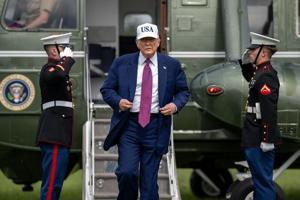
One year after the attempted assassination of now-President Donald Trump at a campaign rally in Butler, Pennsylvania, the motives of shooter Thomas Matthew Crooks remain elusive, even as more details have emerged.
The U.S. Secret Service, meanwhile, has initiated or implemented dozens of operational reforms since that day, which critics had deemed a “stunning failure” on the part of the agency.
Crooks, a 20-year-old Bethel Park resident, fired eight rounds at the Republican presidential candidate on July 13, 2024, after climbing onto the roof of the AGR building, a manufacturing plant located 130 yards away from the Butler Farm Show grounds stage.
One of the bullets grazed Trump’s ear before he ducked and USSS agents surrounded him. Two rallygoers were injured and a third, firefighter Corey Comperatore, was killed before a Secret Service sniper took out Crooks.
After escorting the fist-pumping Republican to an armored vehicle, agents found the gunman’s body, the AR-style 556 rifle used (which legally belonged to Crooks’ father), and Crooks’ car, which contained crude explosive devices.
Follow-up investigations revealed that Crooks was a member of a local gun club – which condemned the shooting – and was known by former classmates as a “loner” who was bullied in school. The FBI also found signs that Crooks was “strikingly intelligent,” having scored higher than 1500 on his pre-college SAT test, according to ABC news.
He lived with his parents, both licensed counselors at the time, and was never diagnosed with a mental health disorder. After interviews with his family, classmates, and community members, however, the FBI believes that undiagnosed mental health issues likely played a role in Crooks’ actions.
An autopsy found no drugs or alcohol in Crooks’ system at the time of his death, while the shooter’s digital footprint from 2019 to 2024 revealed no clear indication of ideological motivations. FBI agent Kevin Rojek later told reporters that the shooter’s internet activity indicated “a mixture of ideologies.” Crooks was a registered Republican but donated $15 to the Democratic political action committee ActBlue in 2021, per media reports.
According to the FBI, Crooks’ search history revealed an interest in homemade explosives as early as 16 years old, when he searched phrases such as “how to make a bomb from fertilizer” and “how do remote detonators work” in September 2019. From April 2024 onward, Crooks began researching upcoming campaign events for both Trump and then-President Joe Biden.
Beginning in July, Crooks collected details on Trump’s upcoming rally in Butler. He registered on July 6 for the event and that same day searched “How far was Oswald from Kennedy?”, “Where will Trump speak from at Butler Farm Show?”, “Butler Farm Show podium”, and “Butler Farm Show photos.”
Two hours before the event began on July 13, 2024, Crooks flew a drone over the Farm Show grounds, likely “to assess the security posture at the event,” according to the FBI’s flight path analysis.
Given the proximity of the AGR building to the open stage, the roof’s unobstructed view, and the ease of roof accessibility (Crooks reached the roof by stepping on two air conditioning units), the USSS’s lack of security detail in the area on the day of the event raised indignant questions during investigative hearings that followed the assassination attempt.
Both congressional investigations and an agency analysis revealed a cascade of communication and operational failures before and during the rally, as The Center Square reported.
Among other errors, the USSS failed to clearly define planning and security responsibilities on the day of the event; did not effectively coordinate with state and local law enforcement; failed to fix radio and drone system technical problems; and denied requests for additional surveillance resources that would have enhanced perimeter security.
The agency also neglected to effectively cover the AGR building, despite identifying its proximity and line-of-sight to the event stage as a security concern. More egregiously, the USSS failed to communicate reports from local law enforcement just minutes before the shooting that a “suspicious person” with a rangefinder was near the AGR building and then positioned himself on the roof.
After a disastrous congressional hearing following the thwarted assassination, USSS Director Kimberly Cheatle resigned. After winning the 2024 election, Trump replaced her with Sean Curran, one of the agents who physically shielded Trump immediately after the shooting started.
Since then, the USSS has enacted numerous changes to its security protocol, including requiring that all operations plans for such events be coordinated and shared with state and local law enforcement; documenting and increasing coverage of all line-of-site vulnerabilities; providing better training curriculum; and ensuring that strategies are in place when drone, radio or other technology systems fail.
The full list of reforms, announced Thursday, can be found here.
“Since President Trump appointed me as director of the United States Secret Service, I have kept my experience on July 13 top of mind, and the agency has taken many steps to ensure such an event can never be repeated in the future,” Curran said in a statement that also included condolences to Compertore’s family.
“Nothing is more important to the Secret Service than the safety and security of our protectees,” he added. “As director, I am committed to ensuring our agency is fully equipped, resourced, and aligned to carry out our important mission each and every day.”
Trump to impose 30% tariff on EU, Mexico
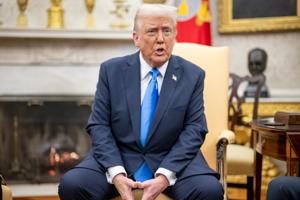
President Donald Trump on Saturday said he will impose 30% tariffs on imported goods from the European Union and Mexico in his latest move to balance trade between the U.S. and other countries.
The tariffs are set to go into effect Aug. 1.
Saturday’s announcement comes a day after the U.S. Department of Treasury released a report Friday showing that tariff revenue helped revenue in the month of June exceed expenses by $27 billion.
“We have had years to discuss our Trading Relationship with The European Union, and we have concluded we must move away from these long-term, large, and persistent, Trade Deficits, engendered by your Tariff, and Non-Tariff, Policies, and Trade Barriers,” Trump wrote in the letter to the EU and posted on his Truth Social account. “Our relationship has been, unfortunately, far from Reciprocal.”
The 30% tariff on EU goods is higher than expected. EU trade ministers are scheduled to meet Monday and could agree to increase tariffs on U.S. goods as retaliation.
In his letter to Mexico, Trump said the U.S. neighbor to the south has helped stem the flow of illegal narcotics and people from entering the country but added that it needed to do more to prevent North America from being a “Narco-Trafficking Playground.”
Earlier in the week, Trump announced new tariffs on several other countries, including 20% tariffs on imports from the Philippines; 25% on Brunei and Moldova; 30% on Algeria, Iraq and Libya; and 50% on Brazil.
All of the new tariffs announced this week are scheduled to go into effect Aug. 1.
• The Center Square reporters Therese Boudreaux and Andrew Rice contributed to this report.
ICE says 200 illegal immigrants arrested; UFW reports 1 death
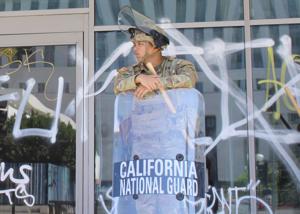
Nearly 200 illegal immigrants were arrested during U.S. Immigration and Customs Enforcement raids in Ventura and Santa Barbara counties.
According to the United Farm Workers, several agricultural workers were “critically injured” and one of them died from those injuries.
ICE released the number of arrests Friday, following the previous day’s raids at Glass House Farms’ marijuana fields near Camarillo and Carpinteria, cities north of Los Angeles.
More than 500 rioters attempted to disrupt the raids, ICE said. It added that four U.S. citizens “are being criminally processed for assaulting or resisting officers.”
Meanwhile, the UFW, a union of agricultural workers, confirmed there was one death from injuries sustained during the raids.
“UPDATE: we tragically can confirm that a farm worker has died of injuries they sustained as a result of yesterday’s immigration enforcement action,” the UFW posted on X on Friday afternoon.
The Ventura County Fire Department said on X that it responded at 12:15 p.m. Thursday “to provide medical aid as a result of federal enforcement activity along Laguna Road in the Oxnard Plains.”
On Friday, ICE noted the FBI is offering a $50,000 reward for any information leading to the arrest of an individual who, in video broadcast by Los Angeles TV stations, appeared to be firing a gun at federal agents.
ICE added that rioters damaged vehicles.
“At the California marijuana facilities, ICE and CBP law enforcement rescued at least 10 migrant children from what looks like exploitation, forced child labor, and potentially human trafficking or smuggling,” said Tricia McLaughlin, assistant secretary for public affairs at the Department of Homeland Security.
“During the operation, a violent agitator fired a gun at our brave officers,” McLaughlin continued. “While ICE and CBP officers are being assaulted by rioters and dodging bullets to save children, Sanctuary politicians are demonizing ICE and CBP. We will prosecute to the fullest extent of the law anyone who assaults or doxes federal law enforcement.”
The Center Square Friday reached out to Glass House Farms, but did not get a response.
Regarding medical aid during the raids, the Ventura County Fire Department posted, “VCFD’s commitment is to the safety of all members of our community, and to provide professional, compassionate emergency care regardless of immigration status.”
Videos by TV news stations showed federal agents throwing cannisters of tear gas to control the crowd.
Trump administration sues California over high egg prices

The Trump administration is suing California for its regulation of eggs, claiming three state laws are contributing to the rise in prices for American consumers.
The U.S. Department of Justice filed a lawsuit against California Gov. Gavin Newsom and other state officials on July 9, accusing California’s Proposition 2, Assembly Bill 1437 and Proposition 12 of “imposing unnecessary red tape on the production of eggs.” The lawsuit claims these three laws make it harder for farmers to produce and sell eggs in California, which has led to a rise in egg prices.
In the lawsuit, the DOJ argued the federal government has the right under the federal Egg Product Inspection Act of 1970 to overrule California’s laws on eggs. That is because, the DOJ noted, federal laws supersede state laws under the U.S. Constitution’s Supremacy Clause.
The DOJ claimed California’s three laws impose additional requirements than the ones listed in the Egg Product Inspection Act and therefore are invalid.
According to a study referenced by the DOJ in the lawsuit, the egg requirements enforced by Proposition 2 and Assembly Bill 1437 caused the egg production in California to decrease. The study showed that in 2016, egg production and egg-laying hens in California were about 35% lower than what it would have been if the state hadn’t undergone its recent policy changes.
The DOJ also claimed Proposition 2 and AB1437 caused egg prices to increase because according to the same study, the average price for a dozen eggs in California was about 22% higher from December 2014 through September 2016 than it would have been if the state did not have regulations on the production of eggs.
Newsom’s press office ridiculed the lawsuit in a post on X, claiming Trump blames California “for everything.” Newsom’s press office added that the next thing Trump was going to blame Newsom for is “the fall of Rome” and “the asteroid that wiped out the dinosaurs.”
The Center Square reached out to the Newsom’s press office for further comments, but was told officials weren’t available for comment.
Proposition 2 is an animal welfare measure that gives farmers housing requirements. The measure prohibits the confinement of “pregnant pigs, calves raised for veal and egg-laying hens” in a space where the animals can not “turn around freely, lie down, stand up and fully extend their limbs, according to BallotPedia. Prop. 2 was approved by California voters in 2008 and came into effect in 2015. Farmers were given six years to make the required changes before receiving a punishment of a fine up to $1,000 and 180 days in the county jail.
AB 1437 was enacted in 2010 and designed to regulate the quality of the eggs being sold. Legislators said they passed AB1437 to protect consumers “from the deleterious, health, safety and welfare effects of the sale and consumption of eggs derived from egg-laying hens that are exposed to significant stress,” according to the California Health and Safety Code section 25995(e).
The same section said that when animals are treated well, they are healthier and safer for human consumption. Further, section 25995(b) states when animals are stressed, they are more receptive to catching diseases. Evidently, AB 1437 works alongside Proposition 2’s requirements because it prohibits selling eggs that come from egg-laying hens kept in violation of Proposition 2.
Proposition 12 is the third law scrutinized in the lawsuit and was approved by voters in 2018. Proposition 12 amended and added to the egg regulations already set in the state by Proposition 2 and AB 1437.
Trump tariffs bring in $27 billion surplus in month of June
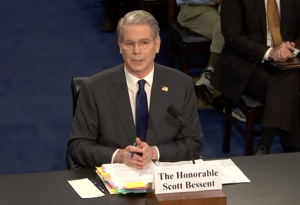
Government revenue exceeded government spending in the month of June due to increased revenue from tariffs, according to the Department of the Treasury.
The department’s monthly report, released Friday, showed that the federal government collected $526 billion in revenue and posted $499 billion in outlets, resulting in a $27 billion surplus. That $27 billion surplus is the exact amount of revenue collected from tariffs.
Additionally, gas prices are at a four-year low and grocery prices remained steady during June, easing fears that tariffs would spike prices and spelling good news for the economy.
“The tariff panic and inflation fearmongering from Democrats and their friends in the media hasn’t held up,” Treasury Secretary Scott Bessent posted on social media. “[I]mported goods prices are down this year, falling even faster than overall goods prices.”
Since the beginning of 2025, the U.S. government has collected $108 billion in tariff revenues. Bessent has predicted that number will rise to at least $300 billion by the end of the year.
Most recently, President Donald Trump announced a 50% tariff on imports from Brazil and tariffs ranging from 25% to 40% on more than a dozen other countries, including U.S. allies.
Trump’s aggressive and often unpredictable tariff policy has garnered condemnation from those worried he will damage relationships with allies, while fiscal watchdogs have praised his policies as a way to tackle America’s soaring deficit.
Republicans in Congress are also hopeful that continued tariffs will help offset the cost of the president’s multitrillion-dollar “big, beautiful bill,” which permanently extends the bulk of the 2017 Tax Cuts and Jobs Act, among other policies.
Trump, Abbott lead roundtable about local, state, federal response to Texas floods
President Donald Trump and the first lady visited the site of the devastating flash floods Friday afternoon that occurred in Central Texas on July 4 to observe the damage and meet some of the affected families.
Trump also held a roundtable with Texas Gov. Greg Abbott, other government officials and lawmakers, first responders and local officials in Kerrville, Texas, which experienced some of the worst of the natural disaster.
“The First Lady and I are here in Texas to express the love and support and the anguish of our entire nation in the aftermath of this really horrific and deadly flood,” Trump said.
First Lady Melania Trump said she and the president prayed, hugged and held hands with some of the families who lost loved ones.
The flood in Texas Hill Country is one of its deadliest on record, according to reports, leaving 121 confirmed dead and about 170 still missing. Heavy rainfall began on July 2, according to a disaster proclamation from Texas Gov. Greg Abbott. Rainfall across the state ranged from five to 15 inches, even exceeding 18 inches in some parts, according to the U.S. Department of Homeland Security. In Central Texas, the deluge caused the Guadalupe River to overflow its banks and surge into surrounding communities.
Abbott has included 21 counties in his disaster proclamation, and at least nine have been approved for federal disaster assistance thus far.
“Your immediate declaration for individual assistance and public assistance will help us rebuild and recover,” Nim Kidd, chief of the Texas Division of Emergency Management, told Abbott Friday.
Turning to Trump, Kidd also described the massive response from across the country, from volunteers and the state government.
“We’ve had over 2,200 state agency response personnel assisting our local government partners. Mr. President, here’s a staggering number. Over 12,300 volunteers have shown up here out of love to support this community,” Kidd said. “Nineteen other states have sent resources to us.”
Many questions have been raised about the preparation and resources that were in place in Kerrville and Kerr County beforehand, as well as the state and federal government’s response. Kerrville does not have a weather siren system, according to reports, though the area is prone to floods.