National News
Trump’s AI action plan: Roll back regulations, build more data centers
Agencies across the federal government are developing data centers across the United States and implementing AI technology in health research after the announcement of President Donald Trump’s AI Action Plan on last week.
The AI action plan includes more than 90 federal policy actions aimed at rolling back environmental regulations, increasing domestic data center outputs, and integrating AI into operations.
“This plan galvanizes federal efforts to turbocharge our innovation capacity, build cutting-edge infrastructure, and lead globally, ensuring that American workers and families thrive in the AI era,” said Michael Kratsios, director of the White House Office of Science and Technology Policy.
While the plan did not lay out a specific budget to develop AI, some moves inside the administration showcase how the administration is partnering with industry to develop AI centers and using it in health research.
The Energy Department named the Idaho National Laboratory, Oak Ridge Reservation in Tennessee, Paducah Gaseous Diffusion Plant in Kentucky, and Savannah River Site as locations for private partnerships to build AI centers.
Each site is located on federal land and owned by the government. The Energy Department will open each site for private development and investment in AI.
“DOE looks forward to working with data center developers, energy companies, and the broader public in consultation with states, local governments, and federally recognized tribes that these projects will serve to further advance this important initiative,” said the department.
The AI action plan proposes eliminating “red tape and onerous regulation.” This includes allowing federal agencies to limit funding to states where AI regulations “may hinder the effectiveness of that funding or award.”
Legislatures in Idaho, Tennessee and Kentucky have not passed laws limiting data center development in the various states. However, South Carolina passed a regulatory change in April that increased price rates for electricity for large users, like data centers.
The South Carolina legislature has also looked at implementing a tax incentive limit on data centers, with the goal of preventing rate hikes for residents.
The regulations in Idaho, Tennessee, Kentucky and South Carolina could point to how the Trump administration expects states to regulate AI as its plans to develop data centers across the country.
The Energy Department will take submissions from private industry to further develop AI on the sites in Idaho, Kentucky, Tennessee and South Carolina and could select partners by the end of the year, a department press release said.
Golestan Radwan, chief development officer of the United Nations Environment Program, warned against the rapid development of AI data centers.
“We need to make sure the net effect of AI on the planet is positive before we deploy the technology at scale,” Radwan said.
While the energy industry braces to develop AI, the National Institutes of Health announced development of an AI agent that can analyze gene sets to help researchers understand complex molecular data.
The AI agent, GeneAgent, analyzes molecular data and helps scientists draw conclusions about how different diseases and conditions affect groups of genes individually and together.
A news release from the U.S. Department of Health and Human Services said the AI agent “can lead to a better understanding of how different diseases and conditions affect groups of genes individually and together.”
In the statement, NIH recognized that AI is prone to “hallucinations” where content can be false, misleading or fabricated. The department said it tested the agent on more than 1,000 gene sets in preexisting databases to give the AI agent a genetic baseline with which it can analyze future gene sets.
Two human experts manually reviewed 10 randomly selected gene sets evaluated by GeneAgent to see if its self-review capabilities worked and found that 92% of GeneAgent’s decisions were correct.
Previous studies of AI’s impact on the health care landscape assert that the tool can save billions in research and development costs.
“The ability to reduce workflow and refocus most of a doctor’s attention on providing outstanding patient care has been made possible by systems that use AI and better data management,” wrote a team of NIH scientists.
The research team has also verified GeneAgent’s analysis of mouse melanoma cells as part of the testing process.
“GeneAgent was able to offer valuable insight into novel functionalities for specific genes,” the news release said. “This could mean knowledge discovery for things such as potential new drug targets for diseases like cancer.”
Senate passes minibus before recessing, making slight progress on govt funding
Right before leaving for its week-long August recess, the U.S. Senate passed a minibus Friday evening containing three out of the 12 annual government funding bills.
The package allocates nearly $900 billion for military construction and Veterans Affairs, $27 billion for agriculture and rural development, and $2.2 billion for the Legislative branch. More than 80 senators ultimately voted for the minibus.
Appropriations bills are typically passed individually. The unorthodox move is the result of Republican leaders spending days negotiating with uncooperative Democrats, who stalled on confirming the rest of President Donald Trump’s civilian nominees and by doing so prevented progress on the funding appropriations process.
Although Republicans originally planned to craft and pass all 12 government funding bills soon after the One Big Beautiful Bill Act became law, the immediate introduction of a controversial $9 billion rescissions bill caused weeks of delay.
After the rescissions bill passed on partisan lines, many Democrats swore off working bipartisanly to fund the government, objecting to the apparent pointlessness of reaching compromises with Republicans on funding priorities if the majority could simply rescind content they didn’t like later.
Most Democrats ultimately folded Friday night however, in large part due to the bipartisan crafting of the three bills in the minibus. Senate Minority Leader Sen. Chuck Schumer, D-N.Y., even ended the voting marathon on a conciliatory note.
“We have now passed three appropriations bills helping our farmers, helping our veterans, helping our security. It shows that when both sides want to work together, we can get things done,” Schumer said. “We hope we can make this same kind of progress on further appropriations bills that we’ve made on these.”
Congress has until Sept. 30 – the end of fiscal year 2025 – to pass all 12 annual appropriations bills that provide funding for federal agencies to spend on programs. If lawmakers do not pass all 12 in some form through both chambers of Congress, they risk a government shutdown.
So far, only two of those bills have passed the House, while the three-bill minibus is the only 2026 appropriations legislation that has passed the Senate.
“When I ran for leader, I promised to return to a regular order appropriations process,” Senate Majority Leader Sen. John Thune, R-S.D., said on X following the vote. “While we have more work ahead of us, today we made significant progress toward that goal.”
Congress never passed a fiscal year 2025 budget, instead passing three consecutive CRs to keep government funding essentially on cruise control until Sept. 30.
Attorney general warns funding recipients not to discriminate
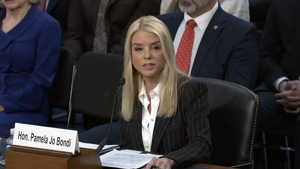
The Department of Justice recently released a memo to recipients of federal funding, warning them that programs involving diversity, equity and inclusion are unlawful discrimination.
The nine-page memo clarifies that federal anti-discrimination laws apply to programs that involve discriminatory practices, including DEI policies. Organizations that receive federal funding are subject to federal anti-discrimination laws and must ensure that their programs do not discriminate against race, gender, religion and more, the memo added.
“This Department of Justice will not stand by while recipients of federal funds engage in illegal discrimination,” said Attorney General Pamela Bondi. “This guidance will ensure we are serving the American people and not ideological agendas.”
Robert Kelchen, a professor in the University of Tennessee, Knoxville’s Department of Educational Leadership and Policy Studies, in an email to Inside Higher Ed, said the enrollment process is already challenging for colleges and universities.
“The only truly safe ways to admit students right now are to admit everyone or only use standardized test scores,” Kelchen wrote. “Being an enrollment management leader has always been tough, but now it’s even more challenging to meet revenue targets and satisfy stakeholders who have politically incompatible goals.”
The new guidance memo emphasizes the major legal risks associated with programs that take part in discrimination.
“The very foundation of our anti-discrimination laws rests on the principle that every American deserves equal opportunity, regardless of race, color, national origin, sex, religion, or other protected characteristics,” said Assistant Attorney General Harmeet K. Dhillon.
To help entities avoid violations and the revocation of federal grant funding, the memo concludes on page 8 with recommendations on best practices:
“Ensure Inclusive Access, Focus on Skills and Qualifications, Prohibit Demographic-Driven Criteria, Document Legitimate Rationales, Scrutinize Neutral Criteria for Proxy Effects, Eliminate Diversity Quotas, Avoid Exclusionary Training Programs, Include Nondiscrimination Clauses in Contracts to Third Parties and Monitor Compliance, Establish Clear Anti-Retaliation Procedures and Create Safe Reporting Mechanisms.”
“Entities are urged to review all programs, policies, and partnerships to ensure compliance with federal law, and discontinue any practices that discriminate on the basis of a protected status,” the memo concludes. “By prioritizing nondiscrimination, entities can mitigate the legal, financial and reputational risks associated with unlawful DEI practices and fulfill their civil rights obligations.”
Californians voice support for Trump’s homelessness order

Californians are urging Gov. Gavin Newsom to acknowledge the Trump administration’s executive order on homelessness, believing it will help mitigate a state crisis.
The order presents a law-and-order approach to homelessness that closely resembles Newsom’s approach. However, it upends “housing first” and “harm reduction” — two standard policies used in California.
The order directs the administration to prioritize funding to state and local governments who adopt its law-and-order approach, but withhold funding to places who don’t.
The order was issued a day after Newsom announced homelessness in local communities is decreasing.
Californians are encouraging Newsom, who continues to celebrate his administration’s approach to homelessness, to comply with the order to receive federal help.
San Diego County Supervisor Jim Desmond has been a loud advocate for Trump’s order, and said he hopes California will ask for help from the federal government and will comply with the necessary standards.
Desmond also said he has never been a fan of “housing first” policies.
San Jose Mayor Matt Mahan did not mention Newsom but did say he opposes affordable housing and believed the order had pragmatic elements to it, according to the San Jose Spotlight.
Many California locals have also gone on X to express their support for the order, stating homelessness in California is still rising despite the the state’s increase in homelessness funding.
Newsom believes the order is focused on creating distracting headlines and settling old scores than producing any positive impact, according to a statement that the Governor’s Office sent The Center Square. Newsom added his policies have contributed to the slowed growth of homelessness in California with the state outperforming the nation in reducing homelessness.
Other state Democratic politicians agree with Newsom, claiming the order is harmful.
Los Angeles City Councilmember Ysabel Jurado said the order was “an attack on our most vulnerable,” in a post on X. Jurado, a former tenants right attorney and an affordable housing activist, added that taking away resources “will only make the problem worse.”
Trump presses pharmaceutical companies to lower drug costs
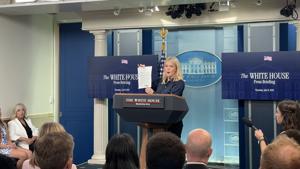
President Donald Trump sent letters to 17 pharmaceutical companies Thursday, urging them to match drug prices to the lowest price offered in other developed countries within 60 days or face consequences.
The letters were addressed to major drug companies, including Pfizer, AstraZeneca and Johnson & Johnson, setting a deadline of Sept. 29 before the White House would “deploy every tool in our arsenal.”
White House Press Secretary Karoline Leavitt said Americans pay more than three times what people in other developed nations do for identical drugs and said the Trump administration is committed to addressing “the problem of exorbitant pharmaceutical pricing.”
“Other nations have been freeloading on U.S. innovation for far too long, and it is time they pay their fair share,” the letters said.
The letters outlined principles the companies must commit to in the next two months, including lowering drug costs for Medicaid recipients and guaranteeing reasonable pricing for new drugs.
“Moving forward, the only thing I will accept from drug manufacturers is a commitment that provides American families immediate relief from the vastly inflated drug prices,” Trump wrote.
The letters ask drug companies to meet the White House’s demands voluntarily, but do not outline regulations or legislation in Congress to mandate Trump’s requests. Leavitt did not elaborate how Trump would retaliate if the pharmaceutical companies do not appease his demands.
The action comes after Trump signed an executive order in May addressing the “egregious imbalance” of American and foreign drug costs. The executive order similarly urged drug companies to lower costs voluntarily and threatened to import drugs from other countries or impose regulations if actions were not taken.
Sens. Josh Hawley, R-Mo., and Peter Welch, D-Vt., introduced legislation earlier this year on this issue. Their bill addresses disproportionately high drug costs in the U.S. and could require pharmaceutical companies to match their prices to other countries by law.
Bombshell report indicates Clinton, Soros group plotted to ‘demonize’ Trump
Newly declassified intelligence documents indicate that Hillary Clinton, her 2016 presidential campaign managers, and a top member of a George Soros group plotted to fabricate the Trump-Russia collusion campaign to distract the public from Clinton’s email scandal.
Declassified by the Senate Judiciary Committee on Thursday, the 29-page “Durham annex” from 2023 chronicles the Office of Special Counsel’s (OSC) investigation into purported efforts by the Clinton campaign and its allies to falsely tie Russia’s cyber interference attempts during election season to Trump.
In its investigation, OSC uncovered emails that appeared to be sent by Leonard Benardo, senior vice president of Soros’ Open Society Foundations, to people involved in Clinton’s campaign. Soros is a billionaire funder of Democratic campaigns.
The emails appear to show that Benardo engaged in discussions with Julianne Smith, one of Clinton’s foreign policy advisors, about how to use reports of Russian interference in the election to Clinton’s advantage and Trump’s detriment. Benardo later told OSC he had no recollection of writing the emails.
In an email dated July 25, 2016, Benardo told an undisclosed person that “politicization is on the table” and that he and Smith had been discussing ways to create a story casting Trump as “an agent of influence” in Russian President Vladimir Putin’s attempts to undermine the election “in the interest of Donald Trump.”
“Julie [Smith] says it will be a long-term affair to demonize Putin and Trump. Now it is good for a post-convention bounce. Later the FBI will put more oil on the fire,” Benardo wrote, indicating that Clinton’s campaign planned to use the FBI to push the story.
While the FBI established early on that Putin ordered “cyber influence operations” to undermine faith in the U.S. democratic process, it found no evidence that Putin interfered on behalf of Trump.
But former President Barack Obama and his senior advisors reportedly pressured the Intelligence Community to assert otherwise, according to documents declassified last week. Obama has denied the allegations.
The Clinton campaign’s goal, it appeared, was to divert Americans’ attention away from her email scandal, since “Hillary is hardly good-looking as far as credibility is concerned,” Benardo added.
Clinton served as Secretary of State under the Obama administration from 2009 to 2013, where she used a private email server for official agency communications, putting thousands of emails with sensitive or classified information at risk.
According to a follow-up email by Benardo dated two days later, Clinton personally approved of the plan to fabricate the Trump-Russia collusion.
“HRC approved Julia’s idea about Trump and Russian hackers hampering U.S. elections. That should distract people from her own missing email, especially if the affair goes to the Olympic level,” Benardo wrote.
“The point is making the Russian play a U.S. domestic issue. Say something like a critical infrastructure threat for the election to feel menace since both POTUS and VPOTUS have acknowledged the fact IC would speed up searching for evidence that is regrettably still unavailable,” he clarified.
Upon finding the emails, the Office of Special Council questioned Benardo, who told them he did not know who “Julie” referred to and he did not draft the emails “to the best of his recollection.”
Clinton, when questioned by OSC, said the plan she apparently approved “looked like Russian disinformation.” Campaign Chair John Podesta and other advisors each denied the validity of the emails and each called the emails “ridiculous.”
Smith was also interviewed and said she recalled neither drafting or receiving the emails nor proposing a plan to Clinton or other campaign leadership to try tying Putin to Trump. She also denied enlisting the FBI to further such efforts.
But OSC found that the verified communications between Smith and campaign advisors implied otherwise. The same day Benardo purportedly sent the email about how the FBI “will put oil on the fire,” Smith texted a Clinton campaign advisor and asked them to “see if [Special Assistant to the President and National Security Council member] will tell you if there is a formal fbi or other investigation into the hack?”
The Clinton campaign advisor, whose name is redacted, replied that the person in question “won’t say anything more to me. Sorry. Told me she went as far as she could.”
Ultimately, OSC determined that “it is a logical deduction that [redacted] Smith was, at a minimum, playing a role in the Clinton campaign’s efforts to tie Trump to Russia,” and that available evidence “supports the notion that the campaign might have wanted or expected the FBI or other agencies to aid the effort” via a formal investigation.
“In short, neither the Office nor [redacted] have been able to determine definitively whether the purported Clinton campaign plan [redacted] was entirely genuine, partially true, a composite pulled from multiple sources, exaggerated in certain respects, or fabricated in its entirety,” OSC concluded, adding that regardless, the entire affair was “concerning.”
As of Thursday afternoon, Clinton and her former campaign advisors have not responded to the Durham annex’s publication, despite outcry from Republicans. The Trump administration is presenting the report as the “smoking gun” confirming recent allegations that Obama, Clinton, and the Intelligence Community created a deliberate smear campaign to delegitimize Trump’s first presidency.
“Based on the Durham annex, the Obama FBI failed to adequately review and investigate intelligence reports showing the Clinton campaign may have been ginning up the fake Trump-Russia narrative for Clinton’s political gain, which was ultimately done through the Steele Dossier and other means,” U.S. Sen. Chuck Grassley, R-Iowa, said Thursday.
“History will show that the Obama and Biden administration’s law enforcement and intelligence agencies were weaponized against President Trump,” he added. “This political weaponization has caused critical damage to our institutions and is one of the biggest political scandals and cover-ups in American history.”
‘Core’ Biden advisor appears before House committee
Mike Donilon, former President Joe Biden’s then-senior advisor, appeared before a closed House committee Thursday to discuss the investigation into the former president’s mental and physical fitness.
Donilon was tight-lipped prior to appearing before House Committee on Oversight and Government Reform for a transcribed interview.
Reporters flanked the former advisor, peppering him with questions about Biden’s cognitive state. Donilon remained silent.
Donilon marks the third witness to voluntarily appear before the committee in defense of the former president.
His testimony would be especially significant as he began working for Biden in 1981, starting with his time in the U.S. Senate, then as vice president and president. Donilon could provide the committee with a larger picture of a potential Biden health decline.
Committee Chairman Rep. James Comer, R-Ky., described Donilon as one of the former president’s “core” advisors.
In a letter requesting Donilon’s appearance before the committee, Comer accused the former advisor of shielding Biden.
“You were reportedly responsible for erecting a wall between the former president and senators ‘to shield Biden from bad information,’” Comer wrote.
The chairman noted that Donilon participated in an event at Harvard where the former advisor candidly spoke on the former president’s “cognition,” denying claims Biden had mentally declined, leading Comer to want to investigate further.
On Wednesday, the committee interviewed Steve Ricchetti, who served as counselor to Biden.
Ricchetti defended the former president in a prepared statement obtained by The Hill, claiming he had complete faith in Biden.
“Let me be clear: At all times during his presidency, I believed that President Biden was fully capable of exercising his Presidential duties and responsibilities, and that he did so,” Ricchetti stated. “Neither I, nor anyone else, usurped President Biden’s constitutional duties, which he faithfully and fully carried out each and every day.”
However, Ricchetti acknowledged the former president did have his moments, but brushed them off, reiterating his confidence in Biden.
“Did he stumble? Occasionally. Make mistakes? Get up on the wrong side of the bed? He did – we all did. But I always believed – every day – that he had the capability, character, and judgment to be president of the United States,” Ricchetti added.
Last week, the committee interviewed Ron Klain, who served as chief of staff to the former president during the first half of his presidency.
Comer told Newsmax that Klain answered every question, admitting that Biden’s “memory had deteriorated a little bit” and “wasn’t as sharp” in the lead-up to the former president dropping out of the race for reelection. However, Comer added that Klain told the committee that he believed Biden was still competent to lead – echoing Ricchetti’s statements.
Previous witnesses who have been subpoenaed include Annie Tomasini, who served as an assistant to the former president and deputy director of Oval Office Operations, former First Lady Jill Biden’s chief of staff, Anthony Bernal, and Dr. Kevin O’Connor, Biden’s physician. They all pleaded their Fifth Amendment right against self-incrimination and refused to answer questions.
Comer claims those witnesses show “a pattern … seeking to shield themselves from criminal liability.”
Questions regarding Biden’s mental fitness were raised well before the 2020 presidential election. Republicans and many in the conservative media continued to raise questions regarding the former president’s health throughout his presidency.
However, the White House claimed Biden received regular medical exams, showing a healthy, competent president.
The House committee announced in early June that it was expanding its investigation into the “cover-up” of Biden’s “mental decline.”
Comer sent letters to five former senior Biden White House aides, “demanding they appear for transcribed interviews.” Comer’s committee is investigating “potentially unauthorized issuance of sweeping pardons and other executive action.”
The investigations have been fueled in part by the book written by Jake Tapper and Alex Thompson, “Original Sin,” which the congressman quoted as claiming, “Five people were running the country, and Joe Biden was at best a senior member of the board.”
Karine Jean-Pierre, who served as Biden’s press secretary; Ian Sams, former assistant to the president and senior advisor in the White House Counsel’s Office; Andrew Bates, former deputy assistant to the president and senior deputy press secretary; and Jeff Zients, Biden’s former chief of staff, have also been called to testify in front of the committee.
Whatley running on strong economy, safe communities, respected America
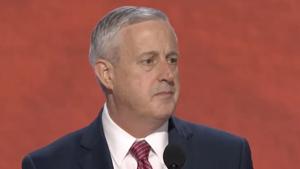
Giving a thumbs up and saying “God bless North Carolina,” Michael Whatley stepped to the mic on Thursday and announced his candidacy for the U.S. Senate.
The choice of two-term President Donald Trump to lead the Republican National Committee through the last election cycle, Whatley will be seeking the seat being vacated by Republican Sen. Thom Tillis and already has the unequivocal support of the president. Whatley spoke to supporters from The Taproom in Gastonia not far from his Gaston County home.
“I want to thank President Trump,” Whatley said. “Without his vision, without his leadership, without what he has done over the last 10 years to remake the Republican Party into the party that is going to stand for every family and every community all across the country, we would not be sitting here today.”
Whatley’s announcement coupled with former two-term Democratic Gov. Roy Cooper’s decision to run is producing estimations of the most expensive U.S. Senate race in American history. The numbers clear $500 million and could reach $750 million.
The two heavyweights of their parties also clear out any likely primary challenges on March 3. Victory Insights was first to release a poll on Thursday, giving a statistical tie in a 3% lead for Cooper with undecided voters leaning Republican.
Whatley said his campaign will be about North Carolina values. He named a “strong economy, safe communities, and an America that is respected around the world. And we will win because we will fight every single day for North Carolina and the values that we hold so dear.”
He said he would fight to eliminate sanctuary cities and “back the blue” every day, a reference to secure borders and support of lawmen at every level.
“We have more than 720,000 veterans who call North Carolina home,” Whatley said. “I will fight for our veterans as hard as they fought for us.”
He called Cooper “radical” and said the former governor would try to appease voters as being moderate.
“He has never seen a dollar he didn’t want to tax, and he didn’t want to spend,” Whatley said.
Whatley said he became a Republican at the age of 12 on the day Ronald Reagan took the oath of office in 1981, with news of hostages in Iran released.
“It was a quick lesson that even a 12-year-old kid could pick up in peace through strength,” Whatley said. “And it was an important lesson that elections have consequences.”
He chastised the Biden administration for putting the country in “freefall,” inflation, with high consumer prices. He cited foreign trade policies detrimental to American farmers and manufacturers, and immigration woes bringing human trafficking and fentanyl inside the country’s borders.
Whatley said the president told him on Election Night about the opportunities ahead for the restoration of the economy and the borders, and “to make sure America was going to be the greatest country on the face of the Earth.”
“And six months in,” he said, “it’s pretty clear to say, America is back.”
Whatley is seeking public office for the first time. His education includes undergraduate work in history at UNC Charlotte, a master’s in religion from Wake Forest, and degrees in both law and theology from Notre Dame.
He worked in the Department of Energy for the George W. Bush administration; was chief of staff for former U.S. Sen. Elizabeth Dole, R-N.C.; and in the first Trump administration was part of the teams for presidential transition on energy, the environment and agriculture.
Whatley was chairman of the North Carolina Republican Party before he was tapped to lead the national committee last year. He shared in that duty with Trump’s daughter-in-law Lara, a Wilmington native living in Florida.
Trump administration returns $510M to Brown University
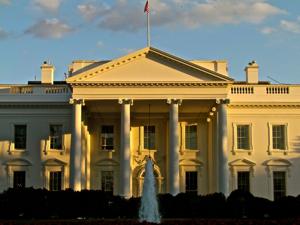
Brown University settled a deal with the Trump administration to release $510 million in federal funding amid civil rights violations.
In a letter, Brown President Christina Paxson shared details about the agreement. The university would contribute $50 million over 10 years to “workforce development organizations” in compliance with anti-discrimination laws.
The letter added that Brown would end programs that promote “race-based outcomes, quotas, diversity targets or similar efforts,” and maintain “women-only and men-only” spaces and sports teams on campus.
“In Brown Athletics facilities, the University will provide female student-athletes with intimate facilities such as locker rooms and bathrooms strictly separated on the basis of sex,” the letter stated.
Earlier this year, the administration had been investigating Brown over alleged cases of antisemitism on campus. In April when the administration froze $510 million in federal education funding, Paxton said Brown would remain committed to meeting its obligations in following the law.
“The Trump Administration is successfully reversing the decades-long woke-capture of our nation’s higher education institutions,” Secretary of Education Linda McMahon said in a statement.
The Trump administration from day one has aspired to judging students based on their merits not race or gender, McMahon added.
“Brown has committed to proactive measures to protect Jewish students and combat Antisemitism on campus. Women’s sports and intimate facilities will be protected for women and Title IX will be enforced as it was intended,” the secretary said.
The administration has threatened universities that federal education funding could be taken away over Title VI violations. So far Brown is among 60 colleges and universities that the U.S. Department of Education has investigated over discrimination and harassment on campus.
Since the freeze, Brown has taken out $800 million in loans, according to Bloomberg.
In addition to Brown, the administration has frozen $400 million in funds from Columbia University and over $2 billion from Harvard University over rising administration and antisemitism concerns on campus.
“Restoring our nation’s higher education institutions to places dedicated to truth-seeking, academic merit and civil debate — where all students can learn free from discrimination and harassment — will be a lasting legacy of the Trump administration, one that will benefit students and American society for generations to come,” McMahon said.
Reciprocal tariffs go into effect at midnight, White House says

The White House said Thursday that President Donald Trump’s reciprocal tariffs will go into effect at midnight for all nations that didn’t get a letter or reach a trade deal with the president.
“Those countries will be hearing from this administration by the midnight deadline tonight,” White House press secretary Karoline Leavitt said.
Leavitt said more deals could come before the midnight deadline. So far, Trump has reached framework deals with roughly two-thirds of the United States’ top 18 trading partners. Another 17 nations got letters from Trump with specific rates they will pay. Leavitt said many leaders are still trying to contact Trump before the deadline.
“Foreign leaders are ringing his phone, realizing that this deadline is a real thing for them tomorrow and they’re bringing offers to the table,” she said.
As of Thursday afternoon, Trump had announced deals with the United Kingdom (10% tariff on imports), European Union (15% tariff on imports), India (25% plus “penalty”), Indonesia (19% tariff on imports), the Philippines (19% tariff on imports), Japan (15% tariff on imports) and South Korea (15% tariff on imports). Earlier on Thursday, Trump gave Mexico another 90 days to reach a trade agreement. Trump has yet to reach pacts with Canada and China. However, earlier this week, Trump’s trade team met with representatives from China for two days in Stockholm.
U.S. Trade Representative Jamieson Greer said that tariffs on Chinese goods could increase by an additional 34% if the U.S. can’t reach a deal with China by Aug. 12. That’s far below the 145% peak level before the two nations reached a tariff truce in May, but still much higher than what American consumers are used to paying.
Trump has given no indication that he might reverse tariffs, but some business groups, including the U.S. Chamber of Commerce, have called on him to do so.
Gary Shapiro, the CEO of the Consumer Technology Association, said Thursday that businesses need predictable trade rules. He also called for a return to tariff-free trade.
“Policymakers face a choice: double down on trade uncertainty or restore certainty that American innovators need to thrive,” he said. “Predictable trade rules give businesses the clarity they need to plan, invest, and bring groundbreaking technologies to market.”
Shapiro added that tariff burdens have been “especially crushing for startups and small businesses that lack the resources to navigate complex compliance rules or absorb escalating costs.”
Businesses could still get relief through the courts. On Thursday, a panel of 11 appellate court judges scrutinized Trump’s tariff authority, asking attorneys on both sides of the case tough questions about the president’s authority to restructure global trade without help from Congress. The court didn’t rule on the tariffs on Thursday but is expected to do so in the coming weeks.
Economists, businesses and some publicly traded companies have warned that tariffs could raise prices on a wide range of consumer products.
Trump has said he wants to use tariffs to restore manufacturing jobs lost to lower-wage countries in decades past, shift the tax burden away from U.S. families, and pay down the national debt.
A tariff is a tax on imported goods paid by the person or company that imports the goods. The importer can absorb the cost of the tariffs or try to pass the cost on to consumers through higher prices.