Illinois News
Pritzker selects former Deputy Gov. Christian Mitchell as running mate
Capitol News Illinois
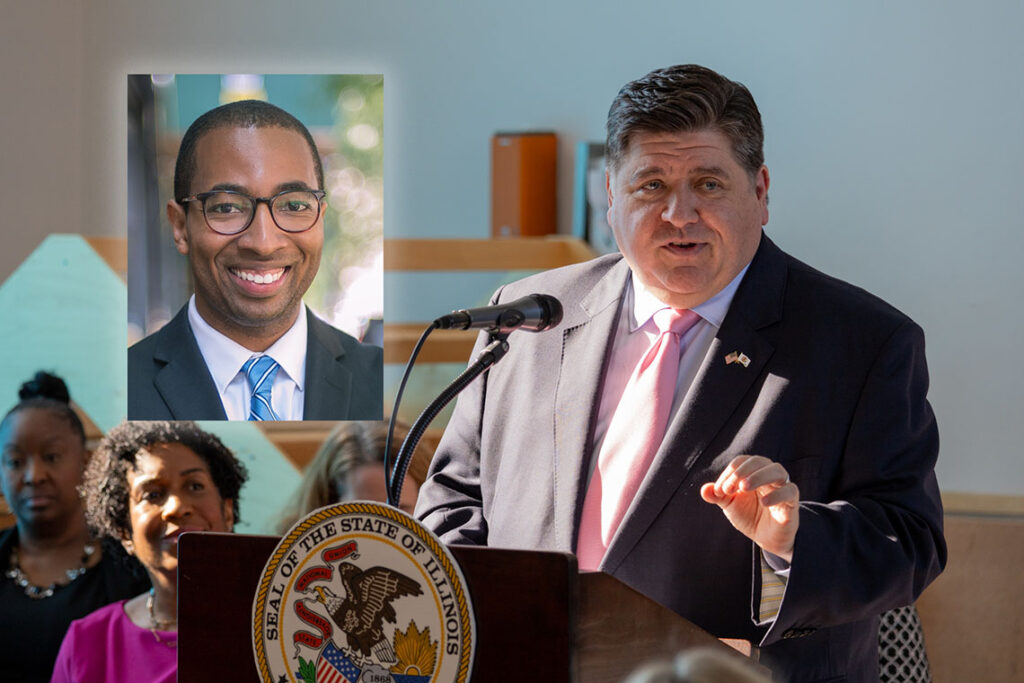
Gov. JB Pritzker announced Tuesday that former Deputy Gov. Christian Mitchell will be his running mate for the 2026 campaign.
Pritzker’s selection, made just days after announcing a third campaign for governor, comes from a close circle of trust in Pritzker’s administration. Mitchell previously served in the governor’s office as one of four deputy governors overseeing key projects in Pritzker’s first term.
“Christian Mitchell is a proven leader with deep experience, steady judgment, and an unshakable commitment to the working families of Illinois,” Pritzker said in a statement. “Whether it’s transforming our clean energy future, rebuilding our infrastructure, or keeping our communities safe, Christian has been a force behind so much of our progress. I couldn’t ask for a better partner to continue delivering results for the people of Illinois.”
Mitchell, 38, will replace Lt. Gov. Juliana Stratton on the ticket as she seeks the Democratic nomination for U.S. Senate.
Mitchell comes in with hefty experience in state government and public policy. A resident of Chicago’s Hyde Park neighborhood, Mitchell served three terms in the Illinois House beginning in 2013 and was executive director of the Democratic Party of Illinois in 2018 before joining the governor’s office in 2019.
Lieutenant governor role
Mitchell left Pritzker’s administration in early 2023 to become vice president for civic engagement at the University of Chicago where he oversees government relations. Mitchell was appointed by Pritzker last year to an unpaid seat on the Metropolitan Pier and Exposition Authority board, which oversees Navy Pier and McCormick Place. He is also a first lieutenant in the Illinois Air National Guard.
“The governor has led with courage and compassion, and together we’ve built a foundation that’s moving Illinois forward,” Mitchell said in a statement. “I’m ready to build on that progress — lowering costs, expanding opportunity, and making sure every community has the resources and opportunities they deserve. This is about delivering real results for the people of Illinois, and I’m excited to get to work.”
Read more: ‘I have work to do,’ Pritzker says in launching third-term reelection bid
Though the lieutenant governor has few constitutional responsibilities in Illinois, Pritzker has leveraged the position to task Stratton with leading key legislative initiatives and overseeing the implementation of some of his administration’s top priorities at state agencies.
If Pritzker is elected to another term, the role will hold greater importance as Pritzker considers running for president in 2028. Pritzker’s election to the presidency would require Mitchell to serve the final two years of his term.
Read more: National speculation ‘helps get more for the people of Illinois,’ Pritzker says
While keeping Mitchell’s selection under wraps, Pritzker told reporters in recent days he was looking for a running mate who was ready to immediately step into the governorship if required.
“The number one qualification is, ‘can you do the job of being governor because if you’re lieutenant governor, that may come to you,’” Pritzker said Monday.
“The second thing I think about is person who I might choose for lieutenant governor somebody who has a heart for all the people of Illinois, not just some or some specific segment of the population because we have a big, diverse state,” he said.
Deputy governor role
Deputy governors in Pritzker’s administration have a chief of staff-like role, overseeing specific policy areas and state agencies. Mitchell was in charge of environmental policy, infrastructure and public safety.
In 2020 and 2021, Mitchell oversaw the negotiations of Pritzker’s marquee climate policy — the Climate and Equitable Jobs Act. It massively reformed the utility and energy industry and requires all fossil fuel power plants to close by 2045.
Mitchell was responsible for representing the governor in negotiations around the bill and was the face of the Pritzker administration as it went through the legislature.
That law, passed in the wake of a bribery scandal with Chicago’s electric utility that forced former House Speaker Michael Madigan to resign, cemented Pritzker’s reputation as a progressive on climate issues.
In the years since, energy experts and some lawmakers involved in passing the law have raised concerns that the state is at risk of missing the clean energy targets that Mitchell helped codify.
Mitchell also oversaw the implementation of the 2019 Rebuild Illinois capital plan – a $45 billion construction project to rebuild roads, bridges and other infrastructure across the state.
Recreational cannabis regulation was also Mitchell’s responsibility. Pritzker signed legislation in his first year legalizing cannabis for recreational use and setting up a series of regulations for dispensaries and new social equity requirements.
Other experience
As a state lawmaker, Mitchell was chair of the House Economic Opportunity Committee.
Mitchell also brings heavy political experience to the ticket. Democrats swept races for statewide offices in 2018 and won supermajorities in the Statehouse with Mitchell serving in a top leadership role under former party Chair Mike Madigan. He took over for Tim Mapes, Madigan’s former chief of staff who was accused of sexual harassment and is now serving time in prison for a perjury conviction.
He has also worked as an advisor on several political campaigns in Illinois, including leading Midwest polling for former President Barack Obama’s 2012 campaign.
Andrew Adams contributed.
Capitol News Illinois is a nonprofit, nonpartisan news service that distributes state government coverage to hundreds of news outlets statewide. It is funded primarily by the Illinois Press Foundation and the Robert R. McCormick Foundation.
The post Pritzker selects former Deputy Gov. Christian Mitchell as running mate appeared first on Capitol News Illinois.
Illinois to roll out direct admissions program for most state universities
Capitol News Illinois
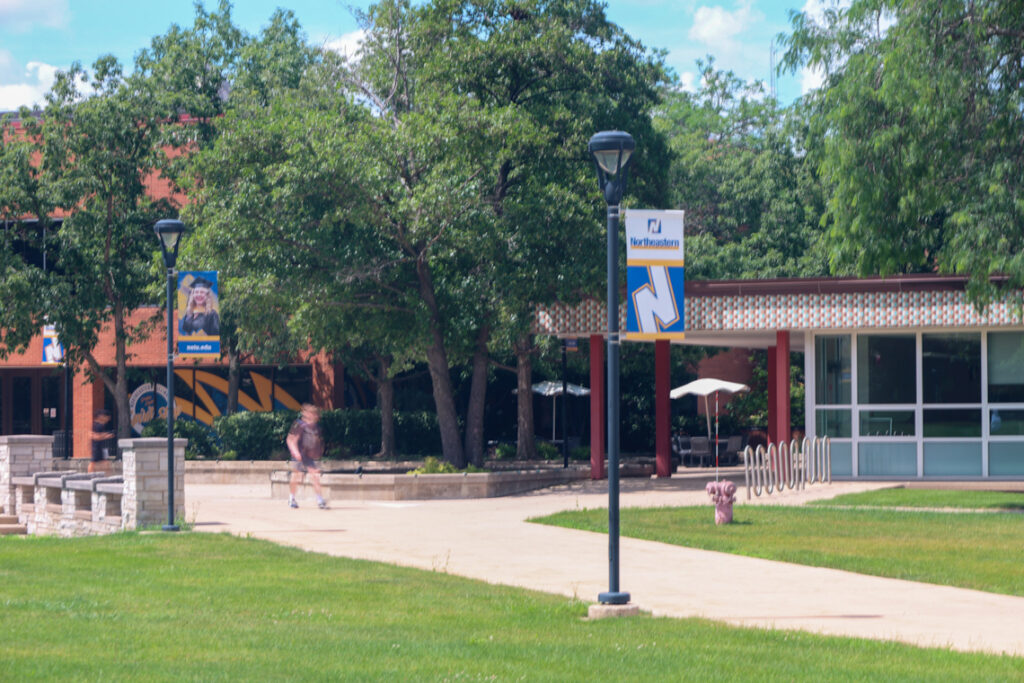
Editor’s note: This story was updated to refer to the correct building on the campus of Northeastern Illinois University in the featured photo caption.
CHICAGO — Illinois students won’t need to fill out applications for most state universities to be admitted — if they have high enough grades.
With his signature, Gov. JB Pritzker on Monday approved a bill creating the direct admissions program. Along with it, he approved bills that implement new state standards for programs offering college credits to high school students, and new requirements for financial aid application assistance.
“These bills streamline the application process for college-bound seniors in Illinois, enhance support for applicants, and open up new horizons for prospective students,” Pritzker said in a statement. “Enacting these laws is what all government work should be about — making life easier for our people.”
Pritzker had said college admissions and higher education accessibility would be a priority of his during this year’s legislative season, which ended May 31. But one of his signature initiatives — allowing community colleges to offer four-year degrees — failed earlier this year.
Direct college admissions
Illinois will implement a direct admissions program so that students hoping to go to a state school will be automatically admitted — if they have a high enough grade point average.
“For eligible seniors and community college transfer students, you will receive offers from the schools that you are admitted to without raising a finger. That’s huge,” Sen. Christopher Belt, D-Swansea, said. “It takes away the anxiety, it takes away the angst of that whole process.”
The bill outlining the direct admissions program, House Bill 3522, passed unanimously in the Senate and with broad bipartisan support in the House in late May.
Read more: House approves new abortion protection, plan to ease college admissions | Senate Democrats champion program to streamline Illinois college applications
The program will begin in the 2027-28 school year, with nine of the state’s 11 public universities participating:
University of Illinois Springfield
Southern Illinois University
Chicago State University
Eastern Illinois University
Governors State University
Illinois State University
Northeastern Illinois University
Northern Illinois University
Western Illinois University
High school students and community college students hoping to transfer to a state school must opt-in to the program to receive offers. Community colleges already admit all students interested in attending but will still participate in the direct admissions program.
The University of Illinois Urbana-Champaign and University of Illinois Chicago will not participate in the direct admission program. The state will, however, provide information about traditional applications to qualifying students through an “access and outreach campaign.”
The criteria for the direct admissions program and outreach campaign will be set by individual schools.
“This new, statewide direct admissions program will make a college degree more accessible for students and will motivate them to continue in their life-changing college journey by ensuring them a spot at their community college or at one of the state’s public universities,” Illinois Board of Higher Education Executive Director Ginger Ostro said in a Monday statement.
Financial aid application assistance
Two more bills signed by Pritzker on Monday, House Bills 3096 and 3097, aim to make it easier for students to navigate the financial aid process.
HB 3096 requires high schools in Illinois to designate at least one staff member as a point-of-contact for information about the Free Application for Federal Student Aid, or FAFSA. HB 3097 requires high schools to offer students time during the school day to fill out FAFSA forms and to receive assistance in doing so.
The new requirements go into effect in the 2025-26 school year.
Information collected through FAFSA is used to determine eligibility for federal loans. Many schools use FAFSA for their own aid programs, and the state offers need-based grants based on information submitted through FAFSA.
“As a father of college students, I just currently went through this fun exercise with my daughter filling out a FAFSA form,” Sen. Javier Cervantes, D-Chicago, said. “I’m being a little sarcastic calling it fun because we had deadlines, we had to make sure we had our documentation together and it wasn’t easy.”
From the 2010 to 2020 school years, an average of 86% of first-time students at four-year schools and 78% of first-time students at two-year schools received federal financial aid, according to data from the U.S. Department of Education.
The Illinois Community College Board offices sits blocks away from the state Capitol. Under a new law, the ICCB and other state agencies are tasked with improving dual credit programs in the state. (Capitol News Illinois photo by Andrew Adams)
Dual credit program
House Bill 2967, another bill approved by Pritzker on Monday, outlines new requirements for high schools and community colleges offering “dual credit” programs, through which students earn high school and college credit for completing a single course.
It requires teachers teaching dual credit classes to have a master’s degree in the subject they’re teaching or a master’s degree and some graduate coursework in the subject. It also requires high schools and community colleges to designate individuals responsible for negotiating what individual dual credit agreements look like.
“HB 2967 reinforces the vital role that strong, robust partnerships between community colleges and high schools play in delivering high quality dual credit programs,” Illinois Community College Board Executive Director Brian Durham said in a statement. “These programs help students get a head start on their college education and a path towards career success.”
The bill also requires schools to consider in-state colleges and universities when setting up dual credit programs over out-of-state institutions.
The bill also creates a committee made up of education officials, representatives from two different statewide teachers’ unions and others to work on improving dual credit programs’ accessibility and quality, as updating a template used by school districts to develop dual credit agreements with community colleges.
Four-year degrees at community college
One key proposal didn’t make the cut this spring — a measure allowing community colleges to offer bachelor’s degrees. Despite being backed by Pritzker in his State of the State address earlier this year, it faced pushback in the General Assembly, which did not pass a bill implementing the policy.
Read more: Pritzker’s community college initiative stalls in House committee
That proposal drew concerns from some lawmakers who worried it could undercut programs to attract local students to state universities. In particular, some lawmakers worried that it could hurt schools like Northeastern Illinois University and Chicago State University, which serve largely minority student populations.
But Pritzker on Monday said he would continue working on a proposal to allow more schools to offer bachelor’s degrees in “very specific, niche areas” like nursing and advanced manufacturing.
“You sometimes have to work two, four, six years, maybe longer to get something done,” Pritzker said.
Capitol News Illinois is a nonprofit, nonpartisan news service that distributes state government coverage to hundreds of news outlets statewide. It is funded primarily by the Illinois Press Foundation and the Robert R. McCormick Foundation.
The post Illinois to roll out direct admissions program for most state universities appeared first on Capitol News Illinois.
National speculation helps ‘get more for the people of Illinois,’ Pritzker says
Capitol News Illinois
SPRINGFIELD — Gov. JB Pritzker began his third campaign for governor on Thursday, but much of the buzz around his 2026 campaign announcement focused on 2028.
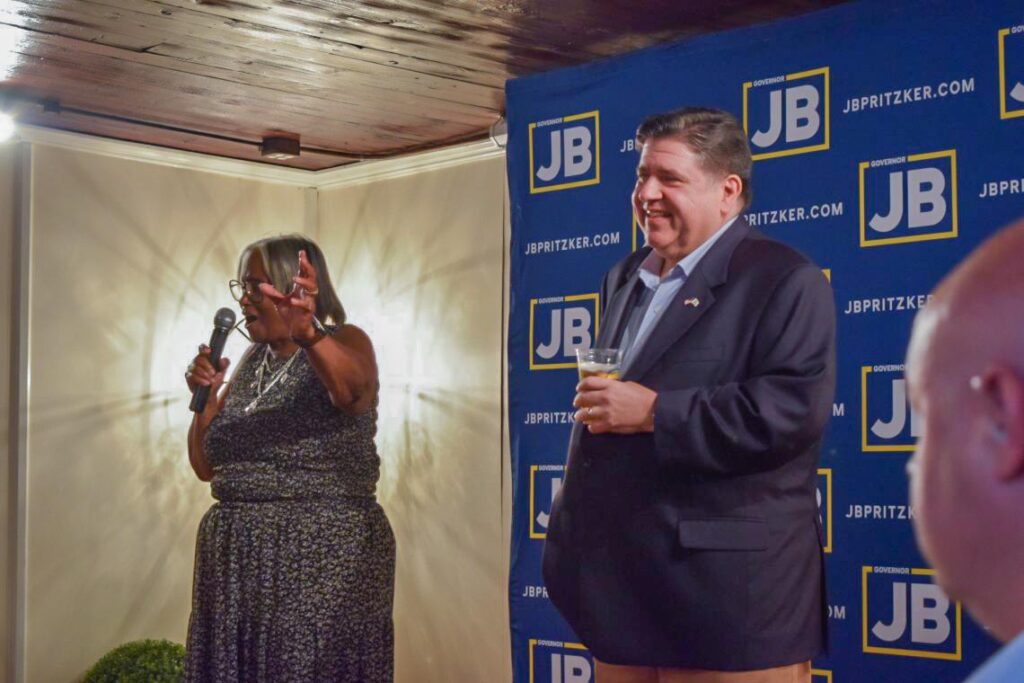
Pritzker made four stops around the state to launch his campaign, fielding questions about any future interest in the presidency and what is driving him to run for what would be a historic third term. In his final stop in Springfield on Thursday evening, he was toasting personally branded “JBeers” – his own craft beer product he unveiled at least year’s Democratic National Convention – with a group of about 100 people at a small event venue just outside the Capitol and talking about his motivations.
“Every day I’m going to wake up going forward thinking about what I am going to do that’s going to help the people of Illinois,” Pritzker told reporters in Springfield when asked how many years of a third term he would serve. “So that’s the reason I’m running for reelection, it’s why I announced today, it’s what I’m going to do every day going forward no matter what decision I make.”
The 60-year-old Democrat’s national profile has grown significantly over the last year. He was a finalist to be former Vice President Kamala Harris’ running mate last July, and weeks later, introduced himself to the country on the stage of the Democratic National Convention in Chicago. In the months since President Donald Trump took office, Pritzker has emerged as one of his most vocal critics.
At news conferences throughout the state, Pritzker did not directly commit to serving a full four-year term if he is reelected and sidestepped questions about his rumored White House ambitions.
Read more: Pritzker calls for mass mobilization as he grows his national profile
But while staying tight-lipped about what he thinks about his prospects in the 2028 presidential election, he said any decision he makes about his future would be Illinois-centric.
Speculation shows Pritzker ‘capable and competent’
In the meantime, Pritzker said he believed his inclusion in the national conversation is good for Illinois.
“When I ran for governor in the first place in 2017 and 2018, never, never could I have imagined that anybody would talk about me as the potential vice-presidential nominee or as a candidate for president of the United States,” Pritzker said.
While Republicans have frequently criticized the governor for his tendencies to criticize Trump rather than work with him to Illinois’ benefit, the governor spun his rising national profile as a positive.
Gov. JB Pritzker takes a picture with Mike Lopez, mayor of nearby Jerome, after announcing his reelection campaign in Springfield on Thursday, June 26. (Capitol News Illinois photo by Jade Aubrey)
“Having the state of Illinois’ leaders viewed as capable and competent and potentially able to run the entire country and being talked about in that way, allows us, I think, to get more for the people of Illinois because there’s an understanding that, you know, maybe in Illinois we’re doing the right things,” he said. “Maybe in Illinois we have leaders that can competently execute on what states really need.”
Pritzker said his experience last summer being vetted for the vice presidency has not played any role in the decisions he has made about his political career.
Should Pritzker decide to run for president, an announcement would likely come at some point in 2027 during what would be the first year of his third term if he’s reelected.
Pritzker’s goal: ‘Protect’ Illinois and his legacy
Pritzker said at his announcement Thursday that his goal in 2026 is to preserve his legacy and “protect” the story of Illinois that’s been written under his leadership. Pritzker didn’t outline a bold vision for his third term but rather pledged to build off what he has already accomplished.
Read more: ‘I have work to do,’ Pritzker says in launching third-term reelection bid
He said his third term would focus on grappling with artificial intelligence, addressing the rising cost of living, continued spending on infrastructure and growing the state’s economy.
Pritzker reflected on his decision to seek reelection despite growing challenges facing the state.
“I don’t shy away from a fight, and we’re going to have to protect the people of Illinois,” Pritzker told reporters in Springfield. “And I feel like we’re in a moment when backing away from public service when things are hard doesn’t feel right. So that’s one of the reasons I chose to run for reelection.”
Gov. JB Pritzker speaks with reporters after his campaign announcement in Springfield on Thursday. (Capitol News Illinois photo by Jade Aubrey)
Pritzker was asked whether he would have run had Trump not been elected last year.
“I think I would, but I have to say that in this moment, it feels like walking away is the wrong thing to do given who is in the White House and given how this administration is attacking people all across this country,” Pritzker said.
The governor must also choose a new running mate as Lt. Gov. Juliana Stratton has decided to run for U.S. Senate. Pritzker said he will choose one by the end of July so his campaign can start circulating nominating petitions in early August. Pritzker said in Chicago that he is looking for someone with enough experience to take over as governor if required.
Rep. Jehan Gordon-Booth, D-Peoria, may be an early front-runner for the job. Pritzker specifically referred to Gordon-Booth as qualified at a stop in East Peoria on Thursday when asked about potential running mates, WGLT reported. The assistant House majority leader has been in the General Assembly since 2009.
Capitol News Illinois is a nonprofit, nonpartisan news service that distributes state government coverage to hundreds of news outlets statewide. It is funded primarily by the Illinois Press Foundation and the Robert R. McCormick Foundation.
The post National speculation helps ‘get more for the people of Illinois,’ Pritzker says appeared first on Capitol News Illinois.
‘I have work to do,’ Pritzker says in launching third-term reelection bid

Capitol News Illinois
CHICAGO — In a hot gymnasium on Chicago’s South Side, Gov. JB Pritzker announced Thursday morning he’s running for a potentially historic third term as governor.
In his announcement speech, Pritzker said he is running to “protect” the story he’s been telling about Illinois — one that has been built largely in opposition to the politics of President Donald Trump.
Pritzker said his third term would focus on grappling with artificial intelligence, addressing the rising cost of living, continued spending on infrastructure and growing the state’s economy.
The field house at Grand Crossing Park where Pritzker launched his first campaign hosted a crowd of Pritzker’s invited supporters, including Democratic party officials, campaign operatives and long-time Pritzker supporters.
Read more: Pritzker calls for mass mobilization as he grows his national profile
Pritzker’s message has often focused on what Democrats need to do to win and push back on Trump, including addressing economic issues for the middle class and being outspoken against Trump’s policies.
“While it is certainly tempting to lay all of this at the feet of the megalomaniac narcissist in the White House and his malignant clown car in Congress, the hard truth is, we all share some of the blame,” Pritzker said.
The governor said “we must reckon with the fact that everything is too damned expensive,” but taking a shot at Republicans, said enacting budget cuts to key government programs like Medicaid that make life more affordable for people shouldn’t be the solution.
Gov. JB Pritzker and his wife, MK Pritzker, wave to supporters at a June 26 rally to launch JB’s third gubernatorial campaign. (Capitol News Illinois photo by Andrew Adams)
The governor also said a third term would continue his past efforts to protect abortion rights, diversity programming in the private sector and teachers’ ability to teach “uncensored history.”
Pritzker’s progressive stances on hot-button national issues are part of what has grown his national profile since President Donald Trump took office in January.
The governor has been one of the president’s most vocal Democratic critics and his schedule has been loaded with national media interviews and campaign speeches around the country.
From reelection to presidential election?
A successful reelection could set the stage for a bigger one: Pritzker’s speculated 2028 presidential campaign.
Pritzker on Thursday downplayed the possibility when speaking to reporters but didn’t explicitly rule it out.
“Everything that I do, truly everything that I do, in my job and every day when I wake up is about improving the lot of the people who live in the state of Illinois, lifting up the working families of Illinois,” Pritzker said. “Whatever I do going forward is going to be about that.”
He had a small taste of presidential campaigning last year when he was considered as a running mate for former Vice President Kamala Harris, then served as a surrogate.
“You don’t get on that list unless they think you actually could be president of the United States and do the job if you had to,” Pritzker told reporters last year.
As some Democrats have tried finding a centrist message, Pritzker has stayed in the left lane. He condemned politicians, without mentioning specific names, who abandon their core beliefs for political gain.
“Of all the unbecoming qualities that Americans hate in their politicians – they hate cowardice the most,” Pritzker said. “I’d rather lose standing up for what I believe in than win by selling out those who believed in me.”
Read more: Pritzker balances messaging as some Dems encourage party to avoid LGBTQ issues
As Pritzker rattled off a list of accomplishments in his more than six years as governor, his message remained the same as it has since he launched his first campaign in 2017 to unseat an unpopular Republican incumbent: fight.
“Let me be clear: There is no Mission Accomplished banner to stand under today,” Pritzker said alluding to a premature victory declaration former President George W. Bush made in a 2003 speech regarding military action in Iraq. “Yes, we have addressed so many of our old problems – but new ones always arise. History is an endless relay race. Our job is not to look for the finish line but to protect the baton as we run our assigned leg. But we have work to do. I have work to do.”
Gov. JB Pritzker speaks to supporters at a campaign launch rally in Chicago on June 26, telling them in his speech “I have work to do.” (Capitol News Illinois photo by Andrew Adams)
Pritzker argued his success has come through embracing his role as a cheerleader for the state, recalling the negative perceptions of Illinois, such as the prevalence of corruption and unbalanced budgets, that had consumed state politics.
“When I was first elected, I told you I was prepared to be a happy warrior on behalf of our state, even if it meant going it alone,” Pritzker said. “I suited up to face the carnival barkers and misery spelunkers and doom grifters. I handed out optimism like a shot of Malört – as a swift jolt to the heart.”
First three-term Democrat?
The 60-year-old Democrat enters the race as the favorite, having received more than 54% of the vote in the 2018 and 2022 elections.
An heir to a fortune built on the Hyatt Hotel chain, Pritzker’s net worth sits at $3.7 billion as of Thursday, according to Forbes. His vast personal wealth makes him one of the richest politicians in American history and gives him a significant leg up on competitors. Pritzker dumped $350 million into his first two campaigns and has never taken outside contributions.
Separately, Pritzker has used an undisclosed amount of his personal fortune to fund a political action committee, Think Big America, to support abortion rights in other states.
Pritzker is also entering unchartered territory for Illinois governors. If he completes his current term, he would be the first Democrat to serve two full terms in modern state history. If he wins reelection, he would be the only governor to serve more than two terms since Republican Gov. Jim Thompson served four terms from 1977 until 1991.
Pritzker will need a new running mate first, however, as Lt. Gov. Juliana Stratton is running for U.S. Senate. Pritzker did not announce a running mate Thursday.
Pritzker’s governing record
The governor’s top priority for his second term was to eliminate child care deserts and make preschool more accessible. Since he was sworn in in January 2023, the state has implemented Pritzker’s Smart Start initiative to expand preschool offerings around the state and has begun to phase in a new Department of Early Childhood.
When asked about those goals after his speech Thursday, Pritzker said there were an “awful lot of things” that his administration still needed to accomplish.
“We still need to get to universal preschool. We’re on our way. It’ll happen probably in 2027,” Pritzker said.
But Pritzker pointed to several of his progressive policy wins Thursday, in his speech and when speaking to reporters.
He has signed legislation raising the minimum wage to $15, legalizing recreational cannabis, banning assault weapons and numerous new protections of abortion rights since Roe v. Wade was overturned three years ago. Pritzker also passed landmark legislation to phase out fossil fuels in the electricity sector.
Pritzker repeatedly brought up cleaning up Illinois’ fiscal house. The state has recorded budget surpluses in recent years and has received nine credit upgrades since he took office.
But challenges are also growing. The budget has gotten tighter, and lawmakers have resorted to more than $1 billion in targeted tax increases over the last two years to balance the budget. The fiscal year 26 budget Pritzker signed this month increased discretionary spending by less than 1%.
Gov. JB Pritzker highlights his progressive wins and criticizes Republicans in a speech to supporters in Chicago on June 26. (Capitol News Illinois photo by Andrew Adams)
There’s also been headaches over legislative priorities. Labor unions are frustrated Pritzker didn’t embrace their proposal for pension reform this spring. And many parts of the governor’s legislative agenda hit roadblocks with concerned lawmakers. There’s also ongoing discussions about achieving Pritzker’s bold clean energy goals as prices rise and energy supply is strained.
The governor has taken pride in growing state agencies decimated by the two-year budget impasse that began a decade ago. But problems at those agencies have caused trouble for Pritzker.
An audit revealed the Department of Public Health failed to intervene to stop deaths from COVID-19 at the LaSalle Veterans’ Home in 2020, though Pritzker blamed and fired leaders at the Department of Veterans’ Affairs. Billions of pandemic relief dollars at the Department of Employment Security went to fraudsters, while the Department of Children and Family Services faced years of scrutiny over deaths and the its failure to properly house children in its care while Pritzker maintained support for the department’s director.
GOP criticizes ‘stepping stone’ approach
As problems have mounted at the Statehouse, Senate Republicans have encouraged Pritzker to “think Illinois.” As he announced his campaign Thursday, Illinois Republicans continue to believe his focus is elsewhere.
“These last nearly eight years under his governance merits firing not rehiring,” Illinois GOP Chair Kathy Salvi said in a statement. “While businesses and families flee, Pritzker sees Illinois as nothing more than a stepping stone for the White House.”
A field of Republican challengers is still taking shape. So far, DuPage County Sheriff James Mendrick, Posen Park District Commissioner Phil Perez and Lake Forest businessman Joe Severino have announced they will run in the Republican primary.
Capitol News Illinois is a nonprofit, nonpartisan news service that distributes state government coverage to hundreds of news outlets statewide. It is funded primarily by the Illinois Press Foundation and the Robert R. McCormick Foundation.
The post ‘I have work to do,’ Pritzker says in launching third-term reelection bid appeared first on Capitol News Illinois.
Pritzker announces reelection campaign
Capitol News Illinois
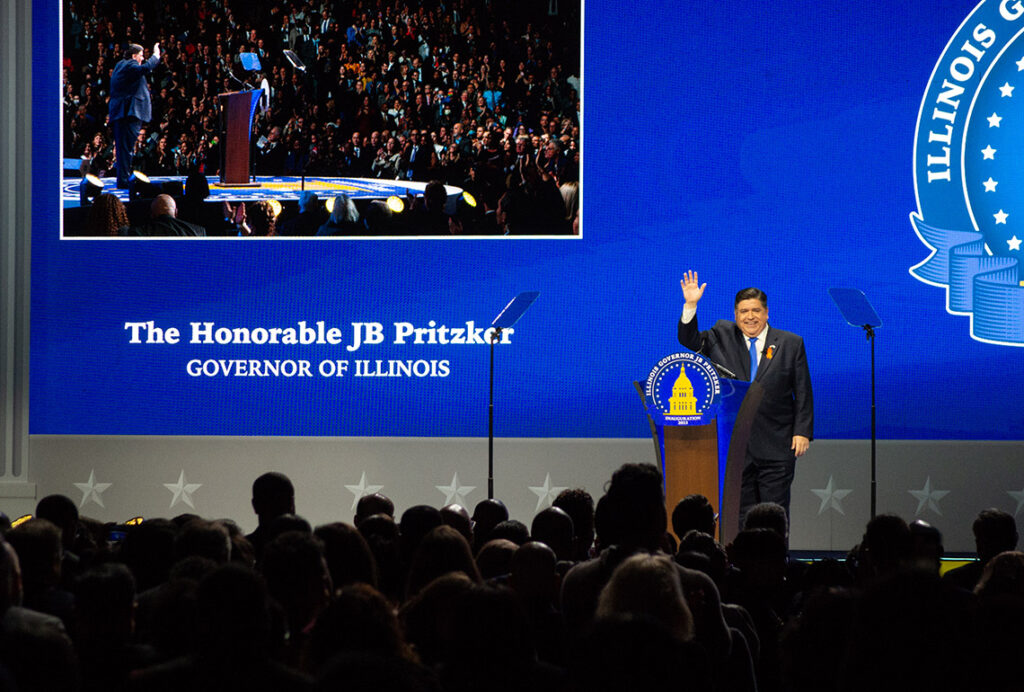
Gov. JB Pritzker will run for a third term as governor. He’s officially making the reelection announcement Thursday in a four-stop tour that spans Chicago, Rockford, Peoria and Springfield.
Should Pritzker win and serve a full term, he would become the only three-term Democratic governor in Illinois’ history.
“I’m running for re-election to protect our progress and continue solving the problems we face,” he said in an announcement video. “I love this state, and it’s the honor of my life to serve as your governor – to help lead through the most challenging of times and celebrate the most joyful ones together. I’m ready for the fight ahead.”
Pritzker has not yet announced a running mate to replace Lt. Gov. Juliana Stratton, who is running for U.S. Senate in 2026.
The state GOP issued a statement saying Pritzker should be “fired not re-hired.”
“He’s prioritized illegal immigrants over Illinois families, hiked taxes, and rammed through the largest, most bloated budget in state history,” ILGOP Chairman Kathy Salvi said in a statement.
The governor’s political future has been the topic of significant speculation, especially since he was shortlisted for former Vice President Kamala Harris’ running mate search last summer in her campaign for the White House. That and his vocal and frequent condemnations of President Donald Trump have fueled speculation of a presidential run in 2028.
The announcement that he will run for governor does not prohibit a future presidential run, because governor and president are not up in the same election cycle.
Several Republicans have announced plans to run for governor. DuPage County Sheriff James Mendrick said he would run earlier this year. Mechanic and Posen Park District Commissioner Phil Perez and businessman Joe Severino have also publicly said they are running, while Cook County GOP Chair Aaron Del Mar is also mulling a run.
Capitol News Illinois will cover the Chicago and Springfield events and have full coverage later today.
Capitol News Illinois is a nonprofit, nonpartisan news service that distributes state government coverage to hundreds of news outlets statewide. It is funded primarily by the Illinois Press Foundation and the Robert R. McCormick Foundation.
The post Pritzker announces reelection campaign appeared first on Capitol News Illinois.
Attorney General Raoul joins lawsuit challenging Trump’s termination of federal grants
Capitol News Illinois
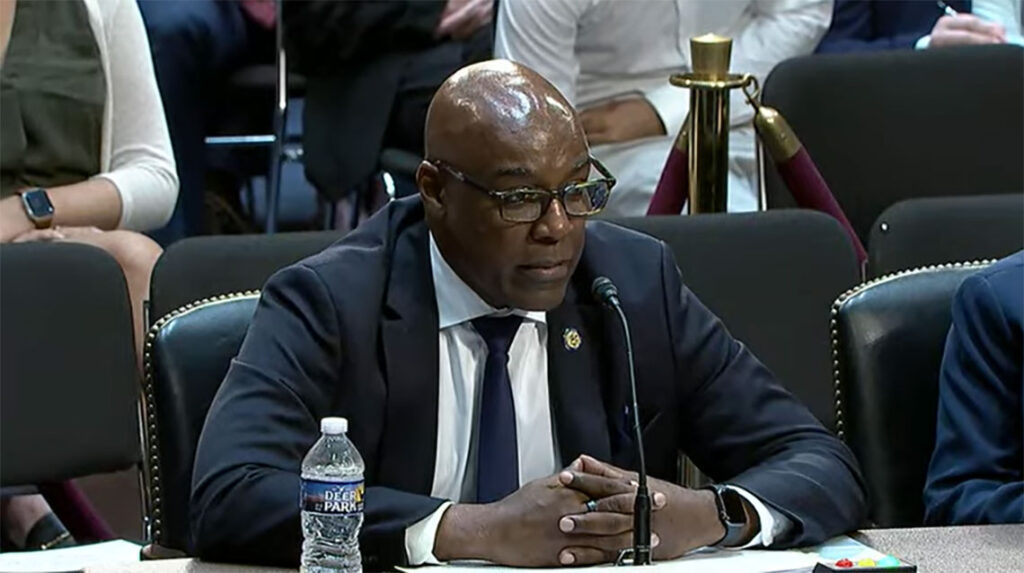
SPRINGFIELD – Attorney General Kwame Raoul announced this week he has joined another multistate lawsuit challenging the Trump administration’s decision to withhold billions of dollars in federal funds that had previously been approved for states and other grantees.
The complaint, filed Tuesday in U.S. District Court in Massachusetts, challenges several actions the administration has taken since Trump returned to office Jan. 20 that involved terminating federal grants that had previously been approved by various agencies.
Each of those actions, the lawsuit argues, were based on a misuse of a single clause in one regulation under the federal Office of Management and Budget. That clause allows agencies to terminate a grant if the agency determines the award “no longer effectuates the program goals or agency priorities.”
“The Trump Administration has claimed that five words in this Clause — ‘no longer effectuates . . . agency priorities’ — provide federal agencies with virtually unfettered authority to withhold federal funding any time they no longer wish to support the programs for which Congress has appropriated funding,” the lawsuit alleges.
The suit is one of more than a dozen Raoul has joined as part of a coalition of Democratic attorneys general who have been battling the administration since Trump’s second inauguration in January.
Speaking Monday to a congressional panel made up of Democratic members of the U.S. House and Senate judiciary committees, Raoul joined three other members of that coalition to explain their litigation campaign.
“Whether or not I disagree with President Trump on his policy agenda, he must act in a lawful way that is consistent with the Constitution and the laws that Congress has enacted,” Raoul said. “Unfortunately, the president and his administration have chosen, with many of their actions, to ignore the Constitution and federal law. And when constitutional guarantees are ignored, all Americans are at risk.”
Grants affected by cuts
The lawsuit challenges three specific funding cuts that have directly affected the state of Illinois. Those include:
The U.S. Department of Agriculture’s decision in March to halt reimbursements under the Local Food Purchase Assistance Program, which provided funding for nonprofit organizations to buy locally grown food products from farmers for free distribution to vulnerable communities.
A decision by the Federal Emergency Management Agency to terminate two Shelter and Services Program Grant awards to the Illinois Department of Human Services totaling $29 million. The money was intended to reimburse Illinois for the cost of providing food, shelter and medical care to migrants whom the U.S. Department of Homeland Security had released to relieve overcrowding at federal detention facilities.
And a decision in May by the U.S. Department of Labor to terminate grants totaling $28.8 million to the Illinois Department of Employment Security for modernization of the state’s unemployment insurance system.
According to the lawsuit, OMB first adopted the regulation in 2020, near the end of the first Trump administration. At the time, according to the Federal Register, the agency said the clause was intended to allow agencies to end a grant program under specific conditions, but that it was not intended to let them terminate grants “arbitrarily.”
The clause was later updated to include its current wording in 2024, near the end of Joe Biden’s administration. However, according to the complaint, “OMB never suggested, in either the 2020 or 2024 rulemaking, that a grant could be terminated even though the grant was continuing to serve the very goals for which the monies had initially been awarded, merely because the agency’s priorities shifted midway during the use of the grant—let alone with no advance notice.”
As of Wednesday, the case had not yet been scheduled for a hearing.
Capitol News Illinois is a nonprofit, nonpartisan news service that distributes state government coverage to hundreds of news outlets statewide. It is funded primarily by the Illinois Press Foundation and the Robert R. McCormick Foundation.
The post Attorney General Raoul joins lawsuit challenging Trump’s termination of federal grants appeared first on Capitol News Illinois.
Illinois’ soil conservation funding stagnates amid recent high-profile dust storms

Capitol News Illinois
SPRINGFIELD —– Three main factors contribute to the formation of Midwest dust storms: strong winds, dry soil in farm fields and large amounts of loose soil.
That’s according to Andy Taylor, the Science and Operations officer at the National Weather Service’s office in Lincoln. He said these are key ingredients that meteorologists, farmers and experts in the agricultural community have found cause dust storms when they converge.
On May 16, Chicago saw its first major dust storm since the Dust Bowl, which stretched from Texas to New York in the early 1930s and deposited 300 million tons of soil across the nation – 12 million tons of which settled in the Chicago region, according to the Bill of Rights Institute. The storm in May dropped visibility in the city to near zero as wind gusts blew over 60 mph at times, according to the National Weather Service.
Taylor said the atmospheric environment that day was more characteristic of the dry environments in the High Plains or Southwest U.S., not the Midwest. As rain began to fall near Bloomington, it quickly evaporated and cooled the atmosphere, creating strong pockets of wind that began to move North. And as winds sped up, the storm began to pick up and move dry and loose soil from fields it passed over, which created the dust storm.
“The type of dust storm event that we had that affected the Chicago area, I wouldn’t necessarily take that occurrence as saying we’re going to see an increase in those type of events from this point on,” he said. “Although, anytime you see all those ingredients come together, we certainly could see that again.”
Soil conservation funding ‘deprioritized’
While there were no deaths due to the storm in Chicago, a major dust storm that occurred in central Illinois on a portion of I-55 resulted in a multi-car pileup that took the lives of eight people and injured dozens more in May 2023.
That dust storm also dropped visibility to zero on the stretch of the interstate between Farmersville and Divernon, and was again caused by dry, loose soil being picked up and moved by winds.
Although Taylor said dust storms are not new to Illinois – as his office has documented events back to the 80s – most of the storms don’t move across vast expanses of the state. Instead, he said they often occur in more localized areas, like the storm near Divernon in 2023.
“When we’re seeing the right weather-related factors coming together and the ground is fairly dry, which matches up with loose soil so we know we’re going to be more prone to blowing dust, we coordinate with partners in the agricultural community to determine when we might anticipate those blowing dusts events,” Taylor said.
The Association of Illinois Soil and Water Conservation Districts has been lobbying for increased funding for additional district employees. This year’s state budget allows for each district to staff one full-time employee, which AISWCD Executive Director Eliot Clay called “wildly inadequate” as he said each district needs at least two.
“I really, honestly think conservation funding has been deprioritized,” he said.
What do soil and water conservation districts do?
Soil and water conservation districts began to crop up across the U.S. in the late 1930s as a response to the Dust Bowl and Congress’ subsequent declaration of soil and water conservation as a national priority. According to the Association of Illinois Soil and Water Conservation Districts, that declaration prompted then-President Franklin D. Roosevelt to recommend legislation to state lawmakers that would enact districts in every state.
Illinois has 97 districts, or nearly one district for every county in the state. Employees of the districts are responsible for a variety of tasks – including assessing farmland, educating farmers about conservation practices and connecting farmers with grants from the state and federal government. These all play a key role in the association’s mission of protecting Illinois’ natural resources.
“Unlike a group like the Department of Natural Resources or the EPA or even the Department of Agriculture, SWCDs are not a regulatory body,” Clay said. “We are not going out there and enforcing rules and laws on people, we’re just trying to help farmers do better. And that’s the reason why a lot of farmers rely on SWCDs, is because they do not see us as like, the ‘government’ coming in and telling them, ‘this is how you’re going to do your operation.’”
Soil conservation funding stagnates
The fiscal year 2026 budget signed by Gov. JB Pritzker last week allots $7.5 million to the state’s SWCDs – which Clay said is the same amount the association received in the previous fiscal year. However, he said that number was a $1 million cut from the FY24 budget allocation.
Read more: Pritzker signs $55.1B state budget reliant on $700M of new taxes | New taxes on sports bets, nicotine products as Democrats pass $55.2B budget
Of that $7.5 million, $3 million will go to cost-share grants, which act as reimbursements to farmers for the costs of implementing both state and federal conservation policies, such as cover crops. The remaining $4.5 million will go to administrative costs.
Clay said the breakdown of that $4.5 million provides $40,000 to each Soil and Water Conservation district – meaning that every district will have enough funds to pay one full-time employee. He called the salary “wildly inadequate” for the district employees, most of whom have college degrees.
“$40,000 – and that’s supposed to include benefits, so their take-home is less than that – is barely enough, I mean I would say it’s not enough even for one person” Clay said. “And it’s hard to keep people and incentivize people to come to work when there’s not the kind of money there that there should be.”
In addition, Clay said each district needs two full-time employees to be fully-staffed – one to make on-site visits to farms and one to coordinate schedules, receive phone calls and emails, and staff the office.
He said in recent years, the association was told by both the Department of Agriculture and the governor’s office that if they wanted more funding, they would have to advocate for the money to individual lawmakers outside of budget negotiations.
“I don’t know of any other agency or subsect of an agency that has to, on their own, go to the Capitol and get money,” he said. “That’s very peculiar to me and is something I’ve been trying to wrap my head around, and I have not gotten a good explanation from anybody.”
The governor’s office did not respond to a request for comment.
Over the past two years, Clay said the association unsuccessfully lobbied for $10.5 million in annual funding.
“The bigger question I’m left with after being the executive director over the past six months and witnessing it from this angle is, what does the legislature and the administration value?” Clay said. “It really gets to bigger questions about how the state has dealt with conservation funding in general for the last 20-plus years.”
Soil conservation efforts and farming practices
Kevin Brooks, a commercial agriculture educator at the University of Illinois Urbana-Champaign, said the agriculture community has identified practices farmers can use to reduce the amount of dry, loose topsoil in their fields.
“Measuring the humidity level as a cause is not the issue,” Brooks said in an interview with Capitol News Illinois. “I won’t say it’s not 100% not about the weather, but this is primarily about tillage.”
One suggestion he made was for farmers to till their fields less frequently and instead resort to strip-tilling or using no-till strategies whenever possible to reduce the amount of loose topsoil in fields.
Strip-till is a tilling practice where only narrow rows of a field where seeds will be planted are tilled, leaving the rest of the field untouched. While there are many short- and long-term benefits to strip-tilling, no-till practices often don’t seem to benefit farmers right away but do often have long-term advantages, Brooks said.
Rep. Charles Meier, R-Okawville, farms 1,500 acres in southern Illinois with his family, including corn, wheat, beans, hay, and beef cattle. He said most crops are already minimally tilled by farmers.
State Rep. Charlie Meier, R-Okawville, shows clover growing in a field on his Washington County farm in 2022. In 2009, Meier was awarded the State of Illinois Conservation Farm Family of the Year. (Capitol News Illinois file photo by Beth Hundsdorfer)
“I’m 66 years old and we never no-tilled when I was a kid,” he told Capitol News Illinois. “All of our conventional soybeans are no-tilled now, all of our wheat is done by minimal-till, and our corn is all by minimal-till now.”
He said he’s in frequent contact with his SWCD, including a call on Monday with his district’s employee, and criticized Democratic leadership’s funding priorities, such as subsidies for renewable energy.
“They’re not funding the nuts and bolts of Illinois conservation,” Meier said. “I’m not against wind and solar but they don’t pay for themselves and they’re making us taxpayers pay for them.”
Another main practice Brooks recommended farmers employ was planting cover crops, which are crops planted after harvest not for their produce, but for their benefits to the soil. Cover crops can be planted after a fall harvest for a variety of benefits, including to preserve topsoil through the winter, increase organic matter in the soil and dry the field earlier in the spring.
Brooks also attributed recent dust storms to the invention of high-speed discs – a tillage attachment with many more disks than normal tillage attachments, which tills at faster rates. He said these disks have taken tillage speeds from around 4 mph to over 10, and that farmers in Illinois quickly amassed these machines during and after the COVID-19 pandemic, due to the pandemic relief funds they received.
“In theory, they’re supposed to be a kind of conservation because they don’t go into the ground very deep,” Brooks said. “But they literally turn the top several inches of a farm field into powder.”
Dust storm driving tips
Andy Taylor, from the National Weather Service, recommended safety tips for drivers who find themselves caught in a dust storm.
“If you’re caught in dust with extremely low visibility, the advice is to pull completely off the road, turn off your heads and take your foot off the brake,” he said. “Which may sound kind of counterintuitive in a way, but the reason for doing that is because if you have your lights on, people coming into the dust may think you’re moving. They may see your taillights and think ‘Oh look, someone I can follow’ and that may exacerbate accidents and pileups.”
He also advised drivers who know there is risk of a potential dust storm to travel ahead of the storm or to delay travel until later in the day, if possible.
Capitol News Illinois is a nonprofit, nonpartisan news service that distributes state government coverage to hundreds of news outlets statewide. It is funded primarily by the Illinois Press Foundation and the Robert R. McCormick Foundation.
The post Illinois’ soil conservation funding stagnates amid recent high-profile dust storms appeared first on Capitol News Illinois.
Challenges persist for women, minorities breaking into Illinois’ skilled trades
Capitol News Illinois
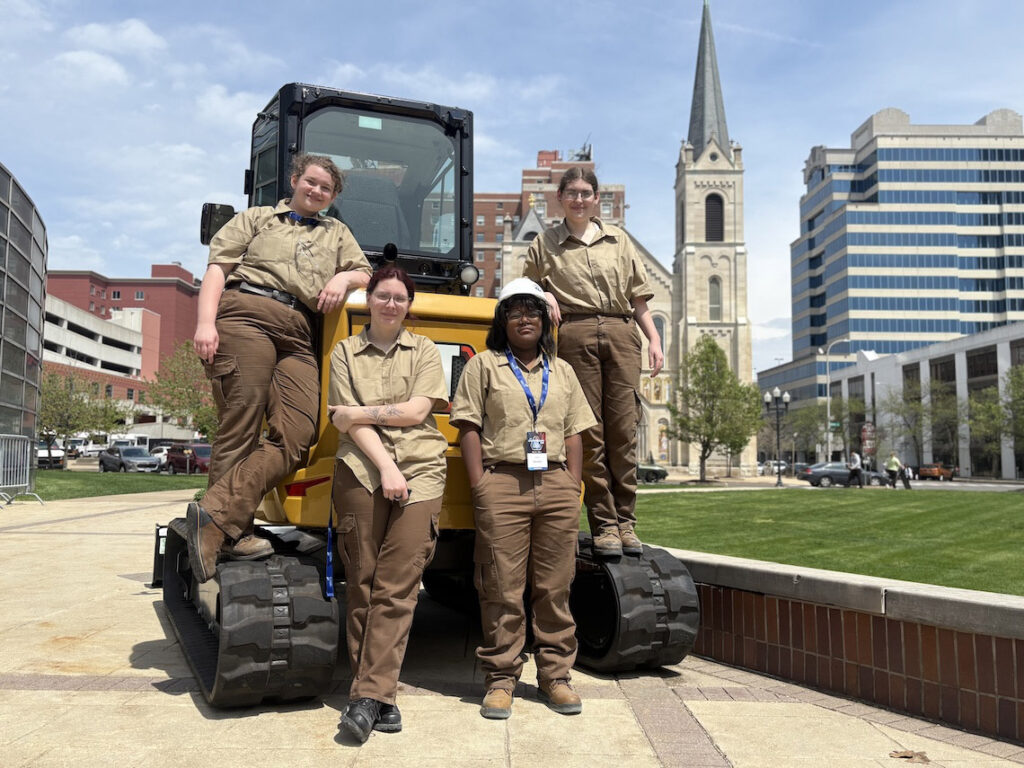
PEORIA — For 60 years, SkillsUSA Illinois has held workforce development competitions for young people entering the trades. For 60 years, there has never been an all-female team competing in the architecture and construction team competition.
Until now, that is.
This April, students competed at the Peoria Civic Center in a bid to showcase their trades work skills, from barbering and cosmetics to house building and fixing cars. First-place winners in the Illinois competition earned eligibility to travel to Atlanta to compete in the national SkillsUSA Championships this week.
Amid the fanfare and cheer, however, the state competition highlighted some of the persistent challenges facing the Illinois workforce. As employers continue searching for skilled tradespeople to combat national worker shortages, entry into fields like construction remains strikingly low for women and people of color, particularly in higher paying and leadership positions.
SkillsUSA Illinois’ first all-girls team — Aubrey Levin, Kayhl Miles, Catelin Wesley and team captain Amyla Walls — did not know they were breaking boundaries until after they had finished their competition this spring in Peoria.
The team from the Bloomington Area Career Center reacted to the news with shocked laughter, followed by near immediate dread as they anticipated the heightened expectations and scrutiny of their work this title would bring.
“They’re going to be like, ‘You’re the first all-female team,’ and I’m going to be like, ‘Please don’t look at my electrical,’” Levin said, half laughing.
Although it may seem late for the existence of the first all-female team, it is consistent with the construction industry demographic trends in Illinois. Over the past 10 years, women have held fewer than one in 10 construction jobs. Prior to 2021, fewer than 5% of new construction apprentices in Illinois were women, according to data from the U.S. Department of Labor.
View Chart in New Tab
The problem is a national one. Although 2020 saw the largest number of women working in trades, only one in 20 U.S. construction workers was a woman, according to a report from the Institute for Women’s Policy Research.
Male construction workers were also better compensated than female construction workers in 2024, even for entry-level apprenticeship positions. New male apprentices earned an average wage of $23.76 per hour, 36 cents more than the average pay for their female counterparts.
The discrepancy grew for those who completed their apprenticeships, with an average hourly gender pay gap of $1.41.
Participation rates for workers of color also remained low, with white apprentices accounting for over three quarters of new registered apprenticeships in 2024.
View Chart in New Tab
Apprentices of color earn less on average than white apprentices, both at entry and completion. In 2024, newly registered Black apprentices earned on average 36 cents less in hourly wages than their white counterparts. For those who completed apprenticeships, the gap grew to almost $4 per hour.
As limited as the progress is, much of it has come in the last few years, according to Jayne Vellinga, executive director of the non-profit Chicago Women in Trades.
Vellinga attributes the momentum to “a perfect storm” of an expected construction boom and worker shortage, infrastructure investment and federal leadership on diversity initiatives.
“It did get people to think sort of outside the box in terms of how they were going to recruit a sufficient workforce to meet a large number of projects projected to come to the area and the retirement of experienced workers,” Vellinga said.
Since 2021, the state has invested heavily in the Illinois Works pre-apprenticeship program, which seeks to create a “qualified talent pipeline of diverse candidates in the construction and building trades.” Gov. JB Pritzker’s office announced an additional $19 million funding allocation to the program in April.
However, Vellinga said she is seeing a rollback in progress, pointing to President Donald Trump’s decision to rescind an executive order that had been in place since enacted by President Lyndon B. Johnson in 1965, which prohibited federal contractors from engaging in employment discrimination on the basis of race, color, religion, sex, sexual orientation, gender identity or national origin.
“I don’t know how it’s going to impact opportunities for women, but there is definitely a change in narrative also at the federal level, from ‘we need diversity on publicly funded projects’ to ‘don’t engage in diversity, equity and inclusion activities,’” Vellinga said.
In addition to outright hiring discrimination, Vellinga said many women’s careers are limited by gender stereotypes and harassment on job sites.
“Some women are doing well and are having an opportunity to move up, and other women do face discrimination, are unable to cobble together enough work during the year to make it a viable career, or perhaps the works site is so hostile that they walk away from it,” Vellinga said.
The hostility is something that the team of high schoolers was already familiar with.
House built by the all-girls team during the SkillsUSA Illinois Championships in April. (Medill Illinois News Bureau photo by Maggie Dougherty)
As SkillsUSA Illinois’ first all-girls team spent two days using their carpentry, roofing, electrical and plumbing skills to build a small house, they were subjected to disparaging, gender-based comments, which the team diplomatically referred to as “construction language.”
It is not something unique to this competition, they said. Levin recalled asking women in the construction unions about their advice on entering tradework. They told her she would need to have thick skin.
“Even now?” Levin asked. Especially now, they replied.
The team described their male peers making jokes with double meanings, and then getting irritated if the girls did not laugh.
“You’re like a bad person for not laughing at a really bad joke,” Miles said.
One such joke came at Levin’s expense, while she was standing on a ladder and trying not to cry from pain after being hit in the back by something on site. A team nearby pointed and laughed at her, she said. A teacher walked by and told Levin to let it out if she needed to.
“Not here,” Levin said. “You can’t cry, because then you’re soft.”
On the other hand, if they got mad, Levin said, a male peer would inevitably ask, “What, are you on your period or something?”
The girls said they are held to a higher standard, as any sign of emotion will be used to prove that they are incapable of matching their male peers. If they stop for a second, they will be called lazy or asked whether they broke a nail, the team said. The job requires a strong poker face, Miles added.
And, Walls said, their judgment is constantly called into question. She recounted a male peer repeatedly correcting her and speaking to her like a child, before eventually concluding she was correct all along.
A national survey of women exiting the trades found that the most common reason women left the trades was due to harassment and lack of respect; nearly half of those who left or had strong intentions to leave marked this as their reason for doing so. Over a quarter of women in the study also indicated that they frequently or always saw sexually explicit and racist graffiti; a fifth responded the same for anti-semitic graffiti.
The second most common reason for exiting, selected by over 40% of those with strong intentions to leave, was a lack of prospects for promotion and advancement. The least selected option was that the work was too physically demanding.
Manny Rodriguez looks down the street in front of Revolution Workshop. (Medill Illinois News Bureau photo by Maggie Dougherty)
The perception that women are less competent exacerbates other structural barriers to employment, according to Manny Rodriguez, executive director of the Chicago-based nonprofit Revolution Workshop, which offers workforce development programs targeted at communities of color who have been underrepresented in the trades.
Construction is a tough business for anyone, Rodriguez said. A recent paper by the RAND Corporation found that almost 40% of apprentices drop out of their programs before completion, regardless of race or gender, with almost half of those dropping out in the first six months.
Part of the issue is stability of work, such as making it through the cold season when opportunities for new construction projects dip, according to Rodriguez.
“In the wintertime, you can’t pour concrete. You can’t weld. If the structure is not already up, you pretty much got to wait until spring,” Rodriguez said.
Employer biases mean that women and people of color may be hired for jobs, but not retained for the next one, resulting in more instability for those workers, Rodriguez said. As a result, apprenticeship completion rates for women and people of color are even lower.
In 2023, women accounted for 4.5% of U.S. construction apprentices, but 6% of cancellations, according to U.S. Department of Labor data. A study by The Institute for Construction Employment Research found that over the last two decades, around two-thirds of Black construction apprentices did not complete their programs.
Hispanic workers have maintained a high share of workforce participation in the construction industry, but often in lower paying, physically intensive roles, resulting in higher rates of both fatal and nonfatal injuries on the job.
“Latinos are represented in construction, but where?” Rodriquez asked. “I’m not the electrician, I’m not the plumber, I’m not the heavy equipment operator, I’m not the pipe fitter. So you got no problem breaking my brown body, but you’re not letting me do the other things.”
Many women and people of color who do make it in construction attribute their success, at least in part, to having others who look like them in the field.
A competitor focuses during the SkillsUSA Illinois TeamWorks competition. (Photo courtesy SkillsUSA Illinois)
In the survey of tradeswomen, almost two thirds of respondents identified mentorship from senior tradeswomen as important to their recruitment and advancement. It was something the all-girls team said was valuable as well.
“If we passed a construction site, and they were working, I always got excited when I saw a girl,” said Miles. “I was happy about it, because I’m like, I’m not the only one who actually enjoys this.” Other members of the team agreed.
But Walls, the only Black member of the team, sees fewer women in construction who look like her.
“I don’t see a lot of women, let alone,Black women, doing construction,” Walls said. “I wish I had someone to relate to.”
That is part of the reason why breaking this barrier was important, for the girls on the team and for those who will come after them.
“It doesn’t matter if we win,” Wesley said. “The fact that we have taken a step like this for us, but also for other females in the trades, it’s a huge deal.”
Maggie Dougherty is a graduate student in journalism with Northwestern University’s Medill School of Journalism, Media, Integrated Marketing Communications, and a fellow in its Medill Illinois News Bureau working in partnership with Capitol News Illinois.
Capitol News Illinois is a nonprofit, nonpartisan news service that distributes state government coverage to hundreds of news outlets statewide. It is funded primarily by the Illinois Press Foundation and the Robert R. McCormick Foundation.
The post Challenges persist for women, minorities breaking into Illinois’ skilled trades appeared first on Capitol News Illinois.
Pritzker OKs changes to Prisoner Review Board following years of controversy
Capitol News Illinois
Gov. JB Pritzker signed a new law Friday to make a series of changes to the Prisoner Review Board after it released a man who would go on to commit murder, leading to intense scrutiny in Springfield.
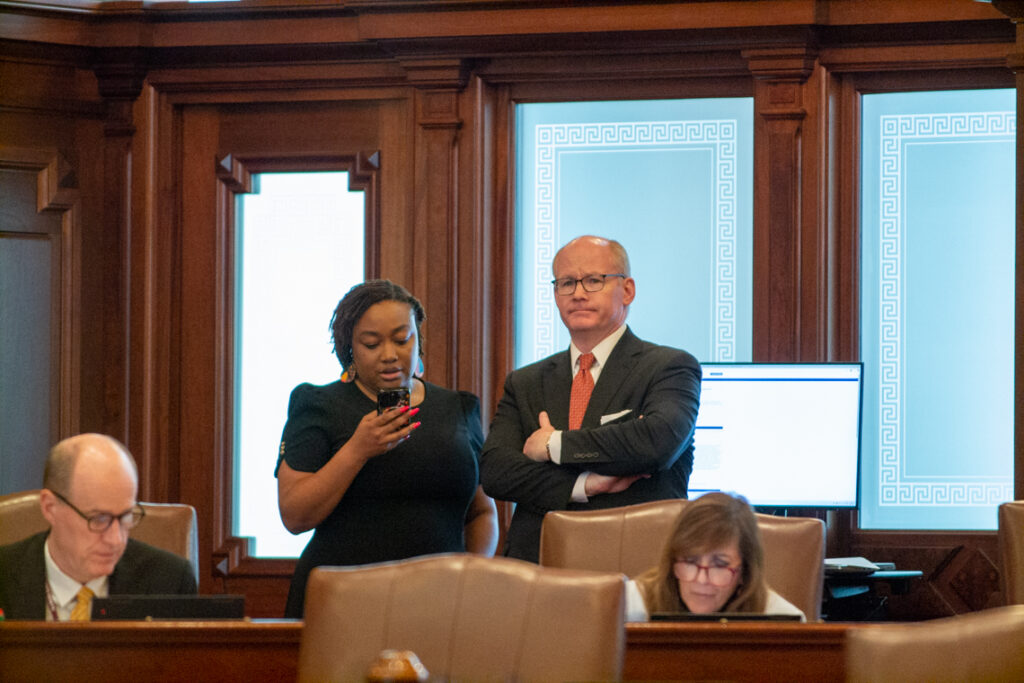
Pritzker signed Senate Bill 19, which contains changes designed to include victims’ participation in Prisoner Review Board decisions and ensure more board members have relevant law enforcement or judicial experience.
The law gives victims the right to file impact statements ahead of hearings, provides them with additional notice when their offender is granted early release, and allows them to seek an order of protection against an offender who is incarcerated.
It also creates the Office of the Director of Victim and Witness Services within the PRB, which would ensure the board complies with victims’ rights. The measure also mandates the board provide victims with contact information for the State Victim Assistance Hotline.
“The bulk of this bill is focused on … making sure that victims, survivors, are more engaged in the process at PRB because unfortunately, too often, we’ve heard from victims and family members that they simply haven’t been given a voice in this process,” bill sponsor Rep. Will Guzzardi, D-Chicago, said when the bill passed the House last month.
Read more: Prisoner Review Board reform bill clears Senate
The bill was approved by the Senate in April on a 33-22 vote, with some Democrats opposing it. The House voted 74-37 along party lines to send the bill to Pritzker’s desk in May. Republicans, who had for months been calling for broader reforms, criticized the bill.
Pritzker’s signature comes just two weeks after a man released by the PRB was found guilty of murdering 11-year-old Jayden Perkins at his Chicago home in March 2024.
Crosetti Brand was released from prison in 2023 after serving a sentence for a domestic violence conviction. After his release, Brand began threatening a former partner, Laterria Smith, and showed up to her home in February 2024, according to the Chicago Sun-Times. Brand was sent back to prison for violating the conditions of his release, and Smith filed for an order of protection. But a Cook County judge denied the order because Brand was behind bars.
On March 12, 2024, the PRB voted to release Brand citing a lack of evidence to keep him behind bars, the Sun-Times reported. The next day, Brand confronted Smith at her home and stabbed her and her son, Perkins, multiple times. Smith survived but Perkins did not. Brand was found guilty of first-degree murder and 16 other counts earlier this month.
Two board members, including the chair, resigned after Perkins’ death. Smith sued the board for negligence in March.
Read more: Prisoner Review Board sued for negligence a year after released prisoner killed Chicago boy
The case put even more scrutiny on the board, which was already in the spotlight over other controversial decisions to release people from prison.
In May 2024, the Senate unanimously passed a bill that would have made a series of reforms to the board, including requiring that certain meetings be livestreamed and board members receive additional training. The bill appeared ready to pass the House with 76 members signing on as cosponsors. But the bill was never called for a vote in the final hours of session after Pritzker had concerns about the feasibility of the livestreaming requirements and lack of funding for the board.
Read more: Stalled bills: ‘Dignity in Pay Act,’ Prisoner Review Board changes fail to move
Instead, lawmakers moved forward with the legislation signed by Pritzker on Friday, which Republicans opposed saying it doesn’t go far enough to meaningfully reform the board.
“After the Governor ignored our consistent and clear warnings, a horrible murder was triggered by a terrible decision by the Prisoner Review Board,” Sens. Jason Plummer, R-Edwardsville, and Steve McClure, R-Springfield, said in a statement. “Now, instead of listening to a bipartisan coalition at the capitol, he and his far-left allies pushed through a bill that makes it more difficult for the PRB to keep violent criminals off the streets.”
The new law also attempts to make the board more professional, Senate President Don Harmon, D-Oak Park, the Senate sponsor of the bill, said in April. It gives board members eight-year terms instead of six so they can be more focused on their decisions rather than their reappointment, he said. It also changes qualifications for board members, requiring seven out of the 15 board members have at least five years of experience as a law enforcement officer, parole officer, prosecutor, criminal defense attorney or judge.
Republicans opposed creating longer terms for board members, saying it reduces Senate oversight of the board and fails to hold board members accountable for decisions. The Senate is responsible for confirming the governor’s appointments to the board.
Capitol News Illinois is a nonprofit, nonpartisan news service that distributes state government coverage to hundreds of news outlets statewide. It is funded primarily by the Illinois Press Foundation and the Robert R. McCormick Foundation.
The post Pritzker OKs changes to Prisoner Review Board following years of controversy appeared first on Capitol News Illinois.
Advocates await action on bill protecting rights of immigrant students in Illinois
Capitol News Illinois
SPRINGFIELD — Immigration rights advocates in Illinois are anxiously awaiting the governor’s signature on legislation aimed at protecting K-12 students who may be in the country without legal authorization from being denied access to a free public education.
House Bill 3247, known as the “Safe Schools for All Act,” passed both chambers of the General Assembly in the final days of the spring session. It would prohibit schools from denying any child access to a free public education based on their actual or perceived immigration status, or that of their parents.
It would also prohibit schools from disclosing, or threatening to disclose, information about a student’s immigration status or the status of a person associated with the child. And it would require schools to develop procedures for reviewing and authorizing requests from law enforcement agents attempting to enter a school or school facility.
The bill is intended to buffer K-12 students in Illinois from efforts by the Trump administration to launch mass deportations of noncitizens living in the United States without legal authorization.
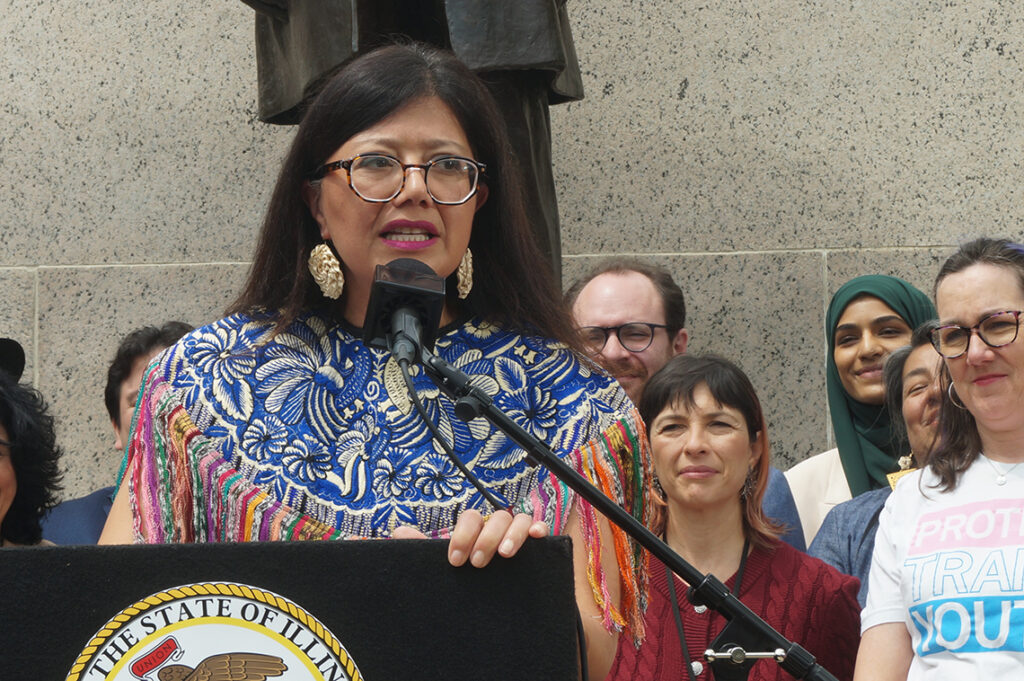
Speaking at a May 7 rally outside the Statehouse, where Democratic lawmakers and immigration rights advocates protested an appearance in Springfield that day of Homeland Security Secretary Kristi Noem, state Sen. Karina Villa, D-West Chicago, the chief Senate sponsor of the bill, vowed that Illinois would remain defiant of Trump’s political agenda.
“We are also going to protect our children,” she told the crowd gathered around a statue of Abraham Lincoln. “We’re going to make them feel safe in our schools by passing HB 3247. We are going to unite and we are going to get that done.”
On Jan. 20, the first day of the new administration, the Department of Homeland Security rescinded a Biden-era policy that prevented federal agents from conducting immigration enforcement actions in certain “sensitive” areas, including schools, churches and hospitals.
Immigrant rights advocates demonstrate outside the Illinois Statehouse for legislation protecting rights of noncitizens, including a bill meant to ensure the right of a free public K-12 education, regardless of a child’s immigration status. (Capitol News Illinois photo by Peter Hancock)
Fred Tsao, an attorney for the Illinois Coalition for Immigrant and Refugee Rights, said during an interview that the policy change has had a chilling effect on the immigrant community, making many afraid to even show up in school.
“We have seen a decline in student participation, particularly among heavily Latino schools after this inauguration,” he said. “So we want to make sure that schools are prepared in the events that federal agents, or for that matter other law enforcement, come to their door in a nonemergency situation.”
Tsao said advocates have also been concerned about possible changes in other legal protections for immigrant students that so far have only been expressed in judicial opinions.
In 1982, the U.S. Supreme Court struck down a Texas statute that authorized local school districts to either deny enrollment to children who had not been “legally admitted” to the United States, or to charge them tuition, holding the law violated the Equal Protection Clause of the 14th amendment.
Tsao, however, said there have been attempts in other state legislatures, including earlier this year in Tennessee, to pass legislation that would challenge that 43-year-old ruling. And while the effort in the Tennessee legislature fell short this year, he said advocates in Illinois wanted to act now to make sure the rights of immigrant students are protected in state law, should the Supreme Court precedent ever be overturned.
“Fortunately, our counterparts in Tennessee, the immigrant advocacy organizations and community leaders, bombarded the General Assembly with advocacy work and were able to persuade a number of legislators to vote against this legislation when it came down to it,” he said. “But you know, that’s not to say that folks in Tennessee or folks in other states won’t try again.”
As of Wednesday, June 18, HB 3247 had not yet been sent to Gov. JB Pritzker.
Capitol News Illinois is a nonprofit, nonpartisan news service that distributes state government coverage to hundreds of news outlets statewide. It is funded primarily by the Illinois Press Foundation and the Robert R. McCormick Foundation.
The post Advocates await action on bill protecting rights of immigrant students in Illinois appeared first on Capitol News Illinois.