Posts by Newspaper Staff
PZC Briefs: Solar Farm in Crete, Post-Fire Permit for Troy Business, and More

The Will County Planning and Zoning Commission handled several other cases during its July 1 meeting, including a new solar farm, a temporary permit for a fire-damaged business, and routine residential variances. Crete Township solar farm gets green lightThe commission recommended a special use permit for a 3.5-megawatt commercial solar facility on a 21-acre property…
Read MoreIn Brief: Capital & IT News
Here are other highlights from the Will County Capital Improvements & IT Committee meeting on Tuesday. Successful Fire Drill at County BuildingThe Will County Office Building held its first full fire drill under the current facilities director, resulting in a safe and orderly evacuation in 3 minutes and 40 seconds, well under the five-minute target…
Read MoreWill County Finance Committee July 1 Meeting Briefs
Bond Refinancing Advances: Finance Committee approved an ordinance authorizing up to $200.8 million in bond refinancing that could save taxpayers more than $716,000. The measure moves to the full County Board for July 17 consideration. Budget Performance Update: County corporate fund shows $58.3 million in revenue through May, representing 21.3% of annual budget, while expenses…
Read MoreWill County Public Works Committee Juliy 1 Meeting Briefs
ROAD CONTRACTS APPROVED Austin Tyler Construction Contract: The committee approved a $691,544 contract with Austin Tyler Construction for resurfacing River Road from East Frontage Road to Prairie Creek Bridge and Strip Mine Road from IL Route 129 to IL Route 53. Work begins in August with completion expected by October. Washington Township Resurfacing: Iroquois Paving…
Read MoreCBP data: Trump admin has released thousands of inadmissibles into U.S.
The Trump administration has released more than 13,000 inadmissible noncitizens into the U.S. in the first four full months of his administration who arrived at ports of entries (POEs) nationwide, according to U.S. Customs and Border Protection data evaluated by the Transactional Records Access Clearinghouse (TRAC), a nonpartisan organization founded at Syracuse University.
The data includes case-by-case CBP Office of Field Operations data reported at POEs nationwide in records TRAC obtained through Freedom of Information Act requests.
It excludes illegal border crossers reported by Border Patrol who were apprehended or encountered between ports of entry. It also excludes gotaways, those who evaded capture and illegally entered the country, also deemed inadmissible.
The Immigration and Nationality Act defines “inadmissible aliens” as “An alien present in the United States without being admitted or paroled, or who arrives in the United States at any time or place other than as designated by the Attorney General …” The law includes multiple categories and definitions related to public health and a range of crimes and circumstances, including national security and terrorism designations and associations.
“Noncitizens arriving at the United States by land, air and sea continue to seek entry to this country without adequate papers,” the TRAC report states. Since President Donald Trump was sworn into office in January and through the end of May, 50,071 foreign nationals “arrived at ports of entry and were initially found ‘inadmissible,’” according to the data published by TRAC.
“The Trump administration has not stopped all noncitizens without papers from entry,” the TRAC report states. As of the end of May 2025, 10,673 inadmissibles were paroled into the U.S.; an additional 2,351 were issued Notices to Appear before an immigration judge and allowed entry by CBP Office of Field Operations officers, TRAC says, according to the data it obtained.
The greatest number of inadmissables were released into the country by CBP OFO officers in San Diego and San Francisco; CBP OFO officers who issued the greatest number of NTAs were at Laredo and New York POEs, TRAC found.
When evaluating data from February through May, the greatest number of foreign nationals reported by CBP OFO officers at POEs were citizens of Mexico, Cuba, Philippines, Haiti, Canada, Venezuela, Ukraine, India, China, Honduras, Russia, Nicaragua, Guatemala, Colombia and El Salvador, according to the TRAC analysis.
The data includes everyone OFO determined was inadmissible and categorizes the reasons OFO gave for each designation and how they were processed. CBP provided data for most periods, TRAC said, however “CBP recently refused to release” some data it requested, and is “contesting this unlawful withholding.”
The data is categorized by country of origin, month and year, OFO location/POE, inadmissible entry details, gender, age, and other categories and subcategories.
Parole data refers to humanitarian, public interest or parole programs specific to countries.
Each category is searchable using different drop-down menus.
For example, in March 2025, 20,860 inadmissables were reported by CBP OFO officers nationwide. Among them, the greatest number were Mexicans (4,137), followed by Philippinos (2,693), Canadians (2,662), Indians (1,933) and Chinese (1,875).
Among them, the greatest number of inadmissibles released into the country in March were Mexican nationals: 1,548 were paroled into the country; 88 were released given NTAs to appear before a federal immigration judge, according to the data.
The large numbers of inadmissible Philippine, Indian and Chinese nationals are attributed to crew members of ships who didn’t have proper papers. Only 44 Philippino, 71 Indian and 76 Chinese nationals were paroled into the U.S. that month.
Of the 2,662 inadmissible Canadians, 93 were paroled into the U.S.; five were given NTAs. The majority, 2,481, were withdrawals, according to the data.
CBP OFO officers work at more than 300 POEs nationwide at international airports, land and seaports.
TRAC data includes more than 6 million foreign nationals designated as inadmissible by CBP OFO officers at POEs nationwide, from October 2011 to May 2025.
Pritzker selects former Deputy Gov. Christian Mitchell as running mate
Capitol News Illinois
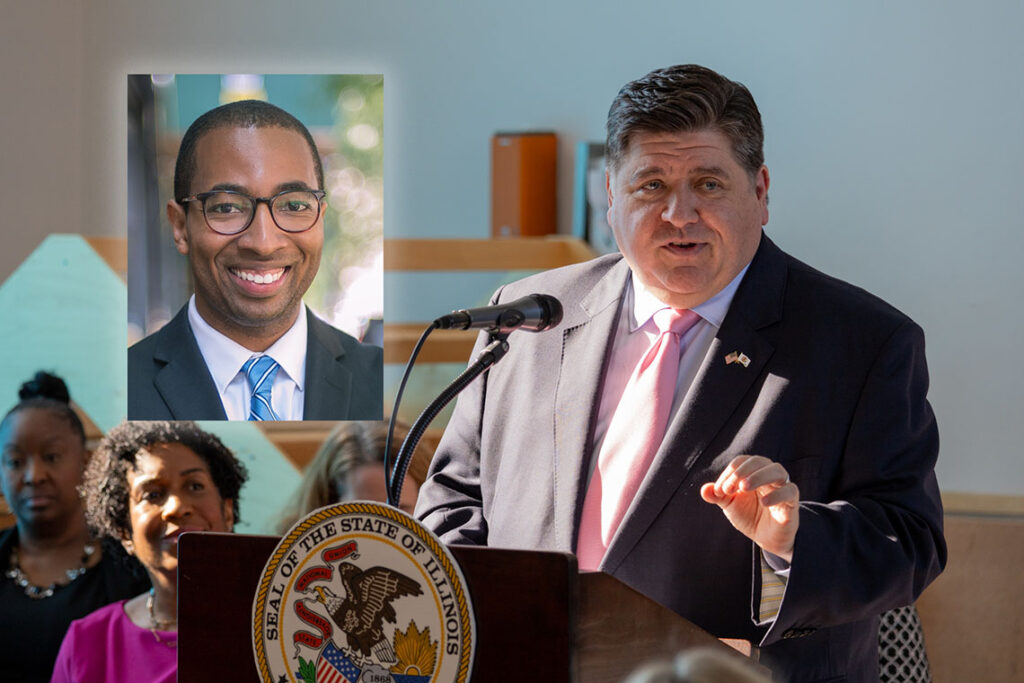
Gov. JB Pritzker announced Tuesday that former Deputy Gov. Christian Mitchell will be his running mate for the 2026 campaign.
Pritzker’s selection, made just days after announcing a third campaign for governor, comes from a close circle of trust in Pritzker’s administration. Mitchell previously served in the governor’s office as one of four deputy governors overseeing key projects in Pritzker’s first term.
“Christian Mitchell is a proven leader with deep experience, steady judgment, and an unshakable commitment to the working families of Illinois,” Pritzker said in a statement. “Whether it’s transforming our clean energy future, rebuilding our infrastructure, or keeping our communities safe, Christian has been a force behind so much of our progress. I couldn’t ask for a better partner to continue delivering results for the people of Illinois.”
Mitchell, 38, will replace Lt. Gov. Juliana Stratton on the ticket as she seeks the Democratic nomination for U.S. Senate.
Mitchell comes in with hefty experience in state government and public policy. A resident of Chicago’s Hyde Park neighborhood, Mitchell served three terms in the Illinois House beginning in 2013 and was executive director of the Democratic Party of Illinois in 2018 before joining the governor’s office in 2019.
Lieutenant governor role
Mitchell left Pritzker’s administration in early 2023 to become vice president for civic engagement at the University of Chicago where he oversees government relations. Mitchell was appointed by Pritzker last year to an unpaid seat on the Metropolitan Pier and Exposition Authority board, which oversees Navy Pier and McCormick Place. He is also a first lieutenant in the Illinois Air National Guard.
“The governor has led with courage and compassion, and together we’ve built a foundation that’s moving Illinois forward,” Mitchell said in a statement. “I’m ready to build on that progress — lowering costs, expanding opportunity, and making sure every community has the resources and opportunities they deserve. This is about delivering real results for the people of Illinois, and I’m excited to get to work.”
Read more: ‘I have work to do,’ Pritzker says in launching third-term reelection bid
Though the lieutenant governor has few constitutional responsibilities in Illinois, Pritzker has leveraged the position to task Stratton with leading key legislative initiatives and overseeing the implementation of some of his administration’s top priorities at state agencies.
If Pritzker is elected to another term, the role will hold greater importance as Pritzker considers running for president in 2028. Pritzker’s election to the presidency would require Mitchell to serve the final two years of his term.
Read more: National speculation ‘helps get more for the people of Illinois,’ Pritzker says
While keeping Mitchell’s selection under wraps, Pritzker told reporters in recent days he was looking for a running mate who was ready to immediately step into the governorship if required.
“The number one qualification is, ‘can you do the job of being governor because if you’re lieutenant governor, that may come to you,’” Pritzker said Monday.
“The second thing I think about is person who I might choose for lieutenant governor somebody who has a heart for all the people of Illinois, not just some or some specific segment of the population because we have a big, diverse state,” he said.
Deputy governor role
Deputy governors in Pritzker’s administration have a chief of staff-like role, overseeing specific policy areas and state agencies. Mitchell was in charge of environmental policy, infrastructure and public safety.
In 2020 and 2021, Mitchell oversaw the negotiations of Pritzker’s marquee climate policy — the Climate and Equitable Jobs Act. It massively reformed the utility and energy industry and requires all fossil fuel power plants to close by 2045.
Mitchell was responsible for representing the governor in negotiations around the bill and was the face of the Pritzker administration as it went through the legislature.
That law, passed in the wake of a bribery scandal with Chicago’s electric utility that forced former House Speaker Michael Madigan to resign, cemented Pritzker’s reputation as a progressive on climate issues.
In the years since, energy experts and some lawmakers involved in passing the law have raised concerns that the state is at risk of missing the clean energy targets that Mitchell helped codify.
Mitchell also oversaw the implementation of the 2019 Rebuild Illinois capital plan – a $45 billion construction project to rebuild roads, bridges and other infrastructure across the state.
Recreational cannabis regulation was also Mitchell’s responsibility. Pritzker signed legislation in his first year legalizing cannabis for recreational use and setting up a series of regulations for dispensaries and new social equity requirements.
Other experience
As a state lawmaker, Mitchell was chair of the House Economic Opportunity Committee.
Mitchell also brings heavy political experience to the ticket. Democrats swept races for statewide offices in 2018 and won supermajorities in the Statehouse with Mitchell serving in a top leadership role under former party Chair Mike Madigan. He took over for Tim Mapes, Madigan’s former chief of staff who was accused of sexual harassment and is now serving time in prison for a perjury conviction.
He has also worked as an advisor on several political campaigns in Illinois, including leading Midwest polling for former President Barack Obama’s 2012 campaign.
Andrew Adams contributed.
Capitol News Illinois is a nonprofit, nonpartisan news service that distributes state government coverage to hundreds of news outlets statewide. It is funded primarily by the Illinois Press Foundation and the Robert R. McCormick Foundation.
The post Pritzker selects former Deputy Gov. Christian Mitchell as running mate appeared first on Capitol News Illinois.
‘Big, beautiful bill’ narrowly passes Senate, faces tough crowd in House
After more than 26 hours of debate and a record number of vote-a-rama amendments, the U.S. Senate narrowly passed President Donald Trump’s ‘big, beautiful bill’ Tuesday.
The massive budget reconciliation bill hikes the debt ceiling by $5 trillion and implements President Donald Trump’s tax, energy, border security and defense agenda. But the cost and complexity of the bill required Vice President J.D. Vance to break the chamber tie with Sens. Rand Paul, R-Ky., Thom Tillis, R-N.C., and Susan Collins, R-Maine, voting no.
By permanently extending the bulk of the 2017 tax cuts – rather than extending them for only 10 years, as the House originally did — the Senate-amended OBBBA would add roughly $4 trillion to the national debt when accounting for interest by fiscal year 2034.
Republican leaders have spent weeks trying to rally their constituents around the massive bill, formerly titled the One Big Beautiful Bill Act but stripped of its name via a last-minute procedural complaint by Senate Democrats. While fiscal hawks objected to the bill’s projected impact on the debt and deficit, other Republicans raised concerns about the $1.7 trillion in savings found by House and Senate committees.
The majority of the bill’s offsets came from Medicaid reforms, with the House imposing work requirements on able-bodied adults and the Senate lowering the Medicaid provider tax cap from 6% to 3.5%. Some GOP senators worried this could cause rural hospitals to close, so a provision creating a $50 billion hospital stabilization fund was included.
Another 11th-hour amendment, introduced by U.S. Sens. Marsha Blackburn, R-Tenn., and Maria Cantwell, D-Wash., passed in a 99-1 vote and stripped a provision that would have banned states from regulating AI for the next ten years or risk losing federal funds.
The Senate also changed the House’s plan to quickly phase out most Inflation Reduction Act subsidies and gave states with high SNAP payment error rates more time to fix their rates before incurring the penalties outlined in the bill.
Most notably, the Senate changed budget reconciliation precedent by operating under current policy baseline, an accounting method that treats tax cut extensions as if it costs nothing. As a result, the Senate waived the usual requirement to find additional budgetary offsets in order to codify the tax provisions of the bill.
Dozens of House Republicans had already warned they will reject the bill if it returns with drastic Senate revisions, especially the never-before use of current policy baseline to calculate revenue loss from tax cuts. House Speaker Mike Johnson, R-La., had personally promised holdouts that tax cuts would be paired dollar-for-dollar with spending reductions or economic growth.
Since the Senate’s final product upended that compromise, Johnson and House committees will likely have to revise the Senate’s revisions to get enough lower chamber votes, which in turn will require another Senate vote before the bill can reach Trump’s desk.
Sen. Ron Johnson, R-Wis., a deficit-concerned holdout who eventually voted in favor, called the bill “a step forward” after its Senate passage but reiterated that “there is still a long way to go.”
Illinois to roll out direct admissions program for most state universities
Capitol News Illinois
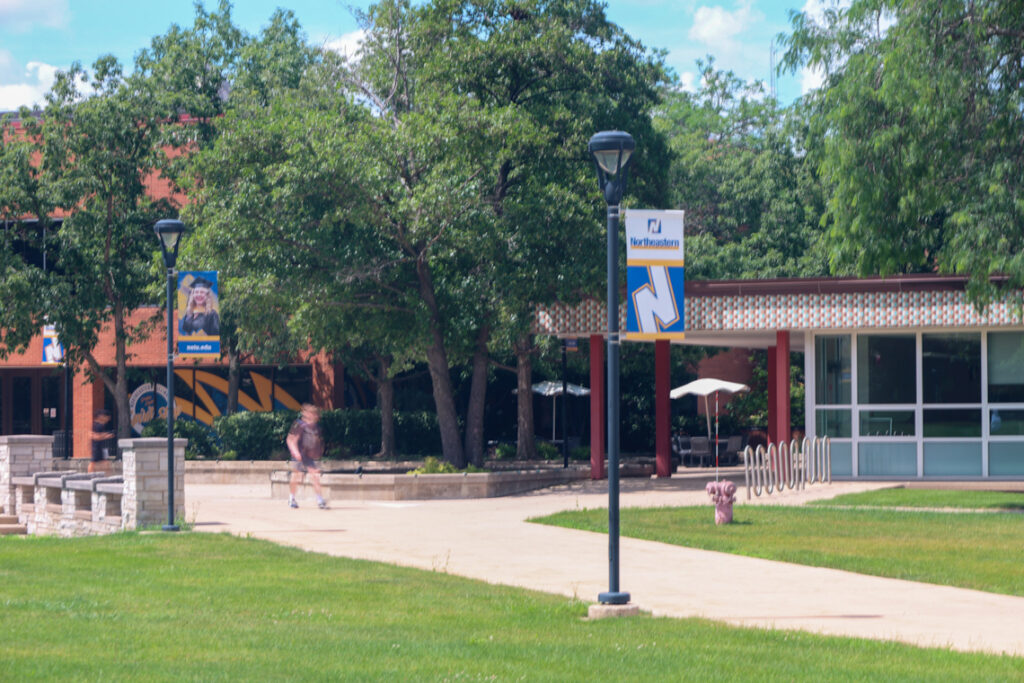
Editor’s note: This story was updated to refer to the correct building on the campus of Northeastern Illinois University in the featured photo caption.
CHICAGO — Illinois students won’t need to fill out applications for most state universities to be admitted — if they have high enough grades.
With his signature, Gov. JB Pritzker on Monday approved a bill creating the direct admissions program. Along with it, he approved bills that implement new state standards for programs offering college credits to high school students, and new requirements for financial aid application assistance.
“These bills streamline the application process for college-bound seniors in Illinois, enhance support for applicants, and open up new horizons for prospective students,” Pritzker said in a statement. “Enacting these laws is what all government work should be about — making life easier for our people.”
Pritzker had said college admissions and higher education accessibility would be a priority of his during this year’s legislative season, which ended May 31. But one of his signature initiatives — allowing community colleges to offer four-year degrees — failed earlier this year.
Direct college admissions
Illinois will implement a direct admissions program so that students hoping to go to a state school will be automatically admitted — if they have a high enough grade point average.
“For eligible seniors and community college transfer students, you will receive offers from the schools that you are admitted to without raising a finger. That’s huge,” Sen. Christopher Belt, D-Swansea, said. “It takes away the anxiety, it takes away the angst of that whole process.”
The bill outlining the direct admissions program, House Bill 3522, passed unanimously in the Senate and with broad bipartisan support in the House in late May.
Read more: House approves new abortion protection, plan to ease college admissions | Senate Democrats champion program to streamline Illinois college applications
The program will begin in the 2027-28 school year, with nine of the state’s 11 public universities participating:
University of Illinois Springfield
Southern Illinois University
Chicago State University
Eastern Illinois University
Governors State University
Illinois State University
Northeastern Illinois University
Northern Illinois University
Western Illinois University
High school students and community college students hoping to transfer to a state school must opt-in to the program to receive offers. Community colleges already admit all students interested in attending but will still participate in the direct admissions program.
The University of Illinois Urbana-Champaign and University of Illinois Chicago will not participate in the direct admission program. The state will, however, provide information about traditional applications to qualifying students through an “access and outreach campaign.”
The criteria for the direct admissions program and outreach campaign will be set by individual schools.
“This new, statewide direct admissions program will make a college degree more accessible for students and will motivate them to continue in their life-changing college journey by ensuring them a spot at their community college or at one of the state’s public universities,” Illinois Board of Higher Education Executive Director Ginger Ostro said in a Monday statement.
Financial aid application assistance
Two more bills signed by Pritzker on Monday, House Bills 3096 and 3097, aim to make it easier for students to navigate the financial aid process.
HB 3096 requires high schools in Illinois to designate at least one staff member as a point-of-contact for information about the Free Application for Federal Student Aid, or FAFSA. HB 3097 requires high schools to offer students time during the school day to fill out FAFSA forms and to receive assistance in doing so.
The new requirements go into effect in the 2025-26 school year.
Information collected through FAFSA is used to determine eligibility for federal loans. Many schools use FAFSA for their own aid programs, and the state offers need-based grants based on information submitted through FAFSA.
“As a father of college students, I just currently went through this fun exercise with my daughter filling out a FAFSA form,” Sen. Javier Cervantes, D-Chicago, said. “I’m being a little sarcastic calling it fun because we had deadlines, we had to make sure we had our documentation together and it wasn’t easy.”
From the 2010 to 2020 school years, an average of 86% of first-time students at four-year schools and 78% of first-time students at two-year schools received federal financial aid, according to data from the U.S. Department of Education.
The Illinois Community College Board offices sits blocks away from the state Capitol. Under a new law, the ICCB and other state agencies are tasked with improving dual credit programs in the state. (Capitol News Illinois photo by Andrew Adams)
Dual credit program
House Bill 2967, another bill approved by Pritzker on Monday, outlines new requirements for high schools and community colleges offering “dual credit” programs, through which students earn high school and college credit for completing a single course.
It requires teachers teaching dual credit classes to have a master’s degree in the subject they’re teaching or a master’s degree and some graduate coursework in the subject. It also requires high schools and community colleges to designate individuals responsible for negotiating what individual dual credit agreements look like.
“HB 2967 reinforces the vital role that strong, robust partnerships between community colleges and high schools play in delivering high quality dual credit programs,” Illinois Community College Board Executive Director Brian Durham said in a statement. “These programs help students get a head start on their college education and a path towards career success.”
The bill also requires schools to consider in-state colleges and universities when setting up dual credit programs over out-of-state institutions.
The bill also creates a committee made up of education officials, representatives from two different statewide teachers’ unions and others to work on improving dual credit programs’ accessibility and quality, as updating a template used by school districts to develop dual credit agreements with community colleges.
Four-year degrees at community college
One key proposal didn’t make the cut this spring — a measure allowing community colleges to offer bachelor’s degrees. Despite being backed by Pritzker in his State of the State address earlier this year, it faced pushback in the General Assembly, which did not pass a bill implementing the policy.
Read more: Pritzker’s community college initiative stalls in House committee
That proposal drew concerns from some lawmakers who worried it could undercut programs to attract local students to state universities. In particular, some lawmakers worried that it could hurt schools like Northeastern Illinois University and Chicago State University, which serve largely minority student populations.
But Pritzker on Monday said he would continue working on a proposal to allow more schools to offer bachelor’s degrees in “very specific, niche areas” like nursing and advanced manufacturing.
“You sometimes have to work two, four, six years, maybe longer to get something done,” Pritzker said.
Capitol News Illinois is a nonprofit, nonpartisan news service that distributes state government coverage to hundreds of news outlets statewide. It is funded primarily by the Illinois Press Foundation and the Robert R. McCormick Foundation.
The post Illinois to roll out direct admissions program for most state universities appeared first on Capitol News Illinois.
Everyday Economics: Personal income decline, student loan debt point to slowdown
Bottom line up front: The economic data this week tells a story of resilient consumers facing mounting headwinds. Inflation pressures remain somewhat contained – perhaps due to emerging cracks in consumer finances.
What’s Behind the Latest PCE Numbers
The PCE price index rose 0.14% for the month, putting inflation at a 1.7% annualized rate, with core PCE posting respective readings of 0.18% and 2.2%.
Energy prices fell 4.6% year-over-year but even without the decline, inflation is still running just slightly above the Fed’s 2% target.
The income and spending dynamics reveal an important story. Personal income declined 0.4% in May while spending fell 0.1%. Recent months saw elevated income growth thanks to policy changes – Social Security Fairness Act retroactive payments and Emergency Commodity Assistance Program payouts to farmers provided temporary support. But that support will soon wane. At the same time, private sector wage growth continues to slow.
The Student Debt Crisis Hits Hard
Another significant development for consumer spending power is the return of student loan delinquencies. After a 43-month payment pause, nearly one in four student loan borrowers (23.7%) were behind on their student loans in the first quarter of 2025.
The scale of this change is unprecedented. According to the Quarterly Report on Household Debt and Credit published by the New York Fed, more than 2.2 million newly delinquent borrowers have seen their credit plunge by over 100 points, while more than 1 million have experienced drops of at least 150 points.
This isn’t just about student loans – it’s about access to consumer credit going forward. An estimated 2.4 million delinquent borrowers previously had credit scores above 620, meaning they qualified for mortgages, auto loans and credit cards before these delinquencies hit their reports. Many no longer do.
The timing couldn’t be worse. These borrowers are predominantly millennials and Gen Z near or at peak home-buying age, facing an already brutal housing affordability crisis. When credit access tightens for millions of consumers simultaneously, spending patterns shift – and not in ways that support robust economic growth.
Labor Market Signals Point to Weakness Ahead
The frozen labor market adds another layer of concern for consumer spending. Private sector wage growth continues slowing as unemployment duration rises and job seekers give up. This creates a feedback loop: weaker labor market conditions reduce workers’ bargaining power, which slows wage growth and ultimately constrains spending.
Housing’s Negative Wealth Effect
The expected decline in home values represents another headwind for consumer spending going forward. For homeowners who’ve relied on housing wealth gains to borrow and spend, a negative wealth effect could cause them to curtail spending.
What’s Next?
Next week brings construction spending and auto sales data – both expected to show weakness. But the main event is the jobs report, where employment growth is expected to slow further and the unemployment rate could nudge higher.
Faith group provides tools for parents to opt out of LGBT curriculum after SCOTUS ruling
A nonprofit religious freedom organization is providing tools for parents to help them opt out of public-school LGBTQ+ instruction, curriculum and materials after the Supreme Court’s landmark ruling on Friday.
In Mahmoud v. Taylor, the Supreme Court ruled 6-3 that a Maryland school board’s introduction of “LGBTQ+-inclusive” books and curriculum “combined with its no-opt-out policy, burdens the parents’ right to the free exercise of religion.”
The school board previously allowed for an opt-out policy but reversed it, arguing it was too difficult to manage, The Center Square reported.
Because the school board refused to allow an opt-out option, the court held that if it didn’t issue an injunction to halt the school district’s policy, parents would be forced to keep making the same choice. They would be forced to “either risk their child’s exposure to burdensome instruction, or pay substantial sums for alternative educational services,” the ruling states. “As we have explained, that choice unconstitutionally burdens the parents’ religious exercise, and ‘[t]he loss of First Amendment freedoms, for even minimal periods of time, unquestionably constitutes irreparable injury.’”
The court majority said that “a government burdens the religious exercise of parents when it requires them to submit their children to instruction that poses ‘a very real threat of undermining’ the religious beliefs and practices that the parents wish to instill.”
It also emphasized that parental rights and religious freedom were protected by the Constitution, arguing, “The practice of educating one’s children in one’s religious beliefs, like all religious acts and practices, receives a generous measure of protection from the Constitution.”
In response, California-based Advocates for Faith & Freedom, which has been embroiled in lawsuits over parental rights and religious freedom for years, created a free, legal opt-out form for parents to use nationwide.
The form is customizable, allowing parents to “request that their child be exempt from exposure to any instruction or materials on gender identity, sexual orientation, or other related topics contrary to their faith,” it says. This includes opting out of “instruction, curriculum, or discussions related to gender identity, gender theory, sexual orientation, or any LGBTQ+-themed materials that conflict with their religious beliefs,” it says.
“Today’s decision is a victory for religious freedom and the rights of parents. A parent should be treated by a school as a respected partner, not as someone to ignore or alienate from his/her own child’s education,” Advocates for Faith & Freedom president and chief counsel Robert Tyler said. “The Supreme Court’s opinion sends a two-part message to schools across the country: 1) sincere religious beliefs cannot be ignored and 2) a parent has every right to know what is going on with his/her child at school.”
The letter also includes affirmations of what the parents and family believe, including that biological sex is immutable, defined by God, and “it is sinful and harmful to teach children that a person can change their biological sex and gender.”
The letter defines what the it considers objectional materials and clarifies that no one at a child’s school, including employees and third parties, are allowed “to introduce, expose, teach or discuss [with the child] any book or curriculum that contains ‘objectional materials.’”
It notes that parents have a First Amendment right to hold their religious beliefs and educate their children and anyone at the school who violates it and the Supreme Court injunction will face legal consequences.
“For too long, public schools have treated parental rights and the free exercise of religion as an ‘empty promise,’” Advocates for Faith & Freedom said.
It also notes that the ruling “does not mark the end of the issue” and that parents should expect potentially ongoing challenges to their First Amendment rights.
“Public schools can be expected to try to limit the Supreme Court’s holding and will find new ways to assert its power and to indoctrinate children,” it said, adding that it remained committed to preserving the rights of parents, children and families.