Posts by Newspaper Staff
Committee Highlights ‘Lack of Teeth’ in County Code Enforcement Process

While the Will County Ad-Hoc Ordinance Review Committee quickly approved minor updates to its administrative adjudication ordinance Tuesday, the action sparked a broader discussion about resident frustration over the enforcement process and its perceived “lack of teeth.” Committee member Sherry Newquist raised the issue, noting she frequently hears from constituents about the “ungodly length of…
Read MoreMeeting Briefs: Will County Ad-Hoc Ordinance Review Committee for July 22, 2025

AI Policy Discussion Urged: Chair Jackie Triner called for the county to develop a comprehensive policy on the use of Artificial Intelligence. Citing a recent conference, Triner noted the potential benefits for efficiency, like processing invoices, but also the risks of unregulated use by employees. Currently, only the Emergency Management department has a formal AI policy.…
Read MoreFeds weigh in on lawsuit challenging how Illinois maintains voter registration rolls
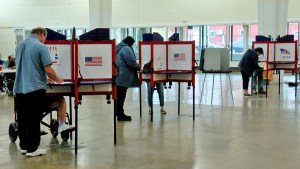
Voters cast their ballots in Springfield during the 2024 general election in November. (Capitol News Illinois photo by Andrew Campbell)
The Justice Department is weighing in on a federal lawsuit that accuses the Illinois State Board of Elections of failing to properly maintain its voter rolls.
The post Feds weigh in on lawsuit challenging how Illinois maintains voter registration rolls appeared first on Capitol News Illinois
Gabbard’s report questions intelligence community’s conclusions
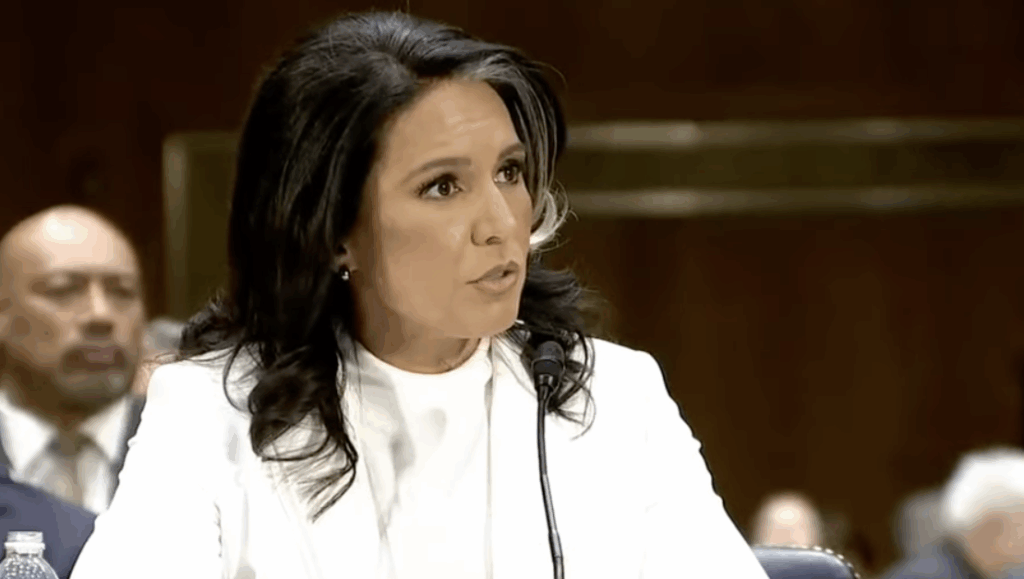
Director of National Intelligence Tulsi Gabbard’s accusations that former President Barack Obama conspired to “usurp” President Donald Trump’s 2016 election victory has drawn criticism to years-long conclusions in the investigative community.
On July 18, Gabbard released a 114-page document titled “Declassified Evidence of Obama Administration Conspiracy to Subvert President Trump’s 2016 Victory and Presidency.” She also published an 11-page memo highlighting documents from the larger release in a timeline.
The documents asserted that the former president and his top administration officials forced the intelligence community to claim Russia had interfered in the 2016 presidential election.
The release included communications before the 2016 election where Department of Homeland Security officials and FBI officials said they did not feel comfortable implying there was “definitive” evidence that Russia intended to disrupt the election.
However, Gabbard’s report says a meeting with Obama and top administration officials in December 2016 tasked the former director of national intelligence James Clapper with compiling evidence of Russia’s influence over the election, rather than whether it was involved at all.
The investigation reportedly tasked Clapper with compiling instances of Russia’s involvement with hacking, leaks, media spin and cyber activity against voting systems rather than whether it was involved at all. The investigation involved Clapper, CIA, FBI, Department of Homeland Security and National Security Agency officials.
Additionally, Gabbard’s report says intelligence officials leaked information to the media multiple times claiming that Russia was involved in hacking the election.
Ultimately, a 2020 Senate Intelligence Committee investigation assessed the efforts of the intelligence community’s efforts to document Russian intervention in the 2016 election. The report affirmed that Russia “directed extensive activity” from 2014 through 2017 “against U.S. infrastructure at the state and local level.”
Despite its findings, the committee concluded it found “no evidence that any votes were changed or any voting machines were manipulated.”
Rep. Jim Himes, D-Conn., ranking member of the House intelligence committee, called Gabbard’s report a “dangerous lie.”
Himes affirmed the 2020 senate intelligence committee’s findings. He also said Russia bought “reams of Facebook ads to discredit Hillary Clinton.”
“The intelligence community is full of very, very good people who do their jobs every single day and now they’re watching their leader do something that each and every one of them knows is dishonest,” Himes said.
Despite criticism over Gabbard’s methods, Trump affirmed Gabbard’s report on Monday.
“Obama himself manufactured the Russia, Russia, Russia HOAX. Crooked Hillary, Sleepy Joe, and numerous others participated in this, THE CRIME OF THE CENTURY!. Irrefutable EVIDENCE. A major threat to our Country!!!” Trump wrote on social media.
U.S. set to withdraw from UNESCO in 2027
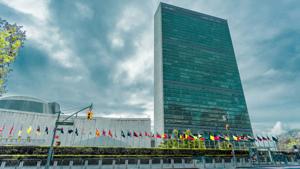
The U.S. is withdrawing from UNESCO, the United Nations’ Educational, Scientific and Cultural Organization, saying that the organization has “strayed from its founding mission.”
State Department spokeswoman Tammy Bruce announced the U.S. withdrawal from the organization, saying it is “not in the national interest of the United States.” However, the U.S. will remain a full organization member until Dec. 31, 2026.
In a statement from the State Department, it accused the organization of being globalists, highlighting anti-Israeli “rhetoric.”
“UNESCO works to advance divisive social and cultural causes and maintains an outsized focus on the UN’s Sustainable Development Goals, a globalist, ideological agenda for international development at odds with our America First foreign policy. UNESCO’s decision to admit the ‘State of Palestine’ as a Member State is highly problematic, contrary to U.S. policy, and contributed to the proliferation of anti-Israel rhetoric within the organization,” according to the statement.
State added that moving forward, the U.S. “participation in international organizations will focus on advancing American interests.”
This isn’t the first time President Donald Trump has withdrawn from the organization. During his first administration in 2017, the administration made the same move, prompting the organization to prepare for a possible second withdrawal.
Audrey Azoulay, director-general of UNESCO, released a statement, calling Trump’s decision to withdraw “regrettable” but “anticipated.” The head of the organization warned that the decision may impact its relationship with its partners in the U.S.
“This decision contradicts the fundamental principles of multilateralism, and may affect first and foremost our many partners in the United States of America – communities seeking site inscription on the World Heritage List, Creative City status, and University Chairs,” Azoulay stated.
Azoulay assured its members of its financial stability, underscoring that since 2018, the organization has “diversified” its funding sources to offset its reliance on U.S. dollars.
Azoulay addressed accusations of antisemitism, highlighting its work to fight against antisemitism while promoting education on the Holocaust.
“UNESCO is the only United Nations agency responsible for these issues, and its work has been unanimously acclaimed by major specialized organizations such as the United States Holocaust Memorial Museum in Washington DC, the World Jewish Congress and its American Section, and the American Jewish Committee (AJC). UNESCO has supported 85 countries in implementing tools and training teachers to educate students about the Holocaust and genocides, and to combat Holocaust denial and hate speech,” the statement added.
Israel’s minister of foreign affairs, Gideon Sa’ar, celebrated the decision in a social media post, calling it a “necessary step, designed to promote justice and Israel’s right for fair treatment in the UN system.”
“Singling out Israel and politicization by member state must end, in this and all professional UN agencies … Israel thanks the US for its moral support and leadership, especially in the multilateral arena which is plagues with anti-Israel discrimination. The United Nations requires fundamental reforms in order to remain relevant,” Sa’ar posted to X.
Guetlein to head Trump’s ‘Golden Done’ missile defense office

Gen. Mike Guetlein will be the inaugural Golden Dome for America Direct Reporting Program Manager as President Donald Trump looks to quickly set up a multi-layered missile defense system that protects Americans from a range of foreign threats.
The Senate confirmed Guetlein last week. Guetlein will report directly to Deputy Secretary of Defense Steve Feinberg. Guetlein will be responsible for developing the Golden Dome “portfolio of capabilities,” according to the Defense Department.
“Golden Dome is President Trump’s bold vision to build a layered defense of the Homeland to provide for the common defense of the American People against ballistic, hypersonic, advanced cruise missiles, and other next-generation aerial attacks from near-peer and rogue nations,” according to the Defense Department.
Earlier this year, Trump outlined plans for a $175 billion missile defense shield. The system Trump envisions would protect the U.S. and Canada using multiple layers of defense against diverse potential attacks, making it much more complex than previous proposals. The Golden Dome would also include space-based sensors and interceptors that the president said would be able to intercept missiles “even if they are launched from other sides of the world and even if they are launched from space.”
The president said the missile defense system would be operational before he leaves office in 2029. Trump’s plan is loosely modeled after Israel’s Iron Dome – but on a much larger scale. Israel’s Iron Dome defends a nation the size of New Jersey against short-range missiles built in underground tunnels. Trump’s system would protect a much larger area – North America – against more challenging threats, including intercontinental ballistic missiles and hypersonic weapons.
The Office of Golden Dome for America “will establish partnerships with industry, academia, national labs, and other government agencies to develop an objective architecture and to rapidly develop and field defensive capabilities,” according to the Defense Department.
The Pentagon said the government plans to “socialize this objective architecture as it is developed within the next 60 days.”
“Golden Dome for America requires a whole-of-nation response to deter and, if necessary, to defeat attacks against the United States,” the Pentagon said. “We have the technological foundation, national talent, and decisive leadership to advance our nation’s defenses.”
Cruz introduces bill to designate Muslim Brotherhood as terrorist organization
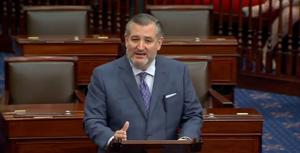
U.S. Sen. Ted Cruz, R-Texas, has introduced a bill to designate the Muslim Brotherhood as a terrorist organization.
Cruz introduced the Muslim Brotherhood Terrorist Designation Act again this year after doing so in 2015, 2017, 2020 and 2021. U.S. Rep. Mario Díaz-Balart, R-Florida, introduced companion legislation in the House, as he has also previously done. The bill has multiple cosponsors.
“The Muslim Brotherhood is a terrorist organization,” Cruz said, which is “committed to the overthrow and destruction of America and other non-Islamist governments across the world, and pose an acute threat to American national security interests. American allies in the Middle East and Europe have already labeled the Brotherhood a terrorist organization, and the United States should do the same, and do so expeditiously.”
The bill states the Muslim Brotherhood “functions as a global terrorist organization and provides material support to [its] branches in countries and territories by providing political support, financial resources, training, services, expert advice, and communications assistance.” Its branches have “sought to destabilize and undermine United States allies and partners throughout the Middle East, including in Bahrain, Egypt, Jordan, Saudi Arabia and the United Emirates, and have been outlawed as a terrorist group by the governments of those countries.”
The bill amends the Anti-Terrorism Act of 1987 to include banning all Muslim Brotherhood members from the U.S., making them ineligible for visas or admittance to the U.S. This includes revoking visas of all non-U.S. citizens who are confirmed Muslim Brotherhood members and removing them from the country. It also requires the Secretary of State to impose sanctions on any Muslim Brotherhood branch, charity or organization that is directly or indirectly controlled by the Muslim Brotherhood, including Hamas.
“The global Muslim Brotherhood has numerous regional branches, including terrorist organizations such as Hamas, and spreads violence and instability throughout the Middle East,” Díaz-Balart said. “For this reason, it is crucial to U.S. national security interests that we prohibit U.S. dollars from enabling the Muslim Brotherhood’s dangerous activities, and that we ensure Muslim Brotherhood members are blocked from entering the United States. This important legislation gives the Trump Administration the additional authority it needs to protect Americans, and our closest allies, from this insidious threat.”
The Muslim Brotherhood was founded by Egyptian politician Hassan al-Banna in 1928 as a Sunni Islamic militant group. Over the next few decades, it grew to have hundreds of thousands of followers in multiple countries in the Middle East and north Africa. After a failed assassination attempt of Egypt’s prime minister in 1948, the Egyptian government cracked down on Muslim Brotherhood members, arresting them, trying them for treason and executing them.
By the 1980s, the Muslim Brotherhood saw a resurgence in Egypt and multiple countries. In 1987, its Palestinian branch emerged as Hamas in Gaza, committed to the destruction of Israel. The preamble to the 1988 Hamas Covenant of the Islamic Resistance Movement includes the famous claim, “Israel will exist and will continue to exist until Islam will obliterate it, just as it obliterated others before it,’” made by al-Banna, The Center Square reported.
Since then, Hamas has taken credit for a range of terrorist acts, including the Oct. 7, 2023, terrorist attack against Israel, resulting in the death of more than 40 Americans and the kidnapping at least 53 Americans.
The bill was proposed after antisemitic incidents drastically increased nationwide, reaching their highest level on record last year of nearly 10,000, The Center Square reported. Cruz and U.S. Rep. Monica De La Cruz, R-Texas, have been targeted by pro-Hamas rioters and vandals, including at Cruz’s Houston home and at a U.S. Senate hearing, and at De La Cruz’s offices, The Center Square reported.
Hamas has been designated as a foreign terrorist organization by the U.S. government since 1997.
After the Hamas Oct. 7 terrorist attack, the U.S. House passed the Hamas International Financing Prevention Act, HR 340, In November 2023. Filed by U.S. Rep. Brian Mast, R-Florida, it would have required the executive branch to impose sanctions on foreign actors that provide certain types of support to Hamas or its affiliates. It went nowhere in the Democratic-controlled Senate.
Cruz has also repeatedly called on the president to designate the Muslim Brotherhood as a terrorist organization. Last month, U.S. Rep. Jared Moskowitz, D-Florida, called on the president to do so highlighting actions taken by other governments.
To date, the governments of Austria, Bahrain, Egypt, Jordan, Saudi Arabia, and United Arab Emirates have designated the Muslim Brotherhood as a terrorist organization.
Nonprofit calls out fitness company for DEI policies
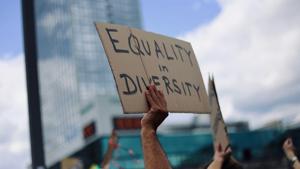
Consumers’ Research in a new “Woke Alert” is criticizing a nationwide fitness company it says is heavily involved in diversity, equity, and inclusion practices such as mandatory DEI trainings and BIPOC-only scholarships.
BIPOC stands for Black, Indigenous, and People of Color.
Executive Director of Consumers’ Research Will Hild told The Center Square that “denying opportunities to applicants and services to customers based on their skin color, like CorePower Yoga did, is not only grossly immoral but also illegal.”
Consumers’ Research is an independent nonprofit organization dedicated to increasing “knowledge and understanding of issues, policies, products, and services of concern to consumers and to promote the freedom to act on that knowledge and understanding,” according to its website.
CorePower Yoga is a nationwide yoga studio chain, according to its website. CorePower has not responded to The Center Square’s two requests for comment.
Hild told The Center Square: “President [Donald] Trump has made it clear that discriminatory practices such as DEI are illegal and go against American values.”
“By allowing activists to dictate personnel and product decisions, businesses and brands are hurting consumers,” Hild said.
“Consumers overwhelmingly oppose race-based discrimination and don’t want to see signs of DEI when they walk into a store or business,” Hild said. “Companies need to focus on providing quality goods and services rather than peddling a woke, discriminatory DEI agenda.”
From offering a teacher scholarship exclusively for BIPOC individuals to requiring diversity and inclusion trainings for all employees, DEI has a large presence at CorePower Yoga, Consumers’ Research alert says.
Of its BIPOC-only scholarship, CorePower said: “As part of our dedication to building a more diverse yoga teacher community, we offer Teacher Training scholarships to our BIPOC students.”
Teacher Training is a program consisting of yoga-related lessons.
Consumers’ Research’s alert said that “CorePower Yoga sent an email pushing the scholarship and its DEI prioritization on its consumers,” and is a part of the company’s “Power Forward” agenda.
The alert details how this agenda of CorePower’s also involved implementing hiring quotas and a Diversity, Equity, Inclusion and Belonging (DEIB) council.
The DEIB council works “to create and support a diverse, equitable and inclusive environment for all employees and students who practice with CorePower Yoga,” according to its online description.
CorePower Yoga’s CEO Niki Leondakis has spoken of the company’s commitment to DEI, as well.
A year ago on LinkedIn, Leondakis said that “the values of diversity, equity, inclusion, and belonging are integrated into everything we do at CorePower Yoga.”
Hild told The Center Square that in response, “consumers should contact CorePower and insist the company fully abandon all its racist and outdated DEI practices and permanently stop discriminating policies such as race-based scholarships and mandatory DEI training.”
Federal housing credit expansion could increase affordable rental units in Illinois: report

Affordable housing advocates say Illinois lawmakers should enact a state low-income housing tax credit to complement more federal funding.
The post Federal housing credit expansion could increase affordable rental units in Illinois: report appeared first on Capitol News Illinois
LA mayor talks about National Guard and former fire chief

Los Angeles Mayor Karen Bass started her week making headlines.
She talked about wanting to rid the city of all National Guard troops and saying she has no problem with the Los Angeles Fire Department lacking a permanent chief during the current wildfire season.
Bass held a news conference Monday morning at Los Angeles Mission College, calling for the removal of the remaining National Guard troops from the city.
The federal government sent thousands of National Guard troops and U.S. Marines to Los Angeles in early June to help protect U.S. Immigration and Customs Enforcement agents and the city amid immigration riots. Last week, half of the 4,000 National Guard troops who were deployed were sent home, leaving 2,000 guards as well as 700 Marines in the city.
Bass disapproved of President Donald Trump’s decision to deploy the National Guard and the U.S. Marines to Los Angeles and said the city never needed the National Guard, during an interview Sunday on “Face The Nation.”
“We never needed the National Guard in the first place,” Bass told anchor Margaret Brennan on the CBS News series. “This is a political stunt. A terrible use of taxpayers’ dollars.”
Shortly after Bass spoke at Los Angeles Mission College, she posted a video on X with California Sen. Caroline Menjivar, a Marine veteran and Democrat who represents Burbank and the San Fernando Valley.
The mayor said the Trump administration notified her that the remaining Marines in Los Angeles will be leaving the city. Bass called that a victory.
During her “Face The Nation” interview, Bass also said it is not a problem that the Los Angeles Fire Department has not had a permanent chief since she fired Chief Kristin Crowley on Feb. 21. Bass added that despite not having a permanent chief, the LAFD is still prepared this wildfire season.
“Our interim fire chief has 40 years of experience,” Bass said.
“In fact, he had just recently retired. I called him out of retirement,” she said, referring to her appointment of former Deputy Chief Ronnie Villanueva as the interim chief. He will serve in the role until a permanent chief is chosen.
Bass said her office is doing a national search for the best chief. She added that Villanueva, in the mean time, is “more than capable of managing” the department.
“We are doing a national search, and he [Villanueva] is certainly open to apply, but the nation’s second largest city needs to make sure that we search the nation for the best talent,” Bass said.
The mayor said she fired Crowley because the fire chief placed 1,000 firefighters off-duty the morning the Palisades Fire erupted, and she failed to complete an after-action fire report, according to a Feb. 21 press release from the mayor’s office.
“We know that 1,000 firefighters that could have been on duty on the morning the fires broke out were instead sent home on Chief Crowley’s watch,” Bass said in the news release. “Furthermore, a necessary step to an investigation was the president of the Fire Commission telling Chief Crowley to do an after-action report on the fires. The chief refused. These require her removal.”
Crowley appealed for reinstatement as fire chief to the Los Angeles City Council on March 4, saying Bass’s accusations were incorrect.
“On the morning of the fire, I did not send home 1,000 firefighters who could have hopped on fire engines and fought the Palisades Fire,” Crowley told the Los Angeles City Council. “Nor did I leave 40 available fire engines unstaffed.”
Crowley also said fire commissioners, following her recommendation, determined the Fire Safety Research Institute was best equipped to conduct the after-action report on the January fires. The institute was selected by Gov. Gavin Newsom’s office to conduct an independent analysis of the blazes, as explained on the institute’s website.
Crowley, who warned Bass about this year’s $17.6 million in budget cuts to the fire department in a letter in December 2024, also told the Los Angeles City Council that the lack of money led to the lack of staff and resources during the Palisades Fire.
“As for the 1,000 firefighters who were allegedly sent home prior to the fires, we did not have enough apparatus to put them on,” Crowley told council members. “Because of the budget cuts and lack of investments in our fleet maintenance, over 100 of our fire engines, fire trucks, and ambulances sat broken down in our maintenance yards, unable to be used to help during one of the worst wildfire events in our history.”
The council rejected Crowley’s appeal for reinstatement as fire chief in a 13-2 vote, with only council members Traci Park and Monica Rodriguez voting to reinstate the chief. Park represents the 11th District, where the Palisades Fire took place.
Crowley still works for the LAFD as the assistant chief of the Valley Bureau.
The Center Square reached out to Crowley and the LAFD for comment, but they did not reply.