Posts by Newspaper Staff
Republicans target China as security threat to U.S. real estate, schools, farmland

With the southern border crisis largely eliminated, Republicans and the Trump administration are setting their sights on China as the next major threat to U.S. domestic security.
Long considered a foreign adversary, China has been making inroads in nearly all sectors of American society, including real estate, universities, agriculture, and even the legal system. Reports released just over the past month show the spread of China’s influence.
One report showed that Chinese nationals made up the top percentage – 15% – of foreign buyers of U.S. homes from April 2024 to March 2025. That amounts to $13.7 billion worth of existing homes in the U.S. getting sold to Chinese nationals, some still residing abroad, as The Center Square reported.
Higher education institutions like the University of Michigan have had multiple Chinese foreign exchange students arrested for activities including spying on U.S. military bases, smuggling dangerous biological pathogens, and illegally voting in the 2024 presidential election.
An even greater source of concern for Republicans is the amount of U.S. farmland that Chinese entities – some of whom are connected to the Chinese Community Party – now own. According to a federal report released earlier this month, Chinese investors own at least 277,335 acres of agricultural land across 30 states, as The Center Square reported.
U.S. Department of Agriculture Secretary Brooke Rollins has pledged the Trump administration will “restore farm security and expose the extent to which our adversaries have targeted American agriculture.” She also recently launched a National Security Farm Action Plan to protect American agriculture.
Two Republican lawmakers plan to help with that effort. U.S. Sen. Josh Hawley, R-Mo., and U.S. Rep. Mary Miller, R-Ill., introduced the Protecting Our Farms and Homes from China Act in their respective chambers this week.
The legislation would ban Chinese companies and individuals affiliated with the CCP from buying agricultural land in the U.S. and require such parties who already own U.S. agricultural land to divest of it within one year.
Those parties would also have to divest of any U.S. residential real estate currently owned, and any residential real estate in the U.S. would be off-limits to CCP-affiliated buyers for the next two years. The president could renew that prohibition biennially.
“China’s goal is simple: control our food production, control our land, and weaken America from within,” Miller stated Friday on X. “We are not going to let that happen.”
Trump administration to release all $6.8B in education funds
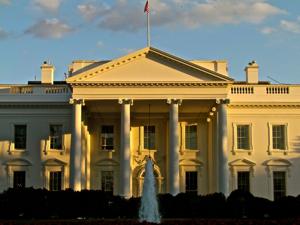
The Trump administration announced Friday it will release all previously withheld $6.8 billion in education funds back to the states.
Since July 1, education departments across the country have been urging the administration to unfreeze the funds.
Twenty-four states and the District of Columbia sued the administration, calling this freeze unconstitutional, unlawful and an arbitrary decision.
Though the administration released some of the education funds, after 25 days of relentless bipartisan pushback, the administration is now announcing it will release the remaining $5.5B.
The Office of Management and Budget “has directed the Department to release all formula funds,” according to Madi Biedermann, deputy assistant secretary for communications at the Education Department. “The agency will begin dispersing funds to states next week.”
After this announcement, education organizations are still speaking out against what they call administration’s reckless actions in delaying crucial education funding.
“Playing games with students’ futures has real-world consequences. School districts in every state have been scrambling to figure out how they will continue to meet student needs without this vital federal funding, and many students in parts of the country have already headed back to school,” said National Education Association President Becky Pringle. “These reckless funding delays have undermined planning, staffing and support services at a time when schools should be focused on preparing students for success.”
Hamadeh introduces bill addressing VA health care staffing

Editor’s note: This story was updated Friday afternoon.
U.S. Rep. Abe Hamadeh, R-Arizona, is sponsoring a bipartisan bill to address staffing shortages at the Veterans Health Administration.
The Health Professionals Scholarship Program Improvement Act of 2025 would amend Section 7616 of Title 38 and “enhance the educational occupational program to address staffing shortages” within the VHA. The bill was approved Wednesday by the House Veterans’ Affairs Committee.
“From what I am told, staffing shortages in the Veterans Health Administration are driven by two main factors: high demand for veteran healthcare and persistent challenges in recruiting and retaining qualified staff, especially medical officers and nurses,” Hamadeh told The Center Square, answering questions by email. “In fact, according to Inspector General reports, well over 80% of VA facilities have severe medical officer and nursing shortages.”
Hamadeh added that “part of this gap is the result of bureaucratic red tape” in the onboarding process for healthcare workers.
“Healthcare providers are unable to fill open positions in a timely manner so veterans must wait longer for care,” said Hamadeh, a former U.S. Army Reserve captain and intelligence officer. “That is unacceptable.”
When asked how long veterans are waiting for health care, Hamadeh described it in two words: too long.
“And I want to be crystal clear about this: For far too long, timely access to care has been the VA’s Achilles’ heel,” Hamadeh continued.
The representative applauded what he called “major progress under Secretary Doug Collins’ leadership,” but said the truth is that “the VA was set back so much under the Biden Administration” that there is still work to be done.
“And because of the constant shortage of physicians and nurses, far too many veterans can’t get care when they need it,” said Hamadeh. “That is exactly why I introduced the HPSP Improvement Act. We have to cut the red tape and get qualified healthcare professionals into VA clinics, so our veterans never have to wait too long for the care they have earned.”
If the government does nothing, Hamadeh said wait times will grow, quality of care will decrease, and the health of U.S. veterans will be sacrificed. That, said Hamadeh, is not something the government should do to those who have served their country.
“The Congressional Budget Office (CBO) has reviewed my Health Professionals Scholarship Program Improvement Act, as amended, and determined it would have ‘insignificant budgetary effects’ for taxpayers,” said Hamadeh. “My bill is designed to make the system work better without adding new costs to federal spending or burdens on taxpayers.”
Also known as H.R. 3767, the HPSP Improvement Act of 2025 is co-sponsored by U.S. Rep. Nikki Budzinski, D-Illinois.
“The bipartisan Health Professionals Scholarship Program Improvement Act would streamline the path for HPSP participants to start working full-time and make it easier for veterans to get the care they need,” said Budzinski in her own press release.
When asked whether he’s had discussions with the other Arizonans representing the state on Capitol Hill, Hamadeh said he has spent most of his time listening to his fellow veterans’ stories, concerns and hopes about what Congress should do for them.
“When it comes to veterans’ issues, I don’t care about party lines,” Hamadeh told The Center Square. “Every veterans’ bill I have introduced has been bipartisan, and it is not by mistake. I believe in results, and I will work with anyone — Democrat or Republican — to ensure we keep our promise to America’s veterans and turn positive changes into real improvements.”
Colorado sues sheriff’s deputy for allegedly working with ICE

Colorado Attorney General Phil Weiser has filed a lawsuit against a Colorado sheriff’s deputy, holding him liable for allegedly cooperating with federal immigration officials.
Weiser made the announcement on Tuesday.
“Colorado Law is clear: it is illegal for local law enforcement to carry out federal civil immigration enforcement,” he posted to social media. “And in Colorado, we do not allow the federal government to commandeer local resources for their own agenda.”
Weiser is suing Deputy Alexander Zwinck of Mesa County for allegedly working with federal immigration officials to detain a 19-year-old illegal immigrant with an expired visa.
The lawsuit, which was filed in Mesa County District Court, states Zwinck had no right to share, or inquire into, the driver’s personal identifying information for the purpose of assisting with federal civil immigration enforcement.
It asks that the court issue an order to prevent Zwinck from “similar unlawful conduct” moving forward.
The incident first started on June 5, when Zwinck pulled over the woman for following too close to a semitruck. She then provided him with her driver’s license, vehicle registration and insurance information, which Zwinck then allegedly uploaded to a Signal group chat, which included federal immigration officers.
“Instead of ending communications with officials on the group chat since there were no criminal matters to follow up on, Deputy Zwinck proceeded to assist the federal immigration officers in detaining the driver,” Weiser’s office said in a press release. “According to the state investigation, Deputy Zwinck provided his location to the federal immigration officers on the chat who indicated that they were on the way.”
Zwinck allegedly stalled the driver, before messaging federal immigration officers with a description of her car, her vehicle’s license plate number and the direction she was traveling once she left. She was later picked up by U.S. Immigration and Customs Enforcement officials.
“In this case, the driver was detained by immigration authorities because of actions by Colorado law enforcement despite the absence of any criminal activity on her part,” Weiser said. “Her detention for over two weeks is directly due to this violation of Colorado’s laws.”
The Mesa County Sheriff’s Office has also begun an administrative investigation into the incident.
The state alleges this was not the only instance of Zwinck assisting ICE officials and that it is investigating the other law enforcement officers who might have been involved in the Signal chat.
“Because of this action, we are making clear that Colorado law enforcement’s role is to advance public safety, not take on the responsibility of doing the work of federal immigration enforcement,” Weiser said.
This comes as Colorado and its capital city Denver have been under scrutiny for their so-called sanctuary city policies, which limits their cooperation with federal immigration authorities.
Notably, Denver Mayor Mike Johnston joined four other sanctuary city mayors in testifying before a U.S. House Oversight and Government Reform committee in March on the issue, as previously reported by The Center Square.
“Mike Johnston had every opportunity to condemn and change his city’s sanctuary policies,” U.S. Rep. Lauren Boebert, R-Colorado, said on social media on Wednesday. “He refused. Denver is a SANCTUARY CITY that makes all Coloradans less safe.”
Kelly leans on experience in Illinois’ Democratic Senate primary
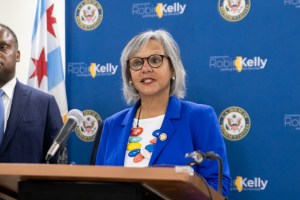
U.S. Rep. Robin Kelly, D-Matteson, speaks at an event on March 18, 2025. (Capitol News Illinois photo by Andrew Adams)
U.S. Rep. Robin Kelly is one of three high-profile Democrats hoping to join the U.S. Senate after the 2026 election.
The post Kelly leans on experience in Illinois’ Democratic Senate primary appeared first on Capitol News Illinois
USDA to relocate thousands of employees, consolidate agency functions
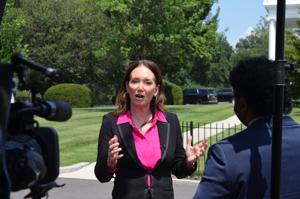
In the coming months, the U.S. Department of Agriculture will relocate more than half of its Washington D.C.-based employees to five different regional hubs across the country.
The move is part of USDA’s larger plan “to achieve improved effectiveness and accountability, enhanced services, reduced bureaucracy and cost savings for the American people,” according to the announcement memo.
Approximately 4,600 USDA employees currently reside in D.C., a growth of 8% over the past four years. With a nearly 15% salary increase during that time as well, the Trump administration says the USDA Department Reorganization plan will ensure that the agency can afford its workforce.
USDA Secretary Brooke Rollins estimates that roughly 2,000 employees will be left in D.C. after the relocations are complete. The other 2,600 will disperse to one of USDA’s five regional hub locations, located in Raleigh, North Carolina; Kansas City, Missouri; Indianapolis, Indiana; Fort Collins, Colorado; and Salt Lake City, Utah.
The agency also will end some leases and vacate some buildings in the D.C. area, as well as reduce regional office management layers. Core administrative support locations in Albuquerque, New Mexico and Minneapolis, Minnesota will remain operational.
Additionally, management of civil rights functions, legislative affairs, Freedom of Information Act responses, human resources, and leases will each be consolidated under different offices.
Rollins said the reorganization will bring the USDA “closer to the people it serves.” She intends to ensure that the transition works “as smooth and as minimally disruptive as possible” for affected USDA staff and their families.
“We will carry out this reorganization through a transparent, common-sense process that preserves USDA’s critical health and safety services that the American public relies on,” Rollins said. “We are embarking on a new chapter that will improve our service to the great patriotic farmers, ranchers, and producers that we are mandated to support.”
While most Republicans view the move as a fiscally responsible way to efficiently manage resources, Democrats have blasted it as reckless.
“The planned reorganization announced by the Agriculture Secretary without notice or input from Congress or key stakeholders and constituencies demonstrates that this administration … is willfully risking the effectiveness of the agencies and programs that support America’s family farmers,” House Agriculture Committee Ranking Member Angie Craig, D-Minn., said.
Since the second Trump administration took office, 15,364 USDA employees have voluntarily chosen deferred resignation. In 2024, the agency’s workforce numbered nearly 100,000 individuals.
AOC broke ethics rules with ‘improper’ gifts, panel finds
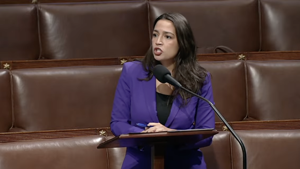
Rep. Alexandria Ocasio-Cortez broke House ethics’ rules by accepting free tickets to the glitzy 2021 Met Gala benefit in New York City, and a designer gown emblazoned with “Tax The Rich” in red letters, a panel said Friday.
The House Ethics Committee released a report Friday saying an investigation determined that the New York Democrat and “Squad” members had flouted its rules by accepting the gratuities and ordered her to pay nearly $3,000 in personal funds to resolve the violations without sanctions.
That includes $250 to cover the attendance of her fiancé at the 2021 charitable event, Riley Rogers, and an additional $2,733.28 payment to Brother Vellies, the business that designed her gown.
“Based on its findings, the Committee determined that it would be appropriate for Representative Ocasio-Cortez to make additional payments of personal funds to compensate for the fair market value of certain expenses,” the panel’s report stated. “Upon confirmation of the completion of those payments, the committee will consider this matter closed.”
An Ocasio-Cortez spokesperson issued a statement saying the lawmaker accepts the committee’s findings and will make the payments to resolve the matter.
“The Congresswoman appreciates the Committee finding that she made efforts to ensure her compliance with House Rules and sought to act consistently with her ethical requirements as a Member of the House,” the statement said. “She accepts the ruling and will remedy the remaining amounts, as she’s done at each step in this process.”
House ethics rules prohibit congressional lawmakers from accepting gifts such as “a gratuity, favor, discount, entertainment, hospitality, loan, forbearance, or other item having monetary value.”
During the September 2021 gala, Ocasio-Cortez was provided with “a couture dress, handbag, shoes, and jewelry,” the ethics report said. “She also received hair, makeup, transportation, and ready-room services.”
The ethics panel said its investigation found that Ocasio-Cortez eventually paid vendors for the rental value of the attire she wore to the event and for the goods and services she and her partner received, but not until after the ethics office contacted her for its review.
If it weren’t for the review, the ethics panel said, “it appears that Rep. Ocasio-Cortez may not have paid for several thousands of dollars’ worth of goods and services provided to her.”
“While the committee did not find that Representative Ocasio-Cortez’s violations were knowing and willful, she nonetheless received impermissible gifts and must bear responsibility for the other conduct that occurred with respect to the delays in payment,” the report concluded.
5 schools investigated for preferencing illegal aliens with scholarships, programs

Five universities across the nation face investigations from the Department of Education’s Office for Civil Rights for potentially discriminating on the basis of national origin in the DACA-only scholarships and programs they offer.
The University of Louisville, the University of Nebraska Omaha, the University of Miami, the University of Michigan, and Western Michigan University are those facing the national origin discrimination investigations, according to the Department of Education.
The investigations “will determine whether these universities are granting scholarships only for Deferred Action for Childhood Arrivals (DACA) or ‘undocumented’ students, in violation of Title VI of the Civil Rights Act of 1964’s (Title VI) prohibition against national origin discrimination,” a news release said.
University of Michigan director of public affairs Kay Jarvis told The Center Square: “The university has received a letter of notification relating to this matter. We have no further comment.”
Interim VP of communications and marketing at the University of Louisville John Karman similarly told The Center Square that, “the university was just notified of the investigation on Tuesday.”
“We are reviewing the claims,” Karman said.
None of the other three universities have yet responded to The Center Square’s request for comment, and neither has the Department of Education.
According to complaints submitted by the Legal Insurrection Foundation’s Equal Protection Project to the Department of Education, the University of Louisville offers the Sagar Patagundi Scholarship to “subsidize the cost of higher education … for undergraduate DACA and undocumented students,” the release said.
The University of Nebraska Omaha offers a Dreamer’s Pathway Scholarship for “students who are DACA or DACA-eligible and Nebraska residents who are seeking an undergraduate degree,” the release said.
Meanwhile, the U Dreamers Program at the University of Miami “is available to academically talented and admissible [DACA] and undocumented high school seniors and transfer students,” the release said.
The University of Michigan has a Dreamer Scholarship that “is intended to support undocumented students or students with DACA status.”
Lastly, Western Michigan University offers the WMU Undocumented/DACA Scholarship “for undergraduate students who are ineligible to receive federal student aid due to an undocumented or DACA status.”
“Discrimination against American-born students must not be tolerated,” founder of the Equal Protection Project William A. Jacobson said in the department’s release.
“Protecting equal access to education includes protecting the rights of American-born students,” Jacobson said.
“At the Equal Protection Project, we are gratified that the Department of Education’s Office for Civil Rights is acting on our complaints regarding scholarships that excluded American-born students,” Jacobson said.
Acting Assistant Secretary for Civil Rights Craig Trainor said in the release that “neither the Trump Administration’s America first policies nor the Civil Rights Act of 1964’s prohibition on national origin discrimination permit universities to deny our fellow citizens the opportunity to compete for scholarships because they were born in the United States.”
“On January 20, 2025, President Trump promised that ‘every single day of the Trump Administration, [he] will, very simply, put America first,’” Trainor said.
“As we mark President Trump’s historic six months back in the White House, we are expanding our enforcement efforts to protect American students and lawful residents from invidious national origin discrimination of the kind alleged here,” Trainor said.
In addition to investigating discrimination based on national origin, the investigations will examine other scholarships at the universities of Louisville, Nebraska Omaha, and Western Michigan “that appear to exclude students based on other aspects of Title VI, including race and color.”
Homeland Security task forces expand efforts targeting transnational crime

( The Center Square) – New Homeland Security Task Forces (HSTF) are launching nationwide to expand efforts to target transnational crime. A new HSTF launched in Houston this month, one month after a HSTF launched in the Midwest.
Although federal law enforcement partners have been targeting transnational crime for years, President Donald Trump directed the departments of Homeland Security and Justice to establish HSTFs to conduct targeted enforcement efforts in a Jan. 29 executive order.
The HSTFs are regional and led by U.S. Immigration and Customs Enforcement’s Homeland Security Investigations field offices and FBI field offices. Participating agencies include the DEA, ATF, U.S. Marshals Service, IRS’ Criminal Investigative Division, U.S. Postal Inspection Service, U.S. Customs and Border Protection’s Office of Field Operations, High Intensity Drug Trafficking Area directors, U.S. attorneys and others.
They are operating under Trump’s order, “Protecting the American People Against Invasion,” which directed the DHS and DOJ to create HSTFs to “end the presence of criminal cartels, foreign gangs, and transnational criminal organizations throughout the United States, dismantle cross-border human smuggling and trafficking networks, end the scourge of human smuggling and trafficking, with a particular focus on such offenses involving children, and ensure the use of all available law enforcement tools to faithfully execute the immigration laws of the United States.”
Task force members are conducting “intelligence-driven, multijurisdictional investigations targeting drug trafficking, money laundering, weapons trafficking, human trafficking, alien smuggling, homicide, extortion, kidnapping, child exploitation and other transnational crimes,” HSTF announcements state.
The Houston HSTF is being led by ICE HSI-Houston and FBI-Houston targeting all of southeast Texas.
HSI Houston Special Agent in Charge Chad Plantz said their goal is to find “transformative ways” to address sophisticated schemes being used by transnational criminal organizations, foreign terrorist organizations, drug cartels and gangs in the region. In Southeast Texas, “we face a myriad of unique border-related challenges and threats from transnational criminal organizations. By establishing this permanently integrated multiagency task force with dedicated personnel from federal, state and local law enforcement working side-by-side with a common mission, we will be better postured to detect and respond to any type of threat we might face,” he said.
Houston, the largest city closest to the U.S.-Mexico border, is considered a major trafficking hub and gateway for criminal activity into the rest of the U.S. It’s only a few hours drive from Brownsville, Eagle Pass, Laredo and other major crossing points used by cartels and transnational criminal organizations. From Houston, people, weapons and drugs are moved to other major hubs like Dallas, Chicago, Atlanta, Los Angeles, New York and Miami within a matter of hours and days, law enforcement officers have explained to The Center Square.
FBI Houston Special Agent in Charge Douglas Williams said the new task force was “a united front unseen before in Houston. For the first time, law enforcement and intelligence agencies are focused on hunting down and eradicating transnational criminals within Houston communities. Federal, state and local police will coordinate with the U.S. Intelligence Community and overseas partners to efficiently eliminate newly designated terrorists wreaking havoc in our neighborhoods.”
The Houston area task force was launched one month after the Kansas City HSTF, which is targeting transnational crime in Iowa, Kansas, Missouri and Nebraska. Its operations are headquartered in Kansas City (for all of Missouri), Wichita (Kansas), Des Moines (Iowa), and Omaha (Nebraska).
Its task force members have already arrested high profile targets in Nebraska including violent Tren de Aragua and MS-13 terrorist members, The Center Square reported.
In May, U.S. Attorney for the Central District of California Bilal Essayli launched a new task force that also includes federal partners from ICE, HSI, the FBI, DEA, and ATF. They are implementing a new approach he argues is a blueprint for other federal prosecutors to follow to combat sanctuary city policies. Their strategy involves filing complaints and arrest warrants with local jails to allow federal law enforcement officers to take into custody as many criminal foreign nationals as possible, The Center Square reported.
McNabb poised for veto override, next steps protecting women’s spaces
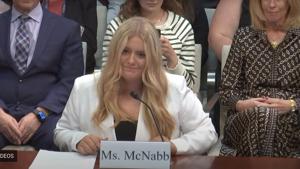
Perplexing as the North Carolina governor’s veto may be to her, Payton McNabb’s fight for women in North Carolina and across America remains girded in steely support with a vision for the future.
Even after the expected override Tuesday of Gov. Josh Stein on a bill defining men and women, her experiences at Hiwassee Dam High in Murphy and on the campus of Western Carolina University in Cullowhee will fuel her fight for protection of women’s spaces in sports, bathrooms, and at universities, particularly sororities.
“All of those I had to fight because of one guy,” she told The Center Square on Friday by phone from her home in Murphy in a 1-on-1 interview, speaking of the latter three, referring to an incident in college. “It got completely out of hand with the way things were being handled. It makes me more thankful for the outcome of the last election. I don’t know how it would have played out if it had gone another way.”
Voters on Nov. 5 sent Republican Donald Trump back to the White House for a second term. On Day 1, he included an order to restore “biological truth” in defining men and women by reproductive cells. The North Carolina General Assembly on June 27 sent legislation in part codifying the order to the desk of Stein, who on July 3 affixed a veto stamp.
Gender policy is in Prevent Sexual Exploitation/Women and Minors (House Bill 805). Three Democratic senators and one representative in the House favored it; no Republicans in either chamber was opposed.
To override, each chamber of the General Assembly needs three-fifths majority of those present. Republican majorities are 30-20 in the Senate and 71-49 in the House of Representatives.
Stein is married and has a 21-year-old daughter in addition to two sons.
“I will never understand his veto,” said McNabb, who turned 20 in March. “I genuinely do not understand how a father – it shouldn’t even be hard because he’s an elected official, elected to protect the women of his state. At the end of day, he’s a father and a husband. For him to fail so miserably … for him not to care what happened to me or the other women in his state, is incredibly sad.”
Her father, she said, “has common sense. Seeing how he responded and acts – I could just never ever, ever, ever, imagine my dad being on the wrong side of this issue. As a real man and father, who cares about his daughter, I could never see him not agreeing with what I am saying, and what 80 or 90% of the country is saying.”
Stein wrote in his veto message, “The General Assembly chooses to engage in divisive, job-killing culture wars. North Carolina has been down this road before, and it is a dead end. My faith teaches me that we are all children of God no matter our differences and that it is wrong to target vulnerable people, as this legislation does.”
Gender ideology gained momentum during the administration of Joe Biden. In North Carolina, however, Democrat Roy Cooper’s 2016 gubernatorial win over incumbent Republican Gov. Pat McCrory was helped significantly by what was known as House Bill 2, or the bathroom bill. The 2016 legislation said individuals using public restrooms must use the one matching their birth certificate.
McCrory signed it, Cooper led its repeal in 2017. Seven years later, McNabb had a restroom encounter at Western Carolina with a “trans-identified male” – meaning, a male at birth, known that day as Paige LeBlanc. Both filed complaints. The university threw out McNabb’s complaint and initiated a Title IX probe against her it eventually lost in acknowledging she did not harass the 27-year-old.
Still, Delta Zeta had kicked her out citing “anti-bullying” and “moral-prejudicial conduct.” She wrote on social media, “I was kicked out of my sorority for stating the simple truth: men don’t belong in women’s bathrooms.”
McNabb – in the process of transferring from Western Carolina as she pursues a communications degree – had physical and emotional pain from the spike of a player on the Highlands High girls volleyball team in a match Sept. 1, 2022. It ended her high school career and sparked her decision to speak out as an 18-year-old to the General Assembly on the Fairness in Women’s Sports Act of 2023.
“That’s a different kind of hurt,” she said. “That was a loss. I lost out on a lot of things. Senior year, it was such a highlight time of life.
“The feeling I felt at Western Carolina when all of the bathroom stuff happened – the things with the sorority, fighting harassment charges, the school I had loved, my family had loved. I found my community and friends and started to love going there. To betray me – that was a different kind of hurt. It was a slap in the face and betrayal. It pushed me to fight for every space. Sports are my No. 1, and I’ll fight for them to the end. This made me think it’s so much bigger. It’s every single category that women are having to face. Now I’m speaking on sports, bathrooms, universities and sororities.”
She’s alongside and close friends with the face of the effort – Riley Gaines, the 12-time All-American swimmer from Kentucky. And Paula Scanlan. She’s the swimmer at the University of Pennsylvania told along with teammates by school leaders to stay quiet regarding Lia Thomas, who swam for three years on the men’s team before transitioning.
“We’ve all experienced some kind of gender ideology,” McNabb said. “We wouldn’t have met otherwise. It’s the greatest thing I’ll take from this experience – such strong and courageous women.
“I think everyone is in it for the right reasons. Everyone just wants to see change. They’re trying to go at it in the most genuine way. All had a different life planned out. Riley was going to be a dentist, Paula was engineering. No one was politics. For all of us to come together, make it political, and we’re in the middle of it – it’s such a crazy shift. I couldn’t have asked for a better group to do it with, just for how positive and encouraging everyone is in front and behind the cameras.”
As she speaks, the warmth of these friends mixed with her family is evident as she meets the challenges of cold health realities nearly three years after the spiked volleyball. She describes the brain as the body’s computer, and navigation of a new normal. Cognition, headaches and fatigue remain concerns, along with the need for a chiropractor periodically.
“My family can see the difference in me, but it’s getting to the point I can’t – that’s scary,” McNabb said. “My good Lord and Savior is healing me every day. I couldn’t be more thankful for that.”
Maturity in her growth is also evident. When vandalism of the Our Bodies Our Sports “Take Back Title IX” Bus Tour happened two years ago in Chapel Hill, her first thought was, “Out of 30 states, it was my state. It was embarrassing for a second, but given where we were at, I wasn’t totally in shock.”
Today, she says, “It’s not changing anything. Everything we’re talking about, we’re going to talk about. And everything that happened, it happened.”
Disenfranchising – a word more often heard in the debate on voting integrity – means to deprive a right or privilege. The right to private spaces, McNabb assures, won’t end with the veto override.
“There’s definitely a lot more that should happen,” she said. “This is a step. The bathroom – it needs to be taken care of. There are girls still having to share the bathroom with boys, and locker rooms with boys. That’s the biggest next step. There’s so many other things to do in my home state. My full focus is putting the pressure on getting this sex definition bill passed. Biological distinction matters. If it had been there a little over three years ago, this wouldn’t have happened to me. I think this is a big step, but there’s plenty to still do.”