Posts by Newspaper Staff
Reciprocal tariffs go into effect at midnight, White House says

The White House said Thursday that President Donald Trump’s reciprocal tariffs will go into effect at midnight for all nations that didn’t get a letter or reach a trade deal with the president.
“Those countries will be hearing from this administration by the midnight deadline tonight,” White House press secretary Karoline Leavitt said.
Leavitt said more deals could come before the midnight deadline. So far, Trump has reached framework deals with roughly two-thirds of the United States’ top 18 trading partners. Another 17 nations got letters from Trump with specific rates they will pay. Leavitt said many leaders are still trying to contact Trump before the deadline.
“Foreign leaders are ringing his phone, realizing that this deadline is a real thing for them tomorrow and they’re bringing offers to the table,” she said.
As of Thursday afternoon, Trump had announced deals with the United Kingdom (10% tariff on imports), European Union (15% tariff on imports), India (25% plus “penalty”), Indonesia (19% tariff on imports), the Philippines (19% tariff on imports), Japan (15% tariff on imports) and South Korea (15% tariff on imports). Earlier on Thursday, Trump gave Mexico another 90 days to reach a trade agreement. Trump has yet to reach pacts with Canada and China. However, earlier this week, Trump’s trade team met with representatives from China for two days in Stockholm.
U.S. Trade Representative Jamieson Greer said that tariffs on Chinese goods could increase by an additional 34% if the U.S. can’t reach a deal with China by Aug. 12. That’s far below the 145% peak level before the two nations reached a tariff truce in May, but still much higher than what American consumers are used to paying.
Trump has given no indication that he might reverse tariffs, but some business groups, including the U.S. Chamber of Commerce, have called on him to do so.
Gary Shapiro, the CEO of the Consumer Technology Association, said Thursday that businesses need predictable trade rules. He also called for a return to tariff-free trade.
“Policymakers face a choice: double down on trade uncertainty or restore certainty that American innovators need to thrive,” he said. “Predictable trade rules give businesses the clarity they need to plan, invest, and bring groundbreaking technologies to market.”
Shapiro added that tariff burdens have been “especially crushing for startups and small businesses that lack the resources to navigate complex compliance rules or absorb escalating costs.”
Businesses could still get relief through the courts. On Thursday, a panel of 11 appellate court judges scrutinized Trump’s tariff authority, asking attorneys on both sides of the case tough questions about the president’s authority to restructure global trade without help from Congress. The court didn’t rule on the tariffs on Thursday but is expected to do so in the coming weeks.
Economists, businesses and some publicly traded companies have warned that tariffs could raise prices on a wide range of consumer products.
Trump has said he wants to use tariffs to restore manufacturing jobs lost to lower-wage countries in decades past, shift the tax burden away from U.S. families, and pay down the national debt.
A tariff is a tax on imported goods paid by the person or company that imports the goods. The importer can absorb the cost of the tariffs or try to pass the cost on to consumers through higher prices.
Pritzker signs bill to implement mental health screenings in schools

Students are pictured in a file photo working on laptops at Lanphier High School in Springfield. (Capitol News Illinois photo by Andrew Campbell)
Illinois schools will not have to pay to implement mental health screenings developed by the State Board of Education under a new law.
The post Pritzker signs bill to implement mental health screenings in schools appeared first on Capitol News Illinois
Judges question arguments in case over Trump’s tariff power
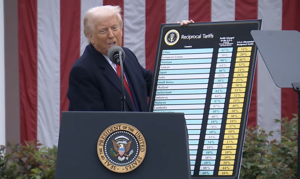
Appellate court judges scrutinized President Donald Trump’s tariff authority on Thursday, asking attorneys on both sides of the case tough questions about the president’s authority to restructure global trade without help from Congress.
Trump has used the International Emergency Economic Powers Act to underpin his “Liberation Day” tariffs. On April 2, Trump announced reciprocal tariffs on nearly all U.S. trading partners. He later suspended those higher tariffs but used the threat of higher taxes to get foreign nations to agree to new trade deals. Most of the deals Trump has announced so far come with a 15% import tax on foreign countries, although some face higher rates.
Democrat-led states and five small businesses challenged Trump’s authority under the 1977 law. A lower court tossed the tariffs, saying Trump overstepped. The administration took it to the U.S. Court of Appeals for the Federal Circuit, which heard oral arguments in the case Thursday.
“IEEPA doesn’t even mention the word ‘tariffs’ anywhere,” Circuit Judge Jimmie Reyna said.
Another member of the 11-judge panel, Alan Lourie, who was appointed by George H.W. Bush, said he didn’t see anything similar in the statute.
“There’s an old expression in the law, ‘noscitur a sociis:’ ‘you know it by its friends,’ ” he said. “Tariffs seem to have no friends in that statute.”
Brett Schumate, the Trump administration’s attorney, disputed the assertion, saying Congress had granted the president broad authority to act during an emergency under IEEPA.
Attorney for the small business plaintiffs, Neal Katyal, argued Congress never gave the president such unbounded authority. He said the government was claiming that “the president can do whatever he wants, whenever he wants, for as long as he wants so long as he declares an emergency.”
Oregon Solicitor General Benjamin Gutman, who argued on behalf of the Democrat-led states, said Trump’s view of the 1977 law amounts to a “breathtaking claim to power that no president has asserted in 200 years.”
He added: “The consequences are staggering.”
Trump didn’t attend the hearing but said the tariffs are essential.
“If our Country was not able to protect itself by using TARIFFS AGAINST TARIFFS, WE WOULD BE ‘DEAD,’ WITH NO CHANCE OF SURVIVAL OR SUCCESS,” Trump wrote Thursday in a social media post.
He also said the import duties would make the U.S. wealthy. The U.S. carries more than $36.8 trillion in debt, and Congress hasn’t passed a surplus budget since 2001.
“Tariffs are making America GREAT & RICH Again,” Trump wrote in another post. “They were successfully used against the USA for decades and, coupled with really dumb, pathetic, and crooked politicians, we’re having a devastating impact on the future, and even the survival, of our country. Now the tide has completely turned, and America has successfully countered this onslaught of Tariffs used against it.”
Trump’s efforts to give U.S. companies a home-field advantage mark the most significant overhaul of global trade since the end of World War II.
The closely watched case, brought by Liberty Justice Center, could have significant financial consequences for businesses and states. A tariff is a tax on imported goods paid by the person or company that imports the goods. The importer can absorb the cost of the tariffs or try to pass the cost on to consumers through higher prices.
Phillip Magness, a senior fellow at the Independent Institute, said both sides faced difficult questions about their arguments.
“The court appeared to acknowledge that there are some circumstances where Trump could impose tariffs, but these needed to be done either on a more narrow reading of the ’emergency’ IEEPA statute or, more likely, under other trade statutes with more stringent requirements that Trump has sought to bypass,” he told The Center Square.
Thomas Berry, director of the Cato Institute’s Robert A. Levy Center for Constitutional Studies, said the judges’ questions on Thursday favored the plaintiffs.
“Based on the tenor and questions of the arguments, it appears that the challengers have the better odds of prevailing,” he said.
In May, the three-judge panel on the U.S. Court of International Trade unanimously ruled that Congress did not give the president tariff authority under the International Emergency Economic Powers Act of 1977. The ruling voided Trump’s “Liberation Day” tariffs and struck down other tariffs Trump issued under the IEEPA.
The administration appealed to the Federal Circuit, which ruled that Trump’s “Liberation Day” tariffs could remain in place while the legal challenge continued.
The appeals court didn’t issue a decision from the bench Thursday.
“It is always difficult to predict what a court will do based on a hearing, but the judges did not appear to buy the core of the Trump administration’s most expansive arguments about IEEPA,” Magness said. “This hints that they will likely impose some restrictions on Trump’s use of IEEPA at minimum, or strike down the most sweeping tariff orders under that statute.”
Trump’s attorneys have vowed to appeal the case to the U.S. Supreme Court if the federal appeals court doesn’t rule in the administration’s favor.
IT Consultant Urges Green Garden Township to Adopt Modern Cybersecurity Measures
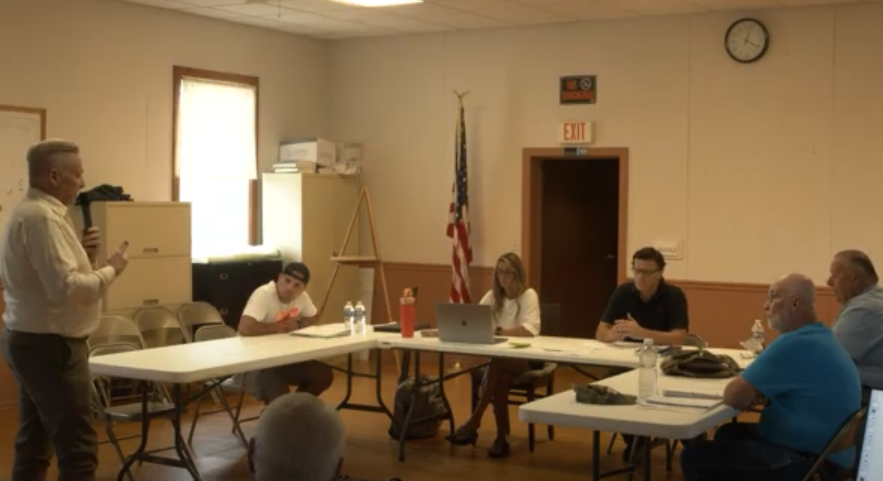
Green Garden Township’s digital infrastructure is vulnerable to cybercrime and requires an immediate overhaul, including adopting a modern, secure email system and multifactor authentication, an IT consultant told the board at its July 28 workshop. Jeff Ryder, from the Frankfort-based firm RWK IT Services, delivered a sobering assessment of the township’s current security posture, warning…
Read MoreFlorida AG, Orange County at standoff over ICE assistance
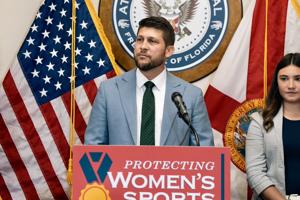
Florida Attorney General James Uthmeier and the Orange County mayor and commissioners are at a standoff over county officials working with U.S. Immigration and Customs Enforcement detention efforts through ICE’s 287(g) program.
Florida leads the country with greatest number of ICE 287(g) partnerships, more than 300 agencies as of July 31, according to ICE data.
Federal law authorizes ICE to delegate to state and local law enforcement officers the authority to perform specified immigration functions only under ICE’s direction and supervision. Local law enforcement officers can apply to participate in the Jail Enforcement Model (JEM), Task Force Model (TFM) and Warrant Service Officer (WSO) model, The Center Square reported.
In Orange County, the county corrections department was approved for the WSO model in February.
However, at a June 26 meeting, Mayor Jerry Demings directed the department to reject an addendum requested by ICE and the Florida Sheriff’s Association to allow corrections officers to transport arrested illegal foreign nationals to an ICE-approved facility without a formal request by ICE. He said the county doesn’t have the resources or staff to comply.
His direction effectively “adopted a sanctuary policy and failed to exercise best efforts in support of the enforcement of federal immigration law,” Uthmeier wrote in a letter to the mayor and county commissioners.
Uthmeier cites state law that prohibits local government entities from adopting or having in effect any “sanctuary policy” that prohibits or impedes law enforcement agencies from complying with federal immigration law and requires them “to use best efforts to support the enforcement of federal immigration law.”
Prohibiting county corrections officers “from transporting arrested aliens to ICE-approved detention facilities squarely prevents them from cooperating with ICE and participating in federal immigration operations,” he said, in violation of state law. Rejecting the addendum to the WSO agreement “constitutes a failure to use ‘best efforts’ to assist with federal immigration enforcement.”
The mayor’s directive was “particularly puzzling because illegal aliens represent an obvious danger to the county,” Uthmeier added.
He cited recent arrests including of a Mexican national illegally in the country who admitted that while driving drunk he hit and killed a 6-year-old kindergarten student, WDBO News reported. Authorities said he had been living in the U.S. illegally since at least 2006 and his criminal history includes three DUI charges in Florida.
Other recent arrests include five Colombian nationals who committed “residential burglaries, targeting the homes and apartments of business owners while they are at work,” the Orange County Sheriff’s Office said. They were believed to be “responsible for a series of residential burglaries” in Osceola and Orange counties; two had ICE deportation warrants.
Targeted residential burglaries increased nationwide under the Biden administration as the border crisis escalated – and remain ongoing. Authorities nationwide discovered they are organized by a South American theft group (SATG) primarily by Colombians and Chileans exploiting immigration policies, The Center Square reported.
Uthmeier said the commissioners must immediately adopt the addendum and allow county corrections officers to work with ICE or be sued and even removed from office.
The mayor told reporters, “the notion that we have somehow not cooperated with ICE is a misnomer,” Fox 35 Orlando reported. “We already have shortage of correctional staff at Orange County Jail,” he said. With staff and funding shortages, they can’t pull resources for transportation, he said. Doing so would make the county and jail less safe, he argues.
Commissioners are expected to discuss the AG’s directive at their meeting next Tuesday.
Four Cubans face up to 832 years in prison for theft ring in Florida, Texas

Four Cuban nationals who were charged in connection to a criminal theft ring operating in Florida and Texas face up to a combined 832 years in prison if convicted, as well as deportation.
Their arrests “exemplify the dangers of an open border policy,” Florida Attorney General James Uthmeier said at a news conference led by Hillsborough County Sheriff Chad Chronister whose deputies busted the crime ring.
One Cuban was in the U.S. on a green card from the Obama era, three illegally entered under the Biden administration, Uthmeier said. “They’ve all got criminal records, and they shouldn’t have been here. Yet here they are operating this organized scheme to defraud our citizens.
“Let this be an example to people out there: leave our citizens alone.”
Chronister said his Organized Crime Task Force detectives launched an investigation in May after noticing a pattern of thefts of Electronic Control Modules (ECMs) from freightliner semi-trucks parked in short-term storage lots. ECMs are considered the “brain” of a truck; without them, the vehicles are completely inoperable, Chronister said.
The detectives suspected the thefts were part of a larger criminal enterprise, confirmed by additional information provided by the Lee County Sheriff’s Office.
Working with the AG’s Office of Statewide Prosecution, they obtained 25 search warrants and investigative subpoenas. Other agencies involved in the operation included the Florida Department of Law Enforcement, Palm Beach County Sheriff’s Office, and Miami-Dade Police Department.
The theft ring victimized 93 people and caused $400,000 worth of ECM thefts and $370,000 in damages by prying open engine compartments and cutting wiring harnesses to remove the ECMs, Chronister said.
Investigators found that the EMCs were stolen from semi-trucks throughout Florida and Texas. Through evidence and surveillance, they were able to tie the alleged perpetrators to ECM theft cases in Hillsborough, Duval, Lee, and Polk Counties in Florida and in Travis and Williamson counties in Texas.
The Cuban nationals, based in Miami and Palm Beach counties, are “believed to be in the U.S. without legal status,” he said.
Cuban nationals Geosvany Figuerdo-Gonzalez, 27, Orlando Martínez-Dorta, 27, Brian Sanchez-Perez, 28, and Liovel Urra-Penate, 28, were all arrested and face a combined 139 counts of RICO, attempted RICO, grand theft and criminal mischief charges.
All four were arrested and charged with conspiracy to engage in racketeering. The first three were charged with a combined 65 counts of grand theft 3rd degree and 65 counts of burglary of unoccupied conveyance (travel across county lines) as well as criminal mischief $1,000 or more.
All four defendants face up to a combined 832 years in prison and deportation.
“Every single one of them has a criminal history,” the sheriff said. “Some of them more expansive than others.”
U.S. Immigration and Customs Enforcement placed detainer requests on three of them. A fourth’s permanent resident status is being investigated, he said.
Detectives learned there is a strong secondary market for ECMs, Chronister said, with ECMS being sold for $3,000 to $10,000 apiece. They also learned that criminals are selling the parts to a broker in Texas who wipes them clean and resells them, he said. Investigators turned over this information to federal law enforcement partners to launch an extended investigation. Additional individuals are expected to be charged, he said.
“This wasn’t petty theft; this was a calculated criminal enterprise targeting people who help keep our economy moving. These suspects crippled hardworking truck drivers by stealing the technology that powers their livelihoods,” Chronister said. “Thanks to the relentless work of our Organized Crime Task Force and our law enforcement partners, we’ve shut down this operation and sent a clear message: if you cross into Hillsborough County to commit a crime, we’ll cross every line to stop you.”
“We have made it clear that crime doesn’t pay in Florida, and if you’re an illegal alien, we will work with the Trump administration to remove you from our country,” Uthmeier said. “Our statewide prosecutors will ensure the only thing coming for these criminal aliens is a strong prison sentence and a flight back to where they came from.”
HHS stands by new eligibility requirements for Head Start

Federal funding is in jeopardy for a number of health, education and social service programs throughout the nation.
This comes after the Trump administration recently reinterpreted the Personal Responsibility and Work Opportunity Reconciliation Act to restrict federal funds for people who can’t verify their immigration status.
One of the programs this will affect is Head Start and its counterpart Early Head Start, which are federally-funded early childhood education programs designed to promote the school readiness of young children from low-income families.
Federal officials are standing by the administration’s decision to prioritize citizens and “qualified aliens” for this funding.
“HHS is enforcing a long-standing federal law, which provides access to federally funded public benefits to individuals lawfully present in the United States,” Andrew G. Nixon, director of communications for the U.S. Department of Health and Human Services, told The Center Square in an exclusive statement.
“Head Start will remain open and accessible to millions of eligible children across the country,” Nixon added. “However, programs funded by U.S. taxpayers must follow federal law in determining eligibility. This ensures fairness and integrity in the use of public resources, particularly in programs that serve vulnerable populations.”
To prove eligibility, Head Start programs will be required to verify the immigration status of children. Under the statute in question, the following would be deemed a “qualified alien” and would be exempt from the funding restrictions:
• Lawful permanent residents admitted under the Immigration and Nationality Act.
• Aliens granted asylum.
• Certain refugees.
• Certain aliens paroled into the U.S. or whose deportation is withheld.
• Individuals granted “conditional entry.”
Nixon told The Center Square that the U.S. Administration for Children and Families plans to soon release guidance on the new interpretation.
The federal government currently pays for over 750,000 kids nationwide to be enrolled in Head Start and Early Head Start, according to the National Head Start Association.
California currently has by far the highest number of students enrolled in Head Start and Early Head Start, at 75,000.
Nevada has just 1,500, while Colorado has 8,000 and Arizona has 12,000. This is all according to data from Head Start.
Concerned about the financial impact on their states and the potential impact of this rule reinterpretation, all four of those states have joined a multi-state lawsuit against the Trump administration challenging this decision.
“This is yet another outrageous attempt by this administration to workaround the law and disrupt critical services Arizonans depend on every day,” said Arizona Attorney General Kris Mayes. “What do they think will happen when Head Start, Meals on Wheels, and Victim Services shutter? Arizonans will have to foot the bill for emergency childcare, scramble to figure out how to feed their family, and go without the support they deserve and are owed by law.”
In fiscal year 2024, the federal government spent over $12 billion on Head Start, which employed 251,000 staff nationwide.
The Trump administration has been persistent in its efforts to make cuts, with staff layoffs and funding uncertainty causing concern for the future of the program.
“There are over 17,000 Head Start centers nationwide that help kids and families thrive, and these centers are particularly important in serving rural communities with fewer options for care,” said an April statement from the U.S. Senate Committee on Appropriations. “Since taking office, President Trump has gutted the offices that keep Head Start centers and child care programs across the country running.”
The Trump administration has a different stance.
“It is the responsibility of HHS to uphold the law as written,” Nixon said. “The department remains committed to supporting eligible children with high-quality early education while adhering to the law.”
It is unclear how many students the new eligibility requirements might affect as Head Start has at no time required parents and/or students to present citizenship or immigration documentation.
The Arizona Department of Education and the Colorado Department of Early Childhood told The Center Square that it could not comment on the issue at this time.
The Arizona Head Start Association, the Colorado Head Start Association, the Nevada Department of Education, and the California Department of Education did not respond to requests for comment by the time of publication.
EPA’s endangerment finding repeal could end greenhouse gas regulations in the Clean Air Act
Energy advocates are pleased by the Environmental Protection Agency’s proposal to repeal the Obama-era Endangerment Finding that has imposed strict regulations on the automobile industry and cost the nation $1 trillion, with one saying the move could lead to the end of EPA greenhouse gas regulations via the Clean Air Act in general.
The Competitive Enterprise Institute’s Daren Bakst told The Center Square that “Congress never envisioned or authorized the EPA to effectively tell Americans what cars they should drive or to act as the nation’s grid manager.”
Bakst is director of the Competitive Enterprise Institute’s (CEI) Center for Energy and Environment and senior fellow, CEI being a nonprofit dedicated to reforming “America’s unaccountable regulatory state.”
Bakst said that “if the EPA finalizes this rule rescinding the 2009 endangerment finding, there will certainly be litigation.”
“Assuming the rule survives legal scrutiny, then this would mean that the EPA can’t regulate greenhouse gas emissions from new motor vehicles,” Bakst told The Center Square. “There are multiple lines of argument being made in the proposed rule, so the effect of any final rule will depend on what arguments win the day.
“For example, it is possible that the Supreme Court, if it takes up the case, may decide that regardless of any endangerment analysis, the agency doesn’t have the authority to regulate these greenhouse gas emissions,” Bakst said.
“There are recent legal developments, such as the fleshing out of the major questions doctrine, which could lead to such an outcome,” Bakst said.
“Such a holding could be broad enough so that it very well could mean the agency can’t regulate greenhouse gases throughout the Clean Air Act in general,” Bakst said.
When asked if there are any other necessary changes as it concerns the EPA and motor vehicles, Bakst told The Center Square that “Congress needs to do its job” and “lawmakers need to expressly clarify that the EPA doesn’t have the authority to regulate greenhouse gases.”
“Even if it doesn’t do this, it should establish some clear limits on how far the agency can go in terms of its rules,” Bakst said.
“For example, there should be wide support for prohibiting the agency from issuing rules that kill off gas-powered cars or force the country to switch to unreliable sources of electricity,” Bakst said.
“By establishing some guardrails against the most extreme rules, the American people won’t be constantly under fear that the EPA will use its alleged power to regulate greenhouse gases as an excuse to change the very nature of our economy and society,” Bakst said.
Bakst also told The Center Square that “it is very important to recognize that the [EPA] in this rule isn’t saying that greenhouse gases in general don’t endanger public health or welfare.”
“This rule is focused on whether a narrow subset of domestic greenhouse gas emissions, in this case from new motor vehicles, cause or contribute to air pollution that may reasonably be anticipated to endanger public health or welfare,” Bakst said.
Founder and executive director of energy advocacy nonprofit Power the Future Daniel Turner said in a statement obtained by The Center Square that the EPA’s action is “a long overdue and much-needed step toward undoing Obama-era rules that gave power to unelected bureaucrats so they could make sweeping decisions about America’s energy future.”
When reached, Power the Future referred The Center Square to Turner’s statement.
“With this action, the Trump Administration is removing power from the shadows – where activist lawyers and career bureaucrats operated for years – and restoring accountability to American energy decisions,” Turner said.
Administrator Lee Zeldin “deserves great credit for this bold and decisive move,” Turner said.
When asked for comment, neither the EPA nor the Environmental Defense Fund – a climate justice group – responded.
CEI senior fellow Marlo Lewis, Jr. said in a statement obtained by The Center Square: “People who worry that repealing EPA’s ban on sales of gas- and diesel-powered cars will lead to a climate meltdown should relax,” Lewis said.
“The so-called climate crisis is a political narrative, not a scientific finding,” Lewis said. “The average person’s risk of dying today from extreme weather is more than 99 percent lower than it was a hundred years ago.”
“That great news, which the endangerment finding completely overlooked, has nothing to do with emissions or changes in the weather and everything to do with the wealth creation and technological innovation supported by humanity’s development and use of abundant, affordable energy resources,” Lewis said.
“By removing regulatory risks to innovation and investment, repeal of the endangerment finding should help foster a more climate-resilient economy,” Lewis said.
‘Make America Fish Again’ campaign urges policy review

Charter captains, commercial fishermen and recreational fishing advocates launched a national campaign this week urging President Donald Trump to issue an executive order restricting foreign industrial fishing in U.S. waters.
The campaign calls for new protections to defend American jobs, marine ecosystems and the future of coastal communities.
The campaign, titled “Make America Fish Again,” was introduced this week at a virtual news conference with participants from Virginia, Maryland, Louisiana and other coastal states. Organizers say foreign-controlled fleets are overharvesting forage fish like menhaden, herring and mackerel. These small schooling species serve as prey for larger predators such as striped bass, tuna and whales.
They are asking President Donald Trump to take executive action to ban midwater trawling and reduction fishing, direct NOAA to set science-based catch limits and prioritize access to U.S. waters for domestic fleets.
“Only the Lord can save more fish than Donald Trump,” said Capt. Vinnie Calabro, a commercial striped bass fisherman and charter operator.
Virginia’s central role in the issue
Virginia is at the center of the debate. According to the Atlantic States Marine Fisheries Commission, Virginia received 75.2% of the total Atlantic menhaden catch allocation in 2023. Ocean Harvesters, a Reedville-based company, operates the menhaden operating in the commonwealth. Ocean Harvesters has a long-term supply contract with Omega Protein, which is owned by Canada-based Cooke Inc.
U.S.-based Ocean Harvesters has defended its work in Virginia, noting that menhaden fishermen have operated continuously for over 145 years in the region.
“Ocean Harvesters vessels are crewed primarily by American fishermen, many of whom are multi-generational, holding the same jobs as their fathers and grandfathers. The fishery employs hundreds of local workers directly, and hundreds more indirectly, and has long been one of the best sources of good-paying jobs in the region,” the company said in a statement.
Menhaden are not directly consumed by people but are processed into fishmeal and oil. Sportfishing and conservation groups argue that industrial “reduction fishing” depletes the base of the marine food chain and harms both ecosystems and the fishing economy.
“Our anglers have long been concerned about large-scale reduction fishing in our fragile Chesapeake Bay,” said Steve Atkinson, chairman of the Virginia Saltwater Sportfishing Association. “We encourage President Trump to protect these critical forage fish and our fishing economy.”
The news release cites federal data showing 2.3 million U.S. jobs and a $321 billion domestic fishing economy could be affected by overfishing. In Virginia and Maryland, striped bass harvests have dropped by more than half since the mid-2000s, according to NOAA Fisheries.
In the Chesapeake Bay, a 2023 study published in Frontiers in Marine Science reported that osprey reproduction in the bay’s main stem fell to 0.6 chicks per active nest, below the 1.15 threshold needed for sustainability. Researchers linked the decline to reduced availability of menhaden, a key forage species.
“This is more than fishing,” said Capt. Michael “Red” Frenette, a Louisiana charter guide featured in the campaign video. “I’m speaking up for thousands of communities like mine. We’ve had enough.”
The campaign has now called on Trump to issue an executive order with four main directives:
Ban midwater trawls for forage speciesEnd reduction fishing of small bait fish in U.S. watersDirect NOAA to manage forage fish for ecosystem healthSet science-based catch targets to protect predator species
Organizers say the effort aligns with the president’s focus on economic nationalism and marine conservation.
As previously reported by The Center Square, the conflict centers on local anglers’ claims that a Canadian-owned company is dominating menhaden fishing in U.S. waters. A federal judge dismissed a 2021 lawsuit in January against Cooke Inc., Ocean Fleet Services, Ocean Harvesters and others.
The lawsuit had argued the companies misrepresented their structure to qualify for U.S. fishing permits in violation of federal ownership rules.
The judge ruled the claims didn’t meet the legal standard under the False Claims Act. But the plaintiffs appealed, arguing the companies violated the American Fisheries Act, which requires commercial fishing vessels to be U.S.-owned and controlled.
A group of law professors backed the appeal, saying in a court brief that the ruling overlooked states’ long-standing rights to protect wildlife and weakened natural resource protections.
Ocean Harvesters, which operates the vessels, said it follows all U.S. laws.
“As required by U.S. law, all menhaden fishing is conducted by U.S.-owned fishing companies, and vessels are crewed primarily by American fishermen,” the company said.
It also said that it operates in a tightly-regulated industry and denied overfishing.
“The Atlantic States Marine Fisheries Commission, the interstate body that manages menhaden, has repeatedly found that the species is not overfished and that overfishing is not occurring – most recently confirming this finding in its 2022 stock assessment,” Ocean Harvesters said. “The Gulf States Marine Fisheries Commission similarly found in 2024 that Gulf menhaden is not overfished and overfishing is not occurring.”
In April, President Trump issued a separate executive order that expanded commercial fishing access in the Pacific Remote Islands Marine National Monument. The order opened federal waters to U.S.-flagged vessels within 50 to 200 nautical miles of the monument’s boundaries. A White House fact sheet said the move would support jobs in places like American Samoa and help counter “rampant illegal, unreported, and unregulated fishing by foreign fleets.”
The Center Square contacted the White House for comment, but had not received a response by the time of publication.
Trump extends Mexico trade talks for 90 days
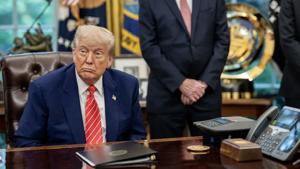
The deadline for a trade deal between the United States and Mexico will be extended for 90 days, President Donald Trump announced on social media.
“The complexities of a Deal with Mexico are somewhat different than other Nations because of both the problems, and assets, of the Border,” Trump wrote on social media.
Trump said the extension will still leave in place a 25% tariff against fentanyl; a 25% tariff on cars; and a 50% tariff on steel, aluminum and copper that the president has imposed over the last several months.
Trump said Mexico agreed to terminate its non-tariff trade barriers “immediately” while a deal is organized in the next 90 days.
“We will be talking to Mexico over the next 90 Days with the goal of signing a Trade Deal somewhere within the 90 Day period of time, or longer,” Trump wrote.
Trump said the United States will continue to monitor security, drug distribution and immigration at the southern border.