Posts by Newspaper Staff
WATCH: Use of National Guard debated in U.S. Senate as Illinois case lingers
While the use of the National Guard remains on hold in Illinois, pending a legal challenge, the U.S. Senate is debating having troops on American streets.
In October, President Donald Trump ordered the National Guard to the streets of Illinois to assist in protecting federal personnel and property around enforcing immigration law after already deploying troops in Washington D.C. and Los Angeles and later in North Carolina and elsewhere. The state of Illinois sued and a district judge blocked the Guard’s deployment on preliminary grounds. The issue is pending in an appeals court. The Trump administration has asked the U.S. Supreme Court to intervene.
Illinois U.S. Sen. Tammy Duckworth, D-Schaumburg, told the U.S. Senate Armed Services Committee Thursday that using the National Guard in such a way sends the wrong message.
“We’ve seen [Department of Homeland Security] agents dressing in camouflage and wielding military style weapons,” Duckworth said. “They’re making it hard for Americans to tell the difference between abusive federal agents and professional troops.”
U.S. Sen. Eric Schmitt, R-Missouri, said there’s been a more than 1,000% increase in attacks against immigration enforcement officers.
“This is insane and the condoning people blocking off vehicles from enforcing the law, these [Immigration and Customs Enforcement] agents, this is a powder keg. It’s a powder keg,” Schmitt told the committee.
Court documents show the federal government justified the deployment of the guard in Illinois to protect federal personnel and property from protesters that turned violent around immigration enforcement.
Duckworth said it’s the immigration officials who are the threat to Illinois communities.
“It is not ICE agents that are being attacked,” Duckworth said. “ICE agents are the ones who teargassed over two dozen Chicago police officers. ICE agents are the ones who teargassed toddlers.”
Schmitt said the rhetoric against immigration enforcement has gone too far.
“The president of the United States has very clear authority to send them to protect federal buildings and to protect law enforcement, which is all that’s happening,” Schmitt said.
The hearing comes on the heels of two Virginia National Guard soldiers being shot blocks from the White House on the day before Thanksgiving, one of whom later died.
Suspect in Charlie Kirk assassination makes first in-person appearance in court
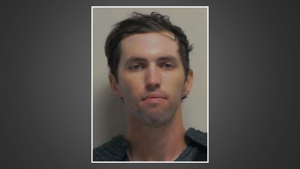
The Utah man charged with assassinating conservative activist Charlie Kirk appeared in person before a Utah court Thursday for the first time since his arrest.
Thursday’s hearing covered some evidentiary and procedural issues ahead of the trial of 22-year-old Tyler James Robinson, who has been charged with multiple felonies in connection with Kirk’s murder.
Robinson wore gray dress pants and a light blue button-down shirt with a softly patterned tie. In an earlier audio-only virtual hearing, the judge had agreed to allow Robinson to wear civilian clothing at pretrial hearings, as the defense had argued his jail attire could prejudice potential jurors.
Though in regular clothing, Robinson still had to wear handcuffs in court and even though the judge had earlier ruled that his shackles couldn’t be visible in any media photographs or video captured in the courtroom, they were visible on at least one livestream Thursday.
Robinson appeared fairly relaxed before the hearing started, even smiling some while talking quietly with some of his lawyers.
Judge Tony Graf Jr. of Utah’s Fourth Judicial Court began the hearing by listing the three issues they would be covering. The parties were to discuss which portions of the audio recording of an Oct. 24 closed hearing would remain sealed and which, if any, could be made public. According to a statement from the Utah County Attorney’s office, the portions in question concerned “the Defendant’s motion to appear at hearings in civilian clothing and without restraints.”
This part of the hearing was closed to the public.
Robinson’s lawyers asked Graf if the defendant’s parents and brother, who attended the hearing, could be present for that portion, but after the prosecution voiced a concern, Graf ultimately decided against it.
“My only concern with that, Your Honor, is that we’re going to be talking about court security measures, and I don’t know that we’ll have to go into a lot of detail about that, but I do have concerns about those issues being discussed in public,” a state attorney said.
“Given the nature and the sensitivity of it, I believe it is appropriate to treat all parties and all in the public equally, though I do recognize their relationship with Mr. Robinson,” Graf said.
After they concluded that part of the hearing, everyone reconvened in the courtroom and turned to two other matters Graf had mentioned: The state’s motion to amend or clarify the gag order and a motion filed by media lawyers that they would receive notice of any motions to close, seal or reclassify any evidence in the case.
The prosecution argued that the case’s gag order was vague and overbroad and asked that the term “witnesses” be clearly confined to just the prosecution team – not to any witnesses the state might call upon. Legally, there are strict rules about how a court can restrain the speech of non-attorney trial participants, and some people connected to the case should be allowed to speak rather freely about it, the prosecution argued.
“And I think the court also needs to note that there are several people associated with this case who have very significant interest in exercising their First Amendment rights and talking about how this case has affected them,” a state attorney said.
On the second point, the defense reiterated that they do not believe they should have to give media lawyers a copy of its pleadings in advance, citing concerns about leaks and media “chaos” being brought into the courtroom.
Media attorneys continued to push for limited party status in the case, so they could be kept abreast of important developments.
Graf said he would have a decision on the first issue soon and the parties scheduled another virtual hearing for Dec. 29, where he will issue rulings on the other two. The next in-person hearing will be Jan. 16.
Pro-life orgs call out FDA, Makary for not fulfilling promise to review abortion drug

Pro-life groups are holding the U.S. Food and Drug Administration and its commissioner Marty Makary accountable for leaving its promise to review the “dangerous” abortion drug mifepristone continually unfulfilled, with one organization calling for the commissioner to be fired due to his having “slow-walked” the review.
Director of Legal Affairs & Policy Counsel Katie Daniel at Susan B. Anthony Pro-Life America told The Center Square: “The FDA should be led by a commissioner who prioritizes women’s and children’s health over politics and who does not undermine the president’s position that states should have the right to enact and enforce pro-life protections.”
SBA Pro-Life America recently called for Makary to be fired due to reports of his having “slow-walked” the promised safety study on the abortion drug.
Daniel told The Center Square that “the new [FDA] commissioner should reinstate the safeguards that were in effect under the first Trump administration and stop upholding the dangerous Biden policy of abortion drugs by mail.”
“And the commissioner should be transparent about how and when they will fulfill the long-promised safety review of these drugs,” Daniel added.
Daniel said that “as long as the Biden mail-order abortion policy remains in place, untold numbers of babies are dying, women are being harmed, and abusers are empowered.”
“Look no further than today’s news headlines,” Daniel said, referencing the reports about “an Ohio doctor who’s been criminally charged after he bought abortion drugs online and forced them down his pregnant girlfriend’s throat.”
“His horrific action was possible because of FDA’s mail-order policy,” Daniel said.
When reached, HHS press secretary Emily Hilliard told The Center Square: “FDA takes the time necessary to conduct comprehensive scientific reviews, and that is what Dr. Makary is ensuring as part of the Department’s commitment to gold-standard science and evidence-based reviews.”
The American Association of Pro Life OBGYNs (AAPLOG) also finds issue with the FDA slow-walking its promised “urgent review of dangerous abortion pills,” stating: “No more empty promises.”
AAPLOG CEO Dr. Christina Francis told The Center Square that “despite promising a thorough review of the safety of mifepristone, [the FDA has] not only apparently stalled the process for political gain but also approved a second generic version.”
“It’s a clear case of speaking out of both sides of their mouth, breaking promises to the pro-life movement and to the American public,” Francis said.
“But women’s lives are on the line, and that’s something we cannot ignore as physicians who care deeply for our patients,” Francis said. “The FDA shouldn’t either.”
Francis explained that “chemical abortion pills have not only ended the lives of millions of preborn children but have also caused significant harm to women.”
“Physical complications are not uncommon and include hemorrhage, retained tissue, severe infections, and the need for emergency surgery,” Francis said.
“The mental health impact is equally alarming, as many women are never told, or are not prepared for the fact, that they will endure labor and then likely see their baby and sometimes even watch their baby die,” Francis said.
“This is leading to cases of PTSD and has the long-term impact of increasing rates of depression, substance abuse and even suicide,” Francis said.
“As a professional medical organization representing nearly 8,000 medical professionals across the country, AAPLOG hopes the FDA will stop making empty promises and do its job,” Francis said. “The health and safety of our patients depend on it, and they deserve better than political maneuvers.”
In October, the FDA faced criticism for approving a generic version of the abortion pill despite its promises to review data on the dangers of the drug mifepristone, as Christina Francise referred to.
Additionally, as SBA’s Katie Daniel pointed out, “The American people do not support unrestricted mail-order abortion.”
“A recent poll found 8 in 10 voters agree no one should be able to get abortion drugs online or from a foreign country and be able to give them to a woman without her knowledge or consent,” Daniel said.
Bill to extend enhanced Obamacare subsidies dies in Senate

As expected, lawmakers failed to pass either of the competing partisan health care bills in the Senate on Thursday.
The result all but ensures that the enhanced premium tax credits through legislation known as Obamacare will revert to prepandemic levels in 2026.
No Democrats supported the Health Care Freedom for Patients Act authored by Republicans. Among other reforms, the proposal would have replaced the enhanced premium tax credits with Health Savings Account contributions and funded cost-sharing reduction payments.
Four Republicans – Sens. Josh Hawley of Missouri, Dan Sullivan of Arkansas, Lisa Murkowski of Alaska and Susan Collins of Maine – also voted for Democrats’ Lower Health Care Costs Act, a three-year extension of the enhanced premium tax credits.
Both sides are now blaming each other for the premium hikes that millions of Americans will face in 2026.
“Senate Republicans just blocked our bill to stop health care premiums from skyrocketing,” Senate Appropriations Vice Chairwoman Patty Murray, D-Wash., wrote on social media. “This vote was Republicans’ last chance to do something before costs jump on January 1 – once again, they refused. This is health care sabotage and we will hold Republicans accountable.”
The Congressional Budget Office estimated that Democrats’ bill would have raised the deficit by $83 billion. Most Republicans opposed the legislation due to both the price tag and because it would merely “subsidize the broken system” – in the words of House Speaker Mike Johnson – that is riddled with fraud.
“Taxpayer-funded premium subsidies go directly to insurance companies and prop up proven examples of waste, fraud and abuse,” Sen. John Boozman, R-Ark., wrote on social media on social media. “Yet Democrats are insisting on no reforms while throwing more money at the failing system they created, without a single Republican vote.”
A recent bombshell Government Accountability Office report uncovered systemic fraud risk and confirmed fraud in the enhanced subsidies. More than 90% of office’s fake applicants received coverage, with GAO noting that “agents and brokers have a financial incentive to maximize enrollments” under the current tax credit system.
“I’ve never seen a party so committed to generating profits for insurance companies as what I’m seeing right now with the Democrats,” said Sen. Bill Cassidy, R-La., a cosponsor of the Republicans’ bill. “The status quo doesn’t work.”
‘Political conflict’ alleged over WA AGO’s involvement in initiative legal battle

The Washington State Attorney General’s Office billed more than 11,000 hours of attorney and staff work on lawsuits against the federal government in an eight-month period following the November 2024 election, according to records obtained by The Center Square.
More than a third of those hours were spent working on a lawsuit against President Donald Trump’s executive order regarding federal funding for medical providers who perform gender-affirming procedures on children.
The AGO’s legal arguments and time spent on the lawsuit has drawn concern from a state-based organization behind an initiative to prevent boys from participating in girl’s sports. The group is concerned about whether the AG will adequately defend the initiative’s ballot title, summary or legality if it passed and was legally challenged.
“Given the amount of legal work already being done at the direction of the AGO on a potentially contentious issue, Let’s Go WA has significant concerns about the myriad political conflicts that appear to be at play between a highly partisan AGO, his former firm that performs substantial work on behalf of the state at his direction, and our current ballot initiative effort that will likely be challenged in court once successful,” Let’s Go Washington Director of Communications Hallie Herzberg wrote in an email to The Center Square.
Between November 2024 and June, the AGO billed 11,010 hours on 22 lawsuits in federal court. Before Trump was inaugurated in January, 177 hours were billed in November-December 2024 on a lawsuit against a potential birthright citizenship executive order. The billing documents don’t show how much taxpayers paid for those staff hours.
On Jan. 28, Trump signed Executive Order 14,187, titled “Protecting Children from Chemical and Surgical Mutilation.” The order cut federal funding, such as research and education grants, to medical institutions that perform underage gender affirming procedures such as prescribing puberty blockers and cosmetic-style mastectomies on females.
In its lawsuit, the AGO argued that the EO “is a cruel and baseless broadside against transgender youth, their families, and the doctors and medical institutions that provide them this critical care. It is an official statement of bigotry from the President that directs agencies to openly discriminate against vulnerable youth on the basis of their transgender status and sex. It is also a blatant abuse of power. The Order usurps spending and legislative powers belonging exclusively to Congress, and seizes the States’ historic police powers to regulate the practice of medicine in violation of the Tenth Amendment.”
According to the records obtained by The Center Square, AGO attorneys and staff billed 2,800 hours in February alone on that lawsuit, which is still in federal court.
In Thurston County Superior Court, the AGO this year defended its draft ballot title and summary for Initiative No. IL26-638, which would prohibit boys from participating in girls’ sports, against a legal challenge by the Legal Counsel for Youth and Children, nonprofit organization based in Seattle. The initiative is being sponsored by Let’s Go Washington.
In an email to The Center Square, Let’s Go Washington wrote that “there has been deep suspicion with supporters of the initiative process going back to $30 car tabs about representation by the Attorney General’s Office on behalf of popularly ballot measures that are passed and then challenged. After the 2024 election, the feedback was overwhelmingly that voters were frustrated by confusing ballot title language chosen by the AGO, which is always a contentious process.”
Let’s Go Washington also noted in their email concerns about perceived conflicts of interests with a lawsuit involving an initiative regarding the use of natural gas use in buildings for heating and cooking. At the time the initiative was on the ballot, now-Attorney General Nick Brown was openly opposed to the initiative while a partner with Pacifica Law Group, which is now suing the state over the initiative despite having active contracts with the AGO that required its permission for Pacifica to sue its client.
AGO Deputy Communications Director Mike Faulk wrote in an email to The Center Square that “if the sponsor of a measure thinks we have written a biased title or summary, they have the opportunity to challenge it in court. Here, the sponsors of the measure (Let’s Go Washington) did not do that. In fact, a group opposed to the measure challenged the ballot title we wrote as too biased in favor of the measure, and Let’s Go Washington intervened in the case to help defend the title we had written. It is obvious we neutrally drafted the ballot title and summary for this measure.”
Regarding the ability of the AGO to defend the initiative if passed and then challenged, he wrote “we routinely defend state laws regardless of whether the policy may conflict with other views. We’ve done that effectively many times and there’s no reason to question our ability to do that here.”
New laws: Gun storage, police background check changes take effect in 2026

Gun owners must store their firearms in secure boxes when children are around under a new state law.
Read MoreOgalla Blasts New State Solar Legislation
Will County Land Use & Development Committee Meeting | December 2025 Article Summary: During a discussion on zoning matters, Will County Board Member Judy Ogalla strongly criticized the passage of Senate Bill 25, which limits county authority over renewable energy projects. Ogalla described the legislation as “disgusting” and unfair to other developers. Solar Legislation Key…
Read MoreCommittee Postpones Vote on Brandon Road Fill Operation After Tree Clearing Allegations

Will County Land Use & Development Committee Meeting | December 2025 Article Summary: The Will County Land Use and Development Committee voted to postpone a decision on a proposed clean construction and demolition debris (CCDD) facility in Joliet Township. The delay came after residents presented evidence suggesting the applicant may have cleared protected woodlands before…
Read MoreMeeting Summary and Briefs: Will County Planning and Zoning Commission for December 2, 2025

Will County Planning and Zoning Commission Meeting | December 2, 2025 Overall Meeting SummaryThe Will County Planning and Zoning Commission met on December 2, 2025, to consider a variety of zoning map amendments, special use permits, and variances. The meeting was highlighted by the approval of a new women’s rehabilitation facility in Joliet and a…
Read MoreMetra Announces No Fare Hikes; Highlights Bridge Projects in Joliet and Mokena

Will County Committee of the Whole Meeting | December 2025 Article Summary: Metra officials presented a balanced 2026 budget to the Will County Board, confirming that riders will not see a fare increase in the coming year. The agency also detailed capital projects affecting Will County, including bridge replacements and the rollout of new battery-powered…
Read More