Posts by Newspaper Staff
Assembly leaders call for Dugan’s resignation, threaten impeachment

Wisconsin’s Republican Assembly leaders say they will begin impeachment proceedings if Milwaukee County Judge Hannah Dugan does not resign from her post immediately following a felony obstruction conviction Thursday evening.
Dugan was found guilty of obstructing as Immigration and Customs Enforcement officers were attempting to arrest a defendant in her court outside of the courtroom.
Assembly Speaker Robin Vos, R-Rochester, and Assembly Majority Leader Tyler August, R-Walworth, sent a statement Friday noting that the last Wisconsin judge was impeached in 1853 but that the Assembly would begin impeachment proceedings if Dugan doesn’t resign.
Dugan’s legal team indicated Thursday that she would appeal the jury’s decision.
“Under a 1976 Attorney General Opinion, Democrat Bronson La Follette stated that when a State Senator was convicted of a felony, a vacancy was created, and the Senator ‘was effectually divested of any right or title to the office. His status with reference to the office was fixed at the time of his conviction,’ the leaders wrote. “Such is the case here, and Judge Dugan must recognize that the law requires her resignation.
“Wisconsinites deserve to know their judiciary is impartial and that justice is blind. Judge Hannah Dugan is neither, and her privilege of serving the people of Wisconsin has come to an end.”
The jury found Dugan not guilty of a misdemeanor charge of concealing related to defendant Eduardo Flores-Ruiz, who was later arrested on the street outside the courthouse and has since been deported.
The obstruction charge could lead to up to five years in prison.
The Assembly leaders cited the Wisconsin constitution, which says “‘[n]o person convicted of a felony, in any court within the United States, no person convicted in federal court of a crime designated, at the time of commission, under federal law as a misdemeanor involving a violation of public trust and no person convicted, in a court of a state, of a crime designated, at the time of commission, under the law of the state as a misdemeanor involving a violation of public trust shall be eligible to any office of trust, profit or honor in this state unless pardoned of the conviction.”
“While we are disappointed in today’s outcome, the failure of the prosecution to secure convictions on both counts demonstrates the opportunity we have to clear Judge Dugan’s name and show she did nothing wrong in the matter,” her legal team said after the verdict was read. “We have planned for this potential outcome and our defense of Judge Dugan is just beginning.”
DOJ fails to fully comply with Friday deadline for Epstein files release
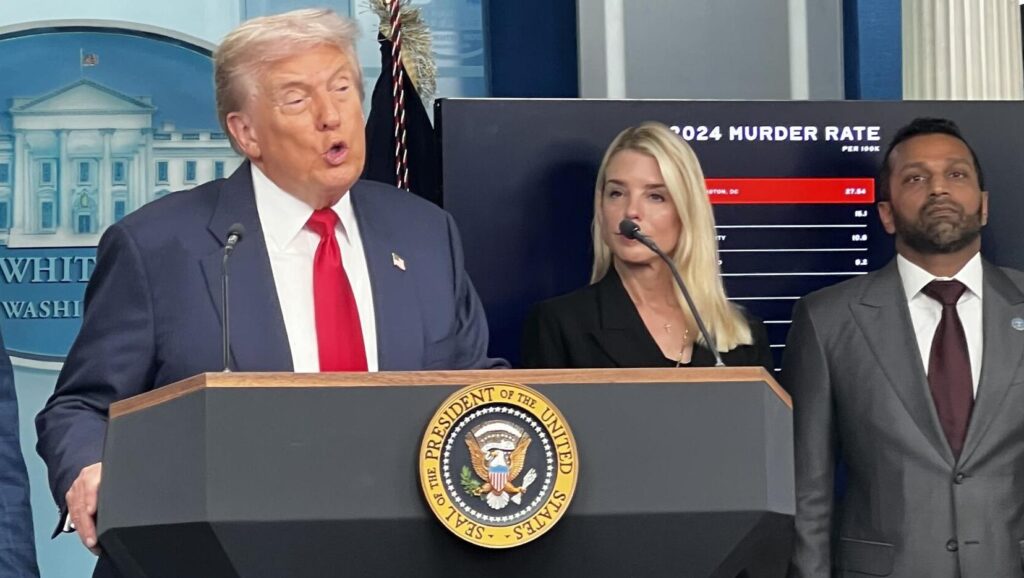
The U.S. Department of Justice will not release the entirety of the federal government’s files on sex trafficker Jeffrey Epstein by the end of day Friday, failing to fully comply with a mandate from Congress.
DOJ will release several hundred thousand documents, however, Deputy Attorney General Todd Blanche said in a Fox News interview. He estimated that “several hundred thousand more” will be released “over the next couple of weeks.”
The delay, Blanche explained, is due to the significant number of redactions that the department must complete in order to protect the identifications of witnesses and victims in the files.
By failing to fully comply with a congressional edict, lawmakers would have grounds to impeach or hold U.S. Attorney General Pam Bondi in contempt of Congress.
Congress passed the Epstein Files Transparency Act on Nov. 18, which President Donald Trump signed into law the next day.
The bill, sponsored by Reps. Ro Khanna, D-Calif.; and Thomas Massie, R-Ky., requires that the U.S. Attorney General “make publicly available in a searchable and downloadable format all unclassified records, documents, communications, and investigative materials in the possession of the Department of Justice” that relate to Epstein and his close associate Ghislaine Maxwell.
“Any Justice Department official who does not comply with this law will be subject to prosecution for obstruction of justice,” Khanna vowed.
Epstein died in jail awaiting trial in 2019 and Maxwell is currently serving a 20-year prison sentence.
President Donald Trump, former president Bill Clinton, billionaire businessman Bill Gates, and dozens of other high-profile figures have received intense public scrutiny for their connections with Epstein and Maxwell.
Trump administration pauses visa program after Brown U shooting suspect found dead
The Trump administration paused the immigration lottery visa program that approved more than 129,000 immigrants to obtain visas in fiscal year 2026.
In a social media post late Thursday, Homeland Security Secretary Kristi Noem said President Donald Trump directed her to pause the diversity lottery immigrant visa program. She said the suspected gunman of the Brown University shooting entered the country through the lottery program.
Rhode Island officials said the suspected gunman of the Brown University shooting was found dead of an apparent self-inflicted gunshot wound 50 miles away in southern New Hampshire.
Noem and authorities identified the shooter as Claudio Manuel Neves-Valente, a 48-year-old former Brown student and Portuguese national. Noem said the alleged shooter entered the visa lottery program in 2017 and obtained a green card.
“This heinous individual should never have been allowed in our country,” Noem wrote on social media.
Two students were killed and nine others were injured at Brown University on Saturday. Authorities also linked the alleged shooter to the killing of a Massachusetts Institute of Technology professor in his hometown.
The Diversity Immigrant Visa Program allots up to 55,000 immigrant visas to be available annually. Approved visas are picked from a random selection of individuals from countries with low rates of immigration to the United States. No more than 7% of approved visas can come from any one country.
In 2025, approximately 131,060 applicants were selected under the diversity visa lottery, including spouses and children. For fiscal year 2026, the United States approved 129,516 prospective applicants, including spouses and children, to obtain immigrant visas in the country.
The U.S. approved lottery winners are selected out of more than 20 million applications for fiscal year 2026. Lottery winners go through an interview process before being selected for a green card. Not all approved lottery winners are selected to receive legal status.
Approved applicants for fiscal year 2026 will likely not be affected by the program’s pause. The lottery program was created by Congress.
Meeting Summary and Briefs: Will County Committee of the Whole for Dec. 2025

Will County Committee of the Whole Meeting | December 2025 Overall Meeting SummaryThe Will County Board Committee of the Whole met on Tuesday, Dec. 9, 2025, for a series of presentations regarding the future of regional transit. Representatives from Pace, Metra, and the RTA outlined their 2026 budgets and the implications of the recently passed…
Read MoreBREAKING: Milwaukee judge guilty of felony obstruction during ICE arrest

Milwaukee Judge Hannah Dugan was found guilty of a felony charge of obstruction by a jury Thursday in a case involving the judge’s actions related to a defendant in her court that Immigration and Customs Enforcement officers were attempting to arrest outside of the courtroom.
The jury returned the verdict at 8:38 p.m. Central Time.
The jury found Dugan not guilty of a misdemeanor charge of concealing related to defendant Eduardo Flores-Ruiz, who was later arrested on the street outside the courthouse and has since been deported.
The obstruction charge could lead to up to five years in prison.
“While we are disappointed in today’s outcome, the failure of the prosecution to secure convictions on both counts demonstrates the opportunity we have to clear Judge Dugan’s name and show she did nothing wrong in the matter,” her legal team said. “We have planned for this potential outcome and our defense of Judge Dugan is just beginning.”
Former Wisconsin state judge Hannah Dugan betrayed her oath and the people she served when she obstructed federal law enforcement during an immigration enforcement operation.Today, a federal jury of her peers found her guilty and sent a clear message: the American people…— Todd Blanche (@DAGToddBlanche) December 19, 2025
Video from the courthouse depicts Dugan speaking with ICE officers in the hallway outside her courtroom and defendant Flores-Ruiz walking through a back hallway with a person identified in an affidavit as his attorney before heading to an elevator and then being chased down and arrested on the street outside of the courthouse.
🚨GUILTY. Now, lock her up.Hannah Dugan obstructed federal agents attempting to arrest an illegal alien with a violent criminal history, including strangulation, suffocation, battery, and domestic abuse. https://t.co/QhC8gPBgBS— Rep. Tom Tiffany (@RepTiffany) December 19, 2025
“Judge Dugan put her personal politics ahead of her sworn duty,” Wisconsin Sen. Julian Bradley, R-New Berlin, wrote on social media. “Judges are supposed to enforce the law and protect the public, not play political activist from the bench.”
The prosecution had plea negotiations with Dugan and her legal team but an agreement was not reached.
GOP opposes California tuition aid for Illegal Immigrants

Republicans are pushing back against California programs that provide taxpayer-funded tuition assistance to illegal immigrants, arguing the policies divert resources from the state’s taxpayers.
The California Dream Act Application allows illegal immigrants and students from mixed-status families to access state-funded financial aid for higher education.
The program applies to students attending public universities. There are currently around 9,500 California State University illegal immigrant students and about 4,000 University of California illegal immigrant students.
“Undocumented Californians are tax-paying residents,” Marissa Saldivar, assistant deputy director of communications for Gov. Gavin Newsom’s office, told The Center Square.
California Assemblymember Carl DeMaio, R-San Diego, rejected that argument, calling it a “diversionary tactic” in an exclusive interview with The Center Square.
“Whether they pay some sales tax here and there is irrelevant,” DeMaio said. “We’re talking about billions of dollars that our taxpayers in California are now being forced to pay, and fewer services are being provided to citizens, and worse treatment is being given to U.S. citizens versus illegals.”
According to the California Budget and Policy Center, illegal immigrants paid an estimated $8.5 billion in state and local taxes in 2022.
That same year, California residents paid an average of $3,734.82 in state income taxes. With roughly 19.6 million taxpaying residents, that equates to about $73.2 billion in state income tax revenue, not including sales taxes or higher-income tax brackets.
Some California educators argue that universities should continue to expand protections for illegal immigrant students.
“Universities have to keep showing support for the undocumented by making them sanctuary spaces where U.S. Immigration and Customs Enforcement cannot enter to detain and deport students,” Julián Jefferies, an associate professor of literacy and reading education at Cal State Fullerton, said. “Universities have a role in informing and advocating against the criminalization of immigrants, their scapegoating in the public media and [for] movement toward humane immigration policy.”
DeMaio told The Center Square the CDAA is “reckless and unfair to taxpayers” and incentivizes illegal immigration.
“As long as you dangle taxpayer-funded freebies to illegal immigrants, they will keep coming,” DeMaio said. “What we are doing in California is felony negligence … While the federal government is trying to secure our border, you have Democrat politicians openly promoting and advertising giveaways at taxpayer expense.”
DeMaio also argued these policies create a disadvantage for U.S. citizens seeking higher education.
“When you prioritize an illegal immigrant over U.S. citizens, you’re giving them the ability to get into a school when that slot could be for a U.S. citizen,” DeMaio said. “Or you’re allowing them to enroll in a high-demand class and take a seat from a U.S. citizen.”
DeMaio criticized Newsom’s continued efforts to enforce pro-illegal immigration ambitions and policies.
“Gavin Newsom is running for president,” DeMaio said. “I want every single voter in the nation to know that Gavin Newsom treats their son and daughter worse than someone here illegally.”
Texas reps launch new Sharia Caucus
Texans continue to lead anti-Sharia law initiatives, including launching a new caucus in the U.S. House and filing legislation to remove the tax-exempt status of organizations that fund terrorism.
U.S. Reps. Chip Roy and Keith Self, both Texas Republicans, on Thursday launched a new Sharia-Free America Caucus in the U.S. House of Representatives. They said doing so was necessary to “counter the alarming rise of Sharia Law in the United States. Sharia is a dominating force that is not compatible with the U.S. Constitution.”
“America is facing a threat that directly attacks our Constitution and our Western values: the spread of Sharia law,” Roy, who is running for attorney general in Texas, said. “From Texas to every state in this constitutional republic, instances of Sharia adherents masquerading as ‘refugees’ – and in many cases, sleeper cells connected to terrorist organizations – are threatening the American way of life.”
He also argues that “those who succumb to this political ideology seek to replace our legal system and Constitution,” saying that under Sharia law, “there is no freedom of speech, religion, or women’s rights.”
Self said, “The American way of life is under siege by radicals from a culture waging war against our Constitution and Western values. We’ve seen what happens when nations allow this infiltration: countries like France and England are on the verge of losing their identity and sovereignty. The same forces are at play here in America today, and if we don’t stop them, they will conquer our country too.”
This is the latest Sharia-related action Roy and Self have taken after filing the Preserving a Sharia-Free America Act in October. The two-page bill would direct the U.S, attorney general and secretaries of the departments of Homeland Security and State to prevent foreign nationals who observe Sharia from entering the U.S. or from remaining in the country.
Any foreign national who provides false statements about their adherence to Sharia Law would have their immigration benefits, visa or admittance to the country revoked and be considered inadmissible or deportable and removed from the U.S., according to the bill language, The Center Square reported.
U.S. Sen. Ted Cruz, R-Texas, also refiled a bill he’s filed multiple times over the past 10 years to amend the Anti-Terrorism Act of 1987 to ban all Muslim Brotherhood members from the U.S., The Center Square reported.
Last month, Gov. Greg Abbott issued three directives targeting Islamic groups, first designating the Muslim Brotherhood and the Council on Islamic American Relations (CAIR) as foreign terrorist organizations. CAIR and the Muslim Legal Fund of America sued Abbott, arguing his directives are unconstitutional and blamed Israel for his actions, The Center Square reported. CAIR also maintains it is not a terrorist organization and doesn’t fund terrorism.
Abbott also directed Texas Department of Public Safety to launch criminal investigations into the Muslim Brotherhood and CAIR and directed law enforcement officers to investigate an Islamic Tribunal operating in north Texas that claims to make judicial rulings. The tribunal operates in Self’s district.
One week after Abbott’s FTO designation, President Donald Trump issued an executive order designating the Muslim Brotherhood as an FTO.
Earlier this month, Abbott requested the Treasury Department to investigate CAIR for its alleged terrorist ties and suspend its 501(c)(3) tax-exempt nonprofit status, The Center Square reported. He cited a federal court ruling, stating, “there is ‘ample evidence to establish’ that CAIR is associated ‘with Hamas,” in the Holy Land Foundation case, one of the largest terrorism financing cases in U.S. history.
Federal law prohibits FTOs from receiving tax-exempt status; domestic organizations created by known FTOs should not have tax-exempt status, Abbott argues.
On Thursday, U.S. Sen. John Cornyn, R-Texas, introduced legislation to allow the Treasury Department to terminate the tax-exempt status of groups that provide material support to terrorism, which he argues includes CAIR. Material support includes finances, services or training, he says.
“I’m introducing legislation to strip CAIR of its tax-exempt status because no organization who bankrolls terrorists should get a tax break, period,” Cornyn said. “CAIR is a radical group of terrorist sympathizers with a long history of undermining American values and trying to unconstitutionally impose Sharia Law on Texas, which is why I stand behind Governor Abbott’s decision to designate it as a foreign terrorist organization.”
He also called on Trump to designate CAIR as an FTO “at the federal level to ensure this breeding ground for anti-American hate is starved of funding and forced to close its doors once and for all.”
Under current U.S. tax code, an entity’s tax-exempt status is suspended if it’s designated as an FTO by the State Department. Cornyn’s bill would extend the current prohibition to organizations designated as FTOs in the last three years. It also establishes procedures for the IRS to notify such organizations, for them to be able to refute the designation, and for designations to be rescinded through administrative and judicial review.
Illinois Accountability Commission hears testimony about excessive force by ICE agents. Felt like a ‘war zone’
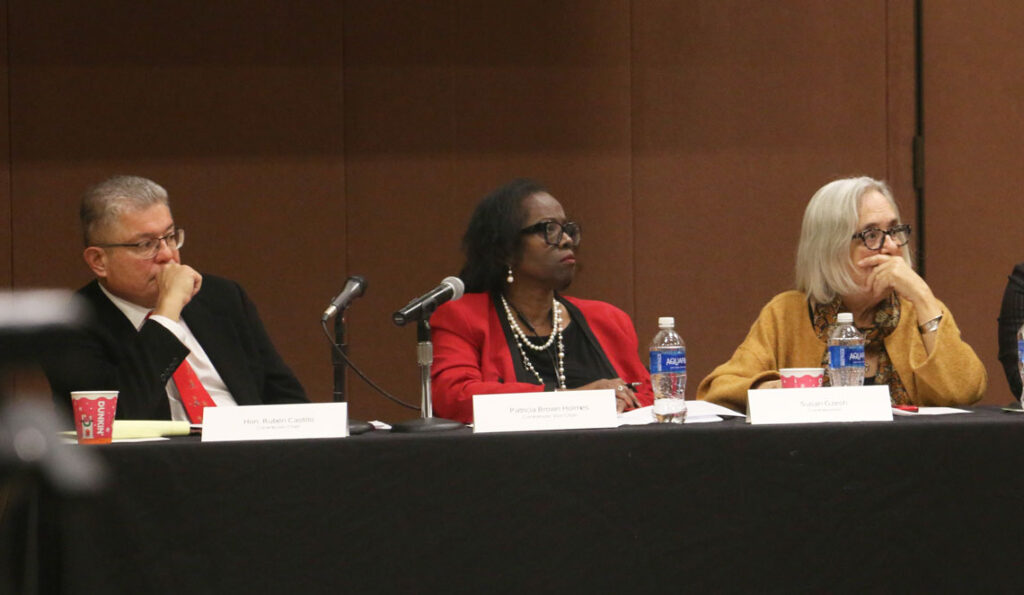
The commission heard testimony of ‘terror unleashed’ by federal immigration agents at its first meeting.
Read MorePlaintiff in redistricting lawsuit predicts Supreme Court fight
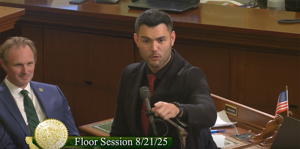
The lead California legislator heading up the federal lawsuit challenging congressional redistricting expects the case to land in the U.S. Supreme Court.
“If this has to go to the Supreme Court, we’re more than happy to take it to the Supreme Court,” Assemblymember David Tangipa, R-Fresno, and lead plaintiff in the case, told The Center Square on Thursday. “It probably will end up there either way, whether we appeal or Gov. Newsom’s team appeals.”
The case, heard this week in U.S. District Court in downtown Los Angeles, ended after two days of testimony and one day of closing arguments. The three-judge panel deciding the case – Josephine L. Staton, Kenneth Kiyul Lee and Wesley L. Hsu – adjourned the court early Wednesday afternoon.
Tangipa previously told The Center Square he believes the judges’ ruling could come by Friday.
During closing arguments on Wednesday, lawyers representing Tangipa and the U.S. Department of Justice, another plaintiff, said the Proposition 50 maps California voters approved in the Nov. 4 special election are illegal. Attorneys argued the newly-drawn maps constitute a racial gerrymander, which runs afoul of the Voting Rights Act of 1965.
Lawyers defending the maps on behalf of Gov. Gavin Newsom and California Secretary of State Shirley Weber said the maps constitute a gerrymander, but not a racial one. Rather, the maps constitute a politically-partisan gerrymander, which does not go against the Voting Rights Act, according to the attorneys.
California voters passed Prop. 50 on Nov. 4 with 64.4% of the vote, with 7,452,945 for and 4,116,810 against. Tangipa filed the lawsuit days later, alleging that the special election to re-draw California’s congressional districts amounted to a “rush-job rejiggering” of district lines. The mid-decade redistricting push was California’s response to Texas’ own mid-decade redistricting effort earlier this year. The Texas effort is designed to pick up five Republican seats in the U.S. House during the 2026 midterm election. The California map is meant to help Democrats gain five seats to counter that.
If the Prop. 50 maps are allowed to stand, the maps would be in effect for the 2026 midterm elections, the 2028 presidential election and the 2030 midterm election. Then the power to draw district maps would go back to the California Citizens Redistricting Commission. California voters approved the creation of the commission in 2008 to draw state legislative district lines before extending that power two years later to include congressional districts.
“In California, we should be able to trust that our elections are fair and transparent,” Assemblymember Alexandra Macedo, R-Tulare and a member of the Assembly Elections Committee, told The Center Square via email Thursday. “Proposition 50 disregards the California Independent Redistricting Commission’s maps and replaces them with new gerrymandered congressional lines that are now being challenged in federal court.”
Democratic legislators who sit on election committees in the California Assembly and state Senate did not respond before press time Thursday to The Center Square’s requests for comment.
Texas leaders propose solution for northern border, national security

A coalition in Texas, including law enforcement, policy experts and lawmakers, is working on solutions for northern border security.
The effort is being spearheaded by the Texas Public Policy Foundation, working with Canadian-U.S.-Future Borders Coalition, Canadian Center of North American Prosperity and Security, and others to develop national security solutions.
They’re doing so after President Donald Trump for the first time in U.S. history declared a national emergency at the U.S.-Canada border.
The longest international border in the world of 5,525 miles has been largely unmanned and unprotected with increased threats of terrorism and systemic lack of operational control, The Center Square reported. Unlike the 1,954-mile U.S.-Mexico border, there’s no border wall, significantly less technological equipment exists and far fewer agents are stationed there.
National security threats increased during the Biden and Trudeau administrations as the greatest number of illegal border crossers and greatest number on the terrorist watch list were apprehended by U.S. officials at the northern border, The Center Square first reported.
Some Canadians have expressed concerns about terrorism threats, pointing to visa policies facilitating entry to those with alleged ties to Islamic terrorist organizations, including granting citizenship to an Egyptian connected to ISIS who was arrested after planning a terrorist attack in Toronto.
Canada “has become a hotbed of radicalization, fanaticism, and jihadism,” after the Oct. 7, 2023, Hamas terrorist attack against Israel, although major Islamic terrorist incidents date to 2006, CNAPS argues. Last year, there were eight Islamic terrorism-related incidents in Canada or involved Canadians living abroad, CNAPS said. Nearly 6,000 antisemitic incidents were reported in 2023 alone, it notes, adding that “Canada’s antisemitic terrorism crisis should solidify the fact that Canada is a national security risk of the U.S.”
Getting border security right “is not optional – it’s essential,” Future Borders Coalition, which has proposed solutions, argues. “Canada and the United States share the longest undefended border in the world. Two-thirds of Canadians live within 100 kilometers of this border, more than 400,000 people and $3.6 billion CAD in goods move across it. The integrity of this border directly impacts the safety and prosperity of both nations.”
This month, CNAPS and First Nation police chiefs joined Texas sheriffs in the first international border security operation in south Texas, The Center Square exclusively reported. The police chiefs are on the front lines of border security, underfunded and understaffed, hoping the Trump administration will help them get the resources they need to combat Mexican cartels, MS-13 and transnational criminal organizations targeting their reservations. Reservations straddling the border are suffering from human, drug and weapons smuggling and trafficking, The Center Square reported.
Despite claims by the Canadian government to surge $1.3 billion for border security, First Nation police have received none of it, they argue. Canada’s Department of Public Safety plans to eliminate funding for some altogether in March, Dwayne Zacharie, president of First Nations Chiefs of Police Association, told The Center Square.
A lack of Canadian government resources has enabled organized criminal networks to infiltrate reservations, “taking advantage of our lack of resources, and that affects national security in Canada as well as in the United States,” Zacharie said.
“The Canadian government refuses to understand the threats” of transnational crime in Canada and on First Nation reservations, TPPF senior fellow Ammon Blair said at a TPPF event on northern border security. Blair, a 20-year Army veteran and 10-year Border Patrol veteran, is working with lawmakers on solutions. First Nation police organizations are being “left behind to deal with foreign terrorist organizations without giving them the resources. And that is all because Canada refuses to understand the threat,” he said.
It’s not just the government, but public perception, Jamie Tronnes with CNAPS said. “If you tell Canadians we have a cartel problem, they’ll laugh at you. They don’t believe it,” she told The Center Square. According to a recent survey, only 28% of Canadians cite immigration as a top concern; border security isn’t even listed as a topic.
“Organized crime is very agile; it adapts very quickly. When it sees a weakness, that’s what it exploits. It’s like water finding a crack. Right now, indigenous policing in Canada is a gap because we’re not properly funded and we’re not properly resourced,” Zacharie said. “There’s no such thing as national security without including all the partners, and that means First Nation policing is a huge part of the national security picture.”
Canadians and Americans need to understand that “we’re at war,” Blair said, similar to insurgents controlling territories that U.S. troops fight overseas.
Transnational criminal organizations are using “unconventional, hybrid warfare,” tactics former active duty Navy JAG Jonathan Hullian witnessed in Afghanistan, he told The Center Square. “In Afghanistan, insurgents didn’t wear national military uniforms. They waged irregular guerrilla warfare” like cartels are doing in the U.S., he says.
Transnational criminal organizations are taking over communities nationwide in the U.S., and placing bounties on federal agents, The Center Square reported. “Once an area is controlled, it’s controlled just like a foreign army” Blair said.
“They’re going to find an area where there’s very little law enforcement, including illegal alien enclaves to control, especially since we had a massive invasion over the last four years, well so did Canada,” he said.