Posts by Newspaper Staff
House Budget Committee talks fraud, entitlement abuse during hearing
The House Budget Committee looked at ways to change entitlement programs during a hearing Wednesday.
Chairman Jodey Arrington and other lawmakers addressed concerns over government spending, entitlement program abuse, and other policies that they say threaten both the economy and dignity of American workers.
“Through the One Big Beautiful Bill Act, the House has advanced reforms to restore accountability and ensure our entitlement programs actually serve the vulnerable, not schemers,” Arrington said in his opening statement.
The hearing was titled: “Reversing the Curse: Rooting Out Waste and Fraud and Restoring the Dignity of Our Work.”
Brian Blase, president of Paragon Health Institute; Matthew Dickerson, xirector of budget policy at the Economic Policy Innovation Center; and Nick Stehle, of the the Foundation for Government Accountability testified.
They focused on the way improper payments, loopholes, and weak oversight increased government spending across programs like Medicaid.
“Federal Medicaid spending increased dramatically during the Biden administration – a result of policies that prioritized enrollment over eligibility, exacerbated state Medicaid money-laundering tactics, and produced excessive state payments to providers and insurers given states’ ability to disproportionately spend with federal money,” Blase said.
According to Stehle, “Medicaid reform is not a choice. It is a moral and fiscal imperative.”
“Choosing not to act is relegating the program to putting the truly needy last and fraudsters, illegal aliens, and able-bodied adults who sit at home first – all while taxpayers foot the bill for an ever-growing program,” he added.
Dickerson raised concerns about waste and improper payments in other programs like food assistance and unemployment insurance.
“In recent decades, enrollment has expanded significantly, benefit levels have grown faster than inflation, and taxpayer spending has surged,” he said.
Dickerson also talked about the importance of work in American society.
“It can instill ethics of integrity, honesty, respect, empathy, and accountability,” he said. “Work requires effort that is essential to earned success.”
LAUSD passes $18.8 billion budget for 2025-26 school year
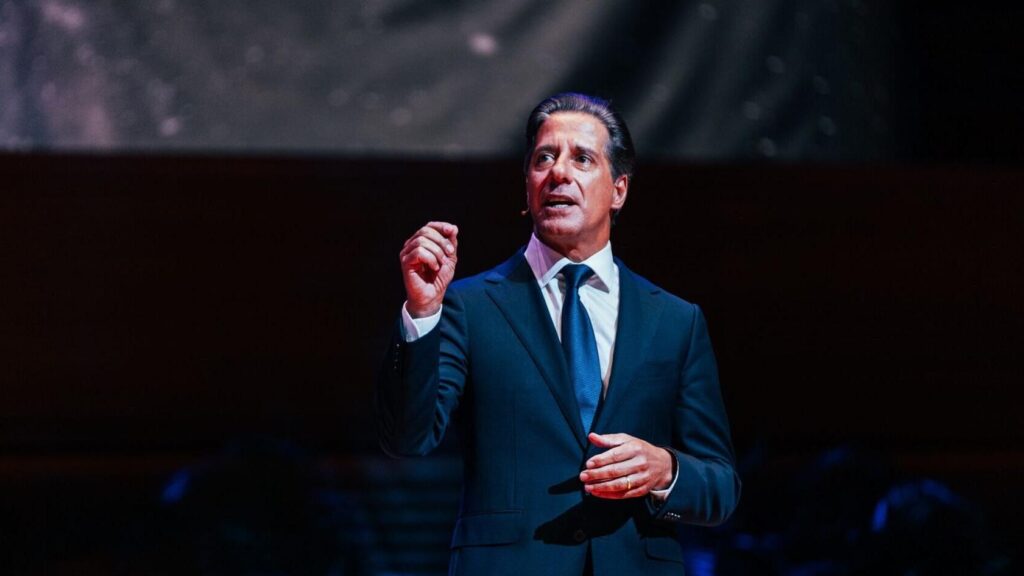
Los Angeles Unified School District board members unanimously approved the 2025-26 budget as they faced an almost $3 billion deficit.
The $18.8 billion budget puts the LAUSD at a $2.9 billion deficit with its projected revenue for the next fiscal year at $15.9 billion. Though there are clear spending gaps, board members are positive that the district will continue to have financial stability.
“Today I, and all of the Board members present, supported a budget that keeps our District on strong financial footing and reflects our shared commitment to students,” board member Nick Melvoin said in a press release. But he added he would like the district to consider more innovative ways to generate revenue to invest in students’ success.
“This budget reflects the gravity of our district’s current financial situation, investing equitably for both the short- and long-term,” board member Tanya Ortiz Franklin said in a press release.
During Tuesday’s board meeting, Superintendent Alberto M. Carvalho highlighted the new amended budget investments of almost $60 million to programs like the Black Student Achievement Plan, accelerated arts investment, protection and training toward supporting LGBTQ+ students.
“They (the budget) are above all ethical and moral priorities that our school district should embrace. Doing the right thing despite the opposition,” said Carvalho. “We are on the right side of history as we make these budgetary investments.”
Parents shared their concerns during the meeting.
“This system fails families,” Maria Palma told the board. “The focus that you continue to have, the only clear hard data that we ever see are the dollars that are budgeted — of which the largest expenditures of course are salaries and benefits. So the focus here is the dollars on their way out. But where in the bargaining agreements are student academic outcomes?”
“Now you continue to have decreasing enrollment due to dismal academic outcomes and poor fiscal management,” Palma said. “Your system that you created is rotting from within.”
Though LAUSD student enrollment has significantly decreased in the past two decades — from 747,009 in 2003-04 to 387,152 students this year — board members continue to support budget increases.
“The principles and values reflected in this budget uphold our promise to student equity,” Carvalho said. “While the structural deficit we face is unwelcome, our team has adopted a responsible framework with flexible guardrails that are adaptive to our economic reality. We will continue to monitor the budget throughout the year, preparing for future challenges while maintaining transparency.”
Questions remain as A’s stadium breaks ground in Las Vegas

Las Vegas has “broken ground” on the still unconfirmed $1.75 billion Athletics baseball stadium.
The city’s latest stadium project is drawing heavily on public funds — $380 million from Nevada and Clark County. That’s raising questions about whether taxpayers can expect a home run from their investment. For now, the A’s, who were previously in Oakland, are playing in Sacramento until a Las Vegas stadium is built.
“I have no doubt this is done in 2028,” Athletics President Marc Badain told The Associated Press. “You know the workforce here; they’re all here and ready to get going.”
The Las Vegas area has taken major steps to make this project a reality. This past October the 1950s mob-era Tropicana casino on Las Vegas Boulevard was blown up to make space for the nine-acre plot of the potential Las Vegas Athletics stadium. Plans call for the stadium to rise among casinos on the famous Las Vegas Strip, which is in an unincorporated area outside city limits.
But the groundbreaking ceremony Monday reflected the hesitations that Nevadans have around calling the Athletics their team. With the big names of Nevada politics present, the classic suit-clad, golden shovel-holding groundbreaking happened out of a baseball display filled with dirt, which was not on the ground. Heavy machinery dominated the photo shoot background, but they turned out to be props rented for the day.
Looking to find the funds for his $1.1 billion share of the stadium project, Athletics owner John Fisher has begun the process to sell his Major League Soccer team, the San Jose Earthquakes. The $600-million sale would plug some important holes but leaves a big price tag up in the air for Fisher. Meanwhile, Nevadan taxpayers have already been signed up to pay the sizable $380 million chunk of the total for the stadium.
The public funding was approved through the 2023 legislative session’s Senate Bill 1, mirroring the $750 million of public funds approved for the NFL Las Vegas Raiders Allegiant Stadium in 2016.
The $2 billion Allegiant Stadium has widely been considered a financial success, regularly being named the top stadium concert earner nationally, raking in over $119 million in 2024.
But like the Athletics’ potential future stadium, the vast majority of these earnings goes to the owners, who have made a good return on investment, while taxpayers can only hope to get their money back through increased tourism. Sports economists generally agree that stadiums shift money in an economy, not necessarily draw in new business to an area.
And all of this is happening amidst financial strains in Nevada, which saw a near $200 million state budget deficit earlier this year.
Seattle PD forwards felony assault charge to prosecutor 10 days after journalist attacked
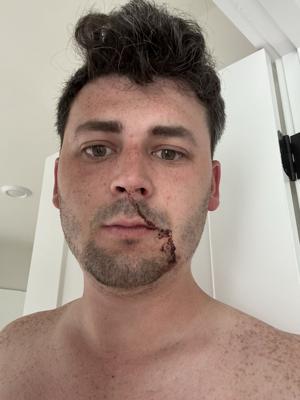
Seattle police detectives have identified the suspect and referred a felony assault charge to the King County Prosecuting Attorney’s Office against the alleged attacker in a brutal assault on an independent journalist covering anti-ICE protests in Seattle.
Cam Higby told The Center Square that Antifa members assaulted him as he attended the June 14 “No Kings Day” protests in Seattle at a Department of Homeland Security building.
“There is probable cause to believe that Assault 2nd Degree (RCW 9A.36.021) occurred,” Sgt. Patrick Michaud of SPD Public Affairs emailed The Center Square. “Detectives referred criminal charges to the King County Prosecuting Attorney’s Office (KCPAO).”
In a Wednesday interview, Higby said he is pleased that SPD is recommending charges against 33-year-old Jeremy Lawson of Monroe, but frustrated that it took so long and that the suspect has not been arrested.
“It has to be the slowest criminal justice system in the country,” he said. “If I [were] in my hometown in New York right now and I went and I walked down the street and punched somebody in the face, I’d be in handcuffs that day and facing charges the next day.”
Higby does not blame the Seattle detective assigned to his case for the delay.
“The detective wants to do something about it. He cares about the case, but the problem is the prosecutor,” he explained. “We have everything from this guy, who has a tattoo on his face. And it’s not sufficient evidence, right? We have the Amazon link to the shoes he was wearing during the attack, and I have linked those shoes back to pictures he has posted on Facebook.”
Higby continued: “I don’t know if there could be a more solid case outside of finding his fingerprints on my gas mask, but it’s really not the detective’s fault. It’s just that the detective has clearly been in this position before, where they have somebody dead to rights with irrefutable evidence, and the prosecutor still doesn’t seem to want to prosecute.”
The vicious attack was captured on video by Jonathan Choe, another independent journalist who on Wednesday told The Center Square that he, too, is skeptical the prosecutor will follow through with charges against the suspect.
“Honestly, I’m so cynical. I have very low expectations for anything to happen, especially since, you know, we’ve heard from not only the prosecutor’s office, but also from SPD they’re not going to even charge in these protest cases as we’ve seen unless it’s extremely serious, right? Unless someone gets shot or stabbed. So, you know, we’ll see what happens,” Choe said.
Choe also mentioned that the suspect has not been arrested.
“This guy’s still on the loose, and this happened way more than a week ago,” he said. “I think if it [were] any other context or circumstance, this guy would have been in handcuffs by now.”
Choe noted that he and other journalists who reported on the attack, including the victim, provided everything SPD needed to refer charges, including photos, videos, and the suspect’s name and address, but it took 10 days for the charges to be referred.
“I mean, what is it going to take in this day and age to get criminals off the streets, especially when we do the job for the cops?” Choe asked.
KCPAO Director of Communication Casey McNerthney responded to The Center Square’s email request for information on the case.
“That case referral will be reviewed individually by senior deputy prosecutors in our criminal division, which is the normal procedure for an assault referral such as that,” McNerthney responded via email. “I’m not familiar with what was received, but a senior deputy may request any available video and medical details if those are not yet submitted. I need to note that defendants are innocent until proven guilty in court.”
He added that video and medical records must be sent from the investigating police agency, not obtained from social media.
“In other words, the court won’t accept those if a prosecutor were to get them from an online post,” McNerthney said.
Higby provided those videos and photos to SPD, which he believes should be ample evidence to identify the attacker.
Higby told The Center Square he was grateful Choe stayed with him after the attack and convinced him to leave the area for his safety, even though Higby had called 911 and wanted to wait for police to show up.
“I told him this was not a high-priority case for them, especially when they’re dealing with Antifa militants,” Choe said. “They don’t even have enough time for that. So, I told him, just let me get you out of this place, to a safe place, and we can reassess, and I’m so glad we did because as I was driving him back, he wasn’t feeling well. And lo and behold, the next day, he got a severe bloody nose, and he went to the hospital, and they said he sustained a serious concussion.”
Six days after the attack – June 20 – Higby told The Center Square he was still suffering headaches and blurred vision from the concussion.
He was wearing a helmet, but believes the blows to his head, which left large dents and divots in the helmet, came from SAP gloves, which are weighted knuckle gloves, he said the attacker was wearing.
“It’s very likely that if I [weren’t] wearing a helmet, that I would have been either killed or critical,” Higby said. “They’re just brass knuckles basically.”
McNerthney did not indicate an expected timeline for a charging decision.
WATCH: Republicans, Democrats feud over Trump admin’s immigration policies
Members of the U.S. House Judiciary Committee sparred over President Donald Trump’s immigration policies during a hearing to examine the visa process Wednesday.
Democrats blasted the Trump administration for “torturing our laws and trampling our constitution,” while Republicans fired back by citing cases of Americans who were killed by undocumented immigrants.
Ranking Member Rep. Jamie Raskin, D-Md., accused Trump of initiating a “war on immigrants” since taking office in January. Raskin criticized Trump’s immigration approach, saying that the president has reformed the immigration system for his own political gain.
“President Trump has turned our visa system into a terrain of caprice and selective punishment he can wield against his chosen political enemies and use to demonize and scapegoat immigrants,” Raskin said.
Trump campaigned all last year on shutting down the U.S. border with Mexico and deporting violent criminal noncitizens. It was an issue most voters agreed with him and helped him win the election.
Under President Joe Biden’s administration, more than 14 million noncitizens entered the country illegally, The Center Square reported.
But Democrats also argued that the Trump administration’s immigration policies are a gateway to opposing all forms of immigration, including legal pathways.
“It cements us in the eyes of the world as a vindictive, isolationist and increasingly undependable and authoritarian country,” Raskin said.
Immigration Subcommittee Chairman Rep. Tom McClintock, R-Calif., defended the president’s reforms since taking office, arguing that these policies are intended to continue to support legal ways to immigration but hone in on rooting out “bad actors” who wish to commit immigration fraud.
“America has the most generous legal immigration system in the world,” McClintock said.
Republicans redirected criticism to Biden, saying that the Biden administration’s border policies led to a rise in violent crimes in the U.S. specifically committed by noncitizens in the U.S. illegally.
U.S. Rep. Chip Roy, R-Texas, cited the case of Jocelyn Nungaray, a 12-year-old girl who was sexually assaulted and killed by two undocumented immigrants in Houston, Texas.
“She’s one of dozens, hundreds, thousands of examples of Americans who are dead because of policies that were advocated for by the Biden administration,” Roy said.
U.S. Rep. Tom Tiffany, R-Wis., highlighted examples of crimes in his district, including an instance in which a father of three was killed in a car crash after a foreign national was driving recklessly while under the influence.
Witness Alex Nowrasteh, vice president for Economic and Social Policy Studies at the Cato Institute, rebutted Republicans’ arguments, saying these cases should not be taken as representative of the immigrant population as a whole.
“Every death and every murder is a tragedy, and those individual criminals should be punished to the fullest extent of the law,” Nowrasteh said. “But that is not a reason to punish other people who are not criminals.”
Treasury hits 3 banks with sanctions over alleged cartel money laundering

The U.S. Treasury Department on Wednesday slapped sanctions on three Mexican-based banks that it said were used to launder millions of dollars for cartels.
The move, officials said, would cut the banks off from the U.S. financial system.
Treasury’s Financial Crimes Enforcement Network identified three Mexico-based financial institutions – CIBanco S.A., Institution de Banca Multiple (CIBanco), Intercam Banco S.A., Institución de Banca Multiple (Intercam), and Vector Casa de Bolsa, S.A. de C.V. (Vector) – laundering money in connection with illicit opioid trafficking.
The orders are the first actions by FinCEN under the Fentanyl Sanctions Act and the FEND Off Fentanyl Act, which gives Treasury additional authorities to target money laundering associated with the trafficking of fentanyl and other synthetic opioids, including by cartels. The moves comes as Trump looks to crack down on fentanyl trafficking, especially by Mexican cartels.
CIBanco is a commercial bank with more than $7 billion in total assets. Intercam holds more than $4 billion in total assets. Vector, a brokerage firm, manages nearly $11 billion in assets.
FinCEN alleges all three “played a longstanding and vital role in laundering millions of dollars on behalf of Mexico-based cartels and facilitating payments for the procurement of precursor chemicals needed to produce fentanyl.”
“Financial facilitators like CIBanco, Intercam, and Vector are enabling the poisoning of countless Americans by moving money on behalf of cartels, making them vital cogs in the fentanyl supply chain,” Treasury Secretary Scott Bessent said. “Through the first use of this powerful authority, today’s actions affirm Treasury’s commitment to using all tools at our disposal to counter the threat posed by criminal and terrorist organizations trafficking fentanyl and other narcotics.”
The move away from plant-based drugs to synthetics has helped the cartels rake in even more cash. Cartels maintain steady supply chains for precursor chemicals, primarily from China and India, needed to produce these synthetic drugs.
In the 12 months ending in October 2024, the United States recorded 52,385 overdose deaths from synthetic opioids – a 33% decline – while overall overdose deaths, from any drug, declined about 26%, according to the most recent available CDC provisional data. Provisional data from the CDC showed that 74,702 of the 107,543 total drug overdose deaths in 2023 involved synthetic opioids, primarily fentanyl. That’s about 69% of all overdose deaths in the U.S.
The DEA seized about 29% less fentanyl in 2024 compared to the prior year. In 2024, the DEA seized 21,936 pounds of fentanyl. The agency also seized 61.1 million fake pills in 2024, a 24% decrease from the previous year. Data from the El Paso Intelligence Center’s National Seizure System – which consolidates drug seizure data from federal, state, and local agencies throughout the United States – indicated a similar trend, with 23,256 total kilograms seized in 2024, down from the previous year.
Fentanyl purity also fell last year, according to DEA testing. In 2024, the average fentanyl pill contained 1.94 milligrams of fentanyl, ranging from a low of 1.58 mg to a high of 2.18 mg. Based on these analyses, DEA forensic laboratory results found that about 5 out of 10 fake pills contain 2mg or more of fentanyl. The average purity of fentanyl powder samples was 11.36%, ranging from exhibits that contained almost no fentanyl (0.07%) to 82% purity.
Trump plans to take tariff case to Supreme Court if needed
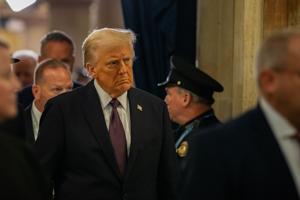
President Donald Trump’s team of Department of Justice attorneys plans to take their tariff case to the U.S. Supreme Court if a federal appeals court doesn’t rule in their favor.
DOJ attorneys argued in a new brief that the Court of International Trade erred in ruling that the president doesn’t have unilateral authority to impose tariffs on U.S. trading partners around the world. They argued that if the CIT decision was upheld, it would disadvantage the U.S. as Trump seeks to reorder global trade through tariffs to put America at the center.
“The CIT’s injunction would, if affirmed, disrupt the Executive Branch’s ongoing, sensitive diplomatic negotiations with virtually every major trading partner,” attorneys for the administration wrote. “And it would unilaterally deprive the United States of a powerful tool for combating systemic distortions in the global trading system, thus allowing other nations to continue to hold American exporters hostage to their unreasonable, discriminatory, and sometimes retaliatory trade policies.”
They added: “If the Court affirms the judgment, we respectfully ask that the Court extend its stay … to allow the government to seek relief from the Supreme Court.”
Trump has turned to the nation’s highest court multiple times this term after federal judges blocked large parts of his domestic agenda.
The administration appealed after a three-judge panel of the U.S. Court of International Trade unanimously ruled in May that Congress did not give the president tariff authority under the International Emergency Economic Powers Act of 1977. The Court of International Trade gave Trump 10 days to unwind all the tariffs he issued under IEEPA. The federal appeals court granted the administration’s request for a stay, putting the Court of International Trade ruling on hold while the appeal continues.
Trump’s attorneys said presidents have used IEEPA authorities multiple times over the years. They pointed to President Jimmy Carter, who invoked the IEEPA to seize Iranian assets in response to the hostage crisis at the American Embassy in Tehran. President Ronald Reagan issued executive orders “banning commerce with Libya and freezing all U.S. assets of the Libyan government and its agents.” President Bill Clinton “blocked Russian assets related to the implementation of an agreement for the disposition of highly enriched uranium extracted from nuclear weapons.” President George W. Bush used IEEPA to “maintain the export control system previously established under a different statute. Biden also used the IEEPA. But none of those presidents used the IEEPA they way Trump has: To issue worldwide tariffs on nearly every U.S. trading partner.
The administration’s attorneys said the tariffs have been good for the U.S.
“And the tariffs have already achieved successes,” they wrote “They have spurred ongoing negotiations on trade agreements with major trading partners and have already produced the general terms of a historic trade deal with the United Kingdom.”
Small businesses and some states disagree. States and small businesses challenged the “Liberation Day” tariffs in two separate cases that are on appeal before the Federal Circuit Court of Appeals.
The businesses, represented by the Liberty Justice Center, said their livelihood is on the line. The businesses included VOS Selections, a New York-based wine and spirit importer, along with others business owners, including one who expects to go out of business before the case reaches a conclusion.
On Wednesday, Liberty Justice Center added to its roster of attorneys in the high-profile case. LJC added constitutional scholars Michael McConnell and Neal Katyal and their law firms to the suit.
“More than any other case challenging executive action, the tariff cases combine fundamental principles of structural constitutional law with immense consequences for the economy,” McConnell said.
The plaintiffs argue that the IEEPA does not authorize the president to impose tariffs at all. And even if it did, it would still require an economic emergency and an unusual, extraordinary threat to be invoked. Existing circumstances don’t meet those requirements, LJC attorneys have argued.
The U.S Court of Appeals for the Federal Circuit will hold a hearing in the case on July 31, which will be available via livestream.
Economists, businesses and some publicly traded companies have warned that tariffs could raise prices on a wide range of consumer products.
Trump has said he wants to use tariffs to restore manufacturing jobs lost to lower-wage countries in decades past, shift the tax burden away from U.S. families, and pay down the national debt.
Attorney General Raoul joins lawsuit challenging Trump’s termination of federal grants
Capitol News Illinois
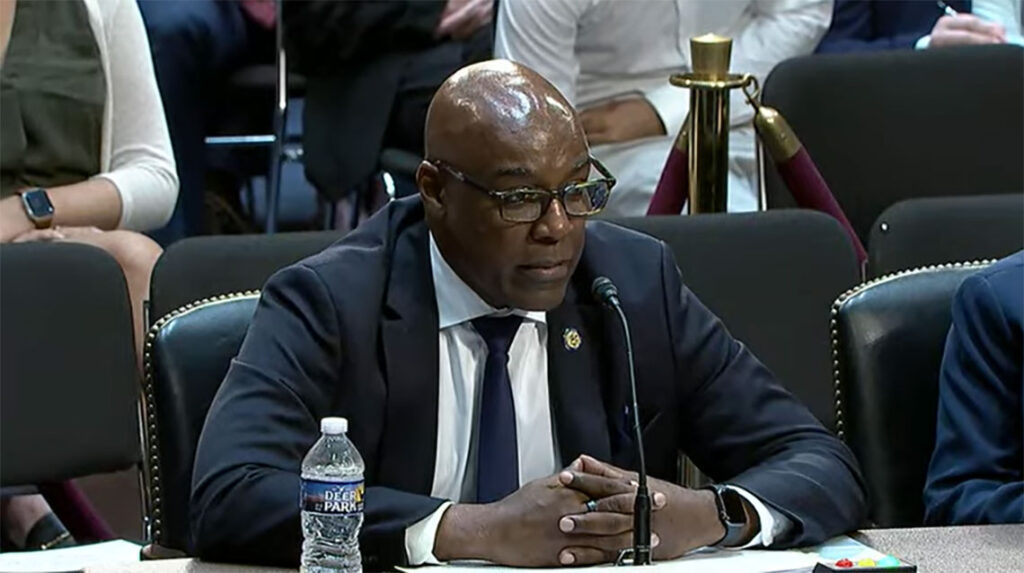
SPRINGFIELD – Attorney General Kwame Raoul announced this week he has joined another multistate lawsuit challenging the Trump administration’s decision to withhold billions of dollars in federal funds that had previously been approved for states and other grantees.
The complaint, filed Tuesday in U.S. District Court in Massachusetts, challenges several actions the administration has taken since Trump returned to office Jan. 20 that involved terminating federal grants that had previously been approved by various agencies.
Each of those actions, the lawsuit argues, were based on a misuse of a single clause in one regulation under the federal Office of Management and Budget. That clause allows agencies to terminate a grant if the agency determines the award “no longer effectuates the program goals or agency priorities.”
“The Trump Administration has claimed that five words in this Clause — ‘no longer effectuates . . . agency priorities’ — provide federal agencies with virtually unfettered authority to withhold federal funding any time they no longer wish to support the programs for which Congress has appropriated funding,” the lawsuit alleges.
The suit is one of more than a dozen Raoul has joined as part of a coalition of Democratic attorneys general who have been battling the administration since Trump’s second inauguration in January.
Speaking Monday to a congressional panel made up of Democratic members of the U.S. House and Senate judiciary committees, Raoul joined three other members of that coalition to explain their litigation campaign.
“Whether or not I disagree with President Trump on his policy agenda, he must act in a lawful way that is consistent with the Constitution and the laws that Congress has enacted,” Raoul said. “Unfortunately, the president and his administration have chosen, with many of their actions, to ignore the Constitution and federal law. And when constitutional guarantees are ignored, all Americans are at risk.”
Grants affected by cuts
The lawsuit challenges three specific funding cuts that have directly affected the state of Illinois. Those include:
The U.S. Department of Agriculture’s decision in March to halt reimbursements under the Local Food Purchase Assistance Program, which provided funding for nonprofit organizations to buy locally grown food products from farmers for free distribution to vulnerable communities.
A decision by the Federal Emergency Management Agency to terminate two Shelter and Services Program Grant awards to the Illinois Department of Human Services totaling $29 million. The money was intended to reimburse Illinois for the cost of providing food, shelter and medical care to migrants whom the U.S. Department of Homeland Security had released to relieve overcrowding at federal detention facilities.
And a decision in May by the U.S. Department of Labor to terminate grants totaling $28.8 million to the Illinois Department of Employment Security for modernization of the state’s unemployment insurance system.
According to the lawsuit, OMB first adopted the regulation in 2020, near the end of the first Trump administration. At the time, according to the Federal Register, the agency said the clause was intended to allow agencies to end a grant program under specific conditions, but that it was not intended to let them terminate grants “arbitrarily.”
The clause was later updated to include its current wording in 2024, near the end of Joe Biden’s administration. However, according to the complaint, “OMB never suggested, in either the 2020 or 2024 rulemaking, that a grant could be terminated even though the grant was continuing to serve the very goals for which the monies had initially been awarded, merely because the agency’s priorities shifted midway during the use of the grant—let alone with no advance notice.”
As of Wednesday, the case had not yet been scheduled for a hearing.
Capitol News Illinois is a nonprofit, nonpartisan news service that distributes state government coverage to hundreds of news outlets statewide. It is funded primarily by the Illinois Press Foundation and the Robert R. McCormick Foundation.
The post Attorney General Raoul joins lawsuit challenging Trump’s termination of federal grants appeared first on Capitol News Illinois.
States file amicus brief against proposed NPR, PBS cuts

Colorado Attorney General Phil Weiser joined 22 other states in filing an amicus brief in support of two lawsuits brought by National Public Radio and Public Broadcasting Service against the Trump administration.
Those lawsuits seek to block proposed funding cuts to public media, which would affect their organizations and local affiliates or “member stations.”
Weiser is co-leading the coalition of Democratic states supporting the lawsuits.
“Public radio and television connect millions of people in Colorado and across the country to critical information they might not otherwise be able to access,” Weiser said in a statement. “Cuts to public broadcasting won’t just rob us of programming many of us cherish, they will create real danger by reducing our ability to get critical emergency notifications to the public, especially to people in rural and tribal communities.”
On May 1, President Donald Trump signed an executive order directing the board of the Corporation for Public Broadcasting and executive branch agencies to end federal funding for NPR and PBS.
The order argued public media is “biased.”
“Today the media landscape is filled with abundant, diverse, and innovative news options. Government funding of news media in this environment is not only outdated and unnecessary but corrosive to the appearance of journalistic independence,” the order stated. “At the very least, Americans have the right to expect that if their tax dollars fund public broadcasting at all, they fund only fair, accurate, unbiased, and nonpartisan news coverage. No media outlet has a constitutional right to taxpayer subsidies.”
On May 27, NPR and three Colorado public radio stations sued to block the proposed cuts. PBS and a Minnesota-based affiliate filed a separate lawsuit on May 30.
The states’ brief was filed concurrently in both lawsuits. It argues that “public media is a public good” and cutting its funding will harm the American people, especially those in rural or tribal areas.
It specifically highlights how public media is currently used to disseminate emergency information and notifications.
“Many states, including Colorado, rely on public broadcast stations to serve as primary or secondary stations to deliver EAS messages to the public during emergencies,” Weiser’s office said in a statement.
The brief also argued for the role of public media as a “vital supplement to early childhood education.”
Colorado, Minnesota, Arizona and Rhode Island all co-led the brief. They were joined on it by leaders from California, Connecticut, Delaware, District of Columbia, Hawaii, Illinois, Maine, Maryland, Massachusetts, Michigan, Nevada, New Jersey, New Mexico, New York, North Carolina, Oregon, Vermont, Washington and Wisconsin.
Colorado has been a critical player in the coalition of Democratic states fighting against the many cuts pushed by the Republican president’s administration, cuts that are motivated by efforts to cut waste and save money. So far, Colorado has joined or filed over 20 lawsuits against the Trump administration, while supporting many others.
“I am proud to stand with my fellow attorneys general to urge the courts to block yet another reckless, illegal action by the Trump administration,” said Weiser, who is running in Colorado’s 2026 governor’s race.
In a separate threat to public media funding, the federal Recissions Package would cut $1.1 billion from public broadcasting. That package narrowly passed the House 214-212 a few weeks ago and has received backlash from Democrats and even a few Republicans. Nevada’s U.S. Rep. Rep. Mark Amodei of Carson City was one of only four Republican members of the House who voted against the Recissions Package, as previously reported by The Center Square.
All four of Colorado’s Republican representatives voted in favor of the package, while the state’s four Democratic representatives voted against it.
Most Republicans applauded the funding cuts in that package.
“The federal government has no business funding media companies,” said U.S. Sen. John Kennedy, R-Louisiana. “It’s time to stop picking winners and losers and defund public broadcasting for good.”
Illinois’ soil conservation funding stagnates amid recent high-profile dust storms

Capitol News Illinois
SPRINGFIELD —– Three main factors contribute to the formation of Midwest dust storms: strong winds, dry soil in farm fields and large amounts of loose soil.
That’s according to Andy Taylor, the Science and Operations officer at the National Weather Service’s office in Lincoln. He said these are key ingredients that meteorologists, farmers and experts in the agricultural community have found cause dust storms when they converge.
On May 16, Chicago saw its first major dust storm since the Dust Bowl, which stretched from Texas to New York in the early 1930s and deposited 300 million tons of soil across the nation – 12 million tons of which settled in the Chicago region, according to the Bill of Rights Institute. The storm in May dropped visibility in the city to near zero as wind gusts blew over 60 mph at times, according to the National Weather Service.
Taylor said the atmospheric environment that day was more characteristic of the dry environments in the High Plains or Southwest U.S., not the Midwest. As rain began to fall near Bloomington, it quickly evaporated and cooled the atmosphere, creating strong pockets of wind that began to move North. And as winds sped up, the storm began to pick up and move dry and loose soil from fields it passed over, which created the dust storm.
“The type of dust storm event that we had that affected the Chicago area, I wouldn’t necessarily take that occurrence as saying we’re going to see an increase in those type of events from this point on,” he said. “Although, anytime you see all those ingredients come together, we certainly could see that again.”
Soil conservation funding ‘deprioritized’
While there were no deaths due to the storm in Chicago, a major dust storm that occurred in central Illinois on a portion of I-55 resulted in a multi-car pileup that took the lives of eight people and injured dozens more in May 2023.
That dust storm also dropped visibility to zero on the stretch of the interstate between Farmersville and Divernon, and was again caused by dry, loose soil being picked up and moved by winds.
Although Taylor said dust storms are not new to Illinois – as his office has documented events back to the 80s – most of the storms don’t move across vast expanses of the state. Instead, he said they often occur in more localized areas, like the storm near Divernon in 2023.
“When we’re seeing the right weather-related factors coming together and the ground is fairly dry, which matches up with loose soil so we know we’re going to be more prone to blowing dust, we coordinate with partners in the agricultural community to determine when we might anticipate those blowing dusts events,” Taylor said.
The Association of Illinois Soil and Water Conservation Districts has been lobbying for increased funding for additional district employees. This year’s state budget allows for each district to staff one full-time employee, which AISWCD Executive Director Eliot Clay called “wildly inadequate” as he said each district needs at least two.
“I really, honestly think conservation funding has been deprioritized,” he said.
What do soil and water conservation districts do?
Soil and water conservation districts began to crop up across the U.S. in the late 1930s as a response to the Dust Bowl and Congress’ subsequent declaration of soil and water conservation as a national priority. According to the Association of Illinois Soil and Water Conservation Districts, that declaration prompted then-President Franklin D. Roosevelt to recommend legislation to state lawmakers that would enact districts in every state.
Illinois has 97 districts, or nearly one district for every county in the state. Employees of the districts are responsible for a variety of tasks – including assessing farmland, educating farmers about conservation practices and connecting farmers with grants from the state and federal government. These all play a key role in the association’s mission of protecting Illinois’ natural resources.
“Unlike a group like the Department of Natural Resources or the EPA or even the Department of Agriculture, SWCDs are not a regulatory body,” Clay said. “We are not going out there and enforcing rules and laws on people, we’re just trying to help farmers do better. And that’s the reason why a lot of farmers rely on SWCDs, is because they do not see us as like, the ‘government’ coming in and telling them, ‘this is how you’re going to do your operation.’”
Soil conservation funding stagnates
The fiscal year 2026 budget signed by Gov. JB Pritzker last week allots $7.5 million to the state’s SWCDs – which Clay said is the same amount the association received in the previous fiscal year. However, he said that number was a $1 million cut from the FY24 budget allocation.
Read more: Pritzker signs $55.1B state budget reliant on $700M of new taxes | New taxes on sports bets, nicotine products as Democrats pass $55.2B budget
Of that $7.5 million, $3 million will go to cost-share grants, which act as reimbursements to farmers for the costs of implementing both state and federal conservation policies, such as cover crops. The remaining $4.5 million will go to administrative costs.
Clay said the breakdown of that $4.5 million provides $40,000 to each Soil and Water Conservation district – meaning that every district will have enough funds to pay one full-time employee. He called the salary “wildly inadequate” for the district employees, most of whom have college degrees.
“$40,000 – and that’s supposed to include benefits, so their take-home is less than that – is barely enough, I mean I would say it’s not enough even for one person” Clay said. “And it’s hard to keep people and incentivize people to come to work when there’s not the kind of money there that there should be.”
In addition, Clay said each district needs two full-time employees to be fully-staffed – one to make on-site visits to farms and one to coordinate schedules, receive phone calls and emails, and staff the office.
He said in recent years, the association was told by both the Department of Agriculture and the governor’s office that if they wanted more funding, they would have to advocate for the money to individual lawmakers outside of budget negotiations.
“I don’t know of any other agency or subsect of an agency that has to, on their own, go to the Capitol and get money,” he said. “That’s very peculiar to me and is something I’ve been trying to wrap my head around, and I have not gotten a good explanation from anybody.”
The governor’s office did not respond to a request for comment.
Over the past two years, Clay said the association unsuccessfully lobbied for $10.5 million in annual funding.
“The bigger question I’m left with after being the executive director over the past six months and witnessing it from this angle is, what does the legislature and the administration value?” Clay said. “It really gets to bigger questions about how the state has dealt with conservation funding in general for the last 20-plus years.”
Soil conservation efforts and farming practices
Kevin Brooks, a commercial agriculture educator at the University of Illinois Urbana-Champaign, said the agriculture community has identified practices farmers can use to reduce the amount of dry, loose topsoil in their fields.
“Measuring the humidity level as a cause is not the issue,” Brooks said in an interview with Capitol News Illinois. “I won’t say it’s not 100% not about the weather, but this is primarily about tillage.”
One suggestion he made was for farmers to till their fields less frequently and instead resort to strip-tilling or using no-till strategies whenever possible to reduce the amount of loose topsoil in fields.
Strip-till is a tilling practice where only narrow rows of a field where seeds will be planted are tilled, leaving the rest of the field untouched. While there are many short- and long-term benefits to strip-tilling, no-till practices often don’t seem to benefit farmers right away but do often have long-term advantages, Brooks said.
Rep. Charles Meier, R-Okawville, farms 1,500 acres in southern Illinois with his family, including corn, wheat, beans, hay, and beef cattle. He said most crops are already minimally tilled by farmers.
State Rep. Charlie Meier, R-Okawville, shows clover growing in a field on his Washington County farm in 2022. In 2009, Meier was awarded the State of Illinois Conservation Farm Family of the Year. (Capitol News Illinois file photo by Beth Hundsdorfer)
“I’m 66 years old and we never no-tilled when I was a kid,” he told Capitol News Illinois. “All of our conventional soybeans are no-tilled now, all of our wheat is done by minimal-till, and our corn is all by minimal-till now.”
He said he’s in frequent contact with his SWCD, including a call on Monday with his district’s employee, and criticized Democratic leadership’s funding priorities, such as subsidies for renewable energy.
“They’re not funding the nuts and bolts of Illinois conservation,” Meier said. “I’m not against wind and solar but they don’t pay for themselves and they’re making us taxpayers pay for them.”
Another main practice Brooks recommended farmers employ was planting cover crops, which are crops planted after harvest not for their produce, but for their benefits to the soil. Cover crops can be planted after a fall harvest for a variety of benefits, including to preserve topsoil through the winter, increase organic matter in the soil and dry the field earlier in the spring.
Brooks also attributed recent dust storms to the invention of high-speed discs – a tillage attachment with many more disks than normal tillage attachments, which tills at faster rates. He said these disks have taken tillage speeds from around 4 mph to over 10, and that farmers in Illinois quickly amassed these machines during and after the COVID-19 pandemic, due to the pandemic relief funds they received.
“In theory, they’re supposed to be a kind of conservation because they don’t go into the ground very deep,” Brooks said. “But they literally turn the top several inches of a farm field into powder.”
Dust storm driving tips
Andy Taylor, from the National Weather Service, recommended safety tips for drivers who find themselves caught in a dust storm.
“If you’re caught in dust with extremely low visibility, the advice is to pull completely off the road, turn off your heads and take your foot off the brake,” he said. “Which may sound kind of counterintuitive in a way, but the reason for doing that is because if you have your lights on, people coming into the dust may think you’re moving. They may see your taillights and think ‘Oh look, someone I can follow’ and that may exacerbate accidents and pileups.”
He also advised drivers who know there is risk of a potential dust storm to travel ahead of the storm or to delay travel until later in the day, if possible.
Capitol News Illinois is a nonprofit, nonpartisan news service that distributes state government coverage to hundreds of news outlets statewide. It is funded primarily by the Illinois Press Foundation and the Robert R. McCormick Foundation.
The post Illinois’ soil conservation funding stagnates amid recent high-profile dust storms appeared first on Capitol News Illinois.