Posts by Newspaper Staff
Senate Republicans rework SNAP reforms in ‘big, beautiful bill’ to skirt filibuster
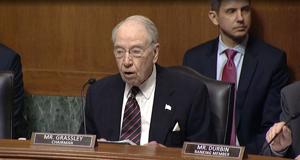
Senate Republicans have finally found a way to include their SNAP reforms, worth $41 billion in federal savings, within the One Big Beautiful Bill Act.
The OBBBA – a massive budget reconciliation bill implementing the president’s tax, energy, border, and defense policies – could increase federal deficits anywhere from $2.4 to $4.5 trillion over the next decade, according to most budget experts.
To offset the cost, most of which stems from the bill’s extension of the 2017 Tax Cuts and Jobs Act, House committees found roughly $1.7 trillion in spending offsets, including tens of billions by reforming SNAP eligibility requirements and funding methods.
After the bill’s House passage, the Senate Committee on Agriculture, Nutrition, and Forestry revised the House’s SNAP provisions, which included closing work requirement loopholes and making all noncitizens aside from legal permanent residents ineligible for food stamps.
Most notably, the House-passed OBBBA included a provision incentivizing states to crack down on improper payments by making them shoulder a portion of the program costs. But the Senate’s SNAP changes expanded on the House’s — which required states to cover 50% of administrative costs and 5% of their SNAP benefit cost share — by hiking the state administrative cost burden to 75%.
Additionally, under the House plan, states’ benefit cost contributions would increase the higher their payment error rates, with states having an average error rate of 10% paying 25% of SNAP benefit costs. The Senate version exempted states with an error rate below 6% from this requirement and lower the 25% cost share cap to 15%
Plans changed, however, after the Senate parliamentarian ruled that the Senate’s state cost-sharing plan and immigrant restrictions violated the Byrd Rule, making the OBBBA ineligible to bypass the filibuster and pass with a majority vote.
After mild panic and a few social media rants, Republicans came back with an amended version of the SNAP reforms, which the parliamentarian approved. The updated Senate plan gives states some breathing room to states by revising which fiscal year payment error rate states can use for the cost-sharing plan. Beginning in 2028 and continuing onward, states can use their payment error rates from three fiscal years prior.
The new plan also expands both noncitizen eligibility for SNAP benefits and the populations who are exempted from work requirements.
Despite resulting in less savings than the previous legislation, the inclusion of some cost-cutting SNAP reforms left Republicans on a hopeful note.
“I’m proud of the legislation we’ve crafted that reflects Senate Republican policy priorities,” Senate ANFC Committee Chairman John Boozman, R-Ark., said in a statement. “This is a practical approach to improve SNAP by reducing waste, enhancing accountability, and encouraging recipients to move toward self-reliance through work and training.”
Trump suspends trade talks with Canada
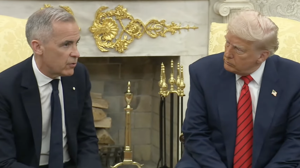
President Donald Trump said Friday that the U.S. was ending trade talks with Canada after months of back-and-forth between the neighboring trade partners.
Trump said the talks were over just days before his self-imposed 90-day deadline.
“We have just been informed that Canada, a very difficult Country to TRADE with, including the fact that they have charged our Farmers as much as 400% Tariffs, for years, on Dairy Products, has just announced that they are putting a Digital Services Tax on our American Technology Companies, which is a direct and blatant attack on our Country,” Trump wrote on Truth Social.
Trump said the digital services tax was a copy of a European Union proposal.
“Based on this egregious Tax, we are hereby terminating ALL discussions on Trade with Canada, effective immediately,” the president said. “We will let Canada know the Tariff that they will be paying to do business with the United States of America within the next seven day period.”
Earlier this month, the two nations seemed close to striking a deal.
Trump said he and Canada Prime Minister Mark Carney had different concepts for trade between the two neighboring countries during a meeting at the G7 Summit in Kananaskis, in the Canadian Rockies.
Asked what was holding up a trade deal between the two nations at that time, Trump said they had different concepts for what that would look like.
“It’s not so much holding up, I think we have different concepts, I have a tariff concept, Mark has a different concept, which is something that some people like, but we’re going to see if we can get to the bottom of it today.”
Shortly after taking office in January, Trump hit Canada and Mexico with 25% tariffs for allowing fentanyl and migrants to cross their borders into the U.S. Trump later applied those 25% tariffs only to goods that fall outside the free-trade agreement between the three nations, called the United States-Mexico-Canada Agreement.
Trump put a 10% tariff on non-USMCA compliant potash and energy products. A 50% tariff on aluminum and steel imports from all countries into the U.S. has been in effect since June 4. Trump also put a 25% tariff on all cars and trucks not built in the U.S.
Economists, businesses and some publicly traded companies have warned that tariffs could raise prices on a wide range of consumer products.
Trump has said he wants to use tariffs to restore manufacturing jobs lost to lower-wage countries in decades past, shift the tax burden away from U.S. families, and pay down the national debt.
A tariff is a tax on imported goods paid by the person or company that imports them. The importer can absorb the cost of the tariffs or try to pass the cost on to consumers through higher prices.
Trump’s tariffs give U.S.-produced goods a price advantage over imported goods, generating revenue for the federal government.
ICE provided medical care to pregnant woman wanted for homicide

Contrary to a local media report and claim by a Democratic congresswoman, medical care was provided to a Guatemalan woman detained by immigration authorities – and she was detained because she was wanted in connection to a homicide, the Department of Homeland Security said.
A local news outlet in Nashville reported that Guatemalan national Iris Dayana Monterroso-Lemu, who was illegally living in Lenoir City near Knoxville, miscarried after she was arrested and detained by U.S. Immigration and Customs Enforcement.
In response, U.S. Rep. Pramila Jayapal said, “A pregnant woman lost her baby after ICE refused to give her prenatal care. She begged for help and was denied. She was fed food full of cockroaches. She was forced to sleep on the floor. This is absolutely disgusting and we should all be outraged.”
After her arrest in March, Monterroso-Lemu was transferred to different detention facilities in Illinois, Tennessee, Alabama and eventually to the Richwood Correctional Center in Louisiana.
The Nashville Banner includes several quotes from Monterroso-Lemu, claiming ICE arrests are being conducted “in a cloak of secrecy.”
Monterroso-Lemu was twice arrested for child abuse/neglect by the Loudon County Sheriff’s Office.
She also had an active warrant charging homicide in Guatemala. She illegally entered the U.S. in 2018 under the first Trump administration and was deported to Guatemala on May 9, 2025, DHS said.
The outlet cites Monterroso-Lemu claiming federal officials “didn’t give me medical attention, nowhere, not in Louisiana, not in Alabama,” which DHS says is false. “She received prenatal care, including an ultrasound and OB-GYN visit, dental care, and medication. She was also admitted to a hospital and saw multiple nurses,” DHS said.
She also claims she “asked for ultrasound” but was “only tested for blood pressure and urine,” according to the news outlet.
DHS says this claim is also false and that she received “prenatal care including a fetal doppler ultrasound.”
The news outlet quotes her claiming she “thought she was having a stroke, but they didn’t give her medical exam.”
DHS said that “as soon as she identified the distress on April 29, ICE provided immediate medical assistance.”
The outlet also claims she “begged to go to the hospital, but was told no;” DHS says ICE officers “sent her to a hospital immediately to receive medical care” and has medical records to prove it.
The report also states that she claims she was sleeping on the floor at a facility in Alabama, which DHS refuted as false, saying she “had a bed in her cell.”
She is also quoted as saying, “She was starving and not getting the nutrients she needed. Spaghetti had cockroaches.”
Everyone detained in ICE facilities “are provided appropriate dietician cleared menus daily, per ICE Performance Based National Detention Standards,” DHS said.
The news outlet also cites her claiming she was mistreated and mocked by guards; DHS says there are no records of any grievance claims filed.
DHS says it has documentation to prove she was provided with a range of medical care. The care she received was at no charge to her. It was funded by U.S. taxpayers.
DHS agencies regularly report on the condition of those in detention, including those injured or who die while in federal custody.
Landry signs ‘Make America Healthy Again’ bill into law
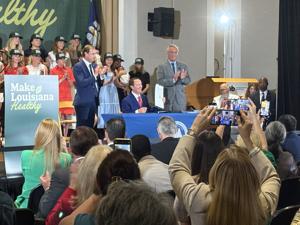
Gov. Jeff Landry, alongside U.S. Health and Human Services Secretary Robert F. Kennedy Jr., signed a sweeping new law aimed at reshaping how Louisiana regulates food, nutrition, and consumer health.
“A healthy independent population reduces reliance on Medicaid, freeing us from government dependence,” Landry said.
Senate Bill 14 bans schools from serving foods containing certain artificial dyes, preservatives, and sweeteners linked to health risks and requires schools to prioritize locally sourced food when possible.
It also mandates that restaurants disclose when they use seed oils like soybean, corn or canola in food preparation. Additionally, doctors and nurse practitioners in several specialties must now complete continuing education on nutrition and metabolic health every four years.
In his speech, Kennedy went on at length about the the public health crisis facing America.
“We have a chronic disease epidemic in this country now, and it is unlike anything humanity has ever faced,” Kennedy said. “We are literally the sickest country in the world.”
According to Kennedy, the U.S. spends $1.7 trillion fighting chronic disease.
Tim Moise, a farmer out of Sunset Louisiana, expects the legislation to put healthier foods on family tables.
“Pasture raised pork: That’s the T-Moise way,” the family farm’s website reads. Moise said in an interview that his hogs were “grass fed and grass finished” and raised with no preservatives or genetically modified organisms.
According to Moise, the shift from traditional, “all natural” animal fats to seed oils sent demand away from locally sourced foods to processed foods and helped cause the surge in heart disease among Americans.
For a long time, Moise said, he was unable to justify a slaughterhouse with the demand for locally-sourced meats so low. But that has recently changed, and he expects the newly established laws and attitude shift driven by the Make America Healthy Again movement to help.
“Did you know that McDonald’s used to use beef tallow to make their fries from 1940 until phasing it out in favor of seed oils in 1990?,” Kennedy wrote on X. “This switch was made because saturated animal fats were thought to be unhealthy, but we have since discovered that seed oils are one of the driving causes of the obesity epidemic.”
Kennedy’s “Make America Healthy Again” movement has garnered national attention, and Louisiana is the first state to pass legislation aimed at targeting “Big Food”.
“Despite fierce opposition among big food, we received not one single no vote on this bill,” Sen. Patrick McMath, R-Covington, said. “This bill is about transparency, both for restaurants and for food manufacturers, to disclose the types of ingredients that are serving us and the potential impact that those ingredients could have on our bodies.”
Moise was among several local farmers invited to the Pennington Biomedical Research Center, including Cyrus and Maggie Long, who run a small family mushroom farm in St. Francisville with their two children.
“We are passionate about mushrooms and about Louisiana farmers. We are a small family-run business growing our mushrooms from petri dish to your dish,” the Longs’ website reads.
The Longs said they were especially excited about the law’s requirement that doctors and nurse practitioners complete nutrition and metabolic health training.
They believe it could help legitimize the medicinal benefits of mushrooms, which are increasingly studied for their role in supporting immune function, reducing inflammation, and improving cognitive health.
The Longs were selling their homemade lion’s mane tincture. Lion’s mane is a type of mushroom that has a growing scientific literature to back its use.
Texas congresswoman files bills to financially penalize sanctuary cities, rioters

A north Texas congresswoman has filed bills to financially penalize sanctuary cities and rioters targeting law enforcement.
U.S. Rep. Beth Van Duyne, a Republican and former mayor of Irving, filed the Recouping Funds from Sanctuary Cities Act of 2025, to financially penalize city governments that actively work against federal immigration enforcement.
The bill applies to political subdivisions of a state that implement statutes, ordinances, policies or practices that prohibit or restrict government officials from cooperating with federal immigration officials. It addresses sanctuary policies that prohibit government officials from sharing information about illegal foreign nationals with federal authorities and refuse to honor detainer requests made with their jails. Local governments that violate the law will be compelled to return unobligated federal funds they received while they obstructed federal immigration enforcement. The time period for recouping funds is retroactive five years from the date the law is enacted.
“By actively harboring and protecting criminal illegal aliens, sanctuary cities create unnecessarily dangerous circumstances for both law enforcement and law-abiding citizens all across our country,” Van Duyne said. As the former mayor of Irving, she said she knows “first hand … how easy it is to coordinate local law enforcement with Immigration and Customs Enforcement (ICE) operations to apprehend and deport criminal aliens.”
While mayor and working with ICE, law enforcement “removed thousands of criminal aliens” in Irving. Under her tenure, Irving became the fifth safest city in America, “not only for American citizens but also for immigrant populations who are the most likely to be preyed upon by violent alien criminals,” she said.
The law also includes a grace period allowing for jurisdictions to notify the attorney general that they corrected their policies and are cooperating with federal immigration enforcement.
Van Duyne says the bill is “a commonsense reform” that has become necessary because of increased attacks against federal agents. In the past few months, attacks against ICE officers have increased by 500%, with federal prosecutors and law enforcement officers being attacked, The Center Square reported.
In the 118th Congress, Van Duyne introduced the No Congressional Funds for Sanctuary Cities Act, which would prohibit the use of federal funds for congressional earmarks targeting state or local governments that identify as sanctuary jurisdictions.
She also introduced the Stop Funding Rioters Act in response to the violent riots in Los Angeles targeting federal immigration officers. The bill would make those convicted of misdemeanor or felony assault of a law enforcement officer, or of a felony related to a riot that destroyed a small business, ineligible to receive aid or participate in Small Business Administration programs.
“Taxpayer dollars should never be used to support individuals who violently attack law enforcement or destroy the livelihoods of hard-working Americans,” she said. “I am committed to protecting law enforcement, supporting small businesses, and ensuring that federal programs serve those who contribute to, rather than destroy, our communities.”
National speculation helps ‘get more for the people of Illinois,’ Pritzker says
Capitol News Illinois
SPRINGFIELD — Gov. JB Pritzker began his third campaign for governor on Thursday, but much of the buzz around his 2026 campaign announcement focused on 2028.
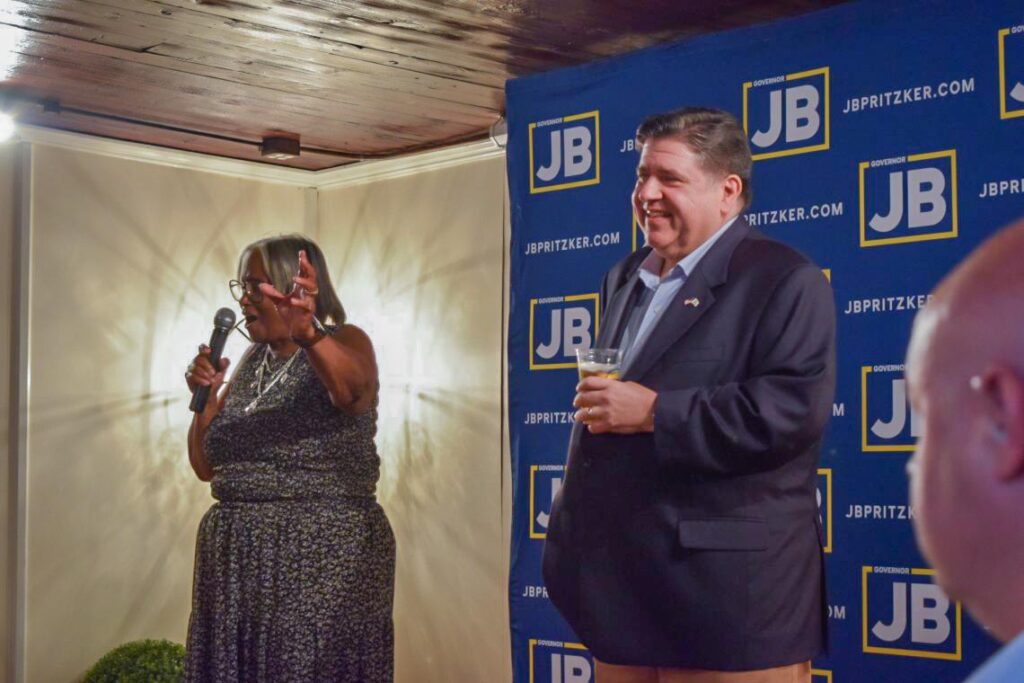
Pritzker made four stops around the state to launch his campaign, fielding questions about any future interest in the presidency and what is driving him to run for what would be a historic third term. In his final stop in Springfield on Thursday evening, he was toasting personally branded “JBeers” – his own craft beer product he unveiled at least year’s Democratic National Convention – with a group of about 100 people at a small event venue just outside the Capitol and talking about his motivations.
“Every day I’m going to wake up going forward thinking about what I am going to do that’s going to help the people of Illinois,” Pritzker told reporters in Springfield when asked how many years of a third term he would serve. “So that’s the reason I’m running for reelection, it’s why I announced today, it’s what I’m going to do every day going forward no matter what decision I make.”
The 60-year-old Democrat’s national profile has grown significantly over the last year. He was a finalist to be former Vice President Kamala Harris’ running mate last July, and weeks later, introduced himself to the country on the stage of the Democratic National Convention in Chicago. In the months since President Donald Trump took office, Pritzker has emerged as one of his most vocal critics.
At news conferences throughout the state, Pritzker did not directly commit to serving a full four-year term if he is reelected and sidestepped questions about his rumored White House ambitions.
Read more: Pritzker calls for mass mobilization as he grows his national profile
But while staying tight-lipped about what he thinks about his prospects in the 2028 presidential election, he said any decision he makes about his future would be Illinois-centric.
Speculation shows Pritzker ‘capable and competent’
In the meantime, Pritzker said he believed his inclusion in the national conversation is good for Illinois.
“When I ran for governor in the first place in 2017 and 2018, never, never could I have imagined that anybody would talk about me as the potential vice-presidential nominee or as a candidate for president of the United States,” Pritzker said.
While Republicans have frequently criticized the governor for his tendencies to criticize Trump rather than work with him to Illinois’ benefit, the governor spun his rising national profile as a positive.
Gov. JB Pritzker takes a picture with Mike Lopez, mayor of nearby Jerome, after announcing his reelection campaign in Springfield on Thursday, June 26. (Capitol News Illinois photo by Jade Aubrey)
“Having the state of Illinois’ leaders viewed as capable and competent and potentially able to run the entire country and being talked about in that way, allows us, I think, to get more for the people of Illinois because there’s an understanding that, you know, maybe in Illinois we’re doing the right things,” he said. “Maybe in Illinois we have leaders that can competently execute on what states really need.”
Pritzker said his experience last summer being vetted for the vice presidency has not played any role in the decisions he has made about his political career.
Should Pritzker decide to run for president, an announcement would likely come at some point in 2027 during what would be the first year of his third term if he’s reelected.
Pritzker’s goal: ‘Protect’ Illinois and his legacy
Pritzker said at his announcement Thursday that his goal in 2026 is to preserve his legacy and “protect” the story of Illinois that’s been written under his leadership. Pritzker didn’t outline a bold vision for his third term but rather pledged to build off what he has already accomplished.
Read more: ‘I have work to do,’ Pritzker says in launching third-term reelection bid
He said his third term would focus on grappling with artificial intelligence, addressing the rising cost of living, continued spending on infrastructure and growing the state’s economy.
Pritzker reflected on his decision to seek reelection despite growing challenges facing the state.
“I don’t shy away from a fight, and we’re going to have to protect the people of Illinois,” Pritzker told reporters in Springfield. “And I feel like we’re in a moment when backing away from public service when things are hard doesn’t feel right. So that’s one of the reasons I chose to run for reelection.”
Gov. JB Pritzker speaks with reporters after his campaign announcement in Springfield on Thursday. (Capitol News Illinois photo by Jade Aubrey)
Pritzker was asked whether he would have run had Trump not been elected last year.
“I think I would, but I have to say that in this moment, it feels like walking away is the wrong thing to do given who is in the White House and given how this administration is attacking people all across this country,” Pritzker said.
The governor must also choose a new running mate as Lt. Gov. Juliana Stratton has decided to run for U.S. Senate. Pritzker said he will choose one by the end of July so his campaign can start circulating nominating petitions in early August. Pritzker said in Chicago that he is looking for someone with enough experience to take over as governor if required.
Rep. Jehan Gordon-Booth, D-Peoria, may be an early front-runner for the job. Pritzker specifically referred to Gordon-Booth as qualified at a stop in East Peoria on Thursday when asked about potential running mates, WGLT reported. The assistant House majority leader has been in the General Assembly since 2009.
Capitol News Illinois is a nonprofit, nonpartisan news service that distributes state government coverage to hundreds of news outlets statewide. It is funded primarily by the Illinois Press Foundation and the Robert R. McCormick Foundation.
The post National speculation helps ‘get more for the people of Illinois,’ Pritzker says appeared first on Capitol News Illinois.
Administration celebrates Supreme Court ruling against nationwide injunctions

President Donald Trump and Attorney General Pam Bondi celebrated the U.S. Supreme Court’s 6-3 ruling against nationwide injunctions from federal courts at a joint news conference Friday.
More than 300 lawsuits have been brought against the administration in its first five months, with federal judges issuing 40 nationwide injunctions against its policies, according to Bondi. The administration has stood by its actions and the more than 160 executive orders from the president, arguing that its policies are lawful and that “rogue, activist judges” have allowed personal feelings and political leanings to interfere with the rightful interpretation of the law. An injunction temporarily blocks the implementation of the law or policy being challenged in court until either the conclusion of the lawsuit – which may take months or even years – or the lifting of the injunction by a judge.
“To put this in perspective, there are 94 federal judicial districts. Five of those districts throughout this country held 35 of the nationwide injunctions. Think about that… Thirty-five out of the 40 opinions with nationwide injunctions came from five liberal districts,” Bondi said.
A report from the Congressional Research Service that was updated May 16 lists 25 injunctions from Trump’s first 100 days in office in 2025. Among those were three injunctions issued against the president’s executive order reinterpreting birthright citizenship; two against the order ending diversity, equity and inclusion programs within the federal government; and two challenging the order prohibiting people identifying as transgender from serving in the military. The others countered orders suspending the U.S. Refugee Admissions Program, centering sex-based protections on biological definitions, withholding funds from foreign entities and requiring more proof of citizenship for elections.
“No longer. These injunctions have blocked our policies from tariffs to military readiness to immigration to foreign affairs, fraud, abuse and many other issues,” Bondi added.
The issue of nationwide injunctions came before the Supreme Court through a case challenging Trump’s birthright citizenship order, but Bondi said the legality of the order itself would be decided by the Court in October, at the start of its 2025-26 term.
Aviation safety, cutting out financial opportunists embedded in proposal

Maintaining aviation safety and cutting out financial opportunists in the form of airports is the driving factor of legislation pending in both the U.S. Senate and House of Representatives.
Sen. Ted Budd, R-N.C., and Rep. Robert Onder, R-Mo., are shepherding bicameral efforts along with Sens. Dan Sullivan, R-Alaska, and Tim Sheehy, R-Mont., to stop what they call abuse of a safety technology more accurate than radar. The Pilot and Aircraft Privacy Act, known also as Senate Bill 2175 and House Resolution 4146, would limit use of the Automatic Dependent Surveillance-Broadcast and require enhanced transparency in airport fees for general aviation aircraft.
The congressmen say the technology is used in some airports “for the purposes of assessing landing fees and collecting revenue from pilots.” The technology identifies the aircraft, airspeed, heading and altitude and is used by air traffic controllers. They say it has helped avoid a number of collisions in the air.
“Abusing this technology to levy unfair, sometimes duplicative fees and threatening pilots with legal action will keep some general aviation pilots grounded, which is a loss for America’s economy, emergency response, and the aviation community at large,” Budd said.
Pilots sometimes do not use it for these reasons.
“Unfortunately, some third parties have taken advantage of this data to impose and collect exorbitant third-party landing fees and frivolous lawsuits targeted at general aviation pilots and travelers,” Onder said. “These uses of data for purposes other than air traffic safety act as a deterrent for pilots to equip their aircraft with this potentially life-saving technology.”
The bill says fees or charges using the ADS-B data is prohibited by government agencies and private entities. It says the date can be used by air traffic controllers for safety, efficiency or other purposes as approved by the Transportation Department secretary. Investigations cannot be originated on the data. And financial information and impact are protected.
U.S. Supreme Court rules for parents on LGBTQ storybooks
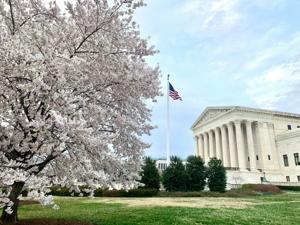
The U.S. Supreme Court, in a 6-3 decision Friday, sided with parents in opting-out their children from school curriculum with LGBTQ storybooks.
In the case Mahmoud v. Taylor, the court recognized parents have a constitutional right to opt their children out of, for religious reasons, content such as storybooks that push LGBTQ ideology.
“We have long recognized the rights of parents to direct ‘the religious upbringing’ of their children,” Justice Samuel Alito wrote in the court’s opinion. “And we have held that those rights are violated by government policies that substantially interfere with the religious development of children.”
Justice Brett Kavanaugh concurred.
“Given the novelty of its ‘LGBTQ+-inclusive’ curriculum and no opt-out policy, if any party is pressing a progressive child rearing process in this litigation, clearly it is the [School] Board,” Kavanaugh said. “Such an unprecedented curriculum cannot ‘overbalance’ the parents’ ‘legitimate claims to the free exercise of religion.’”
This issue arose in 2022 when Montgomery County, the largest school district in Maryland and one of the most religiously diverse counties in the country, reversed its policy on letting parents opt-out their children from LGBTQ-related lessons.
The seven books originally purchased for the 2022-23 school year were “Born Ready,” “Intersection Allies,” “Love, Violet,” “My Rainbow,” “Prince & Knight,” “Pride Puppy!” and “Uncle Bobby’s Wedding” – all with LGBTQ characters and themes.
The district’s associate superintendent for curriculum, Niki Hazel, explained the district decided to buy those books due to previous storybooks not fully representing all diverse families in their school district.
“The books used in its existing ELA curriculum were not representative of many students and families in Montgomery County because they did not include LGBTQ characters,” Hazel said in a U.S. Supreme Court declaration.
Following parents’ frustration with reversing this opt-out policy, the Montgomery County Board of Education claimed these opt-outs were too difficult to manage and that it was too hard to find alternative activities for the excused students.
In her dissent, Justice Sonia Sotomayor, joined by Justices Elena Kagan and Ketanji Brown Jackson, said this decision will isolate students from a diverse education.
“Today’s ruling threatens the very essence of public education … That decision guts our free-exercise precedent and strikes at the core premise of public schools: that children may come together to learn not the teachings of a particular faith, but a range of concepts and views that reflect our entire society,” said Sotomayor. “The reverberations of the Court’s error will be felt, I fear, for generations. Unable to condone that grave misjudgment, I dissent.”
Eric Baxter, senior counsel for the Becket Fund for Religious Liberty, the group representing the parents who were the plaintiffs in the case, said Friday’s decision restored common sense in America.
“This is a historic victory for parental rights in Maryland and across America. Kids shouldn’t be forced into conversations about drag queens, pride parades, or gender transitions without their parents’ permission,” Baxter said. “Today, the Court restored common sense and made clear that parents — not government —have the final say in how their children are raised.”
Sarah Parshall Perry, vice president and legal fellow at Defending Education, said the court’s decision should have been unanimous.
“In what should have been a unanimous decision, the Supreme Court in Mahmoud v. Taylor upheld by a 6-3 vote the rights of religious parents to opt their children out of LGBTQ themed curriculum,” Perry said in a statement to The Center Square. “In a straightforward application of its earlier decision in Wisconsin v. Yoder, the Court wrote that it had long recognized the rights of parents to direct ‘the religious upbringing’ of their children, and that policies that interfere with the religious development of children violate the Constitution. Storybooks like those at issue in Mahmoud convey normative messages on sex and gender, and those messages can and often do conflict with the beliefs of parents and their children.”
Maryland parents Friday praised the court’s decision.
“The Supreme Court sent a powerful message today: Parents do not take a back seat to anyone when it comes to raising their kids. I am deeply grateful to have been part of this historic triumph for parental rights nationwide,” said Grace Morrison, one of the Catholic plaintiffs.
‘Swamp bureaucrat’: Republicans rail as Senate parliamentarian butchers OBBBA

Republicans are facing setback after setback as the Senate parliamentarian continues to slash major provisions from the One Big Beautiful Bill Act, jeopardizing the megabill’s passage and angering lawmakers.
The House-passed OBBBA, a multitrillion-dollar budget reconciliation bill implementing President Donald Trump’s major policy priorities, is under the parliamentarian’s review after undergoing Senate committees’ alterations.
Several significant provisions in the bill, including some SNAP-related accountability measures and cost-cutting reforms to Medicaid, collapsed after Parliamentarian Elizabeth MacDonough determined they violated the Byrd Rule.
The Byrd Rule limits budget reconciliation bills to provisions with direct budgetary impacts. If the parliamentarian finds provisions that violate this rule, lawmakers must either strip them from the bill or lose the ability to pass the legislation in the Senate with a simple majority vote.
Republicans have been scrambling to rewrite some of the provisions into compliance, with some success. A section MacDonough struck that would have fully defunded the Consumer Financial Protection Bureau was rewritten by a Senate committee and later approved, though it authorizes only half the funding cut of the original provision.
But parliamentarian rulings nixing provisions worth hundreds of billions in spending offsets have followed in quick succession since Thursday, including major student loan and financial aid-related sections, one of which would have reduced student loan repayment plan options.
MacDonough also determined Friday that a federal fund for private school vouchers, the deregulation of gun silencers, and stricter verification requirements for Earned Income Tax Credit claimants violated the Byrd Rule.
While Senate Majority Leader John Thune, R-S.D., declined to overrule the parliamentarian’s authority, multiple Republicans vented their frustrations, viewing the slew of rulings as a partisan attack.
“How is it that an unelected swamp bureaucrat … gets to decide what can and cannot go in President Trump’s One Big Beautiful Bill?” Rep. Greg Steube, R-Fla., posted on X. “The Senate Parliamentarian is not elected. She is not accountable to the American people. Yet she holds veto power over legislation supported by millions of voters.”
In a Friday social media post, Rep. Eli Crane, R-Ariz., rhetorically asked his colleagues in the Senate why they are “allowing themselves to be bossed around by a democrat-appointed bureaucrat.”
But the parliamentarian’s rulings are just one of many obstacles to the OBBBA’s passage. Republican leaders are simultaneously negotiating with groups of GOP holdouts in both chambers, including Blue-state Republicans demanding a higher SALT deduction cap and fiscal hawks stipulating greater spending cuts.
Due to the cost of extending the expiring 2017 tax cuts — the greatest portion of the bill — the OBBBA could add anywhere between $2.4 trillion and $4.5 trillion to the federal deficit over the next decade alone, depending on whether or not the parliamentarian approves the Senate’s request for permanent tax cut extension.